 Bellingham Siding
 Why York Homes Need Siding Built for This Climate
York sits close enough to Bellingham Bay that salt-tinged air reaches exterior surfaces year-round, and it doesn't take long for homeowners in this part of Whatcom County to notice what that does to a house. Add the driving rain that blows in off the water during fall and winter storms, plus a moss season that stretches for months under the Pacific Northwest's tree cover and cloud ceiling, and you have a set of conditions that punishes any siding material with a weak point. Painted wood swells, cracks, and opens seams for water to work into. Vinyl gets brittle in cold snaps and can warp or fade under repeated wet-dry cycling. Even some fiber cement products struggle if they weren't engineered for this specific mix of moisture and salt exposure.
That's the environment we install into every time we work a York job, and it shapes every decision on the project — the underlayment, the fastener metal, the gap behind the siding, the caulk we use, and the product line itself. Siding here isn't just cosmetic. It's the first and most exposed layer of protection for the sheathing, framing, and insulation behind it, and in this climate it has to work every single day, not just on dry ones.
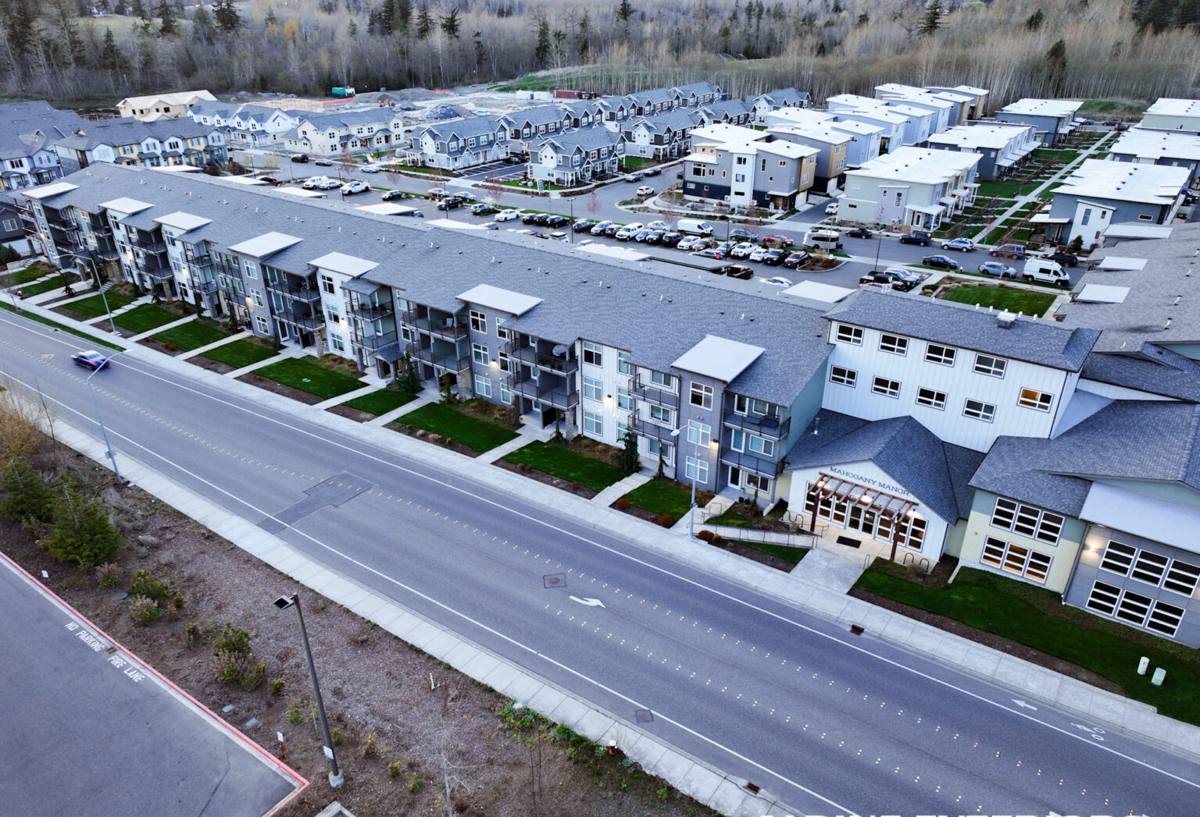
What a Correct Installation Actually Involves
Drainage and the Rain-Screen Gap
In a climate that gets as much sustained rainfall as Bellingham does, siding can't just be a flat barrier pressed against the house. It needs a drainage path behind it — a rain-screen gap or drainable house wrap — so that any moisture that gets past the outer surface has somewhere to go besides straight into the sheathing. Skipping this step is one of the most common shortcuts we see on older or poorly-done siding jobs, and it's usually invisible until rot shows up years later.
Flashing Details That Actually Stop Water
Window and door flashing, kick-out flashing where a roofline meets a wall, and properly lapped flashing at every horizontal joint are what keep water moving down and away from the building instead of behind the siding. These details take extra time to get right, and they're also the details that get skipped when a crew is trying to move fast. In a market with this much rainfall, a flashing mistake doesn't stay hidden — it shows up as a stain, a soft spot, or worse.
Fastening for Coastal Moisture
Standard fasteners corrode faster in salt-influenced air, so we fasten with hot-dipped galvanized or stainless steel nails, following the manufacturer's nailing pattern and clearance requirements — including keeping siding a minimum distance from grade, decks, and roof lines so it isn't sitting in standing moisture or splash-back.
Why We Install Only James Hardie Fiber Cement
Fiber cement as a category — a mix of cement, sand, and cellulose fiber — is inherently more stable and moisture-resistant than wood, and it doesn't burn the way vinyl or wood-based products do. But not all fiber cement is engineered the same way, and that's why our company made the decision to install James Hardie products exclusively rather than mixing in other fiber cement brands.
Hardie's HZ5 product line is specifically engineered for climates like ours — areas that see extended wet seasons and moisture cycling rather than dry heat. The ColorPlus finish is baked on at the factory under controlled conditions, which gives a more consistent, longer-lasting color bond than field-applied paint. And Hardie backs its products with a warranty structure that's transferable to a new owner if the home sells, which matters to homeowners thinking about resale. We're not saying every other fiber cement brand is unusable — we're saying that after years of installing siding in this exact climate, this is the standard we settled on and the one we're willing to put our name behind.
Product Lines That Fit a York Home
HardiePlank Lap Siding
Lap siding is the most common choice for the traditional and craftsman-style homes found throughout York and the surrounding Bellingham neighborhoods. It reads as classic wood clapboard from the street but doesn't carry wood's moisture problems.
HardieShingle and HardiePanel Accents
Many homes in this area use shingle-style siding or panel accents on gables, dormers, or entry features to add texture without a full material change. Both come in the same engineered HZ5 formulation as the lap siding, so the whole exterior performs consistently.
ColorPlus offers a range of finishes that work well with the muted, natural palette common in this part of the county — deep greens, warm grays, and classic whites that hold up visually against the gray skies and green backdrop of a Whatcom County winter.
Our Process, Start to Finish
- On-site assessment: we check existing siding, sheathing condition, and any signs of moisture intrusion before quoting anything.
- Tear-off and inspection: old siding comes off and we inspect the sheathing underneath for rot or damage before it gets covered again.
- Weather barrier and flashing: house wrap, rain-screen gap, and flashing go in at every penetration and transition point.
- Hardie installation: siding is installed to manufacturer spec, including fastener type, spacing, and clearances for our climate zone.
- Caulking and trim: joints, corners, and trim are sealed and finished for a clean, weathertight result.
- Final walk-through: we review the completed job with the homeowner and handle cleanup before we consider it done.
What Drives Cost on a York Siding Job
| Cost Factor | Why It Matters Here | Effect on the Project |
|---|---|---|
| Tear-off vs. new construction | Removing old siding often reveals hidden moisture or rot damage common in wetter climates | Can add repair scope once walls are opened up |
| Siding profile mix | Combining lap siding with shingle or panel accents adds detail work | More labor time than a single uniform profile |
| Trim and flashing complexity | Homes with more windows, gables, or rooflines need more flashing detail | Increases both material and labor |
| Sheathing or framing repair | Long-term moisture exposure sometimes damages what's underneath the old siding | Adds cost but is necessary before new siding goes on |
| Site access and lot terrain | Sloped or wooded lots, common around Bellingham, can slow staging and material handling | Can affect labor time and equipment needs |
Living With Fiber Cement in a Wet, Mossy Climate
James Hardie siding is low-maintenance compared to wood or vinyl, but "low-maintenance" doesn't mean "no maintenance" — especially in a climate that grows moss on nearly everything left alone long enough. A little seasonal attention keeps it looking and performing the way it should for decades.
- Rinse siding down at least once a year to remove dirt, pollen, and the start of algae or moss growth before it takes hold
- Keep gutters and downspouts clear so overflow doesn't run down the face of the siding
- Trim back vegetation and tree branches near the house to allow airflow and sunlight, which slows moss and mildew growth
- Inspect caulking at trim, corners, and penetrations annually and re-caulk any cracked or separated joints
- Watch for moss or algae buildup in shaded, north-facing sections of the house and clean it promptly rather than letting it spread
- Because ColorPlus is a factory-applied finish, it does not need repainting on the same cycle as field-painted siding — but touch-up caulk and trim paint should still be checked
Why Hiring a Crew That Already Works in York Matters
Siding installed to spec on paper doesn't always perform the same way once it's exposed to a specific lot's actual conditions — how much shade a house sits in, which direction the prevailing rain hits it from, whether the lot holds moisture longer than the street next to it. A crew that already works throughout York and the greater Bellingham area has seen these patterns play out on real houses, not just in a manual. That local familiarity also extends to Whatcom County permitting requirements and to catching the kind of pre-existing moisture damage that's common on homes that have weathered a lot of Pacific Northwest winters.
We're not a national crew rotating through the region for a season — we do this work here, on homes with the same climate exposure as yours, and we stand behind it with James Hardie's warranty and our own workmanship.
If you're weighing your options for siding on a York home, we're happy to take a look and give you a straightforward, no-pressure estimate — no obligation, just an honest read on what your house actually needs.