 Bellingham Siding
 Exterior Work Built for Happy Valley's Conditions
Happy Valley sits close enough to Bellingham Bay and the surrounding hills that its homes take on a specific mix of weather stress: salt-tinged air moving in off the water, long stretches of driving rain through fall and winter, and a moss season that seems to start earlier and last longer every year. None of that is unusual for Whatcom County, but it adds up differently depending on how a house is built and what it's clad in. A wall assembly that holds up fine in a drier inland climate can start showing problems here within a handful of years if it wasn't designed with this kind of exposure in mind.
We work on homes across Bellingham and the surrounding neighborhoods, and Happy Valley comes with its own pattern of wear. Older homes in the area often have layers of past repairs — a patch here, a recaulked joint there — that were reasonable fixes at the time but didn't address why the damage happened in the first place. Our approach starts with figuring out what's actually causing the wear, not just covering it up again.
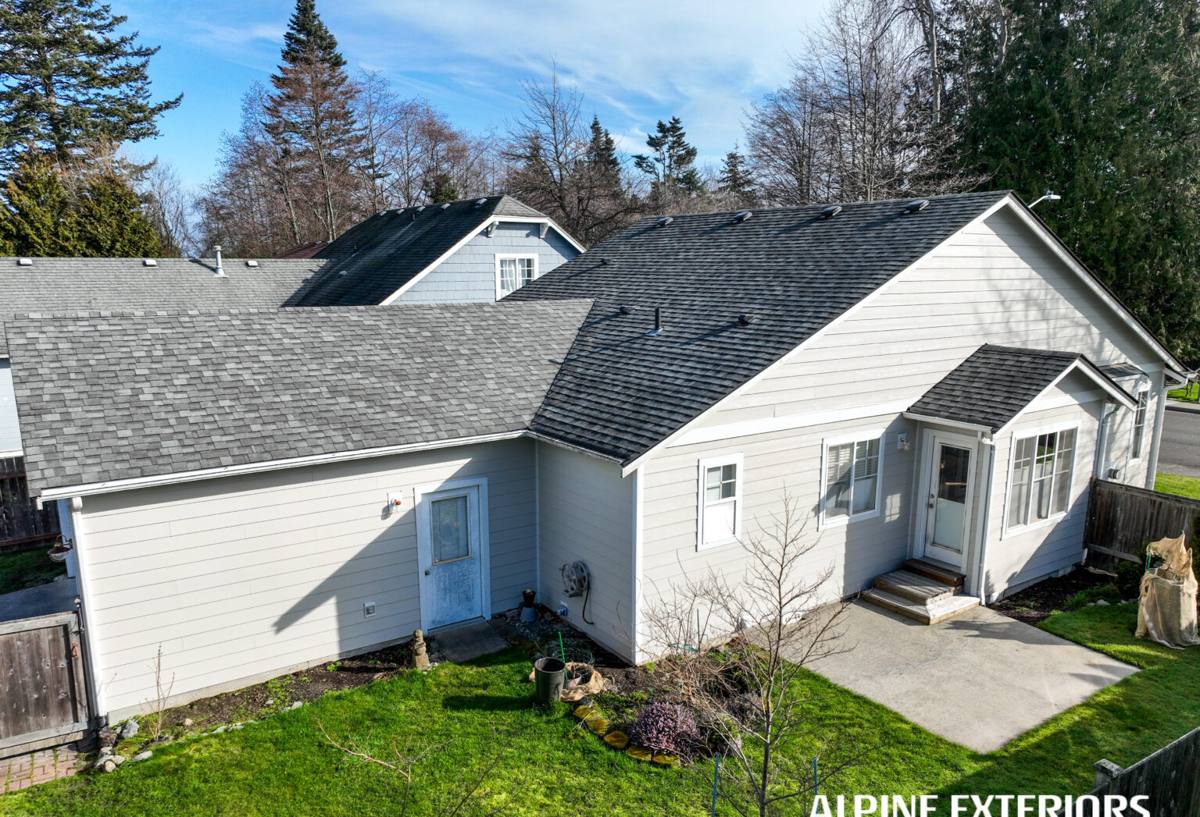
What the Local Climate Does to a House Over Time
Salt Air and Moisture
Proximity to the bay means a steady low-level exposure to salt-laden moisture in the air. Over years, this accelerates corrosion on exposed metal fasteners, flashing, and trim, and it can speed up the breakdown of paint films and lower-grade siding materials that weren't engineered to handle coastal-adjacent conditions. It's a slow process, which is exactly why it's easy to underestimate until a repaint or repair reveals how much has actually happened underneath.
Driving Rain
Bellingham's rain doesn't just fall — it comes in sideways often enough that wall assemblies need real drainage planes, not just a water-resistant surface. Wind-driven rain finds its way into any gap in flashing, any poorly lapped seam, or any place where caulk was asked to do a job that proper detailing should have handled. Once moisture gets behind the cladding, it's the sheathing, framing, and insulation that pay the price, usually invisibly until something more serious surfaces.
Moss and Sustained Dampness
The long wet season means roofs, north-facing walls, and shaded siding sections stay damp longer than they do in drier climates. Moss and algae take hold readily on organic or absorbent surfaces, holding moisture against the material and creating a maintenance cycle that never really ends for the wrong products. It also means gutters, roof valleys, and drainage details matter more here than they would somewhere with a shorter, drier rainy season.
Why We Install Only James Hardie Fiber Cement Siding
We made a decision early on to standardize on James Hardie fiber cement and stop installing other siding materials, including vinyl, LP SmartSide, Cemplank, Allura, primed spruce, and cedar. That wasn't a marketing choice — it came out of seeing, repeatedly, which products held up in this climate and which ones created ongoing headaches for homeowners.
Fiber cement is non-combustible, which matters more every year as wildfire smoke and regional fire risk become a bigger part of Pacific Northwest summers. It doesn't absorb water the way engineered wood products can, so it isn't prone to the swelling, delamination, and edge damage that shows up on wood-based sidings after repeated wet-dry cycles. And it holds its factory-applied finish far longer than field-painted materials, which matters a lot in a place where repainting siding every few years isn't a project most homeowners want to repeat.
To be fair to the alternatives: vinyl is inexpensive and low-maintenance in the sense that it never needs painting, but it can become brittle and crack in cold snaps, fades over time, and doesn't offer the same fire performance. Engineered wood products like LP SmartSide perform reasonably well when installation and caulking are kept up perfectly, but that's a big "if" over 20-30 years of PNW weather, and moisture intrusion at seams and cuts is the most common failure point we see. Cedar is a beautiful, genuinely traditional material for this region, but it demands a maintenance commitment — staining, sealing, moss treatment — that most homeowners underestimate when they choose it. We'd rather be upfront about those trade-offs than sell something we don't believe holds up.
How a James Hardie Installation Actually Works
The siding itself is only part of what determines how a wall performs. Correct installation is what makes the difference between a Hardie install that lasts decades and one that runs into problems in five years.
- Remove existing siding and inspect the sheathing for rot, soft spots, or prior water damage before anything new goes on
- Repair or replace damaged sheathing rather than covering it over
- Install a code-compliant weather-resistant barrier with properly lapped and taped seams
- Detail flashing at every window, door, and penetration so water is directed out and down, never trapped
- Maintain manufacturer-specified gaps and clearances at trim, foundation lines, and roof-wall intersections
- Fasten according to James Hardie's published installation instructions — spacing, fastener type, and depth all affect the warranty
- Caulk and paint touch-up only where the manufacturer's install guide calls for it, not as a substitute for good flashing
Skipping or rushing any one of these steps is how a quality product ends up with a bad reputation. It's also why we care as much about who's on the crew as we do about the material iting on the truck.
James Hardie Product Lines and Where They Fit
James Hardie makes several product lines, and the right one depends on the home's style, exposure, and budget. Most of what we install falls into a few categories:
| Product | Typical Use | Notable Feature |
|---|---|---|
| HardiePlank lap siding | Most common siding replacement | Traditional lap look, multiple textures |
| HardiePanel vertical siding | Board-and-batten, modern styling, accent walls | Clean vertical lines |
| HardieShingle | Accent gables, Craftsman-style detailing | Staggered or straight-edge shingle profiles |
| HardieTrim | Window and door trim, corners, fascia | Matches ColorPlus finish system |
| HZ5 / HZ10 formulations | Climate-engineered for regions like the Pacific Northwest | Formulated for moisture and freeze-thaw exposure |
ColorPlus finish, James Hardie's factory-applied color system, is worth calling out on its own. It's baked on under controlled conditions rather than brushed or sprayed on site, which gives it more consistent coverage and a longer service life than field-applied paint — a real advantage in a climate that's hard on painted surfaces.
Warranty Considerations
James Hardie backs its siding with a long, transferable limited warranty, which matters both for owners planning to stay put and for resale value. That said, the warranty is tied to proper installation — another reason installation quality isn't a place to cut corners. A warranty is only as good as the install behind it.
Roofing, Windows, and Decks — The Rest of the Exterior Envelope
Siding doesn't work in isolation. In a climate like this, the roof, windows, and any decks or outdoor living spaces all interact with the same moisture and weather pressures, and problems in one area often show up as damage in another.
Roofing
A roof in poor condition, or with clogged valleys and gutters, sends water down onto siding and trim in ways that accelerate wear regardless of what the siding is made of. Moss buildup on roofing is one of the most common issues we see in this area, and it's worth addressing before it becomes a siding or fascia problem too.
Windows
Window flashing and integration with the siding plane is one of the most common failure points in older homes. When we replace siding, window flashing details get checked and corrected as part of the job, not treated as a separate afterthought.
Decks
Outdoor decks in this climate face the same sustained-moisture and moss pressures as roofs and north-facing walls. Proper ledger flashing, drainage, and material choice matter as much here as anywhere else on the house.
Why Hiring a Local Crew Matters
A crew that works across Whatcom County regularly sees how homes in specific neighborhoods age — which details fail first, which orientations take the worst weather, and which past shortcuts show up as problems years later. That local pattern recognition is hard to substitute with a general specification sheet.
Local presence also matters practically: knowing the permitting process with the City of Bellingham or Whatcom County, having a crew that can respond during a wet season if something needs attention, and having a company that will still be reachable years after the job is done for warranty questions.
Questions Worth Asking Any Contractor Before Hiring
- Are you licensed and insured to do exterior work in Washington State?
- Will you inspect and repair sheathing before installing new siding, and is that itemized in the estimate?
- Which James Hardie products do you install, and are your installers factory-trained on current specs?
- What does your warranty cover, and how does it relate to the manufacturer's warranty?
- Can you walk me through your flashing details at windows, doors, and roof lines?
- How do you handle change orders if hidden damage is found once old siding comes off?
What to Expect From an Estimate
A useful estimate isn't just a number — it should reflect an actual look at the house: current siding condition, any visible moisture damage, roof and gutter condition, window flashing, and the scope of trim and detail work involved. Costs vary based on square footage, the amount of trim and architectural detail, tear-off and disposal of existing material, and whether sheathing repair turns out to be needed once old siding comes down. We'd rather give a realistic range up front and adjust with documented reasons than lowball a number that changes halfway through the job.
If you're weighing a siding, roofing, window, or deck project for a home in Happy Valley or elsewhere around Bellingham, we're glad to come take a look and talk through what we're seeing and what it would take to address it properly. There's no cost and no pressure attached to the estimate — just a straight answer about what your house needs.