 Bellingham Siding
 Asphalt Shingle Roofing Built for Cordata's Climate
Cordata sits in north Bellingham, close enough to Bellingham Bay and the Salish Sea that salt-laden air is a real factor in how roofing materials age here, and far enough into Whatcom County's tree cover that shade, moisture, and moss are a year-round concern rather than a seasonal one. An asphalt shingle roof in this neighborhood has to handle steady winter rain, damp shoulder seasons, and long stretches where a roof plane simply doesn't get enough sun to dry out between storms. None of that makes asphalt shingles a poor choice for Cordata homes — it's still one of the most practical, cost-effective roofing systems available — but it does mean the installation details matter more here than they would in a drier, more exposed climate.
This page covers what a correctly installed or repaired asphalt shingle roof should include for a Cordata home, how we approach the work, and what to look for when you're deciding who touches your roof.
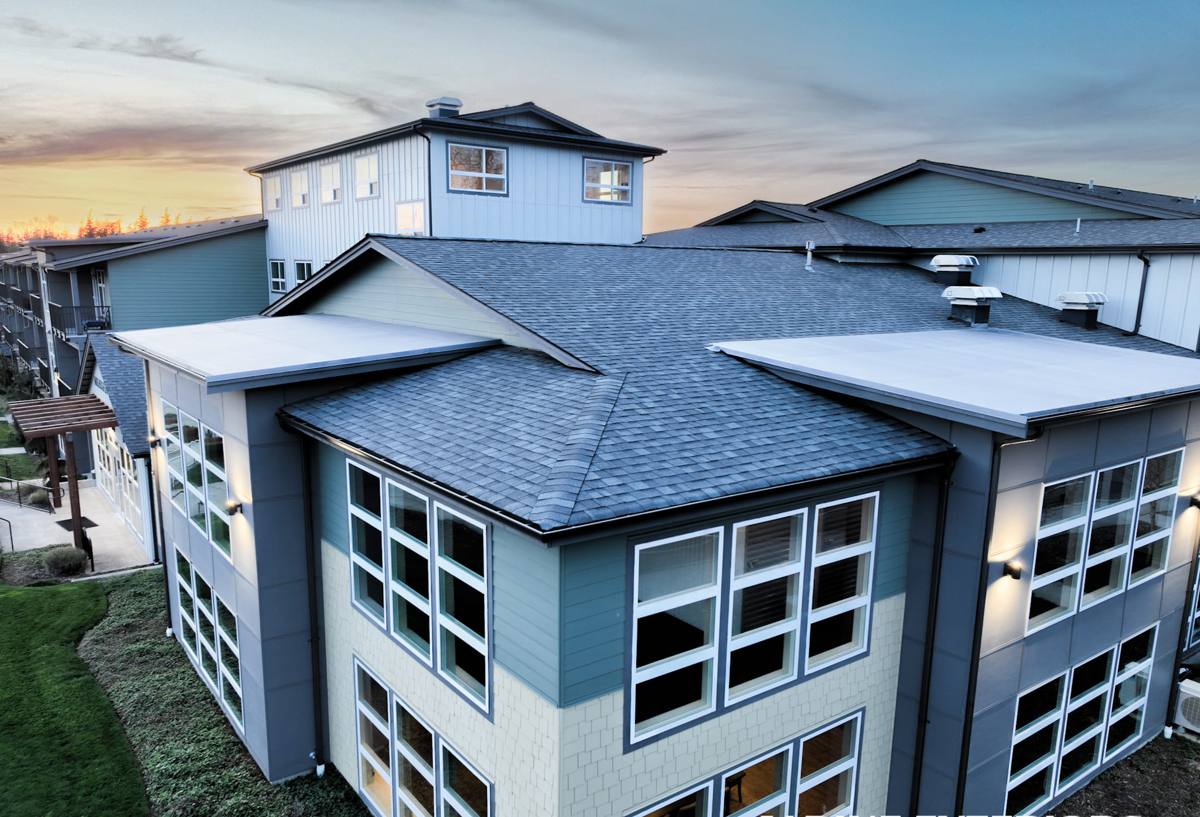
What Bellingham's Climate Does to a Shingle Roof Over Time
Driving Rain and Wind-Driven Moisture
Whatcom County storms frequently come with sideways rain rather than straight-down rain. That matters because a shingle roof isn't just shedding water downhill — it's also resisting wind-driven moisture that tries to work its way up under shingle edges, around penetrations, and along valleys. Underlayment quality, flashing detail, and fastener placement all carry more weight in a climate like this than they would somewhere with calmer, more predictable weather.
Salt Air Near the Bay
Homes closer to Bellingham Bay deal with a slow, steady exposure to salt-laden air that can accelerate corrosion on exposed metal — flashing, fasteners, vent caps, and gutter hardware. It's a gradual effect, not a dramatic one, but it's part of why we favor corrosion-resistant fastener and flashing choices on Cordata roofs rather than treating every job the same regardless of location.
Moss Season
Whatcom County's combination of shade, moisture, and mild temperatures gives moss a long growing window. Moss isn't just cosmetic — its root structure lifts shingle edges and holds moisture against the roof deck, which shortens the life of the shingles underneath it. Roofs on lots with mature tree cover, or on north-facing planes that don't get much direct sun, are the ones we see moss return to fastest if the roof wasn't detailed correctly the first time.
What a Correctly Installed Asphalt Shingle Roof Actually Includes
A shingle roof is a system, not a single product. The shingles themselves get most of the attention, but the layers underneath and around them are what actually determine whether the roof performs well in a climate like ours.
- Deck inspection and repair — any soft, delaminated, or water-damaged sheathing gets replaced before anything new goes down, not covered up
- Ice and water shield at eaves, valleys, and around penetrations, where wind-driven rain and ice damming are most likely to force moisture backward
- Synthetic underlayment across the full deck, which handles sustained wet weather better than older felt products
- Drip edge at eaves and rakes to direct water away from the fascia and deck edge
- Properly lapped step and counter flashing at walls, chimneys, and any roof-to-wall transitions
- Balanced intake and exhaust ventilation so the attic can actually dry out between wet stretches instead of holding moisture
- Correct nailing pattern and fastener count per shingle, matched to the manufacturer's specification and our regional wind exposure
Skipping or shortcutting any one of these doesn't usually show up as a problem in year one. It shows up in year six or seven, as a leak that seems to come from nowhere, or moss and staining that keeps coming back no matter how many times it's cleaned off.
Choosing the Right Shingle for a Cordata Roof
Not every shingle product is built the same way, and the differences matter more in a wet, moss-prone climate than they do in a dry one. We walk homeowners through the real trade-offs rather than just upselling the most expensive option.
| Shingle Type | Typical Lifespan | Best Fit For |
|---|---|---|
| 3-tab shingles | 15–20 years | Budget-conscious replacements, secondary structures, flatter-profile roofs |
| Architectural (laminate) shingles | 25–30 years | Most Cordata homes — better wind resistance and a heavier profile that sheds moisture more effectively |
| Premium/designer shingles | 30+ years | Homeowners prioritizing appearance and maximum wind/impact rating, or steeper, more visible roof planes |
Algae-Resistant Granules
Most quality shingle lines now offer algae-resistant (AR) granules, which help slow the dark staining that shows up on north-facing or shaded roof planes. In a neighborhood with as much tree cover as Cordata, we treat AR granules as close to a default recommendation rather than an upgrade, since the staining they resist is one of the most common cosmetic complaints we hear about from shaded roofs.
Wind and Impact Ratings
Whatcom County doesn't see the sustained high winds of more exposed coastal areas, but winter storms do bring gusts strong enough to lift poorly fastened shingles. We match the shingle's wind rating and our fastening pattern to the specific roof — steeper pitches and more exposed lots get more conservative fastening, not the manufacturer's bare minimum.
Moss, Ventilation, and Moisture — Where Most Roof Problems Actually Start
If there's one theme that runs through nearly every premature shingle roof failure we see in this area, it's trapped moisture — whether that's from moss holding water against the shingles, poor attic ventilation letting warm, humid air condense against the underside of the deck, or flashing that was never properly integrated with the shingle courses around it.
Why Ventilation Matters as Much as the Shingles
An attic that can't breathe holds moisture, and moisture held against roof sheathing from underneath does just as much damage as moisture getting in from above. Balanced ventilation — enough intake at the eaves and exhaust at the ridge — lets the attic dry out between the wet stretches that define a typical Bellingham winter. We check existing ventilation on every roof we evaluate, because adding new shingles over an under-ventilated attic just resets the clock on the same problem.
Managing Moss Without Damaging the Roof
Pressure washing moss off a shingle roof does more harm than good — it strips granules and shortens the shingle's life. We recommend gentle removal methods and, where it makes sense, zinc or copper control strips near the ridge, which let rain carry trace metal down the roof plane and discourage regrowth over time without chemical treatments that can run off into gutters and landscaping.
Repair or Full Replacement? How We Help You Decide
Not every roof problem in Cordata means a full tear-off. We look at the age of the roof, the extent of the damage, and whether the underlying deck and flashing are still sound before recommending anything.
| Situation | Repair Usually Makes Sense | Replacement Usually Makes Sense |
|---|---|---|
| Isolated leak or damaged section | Yes, if the rest of the roof is under 15 years old | Not usually needed |
| Widespread granule loss or curling | Rarely — indicates broader wear | Yes, especially past 20 years |
| Recurring moss on multiple planes | Yes, if the deck underneath is still sound | Only if moss has caused deck damage |
| Roof original to a home 25+ years old | Case-by-case | Yes, typically more cost-effective long term |
We'll tell you honestly when a repair is the right call, even when a replacement would be the larger job for us. A roof that's repaired well and inspected regularly can often go several more years before replacement makes financial sense.
Our Process, Start to Finish
- On-site inspection — we look at the deck, flashing, ventilation, and shingle condition, not just what's visible from the ground
- Straightforward estimate — a written scope of work with materials, timeline, and pricing explained clearly, no pressure to decide on the spot
- Material selection — we walk through shingle options, colors, and warranty tiers based on your roof's exposure and your budget
- Protection of the property — landscaping, siding, and gutters are protected before tear-off begins
- Tear-off and deck inspection — old material removed, deck checked and repaired as needed before anything new goes down
- Installation — underlayment, flashing, ventilation, and shingles installed to manufacturer and code specification
- Cleanup and magnetic sweep — job site and surrounding yard cleared of debris and stray fasteners
- Final walkthrough — we review the finished roof with you before calling the job done
Maintenance That Actually Extends the Life of a Cordata Roof
A well-installed asphalt shingle roof still needs some basic upkeep in this climate. Most of it is simple, and homeowners who stay on top of it get noticeably more life out of their roof.
- Clear gutters and downspouts at least twice a year — clogged gutters back water up under the eave line
- Trim back overhanging branches to reduce shade, debris buildup, and moss growth on affected roof planes
- Have the roof visually inspected after major windstorms, not just on a fixed annual schedule
- Address small leaks or lifted shingles promptly — they rarely stay small once winter rains set in
- Keep an eye on moss regrowth near valleys and north-facing planes, where it returns fastest
- Check attic ventilation isn't blocked by insulation or debris, especially after any attic work
Why Local Roofing Experience Matters in Cordata
A roofing crew that regularly works in and around Bellingham understands how the local rain patterns, tree cover, and salt air actually behave on a roof over time — not just in a manufacturer's spec sheet. That shows up in small decisions: which planes to flag for extra ventilation, where moss is likely to come back, which fastener and flashing materials hold up best this close to the water. Those judgment calls come from doing the work here repeatedly, not from a generic install checklist.
It also matters for warranty support. Manufacturer warranties on shingles and workmanship warranties from the installer are two different things, and a local crew that's still around in five or ten years is the one that can actually stand behind the second kind.
Warranty Considerations Worth Understanding
Shingle manufacturers typically offer a material warranty covering defects in the product itself, while the installing contractor provides a separate workmanship warranty covering the installation. It's worth understanding that distinction before you sign anything — a strong material warranty doesn't help you if a leak traces back to flashing or ventilation work rather than the shingles themselves. We explain both warranty layers clearly as part of every estimate, so you know exactly what's covered and by whom.
If you're weighing a repair, a full replacement, or just want an honest read on how much life is left in your current roof, we're happy to take a look. Reach out for a free, no-pressure estimate using the form below.