 Bellingham Siding
 Exterior Work in Sehome: What the Climate Actually Does to a House
Sehome sits close to Bellingham Bay and up against Sehome Hill, which means homes in this neighborhood deal with a specific combination of weather stress that doesn't show up the same way in drier parts of Washington. It's not one big storm that damages a house here — it's the accumulation of hundreds of gray, damp days a year, wind-driven rain off the bay, and shade from mature trees that keeps north- and west-facing walls wet longer than they should be.
Whatcom County's marine climate means humidity stays elevated for most of the year, and Sehome's mix of older housing stock and tree-shaded lots makes moisture management the single biggest factor in how long an exterior lasts. Siding, trim, roofing, and window flashing all have to be chosen and installed with that reality in mind, not treated like they would be in a dry inland climate.
The Three Things That Wear Down Sehome Exteriors
- Salt air: Proximity to Bellingham Bay means airborne salt accelerates corrosion on fasteners, flashing, and any metal trim that isn't rated for coastal exposure.
- Driving rain: Wind off the water pushes rain sideways into wall assemblies, which stresses caulk joints, butt seams, and anywhere two materials meet.
- Moss and algae: Shaded, damp surfaces in Sehome's tree-canopy lots grow moss and algae far faster than sun-exposed walls, and that growth holds moisture against the siding surface.
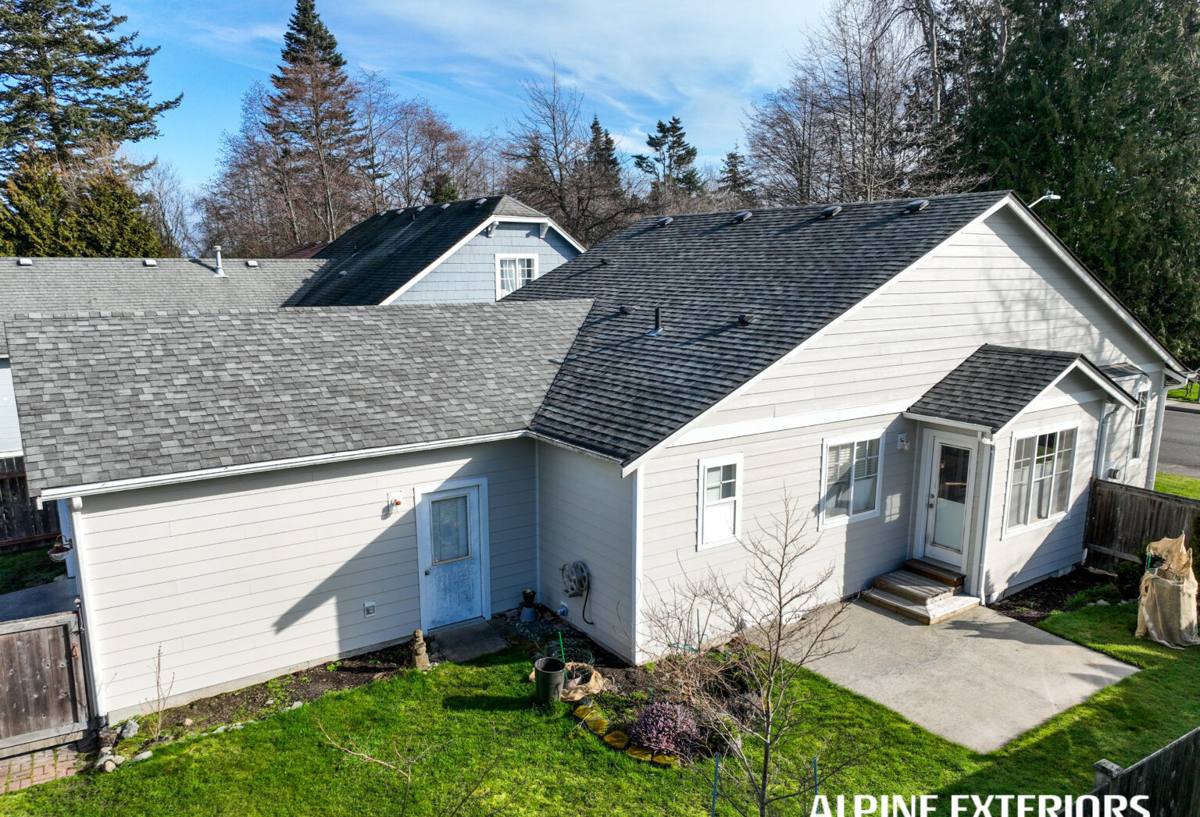
Why Siding Choice Matters More Here Than in Drier Climates
In a dry climate, a mediocre siding installation might go a decade before problems show up. In Sehome's wet, shaded conditions, the same mistakes — a poorly caulked seam, an unfinished cut edge, a rain screen that wasn't detailed correctly — show up in a fraction of that time as swelling, staining, or soft spots. That's why we install exclusively James Hardie fiber cement siding on every job we take on, and why we don't offer vinyl, LP SmartSide, Cemplank, Allura, or wood siding as options.
This isn't a marketing position — it's a standard we hold because we've seen how each of those materials performs, or fails to perform, in a Pacific Northwest marine climate over the long run.
Why We Don't Install Wood Siding (Cedar or Primed Spruce)
Real wood siding is beautiful, and we understand why homeowners are drawn to it. But wood is organic material, and organic material in a climate this wet needs constant maintenance to keep moisture out — recoating, caulking, and watching for the first signs of rot, especially on shaded elevations. In a neighborhood like Sehome, where tree cover keeps walls damp longer, that maintenance burden is higher than most homeowners want to sign up for, and the consequences of falling behind on it are expensive.
Why We Don't Install Vinyl Siding
Vinyl is inexpensive and low-maintenance in the sense that it doesn't need painting, but it's a thin material that expands and contracts with temperature swings, and its seams and J-channels are where water finds its way behind the cladding over time. In a climate defined by sustained wet weather rather than extreme heat, vinyl's real weakness isn't the material itself — it's how much water management depends on details installers often rush.
Why We Don't Install LP SmartSide, Cemplank, or Allura
LP SmartSide is an engineered wood product, which means it's a step up from raw wood in consistency, but it's still wood-based at its core and depends on cut edges being properly sealed and field maintenance being kept up. Cemplank and Allura are both fiber cement, and they're reasonable products — but we've standardized on one manufacturer, one warranty structure, and one factory finish system so we can guarantee consistent results and stand fully behind the work. Splitting our crews' expertise across multiple fiber cement brands doesn't serve homeowners as well as mastering one.
Why James Hardie Is What We Install
James Hardie fiber cement is non-combustible, dimensionally stable, and engineered specifically for the moisture and temperature conditions of the Pacific Northwest through its HZ5 product line. It doesn't swell, rot, or feed moss the way wood-based products can, and the ColorPlus factory finish is baked on under controlled conditions — not brushed on at the jobsite — which gives it far more consistent, long-lasting color than field-applied paint.
| Factor | James Hardie Fiber Cement | Vinyl / Wood-Based Alternatives |
|---|---|---|
| Moisture response | Dimensionally stable, engineered for marine climates | Can swell, warp, or trap moisture at seams |
| Combustibility | Non-combustible core material | Combustible (wood, engineered wood) or heat-deformable (vinyl) |
| Finish | Factory-applied ColorPlus finish, consistent color | Field-painted or color-molded, more prone to fading/wear |
| Moss/algae resistance | Dense, non-porous surface resists growth | Porous or seamed surfaces can hold moisture longer |
| Warranty | Long-term, transferable manufacturer warranty | Varies widely by product and manufacturer |
How Installation Detail Changes the Outcome in a Wet Climate
Even the best siding material fails early if it's installed wrong, and in a climate as wet as Whatcom County's, installation mistakes get punished faster than almost anywhere else in the country. The details that matter most on a Sehome home include:
- Proper rain screen gap behind the siding so any moisture that does get behind the cladding can drain and dry out
- Correct fastener spacing and type — stainless or coated fasteners rated for coastal/marine exposure near the bay
- Factory-primed or factory-finished cut edges, since exposed raw fiber cement edges are the most common point of long-term failure if left unsealed
- Flashing at every window, door, and roofline transition, sized and lapped correctly so wind-driven rain can't work its way behind the siding
- Proper caulking at butt joints and trim, using sealants rated for sustained moisture exposure rather than general-purpose caulk
We install to James Hardie's published specifications on every job, which is also what keeps the manufacturer's warranty intact — a warranty that can be voided by shortcuts a homeowner would never see once the siding is up.
Roofing, Windows, and Decks: The Rest of the Building Envelope
Siding is only one part of keeping a Sehome home dry. We also handle roofing, windows, and decks because they all interact with the same moisture challenges, and a weak point in any one of them undermines the others.
Roofing
A roof in this climate needs to shed sustained rain efficiently and resist the moss growth that shaded, north-facing roof planes are prone to. Proper underlayment, flashing, and ventilation matter as much as the roofing material itself, since trapped moisture in an attic or roof deck causes damage long before it's visible from the ground.
Windows
Window flashing and integration with the siding system is one of the most common failure points on older Bellingham homes. Whether we're replacing windows or installing new siding around existing ones, we pay close attention to how the window flanges, flashing tape, and siding weather barrier tie together, because that's where driving rain finds its way in.
Decks
Decks in a shaded, wet climate face their own moss, mildew, and moisture challenges — especially decks with limited sun exposure, which is common on tree-covered Sehome lots. Proper decking material choice, ledger flashing, and drainage beneath the deck surface all extend its life significantly.
Why a Local Crew Matters in Sehome
Sehome's housing stock spans decades of construction styles, close to Western Washington University and mixed with mature tree cover that most other Bellingham neighborhoods don't have to the same degree. A crew that works across Whatcom County regularly understands how that shade pattern, bay proximity, and older housing stock combine — and adjusts the job accordingly, rather than applying a generic approach that might work fine in a drier or sunnier part of the state.
Local experience also means knowing what to expect from Bellingham's permitting process and how local building conditions — like older homes without modern weather barriers — change the scope of a siding or roofing job once the old material comes off.
What to Check Before Hiring an Exterior Contractor
- Are they licensed and insured to work in Washington State?
- Do they carry manufacturer certification for the specific siding product they're installing?
- Will they show you the manufacturer's installation specifications, not just their own general process?
- Do they explain what's included in the manufacturer's warranty versus their own workmanship warranty?
- Do they have experience working on homes with the same age, exposure, and tree cover as yours?
- Will they inspect the sheathing and weather barrier underneath before quoting a final price, rather than guessing at what's behind the old siding?
Getting Started
If you're noticing moss buildup, soft spots, fading paint, or drafts around windows on a Sehome home, it's worth getting an honest look at what's happening underneath before those issues get more expensive to fix. We offer free, no-pressure estimates for siding, roofing, window, and deck work — reach out through the form below and we'll take a look at what your home actually needs.