 Bellingham Siding
 Exterior Work Built for Birch Bay's Marine Climate
Birch Bay sits directly on the water, and that single fact changes almost everything about how a home's exterior should be built and maintained. Homes here deal with a combination of stresses that a lot of inland Whatcom County properties simply don't see: salt-carrying air moving off the water, rain that gets driven sideways by wind instead of falling straight down, and a long, overcast wet season that gives moss and algae months to take hold on anything shaded or slow to dry. We're a Bellingham-based crew, and Birch Bay is a regular part of our service area — not a place we drive out to occasionally to bid a job and disappear afterward.
None of this means a home on the water is doomed to constant repairs. It means the materials and installation details have to be chosen with the exposure in mind from the start, and that ongoing maintenance has to account for conditions a standard inland home never has to plan around.
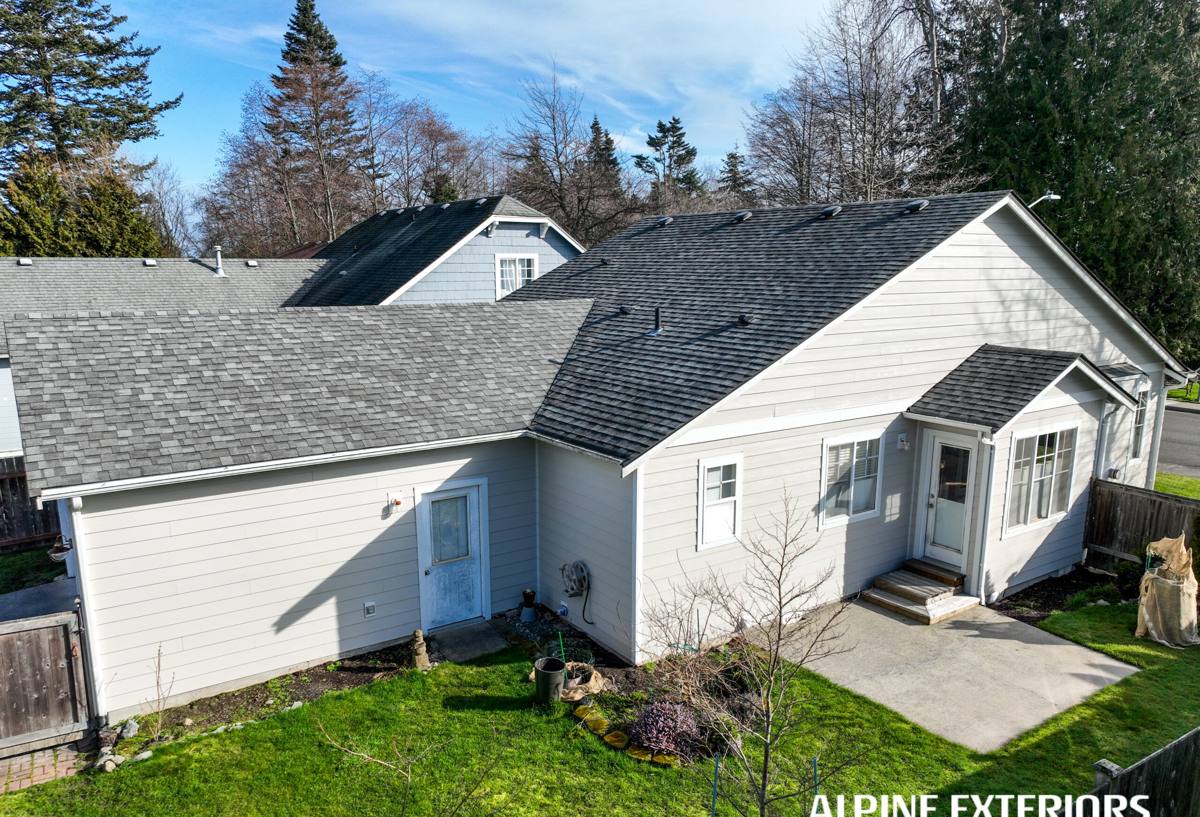
What Salt Air, Wind-Driven Rain, and Moss Actually Do to a Home
Salt Air and Corrosion
Airborne salt is corrosive to metal, and it doesn't stay near the beach — wind carries it well inland and deposits it on siding, trim, flashing, and fasteners. Over time, that accelerates rust on unprotected or under-rated metal components and breaks down lower-quality paint films faster than the same product would wear a few miles from the water. It's a big part of why homes close to the shoreline can start looking tired years before a comparable inland home does, even with similar maintenance habits.
Wind-Driven Rain and the Building Envelope
Rain that comes off the water in a storm rarely falls straight down. It gets pushed sideways and upward, which means it finds its way under siding laps, around window and door trim, and into any small gap in the weather-resistive barrier that a calmer rainfall would never reach. That makes the water-management details behind the visible siding — flashing at every penetration, properly lapped house wrap, correctly sealed trim — more important on a Birch Bay home than they'd be on a sheltered inland lot. A siding product can look identical on paper in both settings and still perform very differently depending on how carefully those details were handled.
Moss, Algae, and the Long Wet Season
Whatcom County's marine climate already means long stretches of damp, overcast weather, and Birch Bay's direct water exposure adds even more humidity to the mix, especially on north-facing and shaded walls. Moss and algae growth isn't just cosmetic — it holds moisture against the surface underneath it, which shortens the working life of paint, caulking, and in some cases the material itself if moisture keeps finding a way in. Roofs, siding, decking, and window sills all need to be able to sit damp for extended periods without breaking down, because in this location, that's the normal condition, not the exception.
Siding: Why We Only Install James Hardie Fiber Cement
For siding, we install James Hardie fiber cement exclusively. We don't install vinyl, LP SmartSide, Cemplank, Allura, or raw cedar and spruce, and we're direct with homeowners about why: each of those products carries real trade-offs — moisture sensitivity, a heavier maintenance load, installation methods that are less forgiving of error, or warranty terms that don't hold up the way homeowners assume — that we're not comfortable putting on a home exposed to salt air and driving rain. That's a standard we hold to on every job, not a sales pitch built around one product.
What Hardie's Climate-Engineered Lines Are Built For
James Hardie is fiber cement: non-combustible, dimensionally stable, and resistant to the kind of moisture cycling that causes wood-based and composite products to swell, cup, or delaminate over time. Hardie's HZ product lines are specifically engineered for wetter, harsher climates like the Pacific Northwest coast, and the factory-applied ColorPlus finish is formulated to resist fading and hold its color under the humidity and salt exposure a place like Birch Bay sees year-round. It's backed by a strong transferable warranty, which matters to a lot of homeowners thinking about resale.
Why Installation Quality Is the Real Deciding Factor
The warranty and the material performance both depend on correct installation — proper clearances above grade and roof lines, correctly lapped and fastened panels, and flashing details that actually shed water instead of trapping it. A Hardie product installed loosely to a generic inland spec will underperform on a shoreline home. That's the piece we pay the closest attention to on every Birch Bay project, because it's the difference between siding that looks good for two years and siding that holds up for twenty.
Roofing, Windows, and Decks Along the Water
Siding is one piece of a home's exterior, and on a property exposed to salt air and driving rain, the systems around it matter just as much. We handle roofing, windows, and decks alongside siding because they all interact with each other — a failure in one usually shows up as a problem in another.
Roofing
A roof with failing or under-spec flashing sends water down behind even well-installed siding, so roof condition and siding performance are directly connected. Flashing at chimneys, vents, valleys, and wall transitions needs regular attention on a shoreline home, since that's where wind-driven rain finds its way in first.
Windows
Window seals and flashing wear faster in a marine environment, and once they let water track behind the frame, it moves into the wall assembly no matter how well the siding around it was installed. Replacing worn windows before that happens is usually far less disruptive than repairing the wall damage that follows.
Decks
Decks facing the water take a heavier beating than inland decks — UV exposure, salt, and constant moisture cycling wear fasteners, connectors, and decking material faster. Material choice and hardware selection matter more here, and a deck built without that in mind tends to need attention sooner than the homeowner expects.
A Local Crew That Already Works Birch Bay
We work throughout Whatcom County, and Birch Bay's shoreline conditions are something we plan for specifically rather than something we run into for the first time on-site. That means paying closer attention to flashing details on water-facing walls, specifying fasteners and trim rated for salt exposure, and sequencing work around the wetter stretches of the year instead of installing materials in conditions that compromise them from day one. It also means we're still in the region, and easy to reach, if a warranty question or a maintenance concern comes up years down the road — which matters more on a coastal property than it does almost anywhere else in the county.
What a Home Assessment Looks Like
Before we recommend anything, we walk the property and look at how the current siding, roofing, windows, and deck are actually holding up against the local exposure — not just their age. A useful assessment covers:
- Condition of siding, paint, and caulking on water-facing and shaded walls specifically
- Signs of moss or algae buildup and what it suggests about drainage and airflow
- Flashing condition at rooflines, windows, doors, and deck ledgers
- Corrosion on visible fasteners, trim, and hardware
- Whether previous repairs addressed the underlying moisture path or just the visible symptom
That walk-through is what determines whether a homeowner needs a full siding replacement, targeted repairs, or simply a maintenance plan to get more life out of what's already there.
Cost Factors on a Birch Bay Exterior Project
Every home is different, but the factors that move a project's scope and cost tend to be consistent for shoreline properties. Rather than quote broad numbers that won't mean much without seeing the house, it's more useful to know what actually drives the estimate:
| Factor | Why It Matters Here |
|---|---|
| Direct water exposure | Water-facing walls need more attention to flashing and fastener spec, which affects labor time |
| Extent of moisture damage | Hidden sheathing or framing damage found once old siding comes off can add scope |
| Home size and complexity | Corners, trim details, and window count all affect material and labor needs |
| Existing substrate condition | Sound sheathing versus damaged sheathing changes prep work significantly |
| Scope — siding only vs. full envelope | Combining siding with roofing, window, or deck work can be more efficient than separate projects |
Timing Your Project Around the Wet Season
Whatcom County's marine climate means there's a real window when siding and exterior work goes on cleanest and cures properly, and a wetter stretch when it doesn't. We plan Birch Bay projects around that rhythm rather than against it — scheduling substrate prep and installation for drier windows, and using wetter periods for planning, material ordering, and assessments instead of forcing work when conditions work against the materials. That's a small thing that has an outsized effect on how a job performs years later.
If you're in Birch Bay and wondering how your siding, roof, windows, or deck are holding up against the salt air and rain, we're glad to take a look. Reach out for a free, no-pressure estimate — we'll walk the property, give you a straight read on where things actually stand, and lay out what, if anything, needs attention.