 Bellingham Siding
 Siding Work in Barkley, Bellingham
Barkley is one of Bellingham's newer planned neighborhoods, built out over the last couple of decades into a mix of single-family homes, townhomes, and multi-family buildings arranged around its roundabouts and the Barkley Village commercial core. Because so much of it was built within a fairly narrow window, a lot of Barkley homes are now hitting the same stretch of their exterior's life at roughly the same time — original siding, trim, and paint that's been through fifteen, twenty, or more Whatcom County winters and is starting to show it.
We're a local exterior contractor working throughout Bellingham, and Barkley is a neighborhood we're in regularly. We handle siding, roofing, windows, and decks, and on the siding side we install one product line: James Hardie fiber cement. This page explains what Barkley's climate does to a home's exterior over time, how we approach siding replacement here, and why we've standardized on Hardie instead of the vinyl, LP SmartSide, or wood options you'll also see quoted around town.
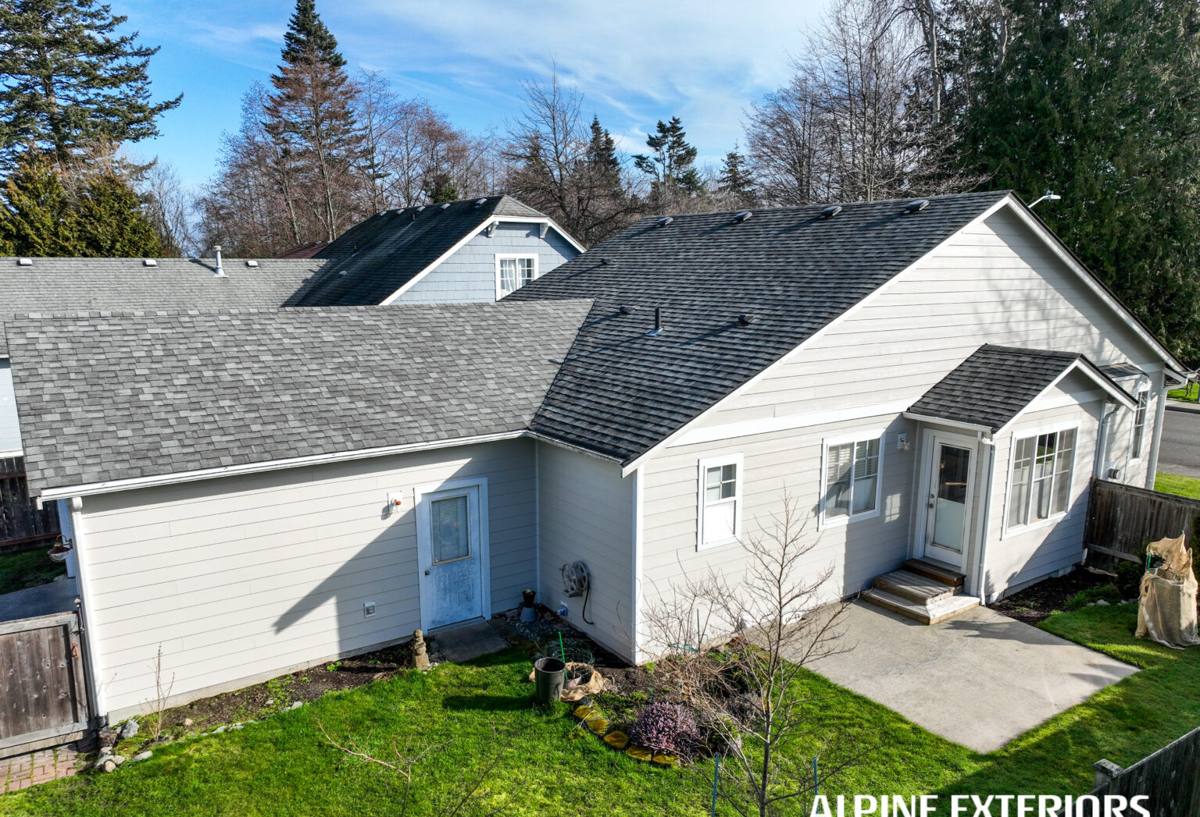
What Barkley's Climate Does to a House
Bellingham sits on Bellingham Bay in Whatcom County, in the Pacific Northwest's marine climate belt — mild temperatures, but a lot of moisture spread across a long part of the year. Barkley, like the rest of the city, deals with three exterior stressors in particular:
Salt Air Off the Bay
Bellingham's proximity to salt water means airborne salt is a real factor for exterior materials citywide, Barkley included even though it sits back from the immediate waterfront. Salt-laden air accelerates corrosion on fasteners and metal trim and can be harder on some paint and coating systems than inland climates, which matters when you're choosing what goes on the outside of the house and how it's finished.
Driving, Wind-Driven Rain
Rain here isn't just frequent, it often comes at an angle, pushed by wind off the water and through the neighborhood's more open, newer-construction lots. Wind-driven rain finds its way into joints, laps, and penetrations that a straight-down rainstorm would never reach, which is why the quality of flashing and joint detailing matters as much as the siding material itself.
A Long Moss and Mildew Season
Bellingham's wet season stretches from fall through spring, and shaded, north-facing walls in particular stay damp for extended stretches. That's ideal growing conditions for moss, algae, and mildew on siding surfaces, and it's a major reason some siding materials age faster or need more maintenance here than they would in a drier region.
How These Conditions Show Up on Barkley Homes
When we look at aging siding in Barkley, the same patterns come up again and again:
- Green or black staining on north- and west-facing walls, especially near landscaping or under eave shadows
- Caulk failure and gapping at trim joints and window returns, letting wind-driven rain track behind the siding
- Fastener corrosion or staining where lower-grade nails or screws were used originally
- Paint that's chalked, faded, or peeling well ahead of its expected repaint cycle
- Soft or swollen spots at bottom courses and corners, where wood-based products have absorbed moisture over time
None of that is a sign that Barkley is a uniquely harsh place to build — it's a normal marine climate doing what marine climates do. The takeaway is that material choice and installation quality matter more here than they would somewhere drier, because the margin for error is smaller.
Why We Only Install James Hardie Fiber Cement
We get asked fairly often why we don't offer vinyl, LP SmartSide, cedar, or primed wood siding alongside Hardie. It's not that those products don't have a place in the industry — it's that after years of exterior work in this climate, we made a decision to standardize on one product system we can stand behind fully, rather than sell whatever a homeowner asks for.
Fiber Cement vs. the Alternatives
| Material | How it handles this climate | Why we don't install it |
|---|---|---|
| Vinyl | Won't rot, but expands/contracts with temperature swings and can crack or warp with age | Thinner profile, visible seams, limited color life, not repairable in sections the way fiber cement is |
| LP SmartSide (engineered wood) | Treated to resist moisture, but still a wood-based substrate | Cut edges and joints need diligent sealing and upkeep; ongoing moisture exposure is the failure point over time |
| Cedar / primed spruce | Natural material, needs regular refinishing to perform | Highest maintenance burden in a wet climate; repainting and sealing cycles are frequent and costly over the home's life |
| James Hardie fiber cement | Non-combustible, dimensionally stable, factory-cured finish | This is what we install |
James Hardie's fiber cement is a cement, sand, and cellulose fiber composite. It doesn't expand and contract the way vinyl does, it isn't a food source for moss and mildew the way wood-based products are, and it holds up structurally in sustained damp conditions in a way that matters directly for a neighborhood like Barkley. Hardie also builds region-specific product lines — their HZ5 formulation is engineered for climates that see more moisture and freeze-thaw cycling, which fits western Washington better than a one-size-fits-all product.
The Factory Finish Matters
A lot of the maintenance headaches we see on older siding come down to the paint, not the substrate underneath. James Hardie's ColorPlus finish is baked on in a factory setting under controlled conditions, which gives it more consistent adhesion and UV resistance than field-applied paint, and it comes with its own finish warranty separate from the product warranty. In a climate with this much rain and shaded, damp wall area, a finish that resists fading and doesn't need repainting on the same schedule as site-painted wood is a meaningful advantage, not a marketing detail.
What Correct Installation Looks Like
Fiber cement performs the way it's supposed to only when it's installed to spec, and most of the siding failures we get called out to inspect trace back to installation shortcuts rather than the material itself. For a Barkley job, that means:
- Proper rain screen or drainage plane behind the siding so incidental moisture can escape rather than sit against the wall assembly
- Correct fastener type, spacing, and embedment depth per Hardie's installation guidelines
- Flashing at every window, door, and penetration, lapped correctly to shed wind-driven rain rather than trap it
- Proper clearance at the bottom edge and at grade so the siding isn't wicking moisture from soil or hardscape contact
- Caulking only where Hardie's specs call for it — over-caulking joints that are designed to move or drain can trap water instead of keeping it out
This is also where hiring locally matters. A crew that works across Bellingham and Whatcom County year-round has seen how these details play out over multiple wet seasons, not just on install day. Products like Hardie carry manufacturer warranties, but those warranties typically require installation according to spec — cutting corners on flashing or fastening can affect warranty coverage even when the material itself is correct.
Beyond Siding: The Full Exterior Envelope
Siding rarely fails in isolation. On most of the Barkley homes we work on, siding, roofing, windows, and decks are all managing the same moisture load, and problems in one system often show up as damage in another — a roof leak that stains siding below it, a failed window seal that rots the trim around it, a deck ledger board that's been trapping water against the house. Because we handle all four of these trades, we can look at a home's exterior as one system rather than quoting a siding job in isolation and missing something that's going to undercut it.
Roofing
Bellingham's rainfall volume makes roof condition directly relevant to siding performance — a roof shedding water properly, with adequate overhangs and functioning gutters, keeps far more water off the wall assembly than the siding alone.
Windows
Window flashing and siding termination at window openings is one of the most common leak points on any home. When we're already opening up the wall for new siding, it's the right time to address aging window flashing or failing seals rather than residing around a problem.
Decks
Deck ledger connections and any deck structure attached to the house need the same careful flashing treatment as the siding itself — a poorly flashed ledger board is a common source of hidden rot at the point where deck meets wall.
What Drives Cost on a Barkley Siding Project
Every home is different, but the same handful of factors tend to move the price up or down on jobs in this neighborhood:
| Factor | Why it matters |
|---|---|
| Extent of existing damage | Rot or moisture damage found once old siding comes off adds repair scope beyond the siding itself |
| Home size and wall complexity | More corners, gables, and trim detail means more labor and material per square foot |
| Siding profile and color choice | Lap width, board texture, and ColorPlus color selection affect material cost |
| Trim and accent work | Fascia, soffit, and trim board replacement alongside siding adds scope but keeps the finish consistent |
| Access and site conditions | Multi-story sections, tight lot lines, or landscaping can affect labor time |
We won't quote a number without seeing the house — anyone who does is guessing — but these are the honest variables that separate a straightforward re-side from a more involved one.
Choosing a Contractor for Exterior Work in Barkley
Whatcom County has no shortage of contractors advertising siding work, and it's worth being deliberate about who you hire, since exterior work is expensive to redo. A few things worth checking before you sign anything:
- Confirm active Washington contractor licensing and bonding, and ask for proof rather than taking it on faith
- Ask specifically what siding product they install and why — a contractor who installs everything has less incentive to steer you away from a cheaper, higher-maintenance option
- Ask how they handle flashing and moisture detailing, not just the finished appearance
- Find out whether the crew doing the physical installation is local or subcontracted out, and how long they've worked in this climate specifically
- Get the warranty terms in writing — both the manufacturer's product warranty and any labor warranty from the contractor
A local crew that's worked through multiple wet seasons in Bellingham and greater Whatcom County has a practical understanding of how siding performs here over time — not just how it looks the day it goes up.
Get an Estimate for Your Barkley Home
If your home's siding is showing staining, gapping, or wear after years of Bellingham weather, we're happy to take a look and give you a straightforward assessment of what you're dealing with. Reach out for a free, no-pressure estimate using the form below — there's no obligation, and we'll walk you through exactly what we'd recommend and why.