 Bellingham Siding
 Roofing in Columbia: A Neighborhood That's Hard on Roofs
The Columbia neighborhood sits close enough to Bellingham Bay that salt-laden air is a constant factor in how roofing materials age here, and it's shaded by enough mature tree cover that moss, needle litter, and shade-driven moisture are just as much a part of the equation. Add in the driving, wind-blown rain that comes through Whatcom County for much of the year, and you've got a combination that wears out a roof faster than it would in a drier, more sheltered part of the state. A roof that would coast along for decades in eastern Washington can start showing real problems in half that time here if it wasn't installed with this climate in mind.
That's really the core issue with roofing in this part of Bellingham: it's not one big threat, it's several small, constant ones working together — moisture that never fully dries out, organic growth that holds that moisture against the shingles, and salt air that accelerates corrosion on any exposed metal. A new roof installation done right in Columbia has to account for all three, not just the one that's most visible.
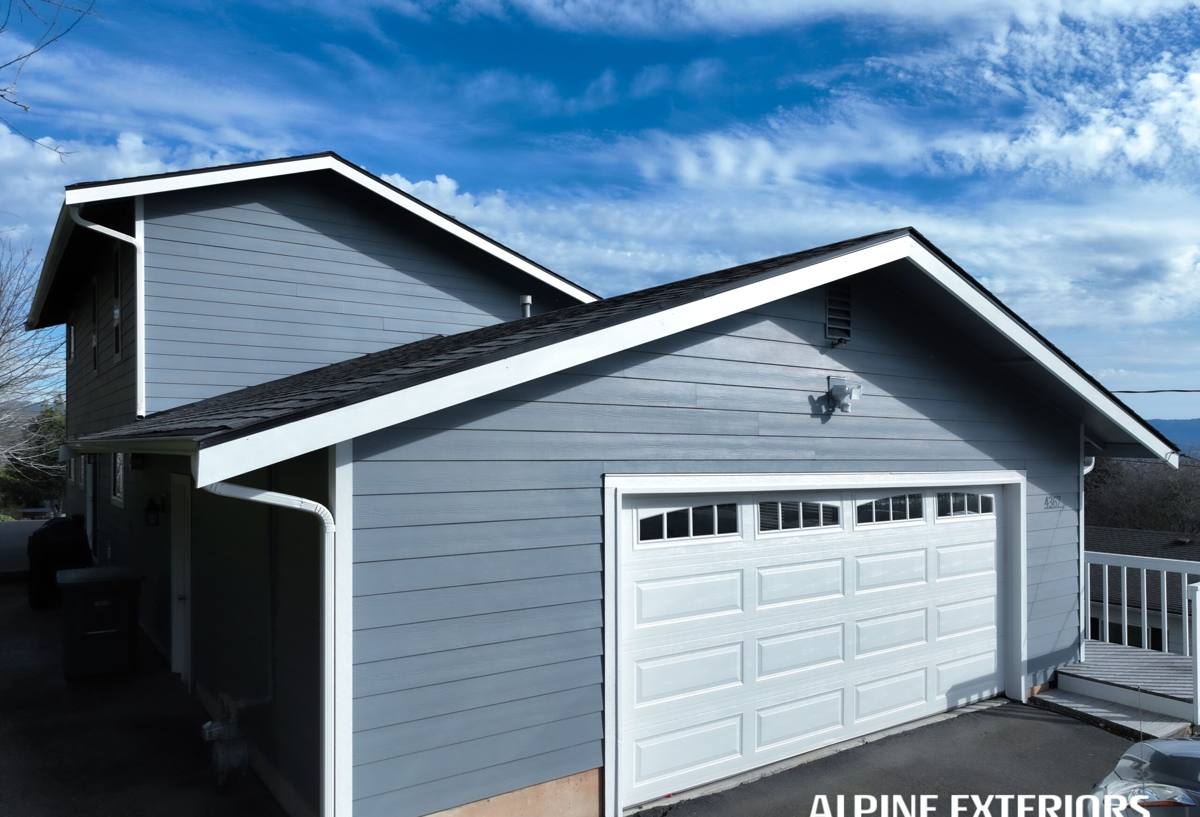
How to Tell You Need a New Roof, Not Another Repair
Most homeowners don't wake up one day and decide they need a new roof — they get there gradually, usually after a few repairs that stop fixing the underlying problem. A few signs point toward full replacement rather than another patch:
Age and Material Lifespan
Standard three-tab asphalt shingles typically run 15-20 years in this climate, architectural (dimensional) shingles closer to 20-25, and both numbers trend toward the shorter end when a roof has heavy shade and persistent moss. If your roof is in that range and you're already dealing with recurring leaks or granule loss, repair spending starts to outpace what it's actually buying you.
Visible and Structural Signs
- Shingles that are cupping, curling at the edges, or missing granules in patches
- Moss or algae streaking that keeps coming back within a season or two of cleaning
- Soft spots, sagging, or visible dips when viewed from the ground or a ladder
- Daylight visible through the roof deck from inside the attic
- Water stains on ceilings or in the attic that reappear after rain, even after a repair
- Flashing around chimneys, vents, or skylights that's rusted, lifted, or cracked
One or two of these can often be addressed with a repair. Several at once, especially combined with age, usually means the underlying materials are past the point where patching makes financial sense.
What a Correct Installation Actually Involves
A new roof is more than shingles nailed to plywood. The parts you don't see are what determine whether the roof performs for its full expected lifespan in a wet, mossy climate like ours.
The Roof Deck
Before anything goes back down, the decking gets inspected for soft, delaminated, or water-damaged sections. Skipping this step and roofing over a compromised deck is one of the most common ways a "new" roof fails early — the surface looks fine while the structure underneath is already gone.
Underlayment and Ice-and-Water Protection
Synthetic underlayment provides the roof's actual water barrier beneath the shingles, and in a region with as much sustained rainfall as ours, we don't cut corners here. Self-adhering ice-and-water membrane goes in along eaves, valleys, and around any roof penetration — the spots where driving rain is most likely to work its way underneath a shingle course rather than run off the surface.
Flashing
Flashing at chimneys, sidewalls, skylights, and valleys is where most leaks originate, not in the open field of shingles. Correct flashing work means new metal, properly lapped and sealed, not old flashing reused to save time.
Ventilation
An intake-and-exhaust system that lets air move continuously through the attic keeps the underside of the roof deck dry and regulates temperature swings. Poor ventilation traps moisture, which shortens shingle life and, in this climate, contributes directly to the moss and mildew problems homeowners fight every year.
Choosing a Roofing Material for a Columbia Home
There's no single "best" roofing material — the right choice depends on your home's structure, your budget, and how much moss and moisture resistance matters to you. Here's how the common options compare for a home in this part of Bellingham:
| Material | Typical Lifespan Here | Moss/Moisture Behavior | Relative Cost |
|---|---|---|---|
| Architectural asphalt shingles | 20-25 years | Algae-resistant options available; needs periodic cleaning in shaded areas | Moderate |
| 3-tab asphalt shingles | 15-20 years | Less moss resistance than architectural; thinner profile sheds debris less easily | Lower |
| Standing seam metal | 40-50+ years | Sheds moisture and debris well; needs coastal-rated fasteners and coatings near salt air | Higher |
| Cedar shake | 20-30 years with upkeep | Attractive but moisture-sensitive; requires diligent maintenance in a wet climate | Higher |
For most homes in Columbia, we steer people toward architectural asphalt with algae-resistant (AR) granules or, for homeowners planning to stay long-term, standing seam metal. We're generally cautious about cedar shake in this specific microclimate — it can look great, but it demands a level of ongoing maintenance to manage moisture and moss that a lot of homeowners underestimate going in. That's a maintenance-burden conversation, not a knock on the material itself, and it's worth having honestly before you commit.
Moss and Moisture: Designing the Roof to Fight Back
Bellingham's moss season is long, and shaded lots like many in Columbia give it exactly the conditions it needs — cool, damp, low sun exposure. Rather than treating moss as an annual cleaning chore, a well-installed roof reduces how much moss can take hold in the first place:
- Algae-resistant shingles with copper or zinc granules that inhibit growth over time
- Proper attic ventilation to reduce the moisture that feeds moss and mildew
- Correctly pitched valleys and clean flashing that don't trap standing water or debris
- Gutter and drip-edge detailing that moves water off the roof instead of pooling at the eaves
None of this eliminates moss entirely — nothing does in this climate — but it meaningfully slows it down and keeps the roof drying out properly between rain events, which is what actually protects the shingles long-term.
Our Installation Process
Every roof is different, but the sequence we follow stays consistent:
- On-site inspection and estimate — we walk the roof, check the attic, and assess deck condition before quoting anything
- Material selection — we go over options and trade-offs based on your home, budget, and how much shade or moss exposure the roof sees
- Permitting — we handle the required permitting through the appropriate local jurisdiction before work begins
- Tear-off and deck inspection — old roofing is removed and the deck is checked and repaired as needed
- Underlayment, flashing, and ice-and-water barrier installation
- Ventilation system installation or upgrade
- Shingle or roofing material installation to manufacturer specifications
- Final walkthrough — we review the completed roof with you and answer any questions before we consider the job done
Permits and Code Requirements
Roof replacement in and around Bellingham generally requires a permit through the appropriate city or Whatcom County building department, along with compliance with current building code for underlayment, ventilation, and, where applicable, ice-dam protection. We handle the permitting process as part of the job so you're not left navigating it on your own, and we build to code rather than treating it as a minimum to work around.
Why Hiring a Crew That Already Works Columbia Matters
A roofing crew that's already worked on homes throughout Columbia and the rest of Bellingham knows the practical realities of this climate before they ever step on your roof — which flashing details tend to fail first near the bay, how much ventilation a shaded lot actually needs, which materials hold up and which ones create years of maintenance headaches. That local track record shows up in fewer surprises during the job and a roof that's built for the conditions it will actually face, not a generic installation dropped in from somewhere drier.
It also matters for accountability. A local, established contractor is easier to reach for a warranty question five years down the road than a crew that moved on to the next region after your project wrapped. When you're vetting anyone for a job this size, ask directly about their experience with homes in your specific neighborhood, their license and insurance status, and how they handle warranty claims after the fact.
Get a Free, No-Pressure Estimate
If your roof is showing its age or you're just trying to understand your options before it becomes an emergency, we're happy to take a look and walk you through what we find — honestly, and without any pressure to decide on the spot. Use the form below to request a free estimate for your Columbia home.