 Bellingham Siding
 Storm Damage Roof Repair Built for Sehome's Climate
Sehome sits in one of Bellingham's established central neighborhoods, a mix of older homes, mid-century construction, and newer infill spread across the rise of land around Sehome Hill. That terrain and tree cover shape how storms actually hit a roof here. Wind moving off the Salish Sea carries salt-tinged air that speeds up corrosion on any exposed metal, driving rain gets pushed sideways and up under roof edges rather than falling straight down, and a long moss season keeps shaded roof planes damp for months at a stretch. When a storm rolls through, it isn't landing on a roof starting from a clean slate. It's landing on one that's already been worked on year-round by salt, moisture, and organic growth, and that combination is exactly what turns an ordinary wind event into real damage.
This page covers what storm damage roof repair actually looks like for a Sehome home: how to tell storm damage from normal wear, what a correct repair involves, how insurance claims fit into the process, and why a crew that already works in this specific part of Bellingham handles that differently than a crew that doesn't.
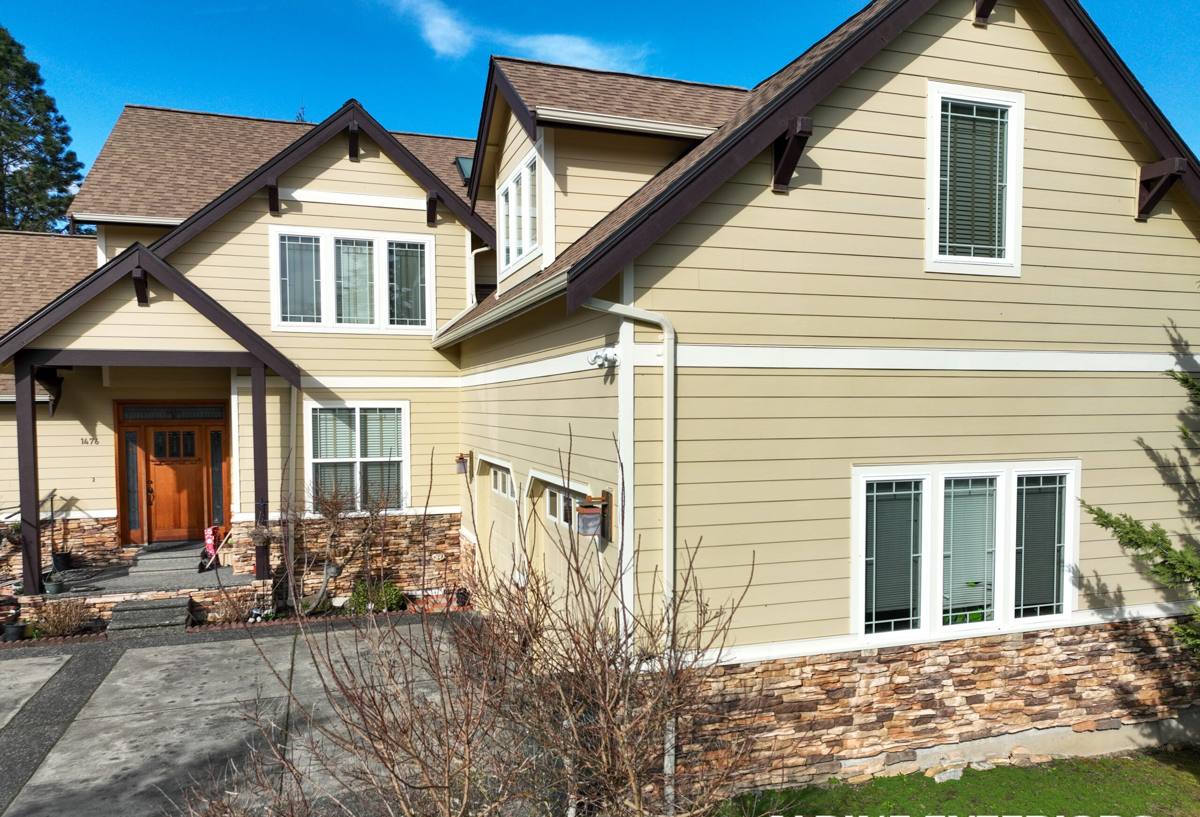
What Actually Counts as Storm Damage
Not every roof problem that shows up after a storm was caused by that storm, and that distinction matters both for how the repair is scoped and for how an insurance claim gets handled. Storm damage is sudden and traceable to a specific weather event: wind that lifts or tears shingles, a tree limb that comes down on the roof deck, hail impact, or flashing torn loose in a gust. Wear-and-tear is gradual: granule loss from age, moss that's been quietly working under shingles for a couple of seasons, or flashing that was under-built from the original install and finally gives out.
The two often get tangled together in practice. A roof that was already weakened by trapped moisture or moss growth under a shaded valley is far more likely to fail outright in a windstorm than a roof in good condition would be. An honest inspection separates what the storm caused from what was already a developing problem, and says so plainly rather than blaming everything on the weather event because that's the easier insurance story.
How Storms Actually Damage a Sehome Roof
Wind Uplift and Lifted Shingles
Wind doesn't need to be extreme to do damage. Sustained gusts get under shingle tabs that have already loosened from age or under-driven nails, and once a few tabs lift, wind can work its way further under the course and tear loose more shingles than the storm alone would explain. Roof planes on exposed or elevated lots take this the hardest, but Sehome's mix of older and newer construction means fastening quality varies a lot from one roof to the next, regardless of how sheltered the lot looks.
Wind-Driven Rain
Rain that's being pushed sideways and upward doesn't behave like rain falling straight down. It finds its way under shingle edges, around flashing that's only lightly lapped, and into any gap that a calmer rain would simply run past. This is often where storm damage shows up days or weeks later as an interior stain, well after the wind has died down, because the water has been slowly tracking through the roof assembly the whole time.
Falling Branches and Debris
Mature tree cover is part of what gives Sehome its character, and it's also a real source of storm damage. Wind that snaps branches or drops limbs onto a roof can puncture shingles, crack decking, or crush a section of gutter and fascia even when the impact looks minor from the ground. Any storm that brings down significant wind should prompt a look at the roof, not just a check for obvious holes.
Moss-Weakened Decking Under Load
Moss doesn't just sit on top of shingles. Over a long moss season, it holds moisture against the roof surface and, eventually, against the decking underneath if shingles have started to fail. Decking that's been softened by trapped moisture is far more likely to give way under wind load or the weight of debris than sound decking would be, which is one more reason storm damage in this climate is rarely a clean, isolated event.
What a Correct Storm Damage Repair Involves
Emergency Tarping
When a roof has an active leak or exposed decking after a storm, the first priority is stopping further water intrusion, not scheduling a full repair. A proper tarp job covers the damaged section securely, anchored so it holds under continued wind, and buys time to plan the actual repair without more water getting into the attic or walls in the meantime.
Deck-Level Inspection, Not Just a Shingle Count
A storm damage inspection that only counts missing or lifted shingles from the ground misses the point. We check the decking underneath affected areas for soft spots or moisture damage, look at flashing around any penetration near the damaged section, and check the attic from inside for staining or dampness that points to where water has actually been getting in.
Matching Repairs to the Existing Roof
Patch repairs need to match the existing shingle profile and color as closely as possible, and the transition between old and new material needs to be woven into the surrounding courses correctly, not just overlaid. A repair that's fastened and flashed to the same standard as the rest of the roof holds up the same way the rest of the roof does; a rushed patch becomes the next leak.
Flashing and Ventilation Checks
Storm repair is a natural point to check flashing at nearby valleys, chimneys, and wall transitions, since a crew is already up there working. Catching a marginal flashing detail during a storm repair, rather than waiting for it to fail on its own, is a small addition to the job that prevents a second call-out later.
Comparing Common Storm Damage Types
| Damage Type | Typical Cause | What the Repair Usually Involves |
|---|---|---|
| Lifted or torn shingles | Wind uplift on aged or under-fastened courses | Section replacement, re-fastening adjacent courses, resealing tabs |
| Interior staining after a storm | Wind-driven rain forced under shingle edges or flashing | Leak tracing, flashing repair or replacement, affected shingle replacement |
| Branch or debris impact | Falling limbs during high wind | Deck inspection and repair, matched shingle patch, gutter or fascia repair |
| Torn or lifted flashing | Wind combined with an under-built original flashing detail | Full flashing rebuild at the affected valley, chimney, or wall transition |
| Granule loss and bald patches | Usually pre-existing wear exposed or accelerated by the storm | Assessment of remaining roof life; may point toward a repair or a replacement conversation |
That last row matters for setting expectations honestly. Some storms reveal a roof that was already near the end of its useful life rather than causing fresh damage outright, and a straightforward repair estimate should say so rather than quietly billing a full storm claim for what's really overdue maintenance.
Working With Insurance on a Storm Claim
Most storm damage repairs in this area go through a homeowner's insurance policy, and how the claim is documented affects how smoothly it moves. We photograph the damage before any repair work begins, note the likely cause and timing based on what we find, and provide a written scope of repair that an adjuster can review against their own inspection. That documentation matters more than it might seem: a vague verbal description of damage is much easier for a claim to get delayed or underpaid on than a clear photo record and itemized scope.
We're glad to meet an adjuster on-site if that's useful, and we'll always give a straight answer about what's storm-caused versus what's pre-existing wear, even when that's not the answer that makes a claim bigger. That honesty is what keeps a repair estimate credible if it gets questioned later, and it's what keeps our own name worth trusting on the next call.
How Our Storm Response Process Works
- Initial call and triage: We ask what's visible and how urgent it is, so an active leak gets prioritized ahead of a lower-urgency inspection request.
- Emergency tarping if needed: If water is actively getting in, stopping that comes first, before any planning conversation about the full repair.
- In-person inspection: We check the roof surface, decking, flashing, and attic, not just what's visible from the ground or a photo.
- Written repair scope: You get a clear estimate covering materials, labor, and what we found, with storm-caused damage and pre-existing wear called out separately.
- Insurance documentation, if applicable: Photos and a written scope you can hand directly to your adjuster, and we'll meet them on-site if that helps move the claim along.
- Repair and cleanup: The repair is matched to the existing roof, flashing and ventilation nearby are checked while we're already up there, and the site is cleaned up, including a magnetic sweep for stray fasteners.
Signs Your Sehome Roof Needs a Storm Inspection
- Shingles visibly missing, curled, or lifted after a windstorm
- A new water stain on a ceiling or in the attic following heavy rain
- Branches or debris that came down on or near the roofline
- Granules collecting heavily in gutters right after a storm, more than the usual slow buildup
- Gutters, fascia, or downspouts visibly bent, torn loose, or disconnected
- Daylight visible through the roof deck from inside the attic
None of these guarantee major damage on their own, but any of them is a reasonable trigger for a proper inspection rather than waiting to see if a small problem turns into a bigger one over the next few storms.
Why Hiring a Crew That Already Works in Sehome Matters
A crew that regularly works roofs in Sehome has already seen how this neighborhood's tree cover drops limbs in a windstorm, how salt-tinged air off the Salish Sea corrodes underspecified flashing metal over time, and which roof orientations hold moss long enough to weaken decking before anyone notices from the ground. That's the kind of judgment that shows up in how a storm repair is scoped, not something a crew unfamiliar with this specific stretch of Whatcom County is likely to catch on a single visit.
It also matters after the repair is done. Storm damage sometimes resurfaces weeks or months later as a slow leak from a detail that wasn't fully addressed the first time, and a contractor with an established, ongoing presence in the area is one you can actually reach if that happens, not a name that showed up after a big storm and moved on once the immediate rush of work dried up.
A Practical Checklist Before You Hire for Storm Repair
- Do they inspect the deck and attic, not just count damaged shingles from the ground?
- Does the estimate separate storm-caused damage from pre-existing wear, in writing?
- Will they document damage with photos and meet an adjuster on-site if needed?
- Do they carry current WA contractor licensing, liability insurance, and workers' compensation?
- Can they point to recent, real storm repair work in or near Sehome or central Bellingham?
- Is the repair material matched to your existing roof, not just whatever's on the truck?
If a recent storm left you wondering whether your roof took real damage, we're glad to take a straightforward, no-pressure look and give you a written estimate you can trust. Use the form below to request a free storm damage inspection.