 Bellingham Siding
 Siding Built for Fairhaven's Waterfront Climate
Fairhaven sits close to Bellingham Bay, and that proximity to the water shapes everything about how a house ages here. Homes in this part of Bellingham deal with a combination most inland Whatcom County neighborhoods don't see in the same intensity: salt-laden air off the water, driving rain that comes in sideways during winter storms, and a moss season that can stretch from October well into spring. Siding that isn't specified and installed for that combination tends to show its age early — chalking, staining, soft spots, and paint failure show up faster on a bluff-adjacent or bay-facing home than on one a few miles inland.
We install James Hardie fiber cement exclusively, and Fairhaven is exactly the kind of neighborhood where that decision pays off. This page walks through what the local climate actually does to exterior materials, how we account for it during installation, and what our full exterior services — siding, roofing, windows, and decks — look like when they're built for a marine-exposed property.
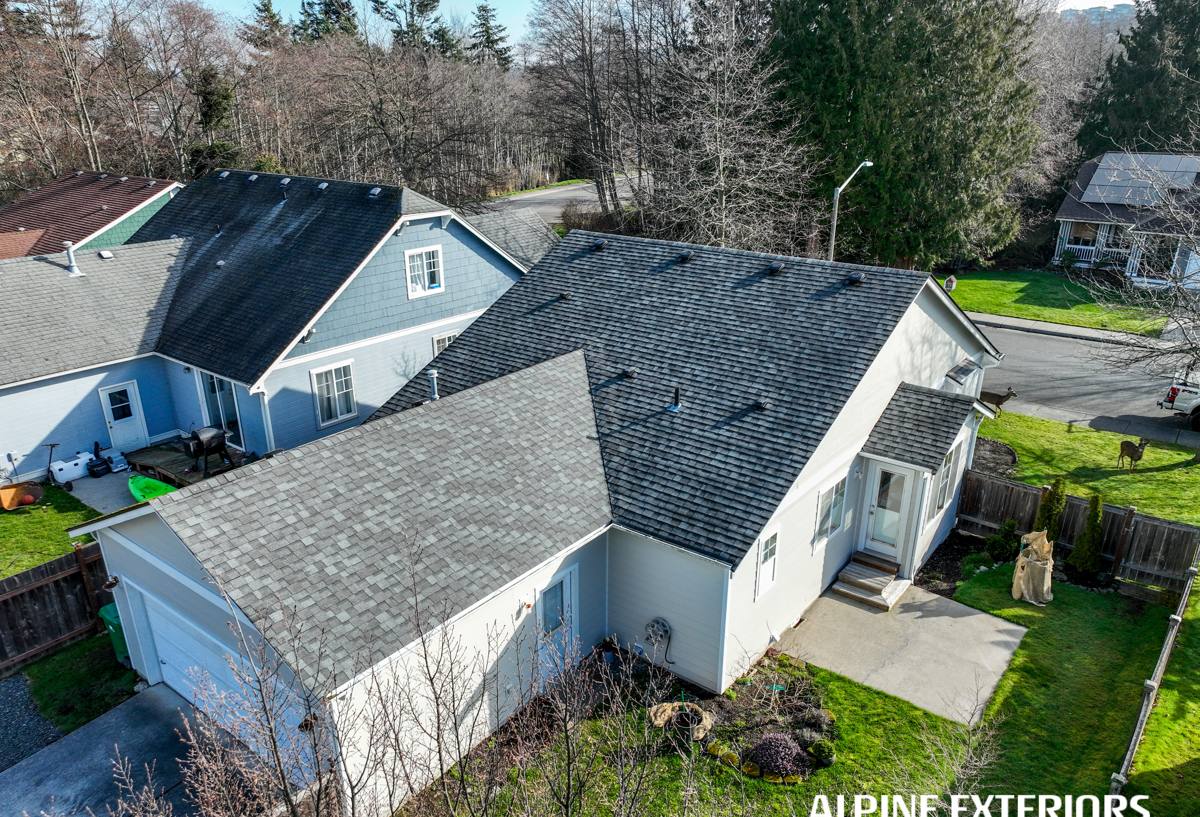
What Salt Air, Rain, and Moss Actually Do to a House
Salt Air and Marine Exposure
Airborne salt from Bellingham Bay settles on exterior surfaces and accelerates corrosion of exposed metal fasteners, flashing, and hardware. It also breaks down lower-grade paint films faster than inland exposure would, which is why homes closer to the water often need repainting on a shorter cycle than the same house set back a mile or two. Fiber cement itself doesn't corrode, but the fasteners, flashing, and trim details around it matter just as much as the siding panel — a job is only as salt-resistant as its weakest hardware.
Driving Rain and Wind-Driven Moisture
Storms coming off the Strait and the Sound don't just drop rain straight down — wind pushes it sideways and up under laps, around window trim, and into any gap that wasn't sealed correctly. Over time, wind-driven rain finds every shortcut in an installation: undersized flashing, missing kick-out flashing above rooflines, caulk used in place of proper flashing, or siding installed too close to grade or decking. The material can be excellent and still fail if the water-management details behind it aren't right.
Moss, Shade, and a Long Wet Season
Whatcom County's wet season runs long, and shaded, tree-lined lots — common throughout Fairhaven's older residential streets — stay damp longer after a storm than an open, sun-exposed lot would. That extended dampness is what moss and algae need to establish themselves on siding, trim, and roofing. Wood-based and wood-composite sidings are especially vulnerable because moss holds moisture directly against a surface that can absorb it; fiber cement doesn't have that same absorption problem, but gutters, grade slope, and vegetation clearance still need attention to keep any siding system from staying wet for weeks at a stretch.
| Climate Stressor | What It Does Over Time | How We Address It |
|---|---|---|
| Salt air | Corrodes exposed fasteners and metal trim; breaks down weak paint films | Corrosion-resistant fastening, factory-cured ColorPlus finish, proper trim detailing |
| Driving rain | Pushes moisture behind siding at laps, trim, and penetrations | Correct flashing, kick-out flashing, drainage gaps, manufacturer-spec fastening |
| Shade and moss | Keeps surfaces damp longer, encourages moss and algae growth | Non-absorptive fiber cement, attention to grade slope and gutter performance |
| Temperature swings | Expansion and contraction stress joints and caulk lines | Proper gapping and joint treatment per Hardie installation specs |
Why James Hardie Is the Right Fit for This Neighborhood
Fairhaven has a real mix of housing stock — older homes with genuine character alongside newer construction — and that mix means exterior work here has to respect both durability and appearance. James Hardie fiber cement is non-combustible, dimensionally stable, and engineered specifically for wet marine and coastal climates through its HZ5 product line, which is built for the moisture and temperature patterns of the Pacific Northwest. It holds its shape and finish far better than wood-based products in a climate that never really dries out for long stretches, and the factory-applied ColorPlus finish is baked on and warranted, rather than field-painted and left to weather on its own.
We don't install LP SmartSide, vinyl, Cemplank, Allura, primed spruce, or cedar. Each of those has genuine strengths, but they also come with trade-offs — moisture sensitivity in wood-based products, appearance and expansion issues in vinyl, or installation and warranty structures we don't think hold up as well over a 30-plus-year Bellingham winter cycle. We standardized on Hardie because, installed correctly, it's the product we're most comfortable standing behind on a bay-adjacent property.
What Correct Installation Looks Like on a Fairhaven Home
Fiber cement siding is only as good as the installation behind it. In a climate like this, a handful of details separate a system that performs for decades from one that develops problems within a few years:
- Manufacturer-specified nailing patterns and corrosion-resistant fasteners, not whatever is fastest to run through a gun
- Proper flashing at every window, door, and roof-to-wall transition, including kick-out flashing where a roofline meets a sidewall
- Correct clearance between siding and grade, decks, and roof surfaces to prevent constant wicking
- Butt joints and trim gaps sized and caulked to Hardie's specification, not sealed shut in a way that traps moisture
- Weather-resistant barrier installed and lapped correctly behind the siding, not just stapled up and covered
- Painted or factory-finished cut edges, since an exposed raw edge is where moisture intrusion typically starts
These aren't optional extras — they're the difference between a siding job that earns its warranty and one that voids it. We follow Hardie's published installation requirements on every job, which is also what keeps the manufacturer's warranty intact if you ever need it.
Signs Your Current Siding Is Losing the Fight
If you're not sure whether your home's exterior is holding up to Fairhaven's conditions, a few warning signs are worth checking for before they turn into structural repairs:
- Persistent moss or dark streaking on siding that returns shortly after cleaning
- Soft, spongy, or crumbling spots, especially near the bottom courses or around window trim
- Paint that's peeling, bubbling, or chalking well before you'd expect a repaint to be due
- Visible gaps, warping, or buckling at seams and corners
- Rusty streaks below fasteners or trim, a sign the hardware underneath is corroding
- Rising energy bills that suggest moisture or air infiltration behind the siding
Any one of these on its own might be minor. Several together, especially on the side of the house that faces the water or prevailing weather, usually means it's time for a closer look.
Beyond Siding: Roofing, Windows, and Decks
Salt air, driving rain, and a long moss season don't stop at the siding — they affect the whole exterior envelope, which is why we handle roofing, windows, and decks alongside siding rather than treating them as separate problems. A roof with compromised flashing feeds water straight down into a wall assembly no matter how good the siding is. Older or failing window flashing is one of the most common hidden moisture sources we find during a siding tear-off. And decks exposed to the same rain and shade patterns need materials and fastening that account for constant damp cycles, not just summer weather.
Because we look at the whole exterior, we can flag issues in one area — a roof valley, a window sill, a deck ledger board — that would otherwise cause a brand-new siding job to fail early from a source that had nothing to do with the siding itself.
Working With a Local Crew
A crew that works Whatcom County regularly knows the difference between a house set back from the water and one that takes weather straight off the bay, and adjusts the installation accordingly. That local knowledge shows up in small decisions — how much clearance to leave at grade, where kick-out flashing actually matters, which sides of a house need the most attention to moss and shade — that a crew unfamiliar with this specific coastline wouldn't necessarily think to prioritize. It also means someone local is reachable years down the road if a warranty question or a maintenance question comes up.
What to Expect From an Estimate
An estimate for a Fairhaven property typically includes a look at the current siding condition, an assessment of moisture exposure and shade patterns specific to the lot, and a review of trim, flashing, and any other exterior components that affect how long a new siding system will last. Every property is different — a bay-facing home with heavy shade needs a different level of attention than one on a drier, more open lot a few blocks up — so we walk the exterior in person rather than quoting from a photo or a general square-footage number.
| Factor | Why It Affects Scope |
|---|---|
| Sun and wind exposure | More exposure to salt air and driving rain generally means more attention to flashing and fastener detail |
| Shade and tree cover | Heavier shade extends drying time and raises moss and algae risk |
| Current siding condition | Hidden moisture damage behind old siding can add repair scope before new siding goes on |
| Trim, window, and roofline detail | More transitions mean more flashing points that need to be done correctly |
If you're weighing a siding, roofing, window, or deck project on a Fairhaven property, we're happy to take a look and walk you through what we see — no pressure, no obligation. Use the form below to request a free estimate.