 Bellingham Siding
 York is one of Bellingham's older, well-established residential pockets, and homes there run the gamut from early-1900s bungalows to mid-century ramblers and newer infill construction. What ties them together isn't age or style — it's exposure. Like most of Bellingham, York sits close enough to Bellingham Bay and the surrounding wetlands that homes deal with a steady diet of moist marine air, wind-driven rain, and shaded, slow-drying north and east walls. If you've owned a house in this neighborhood for more than a few years, you've probably already seen what that does to exterior materials that weren't built for it.
This page is about what York homeowners should know before their next siding, roofing, window, or deck project — and why we've standardized on one siding product instead of offering the usual menu of options.
What the Climate Actually Does to a House Here
Whatcom County's climate isn't dramatic — no hurricanes, no extreme freeze-thaw cycles most winters — but it's relentless in a quieter way. The combination of salt-tinged marine air, long stretches of overcast and drizzle, and shaded lots (mature trees are common throughout York) creates conditions that are hard on wood-based and moisture-sensitive building products.
Salt Air and Metal Fatigue
Proximity to Bellingham Bay means airborne salt content is higher here than it is 20 miles inland. Over years, that accelerates corrosion on exposed fasteners, flashing, and lower-grade trim hardware. It's a slow process, but it's cumulative, and it's one reason we pay close attention to fastener selection and flashing details on every job in this area, not just the ones directly on the waterfront.
Driving Rain and Wall Assemblies
Bellingham doesn't get the heaviest rainfall totals in Western Washington, but a meaningful share of it arrives sideways during fall and winter storms off the Strait. Driving rain finds every gap in a siding system — poor caulk joints, under-flashed windows, siding installed tight to grade. Once moisture gets behind the cladding, it doesn't evaporate quickly in our climate; it sits, and that's when rot and mold set in.
The Long Moss Season
North-facing walls, roof valleys, and anything shaded by fir or cedar trees stay damp for months at a stretch here. That's ideal moss and algae territory. On wood siding and lower-quality composites, sustained moss growth traps moisture against the surface and accelerates deterioration. On roofing, moss lifts shingles and holds water against the roof deck. It's manageable, but it requires materials and details that account for it from the start — not just periodic cleaning after the fact.
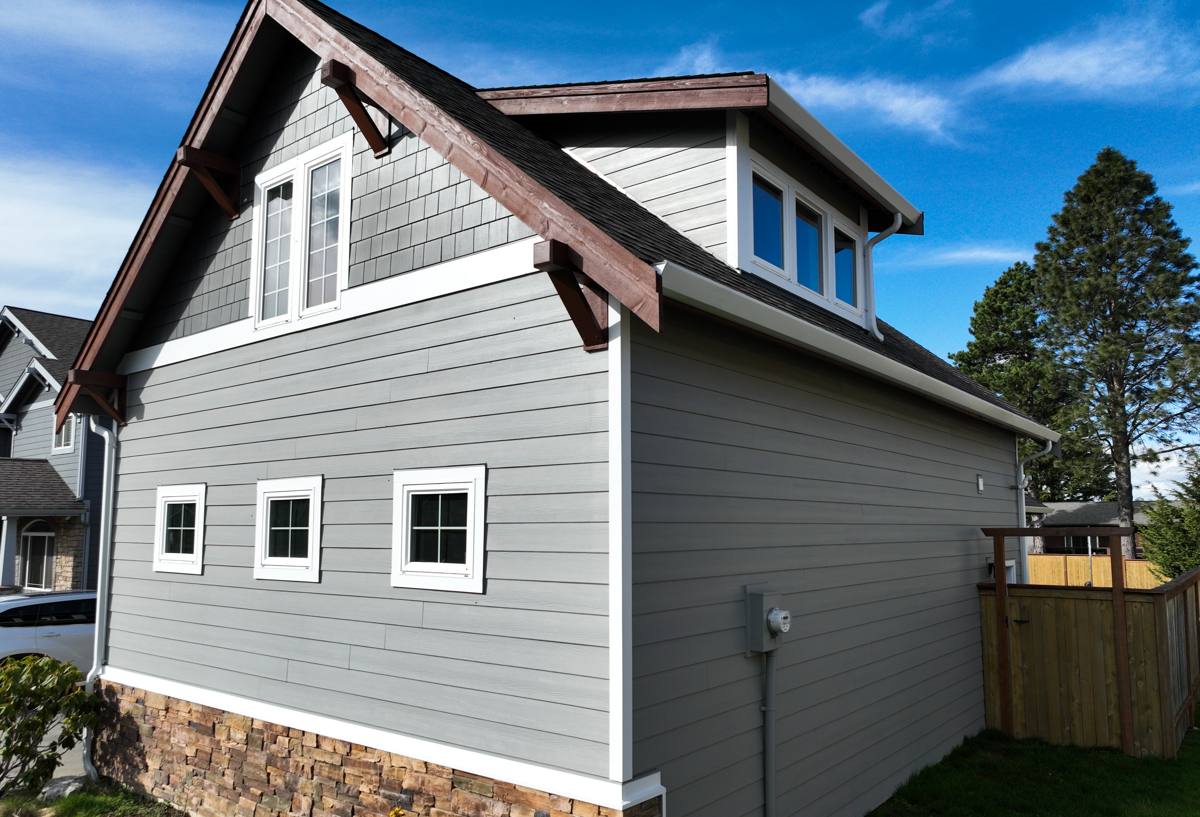
Why We Only Install James Hardie Fiber Cement
Most contractors in this region offer a mix of vinyl, engineered wood (like LP SmartSide), fiber cement, and sometimes cedar or primed wood siding. We used to look at all of it the same way most contractors do — as a menu of options with different price points. After years of doing tear-offs and repair work across Whatcom County and seeing firsthand how each product actually performs after a decade or two of Pacific Northwest weather, we narrowed our installs to one product line: James Hardie fiber cement.
What We Ruled Out, and Why
| Product | Where It Falls Short Here |
|---|---|
| Vinyl siding | Cracks and becomes brittle in cold snaps; seams and panels can allow wind-driven rain intrusion; fades and can warp under any sustained heat reflection |
| LP SmartSide (engineered wood) | Wood-based core is vulnerable if moisture gets behind the panel or into a cut edge; long-term performance depends heavily on perfect caulking and maintenance follow-through |
| Cedar / primed wood siding | Beautiful when new, but requires regular refinishing; in a shaded, damp climate like ours it's the most maintenance-intensive option and the most prone to moss and rot without diligent upkeep |
| Cemplank / Allura (other fiber cement) | Fiber cement as a category performs well here; we standardized on Hardie specifically for its ColorPlus factory finish, HZ climate engineering, and warranty structure — not because competing fiber cement is unsound |
To be clear: this isn't a claim that every other product is defective. Vinyl and engineered wood siding both have legitimate uses and plenty of homes wear them fine for years. Our decision is about what we're willing to warranty and stand behind on homes that face this specific combination of salt air, rain, and shade, year after year. Fiber cement — and Hardie's version of it specifically — is the product we've found holds up with the least drama and the fewest callbacks.
What James Hardie Gets Right
- Non-combustible core — fiber cement doesn't feed a fire the way wood-based products can
- HZ5 engineering — Hardie's HZ product lines are formulated for specific climate zones; the Pacific Northwest falls under HZ5, which accounts for moisture exposure
- ColorPlus factory finish — baked-on color that resists fading and doesn't need site-painting, which matters when you're trying to avoid repeat maintenance visits
- Dimensional stability — fiber cement doesn't swell, warp, or crack the way wood and some composites can with repeated wet-dry cycles
- Transferable warranty — a meaningful factor for York's older homes, many of which change hands over time
How a Siding Project Works, Start to Finish
Homeowners in York are often dealing with an older wall assembly, so the process usually starts with more than a surface look.
1. Assessment and Tear-Off
We remove the existing siding and inspect the sheathing underneath. This is the step that matters most and gets skipped most often by lower-bid contractors. Hidden rot, old moisture damage, or inadequate house wrap needs to be addressed before new siding goes on — covering a problem with new material just delays the discovery, usually at a higher repair cost later.
2. Weather Barrier and Flashing
Given how much of York's siding damage traces back to water intrusion rather than the cladding itself failing, we're deliberate about house wrap continuity, window and door flashing, and drainage planes that let any incidental moisture find its way back out instead of getting trapped.
3. Installation to Manufacturer Spec
James Hardie's warranty depends on installation following their published specifications — proper fastener type and spacing, correct clearances from grade and roof lines, and specific joint and caulking details. A lot of complaints about fiber cement siding trace back to installation shortcuts, not the product itself. We install to spec because that's what keeps the warranty valid and the wall performing the way it's designed to.
4. Trim, Caulking, and Final Detailing
The small details — corner trim, caulk joints, touch-up paint on cut edges — are what separate a siding job that looks good for two years from one that looks good for twenty. This is also where we account for local conditions specifically, sealing and detailing joints with our moss season and driving rain in mind.
Beyond Siding: Roofing, Windows, and Decks
Siding rarely fails in isolation. If your siding project is prompted by moisture damage, there's a good chance the roofing, window flashing, or a deck ledger board nearby is contributing to the problem — so we look at the whole exterior envelope, not just the wall cladding.
Roofing
Roof-related moss growth and clogged valleys are common throughout York, especially on shaded lots. Roof leaks often show up as siding or interior damage well before anyone traces it back to the roof, so a siding estimate is a good time to have your roof looked at too.
Windows
Older single-pane or early dual-pane windows are common in this neighborhood's vintage housing stock. Window replacement done alongside siding work lets us properly integrate flashing between the window and the new cladding — trying to retrofit that later, after siding is already installed, is more difficult and more expensive.
Decks
Ledger board connections and any siding-to-deck transition points are classic trouble spots for hidden rot in wet climates. If your deck attaches to the house, that junction deserves the same moisture-management attention as the rest of the wall.
What Drives the Cost of a Siding Project
| Factor | Why It Matters |
|---|---|
| Extent of tear-off and any hidden repair | Rot or sheathing damage found during demo adds labor and material beyond the base siding scope |
| Home size and wall complexity | Dormers, multiple gables, and cut-up wall lines take more time per square foot than a simple rectangular elevation |
| Siding profile and accent choices | Lap, shingle-style, and panel accents each install differently; mixing profiles adds detail work |
| Trim and color selection | ColorPlus factory-finished boards versus site-painted trim affects both cost and long-term maintenance |
| Access and site conditions | Mature landscaping, tight lot lines, and multi-story sections common in older York properties can affect staging and labor time |
Questions Worth Asking Before You Hire Anyone
- Are they installing to the manufacturer's published specifications, or their own shortcuts?
- Do they inspect and repair sheathing before covering it, or just install over what's there?
- Is the warranty from the manufacturer, the installer, or both — and is it transferable if you sell?
- Do they carry current licensing and insurance specific to Washington State?
- Will they show you the flashing and moisture-barrier details, not just the finished color?
Why a Local Crew Matters in a Neighborhood Like York
Whatcom County's building conditions aren't generic. A crew that mostly works drier inland climates can install siding perfectly well by the book and still miss the details that matter here — the extra attention to north-wall moisture, the flashing choices that account for driving rain off the Strait, the fastener and trim decisions that resist salt air corrosion near the bay. Working this neighborhood regularly means we've already seen how these houses age, which shortcuts cause problems five years down the road, and which details are worth the extra time up front.
If you're weighing a siding, roofing, window, or deck project for a York home, we're happy to take a look and walk you through what we're seeing and what it would take to do it right. Reach out for a free, no-pressure estimate — there's a form right below to get started.