 Bellingham Siding
 Siding in South Hill: Built for the Hill, the Bay, and the Weather Between Them
South Hill sits above downtown Bellingham with a mix of older homes on mature, tree-shaded lots and newer construction filling in the gaps, much of it within sight or a short walk of Bellingham Bay. That elevation and exposure is a mixed blessing for exterior materials. Homes up here catch more open air movement off the water than houses tucked into low-lying, wind-sheltered neighborhoods, which means siding, trim, and window flashing all take a more direct hit from wind-driven rain. At the same time, the tree canopy that makes South Hill streets so pleasant also means plenty of shade, damp leaf litter, and the slow, patient growth of moss and algae on anything that stays wet too long.
We've worked on homes across Whatcom County long enough to know that "coastal Pacific Northwest" isn't one climate — it's several, depending on elevation, tree cover, and how close a house sits to open water. South Hill's combination of bay exposure and shaded lots is its own specific challenge, and it's one reason we don't treat every siding job the same way.
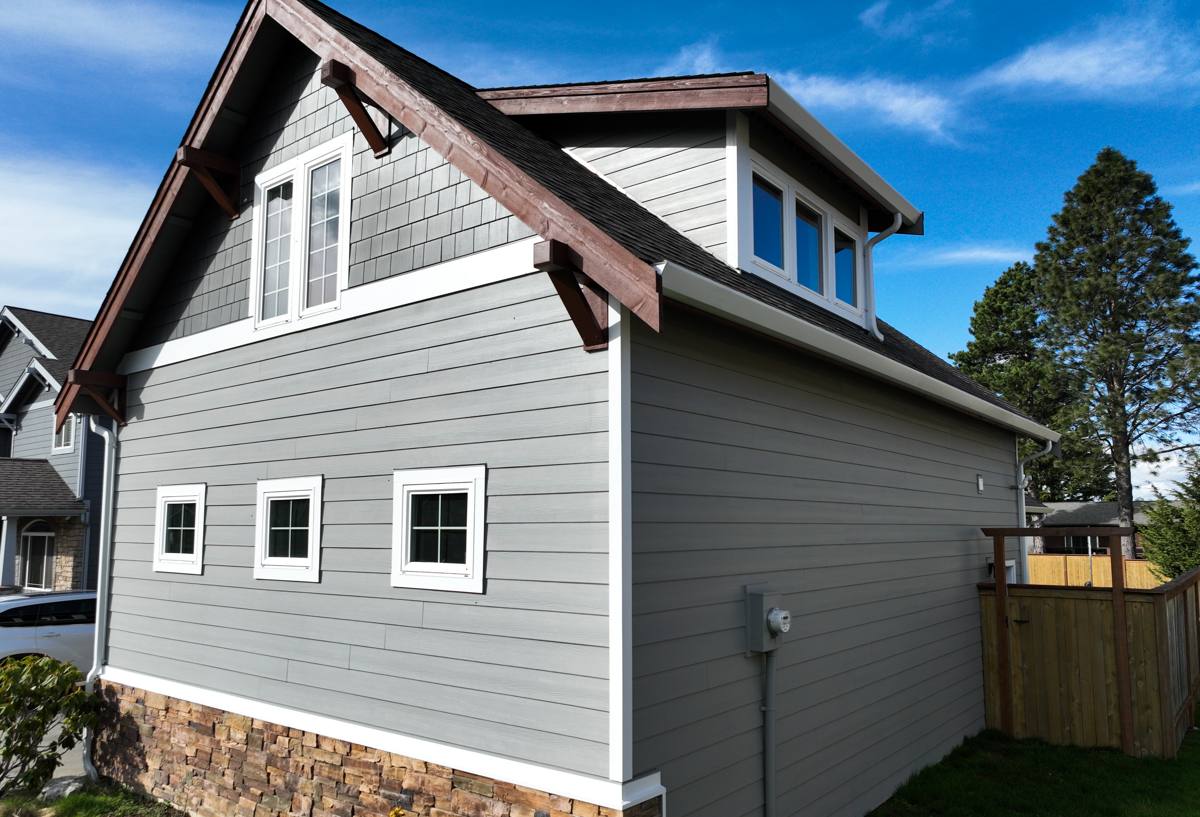
What Bellingham's Climate Actually Does to Siding
Salt Air
Homes with a view of or proximity to Bellingham Bay get low-level salt exposure carried in on the wind. It's not the same intensity as a beachfront property, but over years it accelerates corrosion on fasteners, hinges, and any metal trim components, and it can degrade paint finishes faster than you'd see further inland.
Driving Rain
Whatcom County doesn't just get a lot of rain — a meaningful share of it arrives sideways, pushed by wind off the water. Driving rain finds every gap in a house's exterior: poorly lapped siding joints, under-flashed windows, and caulk that's done its job for a decade and is now cracking. Water intrusion at these points is where rot starts, usually behind the siding where you can't see it until the damage is already extensive.
The Long Moss Season
Bellingham's moss season isn't really a season — it's most of the year. Shaded, north-facing walls and anything under tree cover stay damp for extended stretches, and organic material (wood, wood-composite, and porous or unfinished surfaces) gives moss and algae something to grab onto. Once established, moss holds moisture directly against the siding surface, which is a slow but steady path to material breakdown underneath.
None of these factors alone is dramatic. Together, over ten or fifteen years, they're exactly why some siding materials hold up on South Hill and others don't.
Why We Install Only James Hardie Fiber Cement Siding
We made a deliberate decision years ago to install one siding system on the homes we work on: James Hardie fiber cement. We don't install vinyl, LP SmartSide, Cemplank, Allura, primed spruce, or cedar. That's not a marketing angle — it's a standard we hold ourselves to because of what we've seen happen to exterior materials in exactly this kind of climate.
Why not the alternatives
- Vinyl siding is affordable and low-maintenance in mild conditions, but it's a petroleum-based product that expands, contracts, and can become brittle with age and UV exposure. In driving rain and wind, vinyl's overlapping panel system is more prone to water finding its way behind the surface than a properly sealed fiber cement installation.
- LP SmartSide is an engineered wood product with a real factory warranty and legitimate strengths, but it's still wood at its core — meaning any breach in the factory coating, however small, opens a path for moisture absorption and eventual swelling or rot, which is a harder risk to manage in a climate with this much sustained dampness.
- Cedar and primed spruce are traditional, attractive materials, but they demand ongoing maintenance — periodic refinishing, caulk inspection, and vigilance against moss and rot — that most homeowners don't want to sign up for indefinitely, especially on a shaded, damp South Hill lot.
- Cemplank and Allura are also fiber cement products and share some of Hardie's core advantages, but we've standardized on one manufacturer so we can guarantee consistent installation practices, factory finish quality, and warranty support across every job we do.
Why James Hardie
James Hardie fiber cement is non-combustible, dimensionally stable, and doesn't absorb water the way wood-based products do. Its ColorPlus factory finish is baked on under controlled conditions rather than field-painted, which gives it more consistent UV and fade resistance than a job-site paint job. Hardie also engineers regional product lines — including HZ10 for wetter, more exposed climates like ours — specifically to perform in prolonged moisture exposure. Combined with a strong transferable warranty, it's the system we're willing to put our name behind on every home we side, including the ones up on South Hill catching bay wind and tree shade in equal measure.
Comparing the Options
| Material | Moisture Resistance | Maintenance | Fire Resistance | Typical Lifespan |
|---|---|---|---|---|
| James Hardie Fiber Cement | Excellent — does not absorb water like wood | Low — factory finish, periodic caulk checks | Non-combustible | 30+ years with proper install |
| Vinyl | Fair — water can get behind panels | Low, but can crack/fade with age | Combustible, can warp near heat | 15-25 years typical |
| LP SmartSide | Good if coating stays intact | Moderate — inspect coating breaches | Wood-based, treated | 20-30 years with upkeep |
| Cedar / Primed Spruce | Poor to fair — absorbs moisture | High — refinishing, sealing, moss control | Combustible | Varies widely with maintenance |
This table reflects general material behavior, not guarantees — actual performance always depends heavily on installation quality, which matters as much as the product itself.
More Than Siding: Roofing, Windows, and Decks Work Together
A house's exterior is a system, not a collection of separate parts. Siding that's installed perfectly but paired with a failing roof, leaking window flashing, or a rotting deck ledger board still ends up with water problems — it just shows up somewhere else on the house. We handle siding, roofing, windows, and decks so that flashing details, drainage planes, and water paths get coordinated across all of it, rather than each trade assuming the other one handled the transition points correctly. On a shaded, exposed lot like many on South Hill, those transition points — where roof meets wall, where a window sits in a siding opening, where a deck ties into the house — are usually where problems actually start.
What a South Hill Siding Project Looks Like
- Assessment — We look at your current siding's condition, check for hidden moisture damage, and evaluate how sun, shade, and wind exposure affect your specific lot.
- Product selection — We recommend the Hardie plank profile, color, and product line suited to your home's exposure, including HZ10 where added moisture protection makes sense.
- Removal and inspection — Old siding comes off and we inspect the sheathing and framing underneath for any rot or damage that needs addressing before new siding goes on.
- Weather barrier and flashing — Proper house wrap, flashing at every window, door, and penetration, and correct panel spacing are what actually keep water out — this step matters more than the siding material itself.
- Installation to manufacturer spec — Hardie's warranty depends on installation following their published guidelines, including fastening patterns, clearances, and caulking practices.
- Final walkthrough — We review the finished work with you before calling the job done.
Signs Your South Hill Home May Need Siding Attention
- Visible moss or algae growth that keeps coming back after cleaning
- Soft spots, bubbling, or warping, especially on shaded or north-facing walls
- Paint that's peeling or blistering faster than it used to
- Cracked or missing caulk around windows, doors, and trim
- Visible gaps or separation at siding joints and corners
- A musty smell or discoloration on interior walls that share an exterior wall
What Drives the Cost of a Siding Project
| Factor | Why It Matters |
|---|---|
| Home size and complexity | More wall area, corners, and architectural detail means more material and labor |
| Current siding removal | Removing and disposing of old material adds time versus a bare-wall install |
| Sheathing/framing repair | Hidden rot found during tear-off needs to be fixed before new siding goes on |
| Product line and profile | Hardie offers multiple plank styles, textures, and climate-specific lines at different price points |
| Trim and detail work | Corner boards, window trim, and custom details add labor time |
Why a Local Crew Matters
A contractor who works Whatcom County homes regularly knows the difference between a lot buffered by trees and one taking direct wind off the bay, and adjusts installation details accordingly — flashing choices, caulk selection, even where extra attention to drainage makes sense. That local knowledge doesn't show up on a spec sheet, but it shows up in how the house performs ten winters later. We'd rather size up your specific South Hill lot in person than guess based on a generic regional average.
If your South Hill home's siding is showing its age, or you're planning ahead for a project, we're happy to take a look and give you a straightforward, no-pressure estimate. There's no obligation — just an honest read on where your home stands and what your options are.