 Bellingham Siding
 Serving Sunnyland: Siding Done Right
Sunnyland sits close to Bellingham Bay, in a stretch of the city where older housing stock meets a climate that doesn't let up for long. The neighborhood's mix of mid-century homes and infill construction means we see a wide range of exterior conditions on any given street, but the underlying stress is the same everywhere: salt-tinged marine air, rain that comes in sideways as often as it falls straight, and a moss season that can run most of the year on shaded siding. We work throughout Bellingham and Whatcom County, and Sunnyland is one of the areas where we spend a lot of time on tear-offs and repair calls, because the climate here is unforgiving of shortcuts.
This page is about what that climate actually does to a house, and how our approach to siding, roofing, windows, and decks is built around it rather than around a generic national spec. We install one siding system, James Hardie fiber cement, and we'll explain why later on. But first, it helps to understand what Sunnyland homes are actually up against.
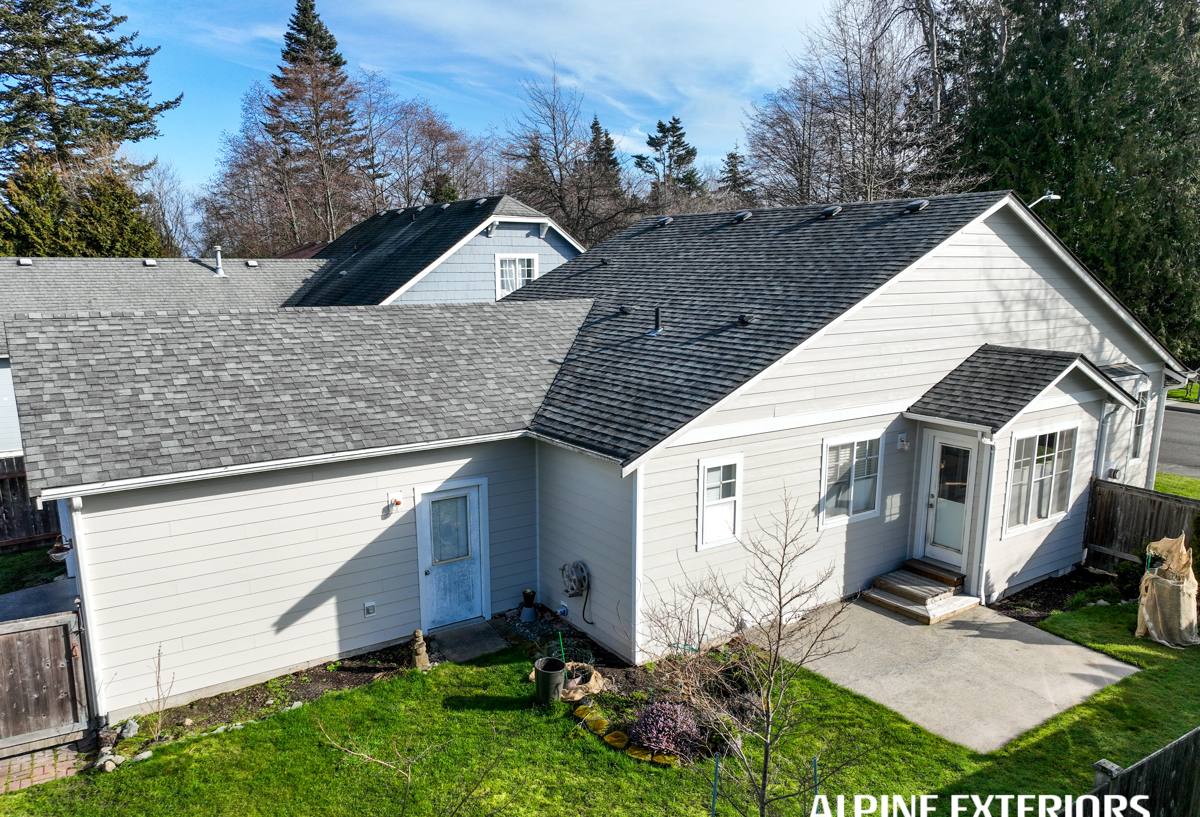
What Bellingham's Climate Does to a Sunnyland Home
Salt Air Off the Bay
Sunnyland's proximity to Bellingham Bay means a steady, low-grade exposure to moisture-laden, salt-tinged air, not just during storms. That kind of constant exposure is hard on exposed fasteners, unprotected trim, and lower-grade finishes over time. It's a slow process rather than a dramatic one, which is part of the problem: the damage is often well underway before it's visible from the street.
Driving Rain
Wind off the water pushes rain sideways into wall assemblies, not just straight down onto rooflines. That matters because siding, house wrap, and flashing that would hold up fine in a calmer, drier region can still fail here specifically because water is being driven at an angle into lap joints, window trim, and any place two materials meet. A installation detail that's "good enough" inland isn't automatically good enough two blocks from the bay.
A Moss Season That Doesn't Really End
Mild temperatures, tree cover, and consistent dampness add up to extended moss and mildew growth, especially on north-facing and shaded walls, which are common in a neighborhood with mature landscaping like Sunnyland's. Any siding material with even slight porosity, or one that traps moisture against the substrate instead of shedding it, becomes a surface for growth to take hold. It tends to show up first in the places homeowners don't look at often: behind shrubs, under eaves, on the shaded side of the house.
What This Means Over the Life of a House
None of these stresses are dramatic on their own in any given month. The problem is that they're constant, year after year, for as long as the house stands. A siding or roofing system that's marginal for this climate doesn't usually fail all at once; it degrades quietly, and the first visible sign is often a repair bill that's bigger than it needed to be because moisture had already been working behind the surface for a season or two.
Why We Only Install James Hardie Siding
We don't offer a menu of siding brands and let price alone decide the choice. We install James Hardie fiber cement, and the reason comes from what we've consistently seen on tear-offs and repair calls in this exact climate.
- Non-combustible core: Fiber cement doesn't feed a fire the way wood-based siding products can, which matters for household safety and can matter for insurance considerations too.
- Factory-applied ColorPlus finish: The color coat is cured under controlled factory conditions instead of brushed on at the job site, so it holds up against fading and moisture intrusion far longer than field-applied paint does.
- Climate-engineered HZ product lines: Hardie's HZ5 formulation is built for regions with heavy sustained moisture and freeze-thaw cycling, which is a closer match for Whatcom County than a generic national siding spec.
- Dimensional stability: Fiber cement doesn't swell, cup, or warp the way engineered wood products can after repeated wet-season moisture cycles.
- Strong transferable warranty: Hardie backs its products with one of the more substantial warranty structures in the industry, provided installation follows spec.
We don't install LP SmartSide, vinyl siding, Cemplank, Allura, primed spruce, or cedar. Those are legitimate products, and other contractors install them well. We made a professional decision that in a climate this consistently wet and salt-exposed, standing fully behind one system is a better position for our customers than offering a cheaper alternative that quietly shifts maintenance risk onto them a few years down the road.
What the Alternatives Trade Off in This Climate
LP SmartSide is an engineered wood product with a resin-treated strand core, and it performs reasonably in drier regions. In a marine environment with this much sustained rain, engineered wood siding is more sensitive to moisture intrusion at cut edges and fastener penetrations than fiber cement is. Vinyl is affordable and low-maintenance in a general sense, but it can warp under sun exposure, crack in cold snaps, and trap moisture behind the panel if house wrap and flashing details aren't handled with real care, an easy thing to get wrong and a hard thing to catch from the outside once it's up. Cedar and primed spruce are attractive natural materials, but they need ongoing painting or sealing to keep moisture out, and in a climate with this much rain, that maintenance schedule tends to slip in a way that shortens the material's real-world life.
What a Correct Installation Actually Requires
Buying the right material is only half the job. A James Hardie installation that performs the way it's engineered to needs correct fastening patterns, proper clearances from grade and roofline, joints that are lapped and sealed correctly, and house wrap and flashing that function together as one system rather than as separate steps done in isolation. Rushed or corner-cut installation is one of the most common reasons a good product ends up performing poorly, which is why we treat install detail with the same seriousness as the material choice itself.
Repair vs. Full Replacement
Not every siding issue in Sunnyland means a full tear-off. Isolated impact damage, a section that failed around a window, or trim that's come loose can often be repaired and matched into existing Hardie siding without redoing the whole house. But when moisture has been tracking behind the wall assembly for a while, or the existing siding is an older product that's simply reached the end of its service life, a patch usually just postpones a bigger job. We'll tell you plainly which situation you're actually in before we recommend anything.
Roofing, Windows, and Decks in the Same Climate
Siding is only one piece of a house's exterior envelope, and in Sunnyland's climate the roof, windows, and any exterior decking take the same kind of punishment. We handle all four as a connected system rather than as unrelated line items.
Roofing
A roof that's shedding wind-driven rain properly and isn't holding moisture in valleys or around penetrations protects everything below it, including the siding. Roofing and siding failures in this climate are often related: a slow roof leak at a wall intersection can show up as siding damage months later, well away from where the actual leak started.
Windows
Window flashing and the seal between the window unit and the surrounding wall assembly are common points of water entry in driving rain, especially on older homes where flashing details may not meet current standards. Replacing windows is also a natural moment to correct flashing that wasn't done right the first time, before new siding goes back in around it.
Decks
Exterior decks in this climate deal with standing moisture, moss growth on horizontal surfaces, and the same freeze-thaw cycling that affects siding. Ledger board attachment and flashing where a deck meets the house are worth particular attention, since that's a common spot for water to find its way into the wall assembly behind the siding.
Exterior Project Cost Factors in Sunnyland
| Factor | What It Affects | Why It Matters Here |
|---|---|---|
| Home age and construction type | Scope of prep work | Sunnyland's mix of older and infill housing means substrate condition varies a lot from one lot to the next |
| Tear-off vs. overlay | Labor scope and substrate access | Tear-off exposes hidden moisture damage that's common under decades-old siding in this climate |
| Substrate and framing condition | Repair costs before new siding or roofing goes on | Years of trapped moisture behind failing materials can rot sheathing and framing before it's ever visible from outside |
| Window and flashing integration | Long-term water-tightness | Bay-driven rain finds gaps at trim and window flashing faster than a calmer climate would expose them |
| Trim and color selection | Material cost and finish longevity | ColorPlus factory finishes outlast field-applied paint against salt air and UV exposure |
| Lot terrain and tree cover | Labor time and equipment needs | Mature landscaping common in Sunnyland can add staging time and affects how much moss pressure a wall sees |
Real numbers depend on the specific house, which is why we walk the property before quoting instead of pricing off square footage alone.
Signs a Sunnyland Home Needs Exterior Attention
- Moss or dark staining that comes back quickly after cleaning, especially on shaded or north-facing walls
- Soft or spongy siding, trim, or decking when pressed by hand
- Paint that's peeling or bubbling in a pattern that follows joints or fastener lines rather than general sun exposure
- Visible warping, cupping, or gapping between siding panels
- Water staining on interior walls or ceilings near window headers or roof-wall intersections
- Rust streaking from fasteners or trim hardware
- A roof that's shedding granules heavily or showing curling shingles near valleys and wall intersections
Why a Local Crew Matters Here
A crew that mainly works drier, inland climates can install a technically correct product and still miss the details that matter specifically in a bay-adjacent, high-moss neighborhood like Sunnyland: how far up a wall moss pressure actually reaches, how much flashing overlap wind-driven rain really demands at this exposure, or where landscaping and tree cover change the moisture picture from one lot to the next. Working consistently in Bellingham and Whatcom County means we see the same failure patterns repeat across different houses, and we build our installation habits around what actually holds up here rather than around a generic regional average.
Our Process
- A walk-through of the property, including a look at existing siding, trim, roofing, and any decking, to identify what's failing and why
- An honest assessment of whether repair, partial replacement, or full replacement fits the actual condition of the house
- A written estimate that lays out material, labor, and scope in plain terms, with no surprise add-ons buried in fine print
- Installation following manufacturer spec for fastening, clearances, flashing, and joint treatment, not a shortcut version of it
- A final walk-through so you can see the completed work before we consider the job done
If your Sunnyland home is due for new siding, a roof that's showing its age, windows that let in drafts or water, or a deck that needs attention, we're glad to take a look. Estimates are free and there's no pressure to move forward — fill out the form below and we'll set up a time to walk the property with you.