 Bellingham Siding
 Siding in Ferndale: A Climate That Doesn't Forgive Shortcuts
Ferndale sits close enough to the water and open farmland north of Bellingham that homes here take a different kind of weathering than houses further inland. The combination that matters most for exterior materials is simple but relentless: salt-tinged air drifting in off Bellingham Bay and the Salish Sea, long stretches of driving rain that come in sideways during winter storms, and a moss and algae season that can run most of the year in shaded, north-facing spots. None of these things destroy a house overnight. They work slowly, on the seams, the caulk lines, the lowest few courses of siding, and anywhere water is allowed to sit instead of shed.
We install siding across Whatcom County, and Ferndale properties consistently show the same wear pattern: whatever material was used, the failures start where moisture got trapped and stayed trapped. That's the problem we design around, not just the look of the finished wall.
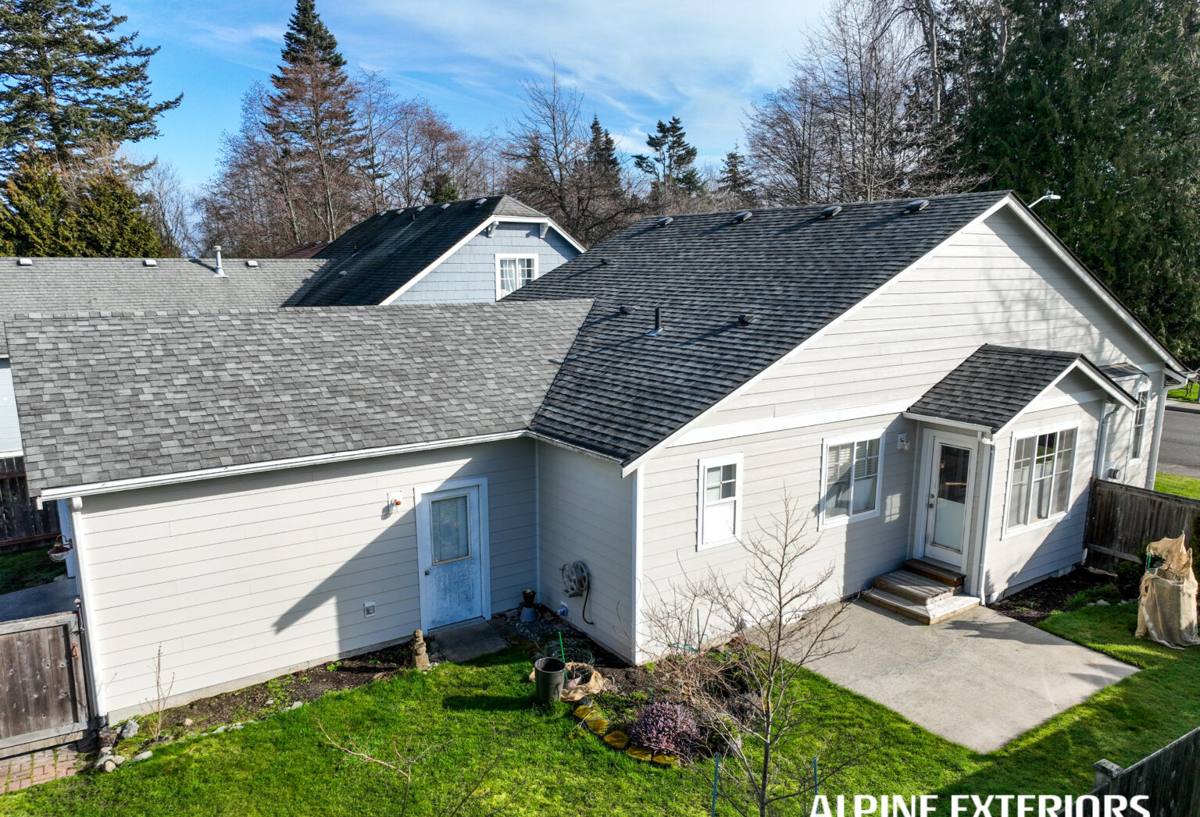
What Salt Air, Rain, and Moss Actually Do to a Wall
Salt Air
Airborne salt doesn't just affect waterfront homes. It travels on wind and settles on siding, trim, and fasteners across a wide radius. Over years, it accelerates corrosion on unprotected metal fasteners and flashing, and it can gradually break down finishes that weren't engineered to resist it. This is one of the reasons fastener choice and flashing detail matter as much as the siding product itself.
Driving Rain
Whatcom County storms frequently push rain horizontally, not straight down. That means water finds its way under poorly lapped siding, around loose trim, and into any gap that a calmer climate might never test. A wall system needs a real drainage plane behind the siding, not just a tight-looking exterior, because the visible surface is only the first line of defense.
Moss and Algae
Shaded elevations, tree-lined lots, and the persistent damp of a Pacific Northwest winter create ideal conditions for moss and algae growth on siding surfaces. Beyond looking bad, sustained moss growth holds moisture against the wall longer than open air would, which is exactly the condition that rots wood-based products and stresses paint films.
Why We Standardized on One Product: James Hardie Fiber Cement
We don't install every siding product on the market, and that's a deliberate choice, not a limitation of what we're capable of doing. We install James Hardie fiber cement exclusively. Here's the honest reasoning behind that.
Fiber cement is non-combustible, dimensionally stable, and doesn't absorb water the way wood-based or wood-fiber products do, which matters directly for the rain and moss conditions described above. James Hardie's HZ5 product line is engineered specifically for the wetter, more humid climate zones the Pacific Northwest falls into, with formulation and finish choices aimed at this exact set of conditions rather than a one-size-fits-all national spec.
We're not going to tell you every alternative product is bad — most have legitimate uses and reasonable track records when installed correctly in the right climate. What we will say is why we stopped installing certain alternatives:
- Vinyl siding is affordable and low-maintenance, but it can warp or distort under heat and expands/contracts more than fiber cement, which shows at seams and corners over time.
- LP SmartSide is a wood-strand product with a real market and real customers who like it, but wood-strand cores are more sensitive to sustained moisture exposure than fiber cement, and that sensitivity is a bigger factor in a climate with Ferndale's rain totals.
- Primed spruce and cedar can look excellent and age beautifully with diligent upkeep, but they demand a maintenance schedule — recoating, caulking, moisture checks — that most homeowners underestimate when they buy the house, not when they build it.
James Hardie's ColorPlus factory finish, backed by a strong transferable warranty, is what let us commit to a single product line and get genuinely good at installing it correctly, every time, instead of stretching a crew thin across five different systems with five different failure modes.
James Hardie Product Lines We Install
| Product | Common Use | Why It Fits This Area |
|---|---|---|
| HardiePlank lap siding | Most common wall siding | Traditional look, HZ5 formulation for wet climates |
| HardiePanel vertical siding | Accent walls, modern facades, gables | Clean lines, strong moisture performance |
| HardieShingle siding | Accent sections, craftsman-style detailing | Shingle look without wood's moisture sensitivity |
| HardieTrim boards | Corners, window and door trim, fascia | Matches expansion rate of the field siding |
How We Approach a Ferndale Siding Project
Assessment First
Before we talk products or pricing, we look at the actual condition of the wall: what's underneath the current siding, whether there's existing rot or moisture damage, how the home is oriented relative to prevailing wind and rain, and where past water intrusion has likely occurred. This tells us what the new system needs to solve, not just what it needs to cover.
Drainage and Flashing Details
Correct installation means a proper water-resistive barrier, correctly lapped flashing at every window, door, and horizontal transition, and fastener patterns that follow manufacturer spec rather than shortcuts. In a driving-rain climate, these unglamorous details are what separate a siding job that lasts decades from one that needs attention again in five years.
Finish and Color
ColorPlus finishes are factory-applied and baked on, which gives more consistent, longer-lasting color than field-applied paint, and it holds up better against the fading and chalking that salt air and UV exposure can cause over time.
Siding Doesn't Work Alone: Roofing, Windows, and Decks
Siding is one part of a home's exterior envelope, and it performs best when the roof, windows, and decking around it are also in good shape. A roof that's shedding water improperly, or window flashing that's failed, will undermine even a well-installed siding job by feeding moisture into places the siding can't protect against on its own. We handle siding, roofing, window replacement, and deck construction, which means we can look at a Ferndale home's exterior as one connected system rather than siding in isolation from everything touching it.
This matters most at transitions: where the roofline meets the wall, where a deck ledger board attaches to the house, and around every window and door opening. These are the highest-risk spots for water intrusion, and they're easiest to get right when one crew understands how all the pieces fit together.
What Affects the Cost of a Siding Project
| Factor | Why It Matters |
|---|---|
| Home size and wall complexity | More corners, gables, and dormers mean more cutting, trim, and labor time |
| Condition of the substrate | Existing rot or water damage needs repair before new siding goes on |
| Removal of existing siding | Tear-off and disposal add labor and material handling costs |
| Product mix | Lap siding, panel accents, and trim work vary in material and install cost |
| Access and site conditions | Tight lots, landscaping, or multi-story walls can add scaffolding or staging time |
We give honest, itemized estimates rather than a single vague number, so you can see exactly what's driving the cost of your specific project.
Why a Local Crew Matters for Ferndale Homes
A contractor based in and around Bellingham and Whatcom County has seen how homes in this specific area age — which elevations take the worst weather, which older siding jobs are failing and why, and how local building department expectations apply to exterior work. That's different from a crew that treats every job site the same regardless of climate. We're not driving in from out of the region to bid a job and disappear if a warranty question comes up later; we're working in the same weather your house has to withstand.
Maintenance Checklist for Fiber Cement Siding in a Wet Climate
- Rinse siding annually to remove dust, pollen, and early moss growth before it takes hold
- Inspect caulking around windows, doors, and trim joints every year or two and re-caulk as needed
- Trim back vegetation and tree limbs that keep siding shaded and damp
- Check for any paint or finish wear at high-exposure areas like south- and west-facing walls
- Look at the bottom courses of siding near grade for signs of splashback or standing water
- Address gutter overflow or downspout issues promptly, since misdirected water is a leading cause of localized siding damage
A Straightforward Next Step
If you're weighing a siding replacement in Ferndale, or you're just not sure whether your current siding still has years left in it, we're happy to take a look and give you a straight answer — no pressure, no inflated urgency. Use the form below to request a free estimate, and we'll walk the property with you and talk through what actually makes sense for your home.