 Bellingham Siding
 What Board and Batten Actually Is
Board and batten is one of the oldest siding patterns in the Pacific Northwest, and it never really went out of style — it just goes in and out of fashion as an accent versus a full-elevation treatment. The pattern is simple: wide vertical panels (the "boards") are installed first, then narrow strips (the "battens") cover the seams between them. The result is a clean, rhythmic vertical line that reads as more modern or more farmhouse depending on the proportions and trim details around it.
The style itself isn't tied to any one material. You can build board and batten out of cedar, engineered wood, vinyl panels made to look like it, or fiber cement. What changes from material to material isn't the look on install day — it's how that look holds up five, ten, and twenty years into a Whatcom County winter.
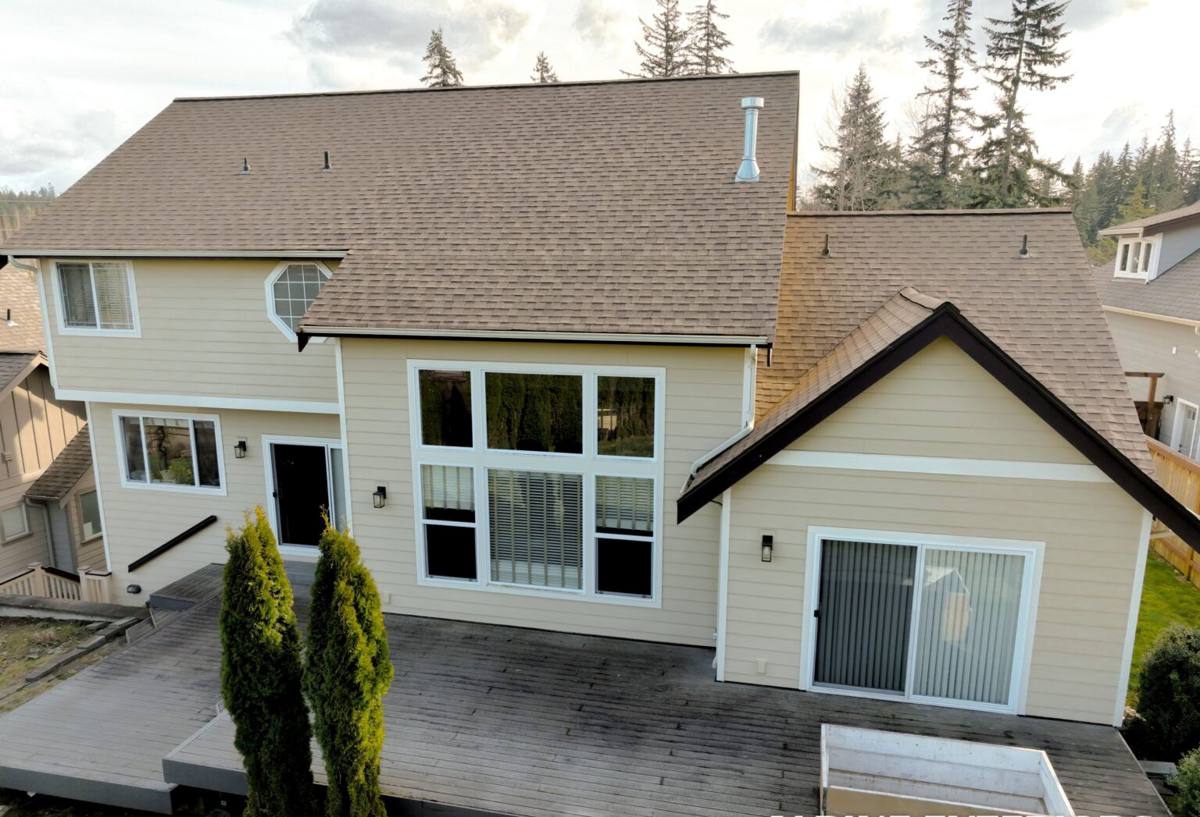
Why We Build Board and Batten in Hardie, Not Wood or Engineered Wood
Traditional board and batten was built from solid cedar boards, and it's still a beautiful look. The problem is maintenance. Solid wood battens and boards move with humidity, and in a climate with as much sustained damp as Bellingham gets — salt air off the bay, driving rain for months at a stretch, and a moss season that doesn't really end — that movement opens seams, cups boards, and gives moisture a place to sit against bare wood. Repainting a full board and batten elevation on a normal cycle is a real, recurring cost that most homeowners underestimate when they fall in love with the look.
Engineered wood siding solved some of that movement problem but introduced its own: the panels are wood-based, so if the factory edge seal or field-cut edges aren't treated and maintained correctly, moisture can wick into the panel and cause swelling at the seams — which is exactly where board and batten seams live. We don't install engineered wood siding for that reason; it asks a homeowner to stay on top of edge sealing indefinitely in a climate that doesn't give siding much of a break.
James Hardie fiber cement doesn't have that failure mode. It's cement, sand, and cellulose fiber, cured into a rigid board that doesn't expand and contract the way wood does, doesn't feed mold or moss the way a wood substrate can, and is factory-finished so the color layer isn't depending on a field paint crew to hit the right mil thickness on every batten edge. That's the whole reason we standardized on it — board and batten in particular is a pattern with a lot of seams and edges, and the material behind those edges matters more than it does on a plain lap siding wall.
The Hardie Products Used for Board and Batten
There are two ways to build the look with James Hardie products, and the choice affects both appearance and budget.
Panel and Batten
The more common approach uses HardiePanel vertical siding as the "board" — a smooth or stucco-textured 4-by-8 or 4-by-10 sheet — installed with HardieTrim battens over the seams. This is efficient to install, gives a very clean flat field between battens, and is the closer match to the modern farmhouse look that's popular right now.
Board and Batten Built from Individual Boards
The more traditional approach uses individual HardieTrim boards run vertically, gapped, and battened — closer to how a real cedar board and batten wall was historically built. It takes more install time and more trim material, so it costs more, but it reads as more authentic on a period-style farmhouse or craftsman home, especially up close.
Both approaches use the same core material and the same finish system — the difference is purely in the build method and the final look.
Choosing Colors: ColorPlus vs. Field Paint
James Hardie's ColorPlus finish is baked on at the factory and backed by its own finish warranty, and for board and batten specifically it has a real practical advantage: every board and every batten comes off the same finish line, so the color and sheen match across hundreds of linear feet without depending on a painter matching a field-mixed batch weeks or months apart. Touch-up kits exist for job-site nicks, but the bulk of the wall never needs a repaint on the normal cycle a field-painted material would.
Field-painted (primed) Hardie boards are still an option when a homeowner wants a custom color outside the ColorPlus palette, but that shifts the finish warranty and maintenance schedule onto a standard exterior paint job, which in this climate typically means repainting on a shorter cycle than ColorPlus needs attention.
| Finish | What's Included | Repaint Cycle | Best For |
|---|---|---|---|
| ColorPlus | Factory color, warrantied finish | Rarely, if ever, on the standard schedule | Most board and batten jobs, especially full elevations |
| Primed + field paint | Primer only; painter applies color on site | Shorter — standard exterior paint cycle | Custom colors outside the ColorPlus palette |
Proportion, Reveal, and Batten Spacing
This is the part that actually makes board and batten look intentional instead of generic, and it's mostly decided before a single panel goes up.
- Batten spacing: tighter spacing (roughly 12–16 inches on center) reads as more modern and formal; wider spacing (18–24 inches) reads as more relaxed and traditional.
- Batten width: narrower battens (about 1 inch) feel contemporary; wider battens (2–3 inches) lean farmhouse or craftsman.
- Panel texture: smooth panels pair with modern trim details; stucco-textured panels read more traditional and hide minor surface imperfections better in flat daylight.
- Corner and trim treatment: the corner boards and window trim have to match the batten proportions or the whole wall looks off — this is a detail worth walking through with whoever is designing the elevation, not leaving to whatever's standard.
Where Board and Batten Works Best on a Home
Full-elevation board and batten is a strong, confident look, but it isn't the only way to use the pattern. A lot of the board and batten we install in Bellingham is used as an accent — on a gable end, a dormer, a porch surround, or a single projecting bay — paired with a horizontal lap siding field on the rest of the house. That combination breaks up a large wall visually, adds texture at the roofline where it's most visible from the street, and costs less than running the pattern across the whole house. Full-elevation board and batten tends to suit simpler, more modern massing; as an accent, it works on almost anything from a craftsman bungalow to a new build.
Installation Details That Actually Matter Here
Board and batten has more vertical seams and more fastener penetrations per square foot than plain lap siding, which means installation quality matters more here than on most siding patterns — and it matters more in Whatcom County than it would somewhere dry.
- Rain screen / drainage gap: a proper weather-resistive barrier with a drainage gap behind the panels gives any moisture that does get past the surface a way out, instead of sitting against the wall sheathing.
- Fastener placement: battens have to be fastened per Hardie's published spec — through the board into framing, at the correct spacing — or the seams they're meant to protect can work loose over time.
- Flashing at horizontal transitions: anywhere board and batten meets a roofline, a window head, or a horizontal band, flashing has to be detailed correctly or that's exactly where driving rain off the bay finds a way in.
- Ground and roof clearance: Hardie's minimum clearances from grade, decks, and roof lines exist for a reason — board and batten run too close to a roof or a deck surface stays wet longer and is where we most often see moss and algae establish first.
Cost Factors to Expect
| Factor | Effect on Cost |
|---|---|
| Full elevation vs. accent use | Full elevation costs more in material and labor than using it selectively on gables or accents |
| Panel-and-batten vs. individual boards | Individual board construction takes more labor and trim material |
| ColorPlus vs. field paint | ColorPlus has a higher material cost up front but lower long-term repaint cost |
| Batten density | Tighter spacing means more linear feet of trim and more install time |
| Tear-off vs. new construction | Removing and disposing of existing siding adds labor beyond the new install |
We don't publish fixed per-square-foot pricing because these factors genuinely change the number from house to house — an accent gable is a very different project than a full-elevation tear-off and re-side.
What to Check Before You Sign a Contract
- Ask which specific Hardie products they're specifying (panel, individual board, HZ10 climate zone) and why.
- Confirm whether the quote is for ColorPlus factory finish or field-painted, and what that means for future maintenance.
- Ask how they're detailing the drainage gap and flashing at rooflines and window heads — this is where board and batten problems actually start.
- Get the batten spacing and width specified in writing or on a drawing, not left as "standard."
- Ask about fastener spacing and whether they're following Hardie's published installation instructions, since that's what keeps the manufacturer's warranty valid.
The Warranty Behind It
James Hardie backs its fiber cement products with a non-prorated limited warranty on the substrate, and ColorPlus finishes carry their own separate finish warranty — both transferable to a new owner if the home sells, which matters if resale is on the horizon. That warranty is conditioned on installation following Hardie's published instructions, which is one more reason installation detail isn't optional on a pattern with this many seams.
If you're weighing board and batten for a gable accent or a full elevation on a Bellingham home, we're happy to walk the house, talk through proportions and product options, and put together a free, no-pressure estimate.