 Bellingham Siding
 Why This Decision Trips Up So Many Whatcom County Homeowners
Every siding call we get in Bellingham starts with some version of the same question: "Can you just fix this spot, or do we need to replace the whole thing?" It's a fair question, and the honest answer is usually "it depends" — but that's not very useful when you're staring at a soft patch of wall or a corner board that's starting to bow. This page walks through how we actually make that call in the field, so you can go into a conversation with a contractor already knowing what to look for and what questions to ask.
Bellingham's climate makes this a harder decision than it is in drier parts of the country. Salt-laden air off Bellingham Bay, long stretches of driving rain, and a moss season that can run from October through April all work against siding in ways that aren't always visible from the driveway. A repair that would hold up fine in a dry climate can fail here in a season or two if the underlying cause isn't addressed.
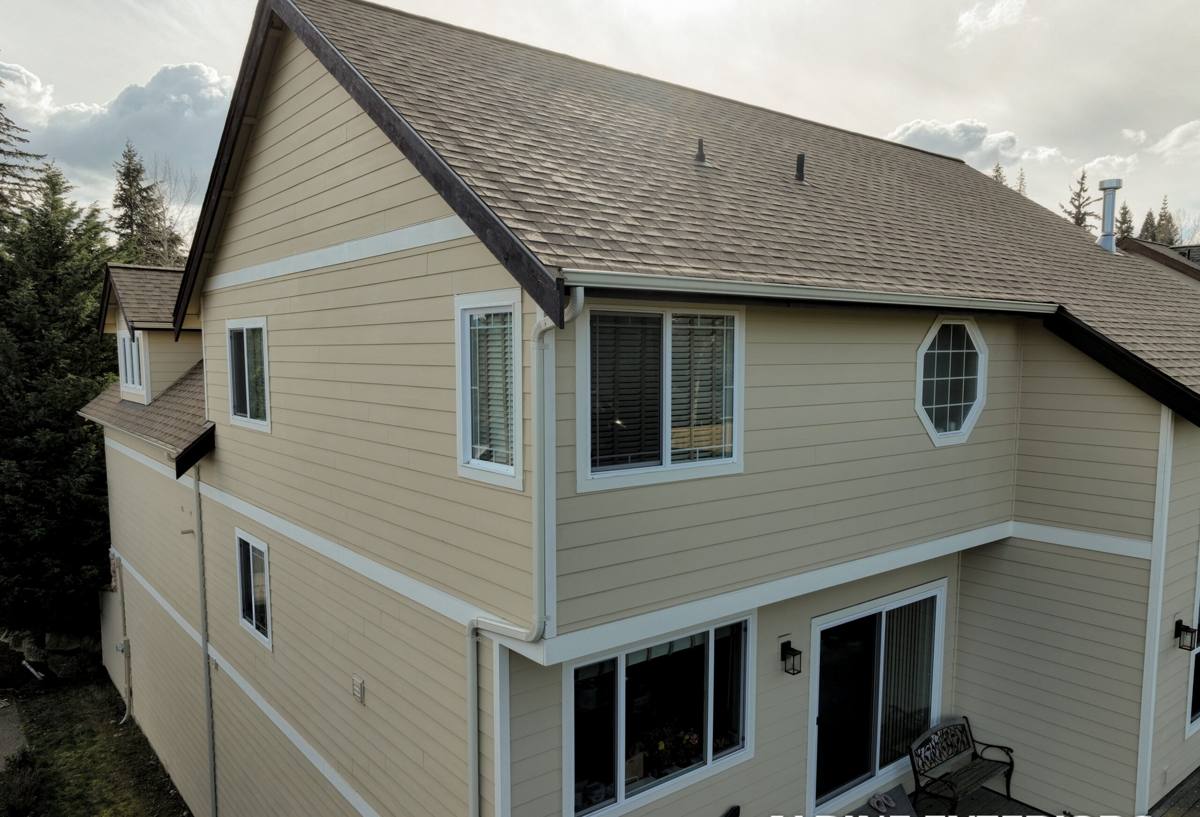
Repair vs. Replacement: The Core Difference
Repair means addressing an isolated problem — a cracked board, a section damaged by a fallen branch, rot around one window. Replacement means removing and re-installing siding across a wall, an elevation, or the whole house. The line between the two isn't always obvious, which is exactly why homeowners get conflicting opinions from different contractors.
When Repair Genuinely Makes Sense
- The damage is localized — one panel, one corner, one area of impact damage
- The siding is less than 10-15 years old and otherwise in good condition
- The underlying sheathing and moisture barrier are dry and intact
- The existing product is still available or a close match can be sourced
- There's no widespread pattern of similar damage elsewhere on the house
When Repair Is a Band-Aid, Not a Fix
- Rot shows up in more than one location, suggesting a systemic moisture problem
- The siding material itself (not just workmanship) is failing — swelling, delaminating, or crumbling
- The house has had multiple "repairs" over the years and problems keep resurfacing
- The siding is old enough that matching color and profile isn't realistic
- You're planning to sell within the next few years and want a clean bill of health
Reading the Warning Signs on Your Own Walls
Before you call anyone, a slow walk around the house tells you a lot. Look at north- and west-facing walls first — in Bellingham these tend to take the worst of the wind-driven rain and hold moisture longest, especially where trees or fences block sun and airflow.
Signs That Point to Repair
A single cracked or split board, nail pops, minor impact damage, or a small area where caulking has failed are typically isolated issues. If you press on the siding around the damage and it feels solid, and there's no soft or spongy texture, you're likely looking at a contained problem.
Signs That Point to Replacement
Soft or spongy spots when pressed, siding that's visibly bowing or pulling away from the wall, persistent dark staining that returns after cleaning, bubbling paint in multiple spots, or a musty smell near an exterior wall inside the house are all signs the moisture problem has moved past the surface. Heavy, persistent moss or algae growth across large sections — common on shaded Bellingham lots — can also mask deeper damage underneath.
What's Actually Driving the Damage: Bellingham's Climate
We bring this up on almost every inspection because it changes the calculus. Coastal salt air accelerates corrosion on fasteners and metal flashing, which can lead to hidden leak points long before the siding surface looks bad. Whatcom County's driving rain — rain that comes in sideways during winter storms — pushes water into seams and laps that would stay dry in a calmer climate. And our moss season means organic growth holds moisture against the wall for months at a time if it isn't managed.
This is why we're cautious about calling something a "simple repair" without checking what's behind the siding. A patch on the surface doesn't fix a flashing detail that's letting water in every time it rains sideways off the Bay.
Cost Factors: What Actually Moves the Number
We won't quote a fake price range here, but we can tell you what pushes a project toward the repair side of the ledger or the replacement side.
| Factor | Favors Repair | Favors Replacement |
|---|---|---|
| Extent of damage | Single panel or section | Multiple areas, spreading pattern |
| Age of existing siding | Under 10-15 years | Approaching or past expected service life |
| Material match | Product still available | Discontinued color/profile, visible patchwork |
| Underlying sheathing | Dry, solid | Soft, stained, or previously repaired |
| Moisture source | Identified and fixable in place | Unknown or systemic (flashing, drainage plane) |
| Resale timeline | Staying long-term, cosmetic priority low | Selling soon, or want a documented full system |
The biggest hidden cost driver isn't the siding material itself — it's what's found once a section is opened up. If sheathing needs to be replaced, or if the water-resistive barrier has failed, that work has to happen regardless of what siding goes back on. A contractor who quotes a repair without opening the wall to check is guessing.
The Case for Not Patching Twice
We've replaced a lot of siding in Bellingham that was originally "just going to get a patch." The pattern is familiar: a small repair addresses the visible symptom, but the moisture source (a flashing gap, a caulk joint that was never sealed right, a drainage path that dead-ends against a ledger board) keeps doing damage behind the new patch. Two or three years later, the homeowner is back to square one, except now there's more rot and a bigger repair bill.
Our position is straightforward: if an inspection shows the problem is genuinely isolated, we'll say so and repair it — there's no reason to sell a full replacement when a targeted fix will hold. But if we find signs the moisture problem is systemic, we'll tell you that too, even if a patch would be the easier sale in the short term.
Why We Install James Hardie When Replacement Is the Right Call
When a homeowner does need full replacement, the material choice matters as much as the labor. We install James Hardie fiber cement exclusively — we don't install vinyl, LP SmartSide, or cedar — and that's a deliberate standard, not a default.
Fiber cement doesn't absorb water the way engineered wood products can, which matters directly in a climate with Bellingham's rain exposure. It's non-combustible, which is a real consideration given the wildfire smoke seasons the Pacific Northwest has seen in recent years. Hardie's ColorPlus factory finish holds up to UV and salt air better than field-applied paint, which means less repainting over the life of the siding. And Hardie's HZ5 product line is engineered for climates like ours — freeze-thaw cycles, sustained moisture, and coastal exposure — rather than being a one-size-fits-all product.
None of this means every other product is a bad choice for every homeowner. It means that after years of doing repair and replacement work across Whatcom County, we standardized on the product that gave us the fewest callbacks and the longest track record when installed to spec — and we stand behind that with a strong transferable warranty.
Questions to Ask Before You Sign Anything
- Did the contractor open the wall to check the sheathing, or just look at the surface?
- Can they explain what caused the damage, not just what it looks like?
- If it's a repair, what happens if the same problem shows up again in a year?
- If it's a replacement, does the quote include fixing any rotted sheathing or damaged flashing found underneath?
- Is the warranty tied to the material, the labor, or both — and is it transferable if you sell?
- Does the estimate specify the actual product line, not just "siding"?
A Reasonable Way to Approach the Decision
Start with an inspection, not a guess. A contractor who's willing to look behind the siding in the damaged area — not just eyeball it from the ground — can usually tell you within that visit whether you're dealing with a contained issue or something bigger. Get a second opinion if the first one feels rushed. And weigh the timeline: if you're planning to stay in the home for another 10-20 years, a full replacement with a durable, climate-appropriate product often costs less over time than a string of repeated patches.
If you're not sure which side of that line your siding falls on, we're happy to take a look. We'll give you a straight answer about whether repair makes sense or whether replacement is the better long-term move — and if it's the latter, we'll walk you through why we build with James Hardie. Reach out for a free, no-pressure estimate using the form below.