 Bellingham Siding
 Why Color Choice Matters More Here Than in Drier Climates
Picking a siding color feels like the fun part of a re-side, but in Whatcom County it's also a durability decision. Bellingham sits between the salt water of Bellingham Bay and the damp foothills of the Cascades, which means your siding deals with salt-laden air, long stretches of driving rain off the Sound, and months of low, filtered light that make north-facing walls stay damp longer than most paint manufacturers assume. A color that looks great on a spec sheet in Arizona can chalk, fade unevenly, or show lap marks within a few years up here if it wasn't engineered for this kind of weather.
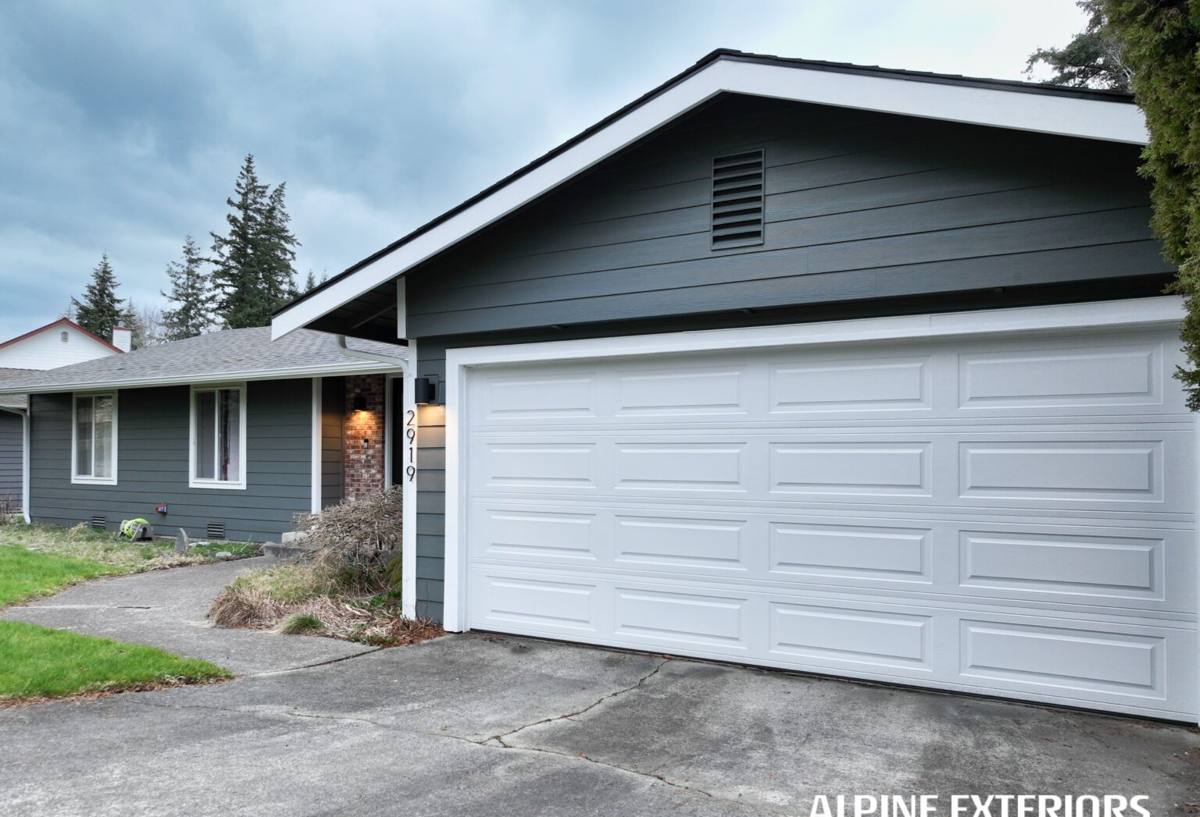
That's the whole reason we standardized on James Hardie siding with the ColorPlus finish system rather than field-painted fiber cement or primed products. ColorPlus isn't a paint color — it's a factory-cured finish process, and understanding how it's built helps explain why it holds up differently than a can of exterior paint applied on site.
What ColorPlus Actually Is
Every ColorPlus board is coated before it ever reaches the job site, using a baked-on finish applied in multiple layers under controlled factory conditions, then cured. That's a different process than brushing or spraying paint onto a wall in variable outdoor humidity and temperature — the kind of conditions Bellingham crews deal with for a good chunk of the year.
- Multi-coat process: primer and color coats are applied and cured in a factory environment, not exposed to wind, dust, or moisture during application.
- Consistent film thickness: factory application avoids the thin spots, drips, and lap marks that can happen with hand-applied paint, especially on textured lap siding.
- Baked adhesion: the finish bonds to the fiber cement substrate in a way that resists the peeling and flaking you sometimes see on field-painted wood or fiber cement after a few wet winters.
- Color-matched caulk and touch-up: Hardie supplies color-matched caulk and touch-up kits for each ColorPlus color, so seams and cut edges don't stand out as a different shade.
None of this means the finish is maintenance-free forever — no exterior finish is — but it starts from a much stronger baseline than a product that depends on a contractor getting field paint conditions right on a rainy Tuesday in November.
Factory Finish vs. Field-Applied Paint
| Factor | ColorPlus Factory Finish | Field-Applied Paint |
|---|---|---|
| Application environment | Controlled factory conditions | Outdoor job site, weather-dependent |
| Coverage consistency | Even, multi-coat, cured before install | Depends on painter, temperature, humidity |
| Typical repaint interval | Often well beyond 10-15 years before touch-up is needed | Commonly 5-8 years in wet coastal climates |
| Fading/chalking resistance | Engineered UV-resistant finish | Varies widely by paint grade |
| Warranty on the finish | Separate finish warranty backing the color itself | Usually only the paint manufacturer's product warranty, not tied to the siding |
Primed fiber cement, primed wood, and raw cedar all require that field-painting step, which shifts both the cost and the risk onto whatever paint job happens after installation — and onto whoever repaints it five or eight years later. ColorPlus keeps that variable out of the equation for a long time.
How Hardie's Color Collections Are Organized
Hardie offers ColorPlus in curated collections rather than an open-ended paint deck. That's intentional — the palette is built around colors that photograph well against real rooflines, trim, and stone, and that read correctly in a range of light conditions, which matters in a place like Bellingham where the light is soft and diffuse more often than sharp and direct.
Typical Groupings You'll See
- Neutral and warm whites — the most common choice regionally, easy to pair with dark trim, black windows, or stone accents.
- Deep grays and charcoals — popular on modern farmhouse and craftsman remodels around Whatcom County, especially paired with cedar-look accent panels.
- Greens and blue-grays — colors that sit comfortably against the evergreen backdrop common to Bellingham lots without looking like they're trying to blend in or disappear.
- Warm earth tones — tans and muted browns that read well against brick, stone veneer, or exposed timber detailing.
Within each collection, boards, trim, and soffit are designed to be color-matched to each other, so a lap siding color has a corresponding trim white or accent that's meant to be paired with it rather than guessed at.
Testing Color in Bellingham Light
One thing we tell every homeowner: don't finalize a color from a small chip held under indoor lighting. Bellingham's cloud cover and marine layer shift color perception more than people expect — a warm gray that looks neutral on a sunny showroom day can read cooler and flatter under our typical overcast sky.
Practical Steps Before You Commit
- View large sample boards outdoors, not through a window, and check them at different times of day.
- Look at the color on a cloudy day specifically — that's the lighting condition your siding will wear most often here.
- Hold the sample next to your actual roof shingles, existing stone or brick, and trim color rather than trying to remember them.
- Check how the color looks both wet and dry — Bellingham siding spends a lot of the year damp, and some colors shift noticeably in appearance when wet.
Salt Air, Moss, and Why Durable Color Retention Matters
Homes closer to Bellingham Bay and the waterfront neighborhoods deal with airborne salt that can accelerate wear on lesser finishes and fasteners. Further inland and up toward the foothills, the bigger issue is prolonged shade and moisture that feeds moss and algae growth on north- and west-facing walls. Neither of these is something paint color choice alone fixes, but color and finish quality interact with both:
- Salt exposure can dull or chalk lower-grade finishes faster; a factory-cured finish with UV and weather resistance built in holds its color longer under that exposure.
- Moss and algae show up more visibly on flat, matte dark colors in shaded areas than on lighter tones, simply because of contrast — something worth considering if your lot has heavy tree cover or a north-facing elevation that stays damp most of the year.
- Driving rain off the Sound tests lap siding's ability to shed water at the overlaps; this is more of an installation detail than a color one, but it's part of why correct installation matters as much as the product itself.
None of this means dark colors are off the table in Bellingham — they're common and they hold up fine with proper detailing and normal exterior upkeep. It just means color choice is worth thinking through alongside your home's specific sun and shade exposure, not picking a swatch in isolation.
Single-Color vs. Multi-Color Schemes
Most Bellingham re-sides land in one of a few approaches:
- One body color, contrasting trim — the most common and lowest-maintenance approach, usually a body color with white or a dark contrasting trim.
- Body color plus accent panel — a shingle-style or board-and-batten accent in gables or entry features, often in a different Hardie product line and a complementary color.
- Two-tone body — a lighter main color with a darker wainscot or lower band, more common on larger homes or ones with a lot of wall height to break up visually.
HOA-governed neighborhoods around Bellingham and Whatcom County often have specific approved color ranges, so it's worth checking your HOA guidelines before falling in love with a color — we can usually tell you quickly whether a shade is likely to be an issue.
Cost Factors to Understand
| Factor | How It Affects Your Project |
|---|---|
| Standard ColorPlus color vs. custom field paint | Standard ColorPlus colors are typically the most cost-effective path; custom-matched field painting adds labor and repaint cycles down the road |
| Multi-color / multi-product schemes | More cutting, more trim detail, and more color-matched accessories than a single-color scheme |
| Touch-up and caulk | Color-matched ColorPlus caulk and touch-up kits are inexpensive relative to the cost of a future repaint |
| Future repainting | ColorPlus is designed to go a long stretch before it needs attention, which is a real long-term savings versus products that need repainting every several years |
A Simple Checklist Before You Choose
- Pull large outdoor samples, not small chips, and view them in overcast Bellingham light.
- Check your HOA's approved palette, if applicable, before finalizing.
- Consider your lot's sun/shade pattern, especially north- and west-facing walls prone to moss.
- Match trim, soffit, and accent colors within the same Hardie collection for a coordinated look.
- Ask about the specific ColorPlus warranty terms for the color and product line you're choosing.
- Keep a color-matched touch-up kit on hand after installation for minor nicks from landscaping or moving equipment.
What Correct Installation Adds to a Good Color Choice
Even the best factory finish depends on correct installation to perform as intended — proper fastener placement, correct clearance from grade and roof lines, and properly caulked or flashed joints all affect how well the siding (and its finish) holds up to Bellingham's rain and humidity over time. A great color on a poorly installed job will still show problems years before it should. That's why we treat color selection and installation quality as one conversation, not two separate steps.
If you're planning a re-side or new build in Bellingham and want to see ColorPlus samples in person against your own home's light and setting, we're happy to bring boards out and walk through the options with you. Reach out for a free, no-pressure estimate and we'll help you land on a color and product line that fits both your house and our local weather.