 Bellingham Siding
 Window Installation Built for Sunnyland's Conditions
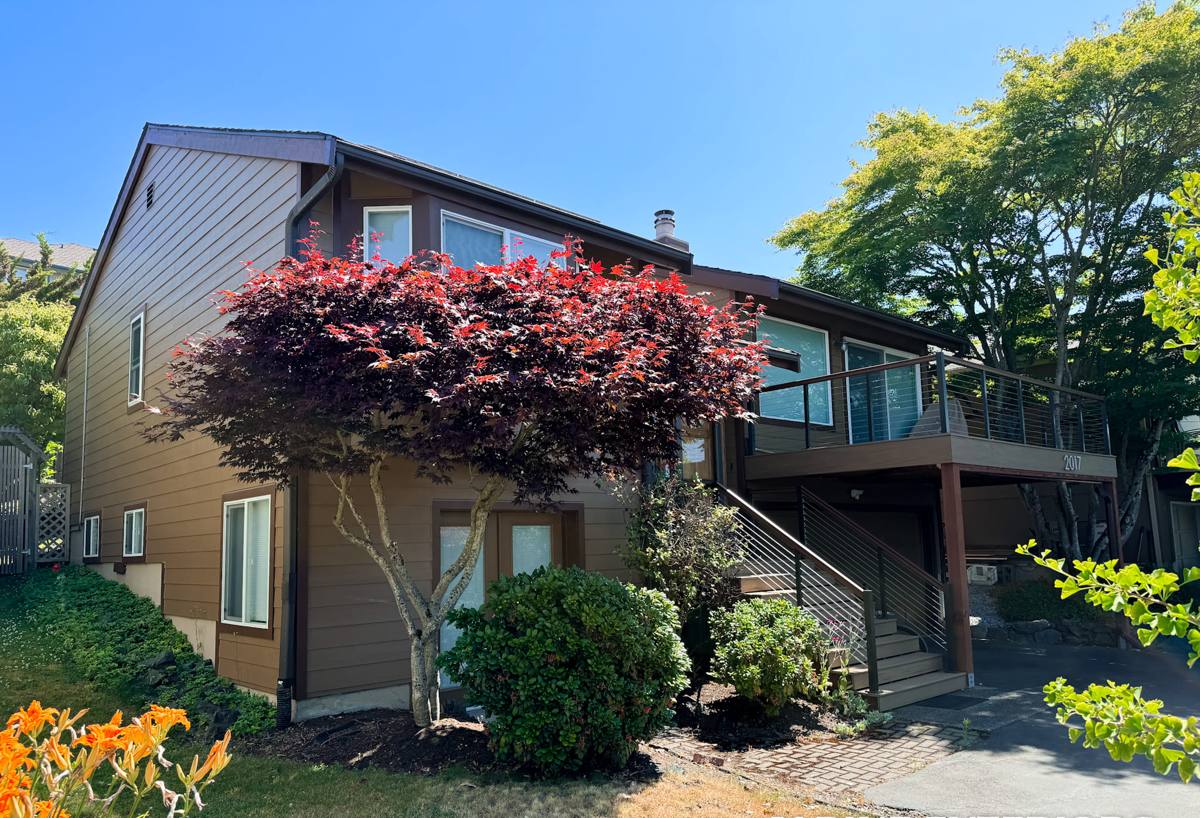
Sunnyland is one of Bellingham's older established neighborhoods, with a mix of early-to-mid-20th-century homes, mid-century additions, and newer infill sitting close enough to Bellingham Bay that the weather off the water shapes how a house ages. Windows here don't fail because of one dramatic event. They fail slowly, from years of salt-laden air, driving rain that comes in sideways off the Sound, and a moss season that runs longer than most homeowners expect from Western Washington. A window installation done right in this neighborhood has to account for all three, not just fit the rough opening and call it done.
This page is specifically about window installation for Sunnyland homes — what the climate demands, what a correct installation actually involves, and how our process works when we're on your street.
What Whatcom County's Coastal Climate Does to Windows
Salt Air and Corrosion
Bellingham sits directly on saltwater, and Sunnyland is close enough to the bay that airborne salt reaches window hardware, fasteners, and unprotected metal components year-round. Salt air accelerates corrosion on cheap hinges, latches, and screws, and it degrades certain finishes faster than inland installations ever see. This is why hardware choice and finish quality matter more here than they would in, say, Spokane — a window that performs fine 100 miles inland can develop sticky locks and pitted hardware within a few years this close to the water.
Driving Rain and Wind-Driven Wetting
Rain in Whatcom County doesn't just fall — it's frequently pushed sideways by wind coming off the water, which means it hits window assemblies at an angle instead of straight down. That changes how flashing, sill pans, and sealant joints need to be detailed. A window that would stay dry in a calm rain event can still take on water at the corners or under the sill if the installation wasn't built to handle wind-driven wetting specifically.
Moss and Prolonged Dampness
Bellingham's moss season is long, and it isn't just a roof problem. Moss and organic growth take hold anywhere moisture sits for extended periods without enough sun or airflow to dry it out — window sills, trim, and the lower corners of frames included. Once organic growth establishes itself against wood trim or gets into a compromised seal, it holds moisture against the building longer, which speeds up rot in wood-framed openings and accelerates the breakdown of failing caulk lines.
What This Means for Sunnyland's Housing Stock
A lot of the homes in this part of Bellingham were built before modern window technology existed, which means many are still on their original single-pane wood windows or a first-generation aluminum or vinyl replacement installed decades ago. Neither of those was built with today's sealants, flashing tapes, or glass technology, and neither was necessarily installed with this specific coastal exposure in mind.
That history matters for how we approach a job. An older wood-framed opening in a Sunnyland bungalow often has different rough opening dimensions, different trim details, and sometimes hidden rot behind the casing that a newer home simply won't have. We treat every Sunnyland job as an assessment first, not a standard swap — because the condition of the opening behind the window determines whether a straightforward retrofit will actually hold up, or whether the frame needs to come out entirely.
Signs Your Windows Are Due for Replacement
Homeowners often wait longer than they should because window failure is gradual rather than obvious. These are the signs worth acting on:
- Visible condensation or fogging between the panes of a double-pane window, which means the seal has failed and the insulating gas has escaped
- Wood trim or sills that feel soft, spongy, or show dark staining, especially at the bottom corners
- Windows that are difficult to open, close, or lock, particularly if this has gotten worse over the past year or two
- Noticeable drafts near the frame even when the window is fully closed and latched
- Visible gaps, cracked caulk, or missing sealant around the exterior trim
- Moss, algae, or persistent green staining building up on the sill or lower frame
- A jump in heating costs without a clear explanation elsewhere in the house
- Peeling or bubbling paint on interior trim around the window, which often points to moisture getting past the seal
What a Correct Window Installation Actually Involves
The window unit itself is only part of the job. In a climate like this, the installation details around the window matter as much as the product, because they're what keeps wind-driven rain and moisture out over the next 20-plus years.
Sill Pan Flashing
A sloped sill pan under the window directs any water that gets past the primary seal back outside instead of letting it pool at the sill and soak into the framing. On a home exposed to driving rain off the bay, skipping this step is one of the most common reasons a window installation fails early.
Flashing Integration With the Weather-Resistive Barrier
The flashing tape or membrane around the window needs to integrate properly with the house wrap or building paper above and below it, shingled correctly so water is always directed down and out, never trapped behind the siding. This is a detail that's easy to get wrong and hard to inspect once the trim goes back on, which is part of why the installer's care matters more than the brand of window.
Sealant Selection and Joint Design
Not all exterior sealants hold up the same way against constant damp-dry cycling and salt exposure. We use sealants rated for the movement and moisture conditions of this climate, and we detail joints so they can be inspected and re-caulked in the future without tearing into the wall assembly.
Insulation Behind the Frame
The gap between the window frame and the rough opening needs to be filled with an appropriate low-expansion insulating material — not stuffed with excess fiberglass, and not left with gaps. Overfilled or underfilled cavities are a common source of both drafts and frame distortion.
Full-Frame Replacement vs. Insert (Pocket) Replacement
One of the first decisions on any Sunnyland job is whether the existing frame is sound enough to keep, or whether it needs to come out completely. Both approaches have a place, but the right call depends on the condition behind the trim, not just preference.
| Factor | Insert (Pocket) Replacement | Full-Frame Replacement |
|---|---|---|
| Best when | Existing frame and sill are structurally sound, no rot present | Frame, sill, or sheathing shows rot, or flashing is clearly failed |
| Access to hidden damage | Limited — problems behind the frame stay hidden | Full access to inspect and repair framing and flashing |
| Disruption | Lower — less trim and siding disturbance | Higher — trim and sometimes siding removed and rebuilt |
| Typical cost | Generally lower per opening | Generally higher per opening |
| Long-term reliability on this coastline | Good, if the frame was already sound | Highest — new flashing and sill pan built in from scratch |
We don't default to the cheaper option just because it's cheaper. If we open up trim on a Sunnyland home and find soft wood or a flashing gap, we'll tell you honestly rather than covering it back up with a new window and the same hidden problem underneath.
Choosing the Right Window for This Climate
Frame material and glass package both affect how a window holds up against salt air and constant moisture. There's no single "best" answer for every home — it depends on your budget, your home's style, and how exposed the specific opening is.
| Frame Material | Coastal Durability | Maintenance | Notes |
|---|---|---|---|
| Vinyl | Good — won't corrode or rot | Low | Widely used, cost-effective, wide color range now available |
| Fiberglass | Very good — stable in temperature swings, resists warping | Low | Higher upfront cost, holds paint well if color changes later |
| Aluminum | Fair — prone to corrosion near salt air unless properly coated | Moderate | Better for commercial or specific architectural needs than typical homes here |
| Wood (clad exterior) | Good on the exterior if properly clad; interior still needs care | Moderate to high | Best for historic-style homes wanting a true wood interior look |
For glass, double-pane with a low-E coating and argon fill is the standard baseline for this region's heating needs. Triple-pane adds further insulation value and sound dampening, which some homeowners near busier Sunnyland streets or arterial roads find worthwhile, but it comes at a higher cost and added weight on the frame and hardware.
Our Process, Start to Finish
- On-site assessment. We look at every opening individually, check for existing rot or flashing failure, and take accurate measurements rather than relying on assumptions from the original build.
- Honest recommendation. We tell you whether an insert replacement is appropriate or whether we're recommending full-frame work, and why, in plain terms.
- Written estimate. Costs are broken out by opening so you can see what you're paying for and make decisions per-window if needed.
- Preparation and protection. We protect landscaping, flooring, and interior finishes before any removal begins.
- Removal and inspection. Once the old window is out, we inspect the framing and sheathing before installing anything new.
- Installation with proper flashing and sealant detailing. Sill pan, flashing integration, insulation, and sealant are done to hold up against this specific coastline's rain and salt exposure.
- Interior and exterior trim finish. Trim is reinstalled or replaced to match your home's existing style.
- Final walkthrough. We check operation, sealing, and finish with you before considering the job complete.
Why Local Experience in Sunnyland Matters
A crew that only occasionally works this close to Bellingham Bay may not think twice about flashing detail or hardware finish, because it isn't a problem where they usually work. A crew that's regularly in Sunnyland and similar Bellingham neighborhoods has already seen what salt air does to the wrong hinge, what wind-driven rain does to a shortcut flashing job, and what a long moss season does to a sill that was never properly sloped to drain. That familiarity shows up in fewer callbacks and windows that are still performing well a decade or two later, not just on installation day.
It also means we're not guessing at what your home's era of construction typically hides behind the trim. Whatcom County's building patterns and this region's weather have a track record, and that history informs every recommendation we make on your house.
If you're noticing drafts, fogged glass, or sticking windows on your Sunnyland home, we're happy to take a look and give you a straightforward, no-pressure estimate — just fill out the form below.