 Bellingham Siding
 Board & Batten Siding for Ferndale Homes
Board and batten has become one of the most requested exterior looks in Whatcom County, and Ferndale homeowners have good reason to want it — the vertical lines read as clean, modern, and a little more custom than standard horizontal lap siding, whether it's covering a whole house or accenting a gable, porch, or entry feature. But Ferndale sits close enough to the water that the same siding detail that looks great in a catalog photo can fail early if it isn't built for this specific climate. Salt-laden air off the Salish Sea, frequent driving rain, and a moss season that stretches through most of the fall, winter, and spring put real demands on any vertical siding system. We install board and batten exclusively in James Hardie fiber cement, and we build every job around what actually holds up here — not just what looks good on install day.
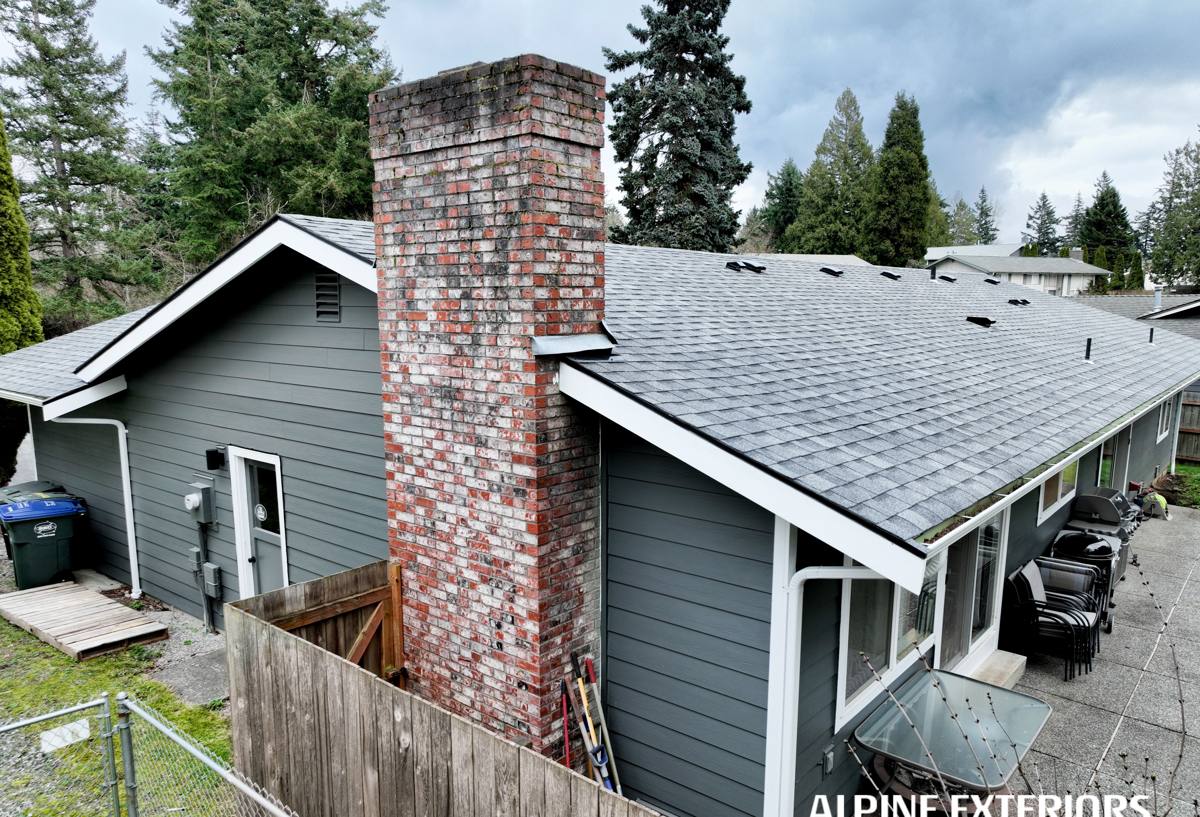
What Ferndale's Climate Does to Vertical Siding
Coastal Whatcom County weather is harder on siding than most homeowners realize, and board and batten is more exposed to it than other siding styles because of how it's built.
Salt Air
Homes closer to Bellingham Bay and the Strait of Georgia deal with airborne salt that accelerates corrosion on fasteners, flashing, and any exposed metal trim. Board and batten uses more linear feet of fastener line and more seams per square foot than wide-plank lap siding, so a fastener or flashing choice that's "fine" on a lap siding job can become a visible problem faster on a board and batten wall.
Driving Rain
Wind-driven rain doesn't just run down a wall — it pushes sideways and finds every gap, seam, and fastener penetration. Vertical battens create more vertical seams for water to test than a horizontal lap profile does, which is exactly why the gap behind the siding and the flashing details at every penetration matter more here than in a drier climate.
Moss Season
Long stretches of damp, shaded weather let moss and algae establish on any surface that stays wet, especially on north-facing walls, under eaves, and around trim details that trap moisture. Moss doesn't just look bad — it holds water against the siding surface for extended periods, which is a problem for any product that isn't dimensionally stable and factory-sealed on all sides.
What a Correct Board & Batten Job Actually Requires
Board and batten looks simple — vertical panels, battens over the seams — but the installation details are what determine whether it lasts fifteen years or fifty. A correct install includes:
- A drainage gap (rainscreen) behind the siding so any water that gets past the surface can drain and the wall can dry, rather than sitting against the sheathing.
- Properly lapped and sealed weather-resistive barrier underneath, with flashing integrated at every window, door, and horizontal trim transition — not just caulk.
- Fastener spacing and placement that follows the manufacturer's engineering, not a generalized "looks even" pattern, because fastener pull-through is where a lot of premature failures start.
- Batten placement over structural framing wherever possible, so the assembly is mechanically sound and not just cosmetically centered.
- Correct clearance at grade, decks, and roof lines — Ferndale's rain volume makes splash-back and standing water at the base of a wall a real long-term risk if that gap is skipped.
Skipping any one of these doesn't usually show up in the first year. It shows up in year five or eight, as staining, soft spots, or fastener corrosion bleeding through the finish — right when a homeowner assumes their siding is settled in and low-maintenance.
James Hardie Board & Batten Options
We install board and batten using James Hardie's engineered vertical siding systems, factory-finished with ColorPlus so the color coat is baked on rather than field-applied. Two approaches come up most often for Ferndale projects:
HardiePanel Vertical Siding with Battens
Large-format fiber cement panels installed vertically with cedar-look or smooth battens over the seams. This is the classic board and batten profile and works well as a full-house siding or as a feature treatment over an entry, gable, or accent wall paired with lap siding elsewhere.
Hardie Artisan Vertical Options
For homeowners wanting a more refined, tighter-reveal look, Hardie's Artisan line offers a heavier panel with sharper detailing, suited to homes where the vertical siding is meant to be the visual centerpiece rather than a background texture.
Both are non-combustible fiber cement engineered for Pacific Northwest moisture conditions, and both carry a factory finish warranty that a field-painted product simply can't match.
Why We Only Install James Hardie
We don't install vinyl board and batten, LP SmartSide, Cemplank, Allura, or primed wood board and batten — not because those products can't be installed correctly, but because we've standardized on one system we can stand behind for the long term in this climate. Vinyl vertical panels expand and contract more than fiber cement and can show waviness or gapping at the battens over time. Wood-based and primed products need consistent repainting and caulking to keep moisture out, which is a hard maintenance schedule to keep up with through a Whatcom County winter. James Hardie's fiber cement doesn't rot, doesn't attract pests, is non-combustible, and holds its factory finish far longer than field-painted alternatives — which matters most on a profile with this many seams and fastener points.
Our Ferndale Board & Batten Process
Every job follows the same sequence, whether it's a full re-side or an accent feature:
- On-site assessment — we look at wall exposure, existing sheathing and moisture barrier condition, framing layout for batten placement, and current drainage at grade.
- Detailed estimate — a written scope covering panel and batten layout, flashing plan, color, and timeline, with no surprise change orders for work that should have been scoped upfront.
- Prep and moisture barrier — old siding removed, sheathing inspected and repaired as needed, rainscreen and weather-resistive barrier installed correctly the first time.
- Installation — panels and battens installed to Hardie's fastening and clearance specifications, with flashing detailed at every penetration.
- Final walkthrough — we review the finished work with the homeowner before calling the job complete.
Living With Board & Batten in Ferndale's Climate
Fiber cement board and batten is low-maintenance compared to wood or vinyl, but "low-maintenance" isn't "no-maintenance" in a marine climate. A short annual routine keeps it performing the way it should:
- Rinse the exterior once or twice a year to clear salt residue and organic buildup before it becomes established moss or algae.
- Check caulking at window and door trim annually — this is the first place minor sealant failure shows up.
- Keep gutters and downspouts clear so water isn't sheeting down wall sections during heavy rain.
- Trim back vegetation and landscaping that keeps a wall section shaded and damp longer than the rest of the house.
- Watch north-facing and shaded walls first — that's where moss and mildew typically appear before anywhere else on the house.
Cost Factors for Board & Batten Projects
Every Ferndale property is different, but the same set of factors drives cost on nearly every board and batten job we scope:
| Factor | Why It Matters |
|---|---|
| Wall prep condition | Sheathing repair or moisture damage found during tear-off adds scope before new siding goes on |
| Full-house vs. accent application | A gable or entry feature costs far less than re-siding the entire exterior |
| Panel vs. Artisan-tier product | Heavier, tighter-reveal Artisan panels run higher than standard HardiePanel |
| Trim and flashing complexity | Homes with more windows, dormers, and roof transitions require more flashing labor |
| Access and site conditions | Steep grades, tight lot lines, or multi-story walls affect staging and labor time |
Why a Crew That Already Works Ferndale Matters
Board and batten forgives fewer mistakes than lap siding — the vertical seams and batten fasteners are less tolerant of shortcuts, and a coastal Whatcom County climate finds those shortcuts faster than a drier region would. A crew that's already installed Hardie siding on homes near this stretch of the coast knows how much drainage gap this weather actually calls for, where moss tends to establish first, and how to detail flashing for driving rain rather than just following a generic install sheet. That local pattern recognition is the difference between a board and batten install that still looks sharp in year fifteen and one that starts showing problems in year five.
If you're weighing board and batten for a Ferndale home, we're happy to walk the exterior with you and put together a straightforward, no-pressure estimate — just fill out the form below.