 Bellingham Siding
 New Roofs Built for Birchwood's Marine Climate
Birchwood sits close enough to the water and the tree cover of Whatcom County that its roofs take a different kind of beating than roofs twenty miles inland. Salt-laden air off the Puget Sound corridor works on metal fasteners and flashing over time. Driving rain, pushed sideways by wind off the water, finds every gap in a poorly lapped underlayment or an undersized drip edge. And the long, damp moss season here — often eight or nine months of the year in a wet stretch — turns a north-facing slope or a shaded roof plane into a growing surface if the roof wasn't built to shed water and dry out quickly.
A new roof installed for Birchwood needs to account for all three of these things from the start, not as an afterthought. That means material choice, fastener selection, underlayment strategy, and ventilation all get decided with this specific climate in mind, not a generic "any roof will do" approach.
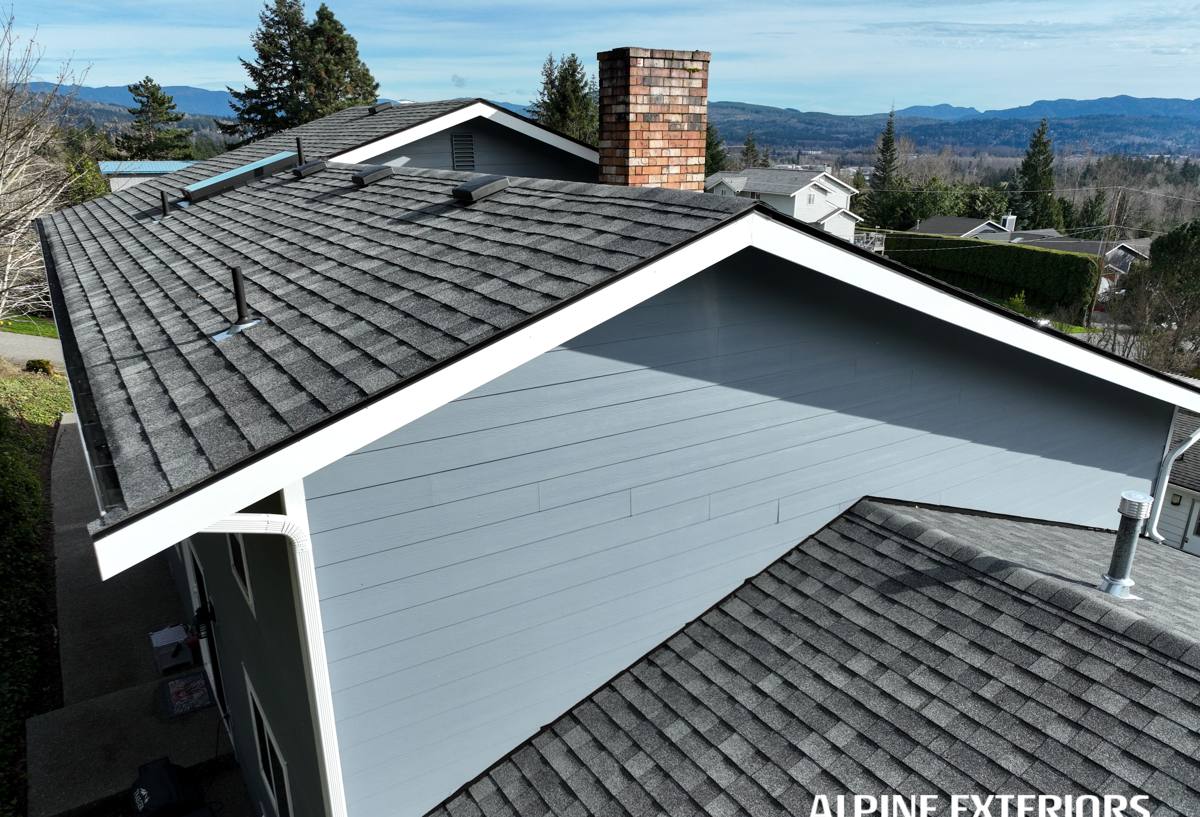
Signs a Birchwood Home Needs a New Roof, Not Another Repair
Roof repairs make sense when the damage is isolated — a cracked pipe boot, a few lifted shingles after a windstorm, a flashing leak at a chimney. A full replacement becomes the right call when the roof's overall condition, not just one spot, is compromised. In our experience working on homes in this area, the most common signs are:
- Granule loss heavy enough that you can see bare, shiny patches on asphalt shingles, especially on south- and west-facing slopes
- Moss or algae staining that keeps coming back within a year or two of cleaning, even on a well-maintained roof
- Shingles that are curling, cupping, or cracking at the tabs — a sign the asphalt has dried out and lost flexibility
- Soft spots or sagging in the roof deck, often first noticed from inside an attic as daylight or water staining
- A roof approaching or past 20-25 years old for asphalt, or showing multiple failure points at once rather than one clean problem
- Repeated interior leaks in different locations after storms, suggesting the underlayment and flashing system as a whole is failing, not just one shingle
If you're only seeing one of these and the roof is otherwise young, a repair is usually the honest answer, and we'll tell you that. Replacement makes sense when the underlying system — deck, underlayment, flashing, and shingle — is aging out together.
Choosing the Right Material for This Climate
There's no single "best" roofing material for every home. The right choice depends on your roof's pitch, how much shade it gets, your budget, and how long you want to go before the next major roof project. Here's how the common options stack up specifically against Bellingham's wet, salt-influenced, moss-prone conditions:
| Material | Moss/moisture resistance | Wind-driven rain performance | Typical lifespan here |
|---|---|---|---|
| Architectural asphalt shingle | Good with proper algae-resistant granules and ventilation | Strong when installed with correct nailing pattern and underlayment | 25-30 years |
| Standing seam metal | Excellent — sheds moisture fast, little surface for moss to grip | Very strong; interlocking seams resist wind uplift | 40-50+ years |
| Composite/synthetic shake | Good, does not absorb water like wood | Strong with proper fastening | 30-40 years |
| Cedar shake | Requires ongoing maintenance to resist moss and rot in this climate | Moderate; depends heavily on installation quality | Varies widely with upkeep |
We steer most Birchwood homeowners toward architectural asphalt or metal for straightforward reasons: both handle sustained damp weather well when installed correctly, both take algae-resistant treatments that matter in a moss-heavy climate, and both have predictable, well-understood warranty structures. Traditional cedar shake can look great, but it demands a level of ongoing maintenance — cleaning, treating, replacing individual shakes — that most homeowners underestimate until they're dealing with moss and soft spots a few years in. That's a maintenance-burden tradeoff we're upfront about, not a knock on the material itself.
Color and Surface Considerations
Darker roof colors show less staining between cleanings but run slightly warmer in summer sun. Lighter colors show algae streaking faster in a climate this damp. Neither is wrong — it's a tradeoff worth talking through based on your roof's exposure and how it sits relative to tree cover.
What a Correct Installation Actually Involves
The material on top is only part of a new roof. Most leaks and premature failures we get called out to fix trace back to shortcuts underneath the shingles, not the shingles themselves. A correct installation for this climate includes:
Deck Inspection and Repair
Every new roof starts with the plywood or OSB deck exposed and inspected. Soft, delaminated, or water-stained sections get replaced before anything new goes down — covering a compromised deck with new shingles just hides the problem.
Ice and Water Shield at Vulnerable Points
Valleys, eaves, and areas around chimneys and skylights get a self-adhering waterproof membrane, not just standard felt. These are the spots where wind-driven rain and ice dams (on the colder, higher-elevation edges of the county) find their way in first.
Full Synthetic Underlayment
We use synthetic underlayment across the full roof deck rather than older felt products. It holds up better to the extended damp exposure common during a multi-day install here, and it performs better as a secondary water barrier if wind ever drives rain up under a shingle tab.
Proper Flashing at Every Penetration
Chimneys, vent pipes, skylights, and wall-to-roof transitions all get new, correctly lapped flashing. Reusing old flashing to save time is one of the most common corners cut in this trade, and it's one of the most common causes of a "new" roof leaking within a year or two.
Fasteners Rated for a Coastal-Influenced Climate
Given the salt air moving through this part of Whatcom County, we use corrosion-resistant fasteners and flashing metals rather than standard-grade hardware that can start rusting and staining within a few seasons.
Ventilation and Moisture Control: The Overlooked Half of the Job
A roof that sheds rain well but traps moisture and heat underneath will still fail early — through curling shingles, deck rot, or mold in the attic. Balanced intake and exhaust ventilation (soffit vents paired with ridge or roof vents) keeps air moving through the attic space, which does two things that matter here specifically: it lets the deck dry out between the region's frequent rain events, and it reduces the cool, stagnant, shaded conditions that moss and algae need to establish themselves. We size and place ventilation as part of every new roof, not as an optional add-on.
Our New Roof Installation Process
- On-site assessment — we inspect the existing roof, deck condition, ventilation, and any problem areas, and take measurements
- Written estimate — a clear breakdown of material options, scope, and cost, with no pressure to decide on the spot
- Material selection — we walk through the tradeoffs above based on your roof's exposure, budget, and how long you plan to stay in the home
- Scheduling around weather — we plan installs to minimize the number of days the deck is open to the elements, which matters in a climate where a dry week isn't guaranteed
- Tear-off and deck inspection — old roofing removed, deck checked and repaired as needed
- Underlayment, flashing, and ventilation installed — the parts of the job that determine whether the roof performs for decades or leaks in year two
- Shingle or panel installation — installed to manufacturer specification, which is also what keeps the material warranty valid
- Final walkthrough and cleanup — we review the finished roof with you and clear the site of debris and nails
Cost Factors for a New Roof in Birchwood
Every roof is priced on its own specifics, but the main variables that move the number up or down are consistent. We'd rather walk you through these honestly than quote a number that doesn't hold up once we're on the roof:
| Factor | Why it matters |
|---|---|
| Roof size and number of planes | More square footage and more valleys/hips mean more material and labor time |
| Pitch and access | Steep or hard-to-access roofs take longer and require more safety setup |
| Deck condition | Rotted or soft decking found during tear-off adds repair cost most homeowners don't budget for upfront |
| Material choice | Asphalt, metal, and composite shakes carry different material and labor costs |
| Number of penetrations | Chimneys, skylights, and multiple vent stacks each add flashing work |
| Layers to remove | A roof with an existing second layer of shingles takes longer to strip than a single-layer tear-off |
Broadly, a straightforward asphalt shingle replacement runs less than a metal roof of the same size, while complex rooflines, poor deck condition, or difficult access push any material's cost upward. We give a firm number after seeing the roof in person, not before.
What to Ask Before You Hire a Roofing Crew
- Are you licensed and bonded to do roofing work in Washington State, and can you provide that documentation?
- Do you carry liability insurance and workers' comp coverage for your crew?
- Will you put the material, labor scope, and warranty terms in writing before work begins?
- Who handles the manufacturer's warranty registration, and does your installation warranty cover workmanship separately?
- Do you inspect and repair the deck as part of the job, or only if it's requested?
- How do you handle weather delays mid-project, and how do you protect an open roof if rain moves in?
A contractor who answers these clearly and in writing, without hedging, is generally one worth trusting with a job this size.
Why Hiring a Crew That Already Works Birchwood Matters
A roofing crew that regularly works Birchwood and the surrounding Bellingham area already knows which slopes tend to hold moss longest, how local tree cover affects a roof's drying time, and which fastener and flashing upgrades are worth the extra cost given the salt air moving through this part of Whatcom County. That's not something a crew based hours away, unfamiliar with this specific coastal-influenced weather pattern, picks up on a single job. It shows up in fewer callbacks and a roof that's actually built for the conditions it has to survive, not just the conditions on a spec sheet.
If you're weighing a new roof for your Birchwood home, we're happy to take a look and give you a straight, no-pressure assessment of what your roof actually needs. Use the form below to request a free estimate.