 Bellingham Siding
 Building New in Sudden Valley Means Getting Windows Right the First Time
Sudden Valley sits in the trees on the south shore of Lake Whatcom, and building or adding onto a home out there is a different job than working on a bare lot in town. Lots are wooded, shaded, and sloped, humidity sits higher near the water, and a lot of the framing package goes up under tree cover that never fully dries out between rain events. When a new-construction window is installed wrong on a lot like this, the problem doesn't show up right away — it shows up two or three winters later as rot in the sheathing, a stained sill, or a window that fogs between the panes. Getting it right at rough-in is cheaper, faster, and far less disruptive than fixing it after drywall and siding are already closed up.
This page is specific to new-construction window installs for Sudden Valley homes and additions — not replacement windows in an existing wall. The two jobs look similar from the street but are handled completely differently on site, and mixing up the methods is one of the more common (and expensive) mistakes we see corrected on newer builds.
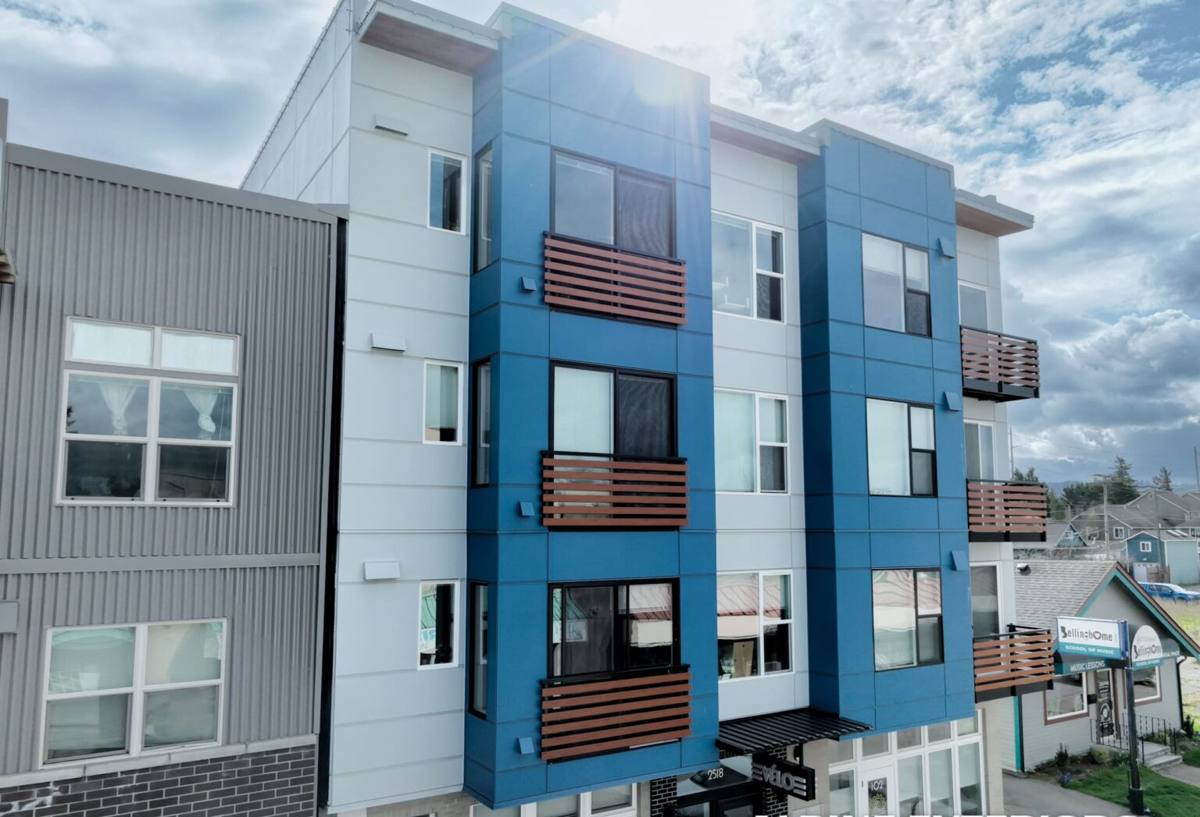
What Sudden Valley's Climate Does to a New Build
Whatcom County's marine-influenced climate brings a long, wet shoulder season, and Sudden Valley's tree cover and lake proximity add their own wrinkle on top of that. A few things we plan around on every job out there:
Moisture and Shade
North- and east-facing walls under a tree canopy dry slowly. Moss and algae take hold faster on shaded siding and trim than they would on an open lot in town, and that same slow-drying pattern affects window openings — any gap in the flashing or sealant has more time to do damage before it dries out again.
Driving Rain
Storms moving through the region push rain sideways, not just straight down, and lake-adjacent lots can funnel wind in ways a flat, open site doesn't. A window opening that's only detailed to shed water from directly above will leak the first time weather comes in at an angle.
Regional Marine Air
Sudden Valley isn't on the immediate saltwater shoreline, but Whatcom County as a whole sits in a marine air belt that affects hardware, fasteners, and finishes over time. We spec corrosion-resistant fasteners and flashing on every install, whether the lot is on the lake, in town, or closer to the bay — it costs little extra at the new-construction stage and saves real money over the life of the window.
New-Construction vs. Replacement: Why the Install Method Changes Everything
A replacement window gets set into an existing, already-flashed rough opening, usually with a nailing flange removed or a pocket frame used to fit inside the old frame. A new-construction window is installed into a bare, unfinished rough opening before siding or interior wall finishes exist — which means the entire weather-resistive barrier (WRB), flashing, and sealant sequence is built around it from scratch. That's more work, but it's also the only chance to get the water management layer built correctly, because once siding goes on, most of that assembly is hidden for the life of the house.
On a new build or addition, we're not working around what's already there — we're setting the standard the rest of the wall assembly has to meet. That's the advantage of doing it right at this stage, and it's why we treat new-construction window rough-ins as a distinct scope of work rather than a smaller version of a replacement job.
Choosing the Right Frame Material for a Wooded, Lake-Adjacent Lot
There's no single "best" window frame material — the right call depends on the elevation, the exposure, and how much upkeep the homeowner wants to take on. Here's how the common options stack up for a shaded, moisture-prone Sudden Valley site:
| Frame Material | Moisture & Moss Resistance | Maintenance | Best Fit |
|---|---|---|---|
| Vinyl | Good — won't rot, but shaded frames can hold algae film and need occasional washing | Low | Budget-conscious builds, secondary elevations under tree cover |
| Fiberglass | Very good — stable in wet-dry cycling, holds paint and caulk lines well over time | Low to moderate | Front elevations, larger openings, longer-term ownership |
| Wood interior / clad exterior | Depends entirely on install quality — the clad exterior is durable, but any breach exposes wood to the wet shade | Higher — exterior clad still needs sealant checks | Homeowners who want a wood interior look and are committed to upkeep |
| Aluminum | Poor thermal performance in our climate and prone to condensation without a thermal break | Low, but condensation issues are a real drawback | Rarely recommended for Whatcom County homes |
For most Sudden Valley builds we lean toward vinyl or fiberglass on shaded and secondary elevations, and reserve wood-interior or clad units for elevations where the homeowner wants that look and understands the added maintenance. We'll talk through the trade-offs for your specific lot rather than push one product across the board.
Glass Packages That Make Sense for Shaded and Sun-Exposed Elevations
A lot of Sudden Valley lots have a split personality — heavily shaded on the lake or forest side, more open where the lot faces a road or clearing. That matters for glass selection:
On shaded, tree-covered elevations, the priority is usually a solid U-factor for heat retention rather than solar control, since these walls rarely see direct sun. On open or lake-facing elevations that do get sun exposure, a Low-E coating tuned for solar heat gain control keeps rooms from overheating in summer while still holding heat in winter. We also pay attention to interior condensation resistance — homes with higher indoor humidity (common with new construction still drying out, or homes near the lake) benefit from warm-edge spacers and a glass package rated for it, since cold glass in a humid room is exactly where interior condensation and eventual sill damage start.
Our New-Construction Window Process
The sequence matters as much as the window itself. On every new-construction install, our crew follows the same core steps, adjusted for the specific product manufacturer's instructions:
- Verify rough opening size and level, plumb, square tolerances against the window schedule before any flashing goes on
- Install a sloped sill pan flashing so any water that gets past the window has a way out, not a place to sit
- Sequence the WRB and flashing tape shingle-style — sill first, then jambs, then head — so water always sheds down and out, never into the wall
- Set the window per manufacturer fastening schedule, checking reveal and operation before final fastening
- Seal and back-dam the interior per the manufacturer's air-sealing details, not just caulk around the trim
- Photo-document flashing and sealant details before siding closes the wall, so there's a record of what's behind the finish
- Walk the finished openings with the builder or homeowner before move-in, checking operation, locks, and screens on every unit
That documentation step matters more on a wooded lot than a bare one — if a question ever comes up years later about how a wall was built, having a record of what's under the siding saves everyone a guessing game.
Code, Egress, and Energy Requirements Builders Need to Hit
Egress
Bedrooms need at least one window meeting egress size and sill height requirements under the applicable building code. On new construction this gets locked in at the window schedule stage — it's far easier to size an opening correctly up front than to discover a shortfall during inspection.
Energy Code
Washington's energy code sets minimum performance requirements for window U-factor and, depending on the compliance path the builder is using, solar heat gain coefficient. We work from the project's approved window schedule and confirm every unit we install matches the specified performance rating — substituting a similar-looking window with a different NFRC rating can jam up a final inspection.
Inspection Timing
Because flashing and WRB integration get covered by siding, it's worth having the building inspector (or your own eyes) review window rough-ins before that happens. We build our schedule around inspection windows rather than rushing to close up the wall.
Why a Local Bellingham Crew Matters for New Construction
New-construction window work depends on coordination — with the framer, the siding crew, and often the general contractor's schedule — and that coordination is a lot smoother when the window crew already knows how Whatcom County builders sequence a job and what the local building department expects to see at inspection. A crew that's worked Sudden Valley specifically also has a feel for how tree cover and lake humidity behave on that side of the lake, which shapes decisions like sill pan sizing and sealant selection before a problem ever shows up.
We're not a national franchise cycling through subs — we're a Bellingham-based crew that shows up, knows the terrain, and stands behind the flashing details nobody sees again once the siding's on.
Getting Started
If you're framing a new home or addition in Sudden Valley and need a window crew that will get the rough-in details right the first time, we'd be glad to look at your plans and walk the site. Reach out for a free, no-pressure estimate using the form below.