 Bellingham Siding
 Sudden Valley's Setting Creates a Specific Siding Problem
Sudden Valley sits back in the trees along Lake Whatcom, and that setting is exactly what makes it beautiful and exactly what's hard on exterior siding. Heavy tree canopy means long stretches of shade on north- and east-facing walls. Lake proximity means the air stays damp longer after a storm than it would on an open lot in town. And like the rest of Whatcom County, this area sits inside a marine-influenced Pacific Northwest climate — driving rain off the water, salt-tinged air moving inland from Bellingham Bay on windy days, and a wet season that can stretch from October well into spring.
Put those together and you get ideal moss and algae conditions. Shaded siding that stays damp for days at a time is where moss gets a foothold, and once it's established it holds moisture against the wall surface, which is bad news for any siding material that isn't built to handle it. We see this pattern on home after home in this neighborhood: north walls and areas under mature trees showing green growth and staining years before the sun-exposed sides of the same house.
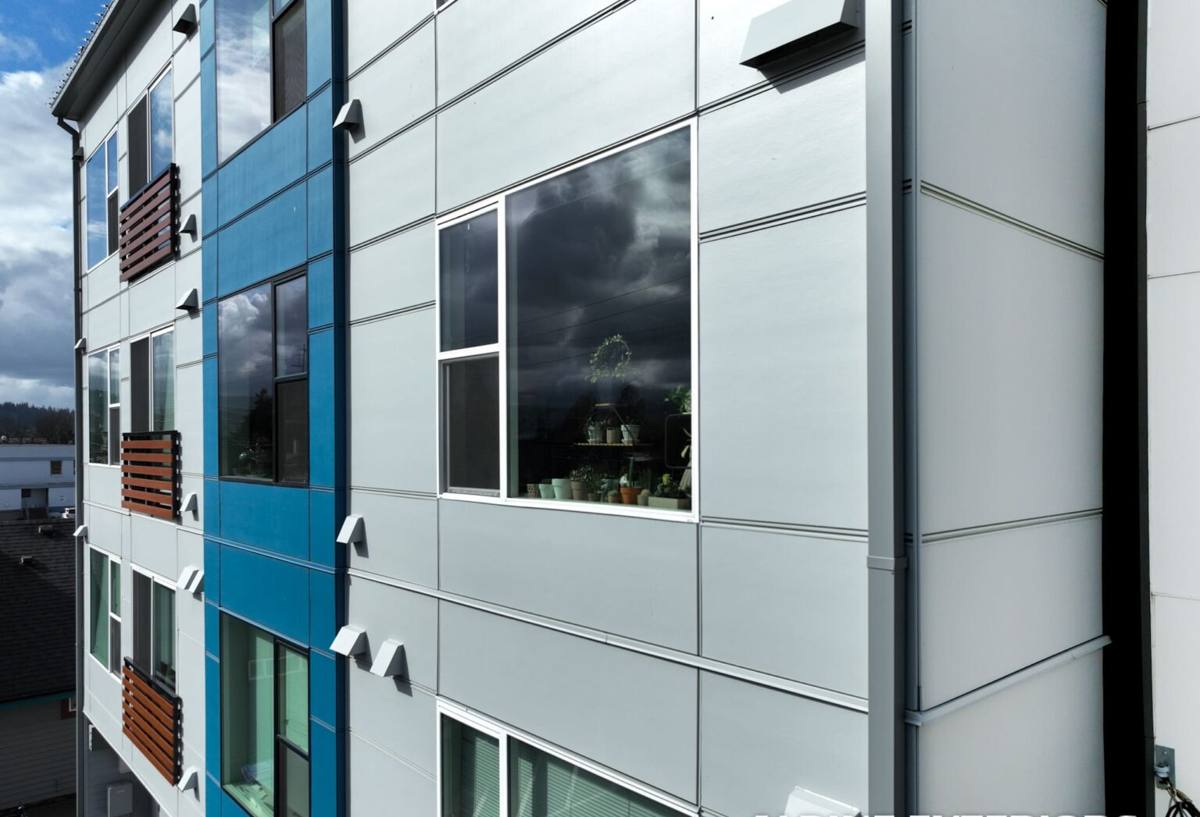
What Siding Actually Needs to Do in This Neighborhood
A siding product installed in Sudden Valley needs to handle three things at once: constant low-level moisture exposure, long shaded periods that slow drying, and occasional wind-driven rain that pushes water sideways into seams and laps. That's a tougher combination than a lot of siding products are designed for.
Why This Rules Out Some Common Options
Wood-based products — cedar, primed spruce, engineered wood siding — depend on their coating staying intact to keep water out. In a shaded, damp environment, coatings break down faster and any gap in that protection lets moisture into the substrate. Vinyl siding doesn't rot, but it doesn't manage moisture behind it either — it relies entirely on the water-resistive barrier and flashing behind it doing all the work, and it can warp or fade under prolonged damp-and-dry cycling. These aren't defects in those products so much as trade-offs that matter more in a setting like this one than they would in a drier climate.
This is why we standardized on James Hardie fiber cement and don't install anything else. It's a cement-based product, so it doesn't feed rot or absorb moisture the way wood-based sidings can, and its factory-applied ColorPlus finish is built to hold up under UV and moisture cycling better than field-applied paint. That combination matters more in a shaded, lake-adjacent neighborhood than it would on a dry, open lot.
What a Correct Fiber Cement Installation Involves
Fiber cement siding is only as good as the installation behind it. The material itself resists moisture well, but the assembly around it — flashing, clearances, fastening, and joints — is what actually keeps water out of the wall. A rushed or generic install can undercut a good product.
| Detail | Why It Matters in Sudden Valley |
|---|---|
| Weather-resistive barrier and proper lap sequencing | Backs up the siding against wind-driven rain and lake-effect moisture |
| Flashing at windows, doors, and penetrations | Redirects water before it reaches the sheathing, especially on shaded walls that stay wet longer |
| Bottom clearance from grade, decks, and roof lines | Keeps splash-back and standing moisture off the bottom course, a common failure point near landscaping and shaded foundations |
| Fastener placement and spacing per manufacturer spec | Prevents panel movement and cracking as wood framing behind it expands and contracts seasonally |
| Caulking and sealant at joints and trim | First line of defense at seams, which is where moss and standing water tend to concentrate on shaded elevations |
None of this is exotic — it's James Hardie's published installation spec. But it takes longer to do correctly, and it's the difference between siding that performs for decades and siding that develops problems in five or six years, often hidden behind the panel where you can't see it forming.
Choosing the Right Product Line and Finish for This Setting
James Hardie makes climate-engineered product lines, and for a lake-adjacent, shaded neighborhood in this part of Whatcom County, the moisture-resistant HZ5 line is the appropriate choice — it's engineered for wetter, harsher climate zones rather than the hot-dry formulation used elsewhere in the country. Beyond the base product, a few choices matter specifically for Sudden Valley:
- Lap siding vs. panel systems — lap siding sheds water down and off; make sure lap lines and caulked joints are detailed correctly on shaded walls where drying is slower.
- ColorPlus factory finish — a baked-on finish holds color and resists the moss/algae staining that shows up faster on field-painted surfaces in shaded, damp spots.
- Color selection — darker, matte finishes can make early moss growth less visually obvious than very light colors, though it doesn't change how much moss actually grows; this is a cosmetic consideration, not a performance one.
- Trim and soffit material consistency — mixing fiber cement siding with wood trim reintroduces the moisture-sensitive material you were trying to get away from; matching trim keeps the whole assembly consistent.
Our Process on a Sudden Valley Job
The process doesn't change dramatically because a house is in Sudden Valley rather than closer to town, but a few things get extra attention:
- Walkthrough and moisture check — we look specifically at shaded elevations, areas under tree canopy, and any spots showing existing moss or staining, since these tell us where the current siding or water management is already struggling.
- Sheathing inspection once old siding comes off — this is where we find out if moisture has already gotten behind the old material. On a shaded, damp lot, we don't assume the wall is dry underneath; we check it.
- Weather-resistive barrier and flashing installed or repaired — this step doesn't get shortcuts regardless of what's driving the reveal.
- Hardie installation to spec — clearances, fastening, and joint sealing done per manufacturer requirements, not "close enough."
- Final walkthrough — checking caulk lines, trim transitions, and clearances before we consider the job done.
Cost Factors Specific to This Kind of Job
Every siding job has variables, but a few come up more often on Sudden Valley homes than on a typical in-town lot:
| Factor | Why It Affects Cost Here |
|---|---|
| Existing moisture damage | Shaded, damp walls are more likely to need sheathing repair once old siding is removed |
| Tree and canopy clearance | Some jobs need branches trimmed back from the house before work can start safely and to keep future moss growth down |
| Access and site layout | Wooded lots and longer driveways can affect equipment staging and material delivery |
| Amount of trim and detail work | Homes with more window/door trim and multiple roof lines take more flashing and cutting time |
| Full replacement vs. partial re-side | A full tear-off allows a full sheathing and barrier inspection; a partial job limits what we can verify underneath |
We give straight, itemized estimates rather than a single lump figure, so you can see what's driving the number and where the money is going.
Maintenance That Actually Matters in This Environment
Fiber cement is low-maintenance compared to wood, but "low-maintenance" doesn't mean "no maintenance" — especially in a shaded, lake-adjacent setting. A short annual routine keeps siding performing for the long haul:
- Rinse shaded and north-facing walls once a year to knock back early moss and algae before it establishes
- Keep tree branches and shrubs trimmed back from siding to improve airflow and sun exposure
- Check caulking at trim, windows, and joints every year or two and re-caulk where it's cracked or pulled away
- Clear gutters and downspouts regularly — overflow during heavy rain is a common cause of localized water damage at corners and bottom courses
- Look at the bottom few inches of siding near grade, decks, and planting beds for splash-back staining or trapped moisture
Why a Crew That Already Works This Neighborhood Matters
Sudden Valley's mix of tree cover, lake moisture, and long shaded stretches isn't the same as siding a house on an open lot closer to downtown Bellingham. A crew that's worked here before knows to check for moss patterns on north walls before starting, knows where moisture tends to hide once old siding comes off, and knows not to skip flashing details because "it hasn't rained in a week." That familiarity doesn't replace following manufacturer spec — it just means fewer surprises and a more accurate estimate from the start.
If you're weighing a re-side in Sudden Valley, we're happy to come take a look and give you a straight, no-pressure estimate — including an honest read on what your current siding and sheathing look like underneath, not just a number.