 Bellingham Siding
 Deck Repair Built for Sudden Valley's Climate
Sudden Valley sits in a pocket of Whatcom County where tree cover, lake humidity, and long stretches of overcast, wet weather all work against an exposed wood or composite structure. Decks here don't fail because the material was bad — they fail because moisture had months at a time to sit somewhere it shouldn't, and nobody caught it until the boards were spongy or the frame was moving underfoot. A deck repair in this neighborhood has to account for that reality, not just patch what's visible.
Between the marine-influenced air that moves through Whatcom County and the shade thrown by the mature trees around Sudden Valley, decks here go through a genuinely long moss and algae season — often eight or nine months of the year with enough dampness for growth to take hold. Add driving rain that gets pushed sideways under railings and against ledger boards, and you have a structure that's under more moisture stress than a comparable deck in a drier climate, even if it looks fine from the yard.
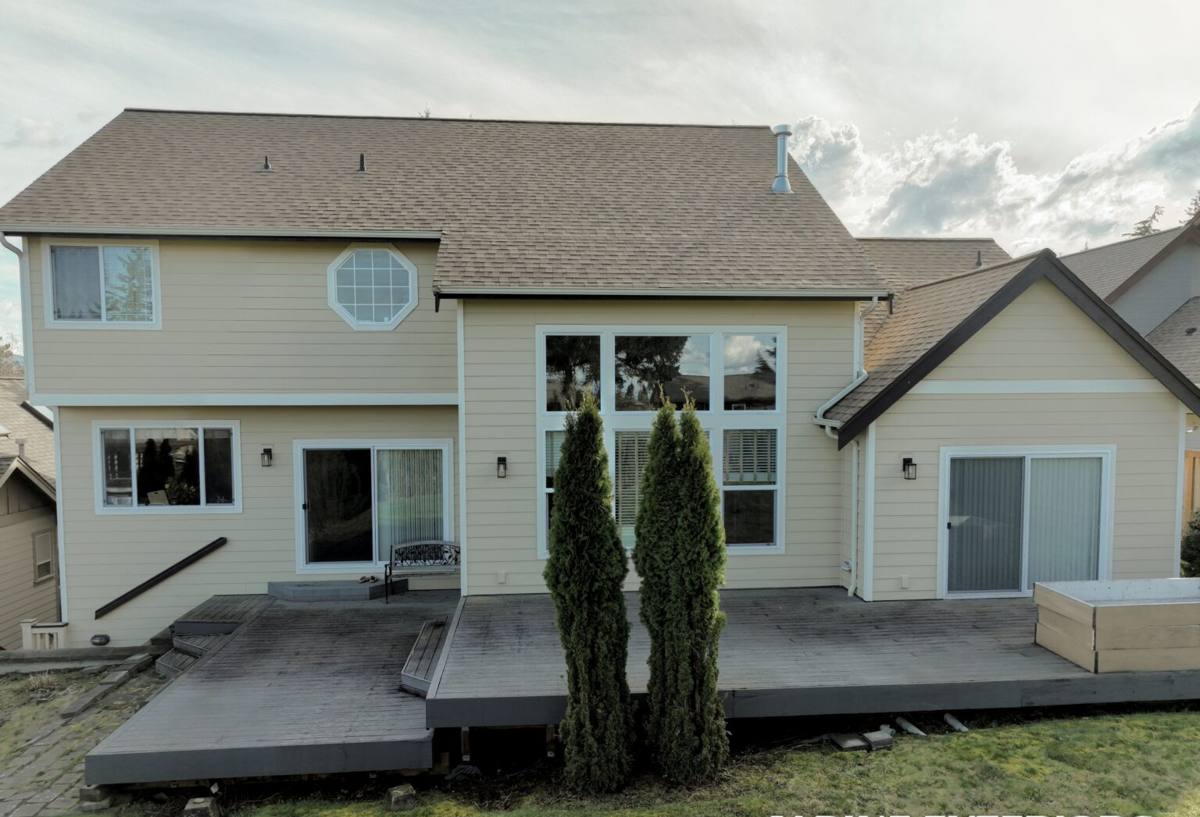
What We Typically Find on Sudden Valley Decks
No two repair calls are identical, but after years of working decks throughout Bellingham and the surrounding county, a handful of failure patterns show up again and again in this area:
- Ledger board rot where the deck attaches to the house — often the first place water intrudes because flashing was missing, undersized, or installed before code required it.
- Corroded or failing fasteners — older nails and non-rated screws that were never meant to handle years of damp Pacific Northwest exposure.
- Soft or delaminating decking boards, especially on the north or shaded side of a house where sun never fully dries the wood between rain events.
- Moss and algae buildup on boards and stair treads, which holds moisture against the surface and turns a maintenance issue into a slip hazard.
- Joist and beam deterioration hidden underneath the deck, usually worse than the surface boards suggest because it's the last thing anyone inspects.
- Railing post rot at the base, where end grain sits in contact with a wet ledger or footing without proper isolation.
Why These Problems Compound in This Area
A deck in a drier climate can tolerate a small flashing gap or an aging fastener for years without real damage. In Whatcom County, and especially around Sudden Valley's tree-shaded lots, that same small defect stays wet for days after every rain event instead of drying out in an afternoon. That's the difference between a cosmetic issue and a structural one — and it's why we treat every repair call here as a chance to check the whole system, not just the spot the homeowner noticed.
What a Correct Repair Actually Involves
Structural Assessment First
Before any board gets pulled or replaced, we check the framing underneath — ledger connection, joist condition, post bases, and footings. Surface rot is often a symptom; the cause is usually a flashing or drainage failure that needs to be fixed at the same time, or the same damage returns in a year or two.
Ledger and Flashing Correction
If the ledger board or its flashing is the source of the intrusion, we correct it properly — self-adhered flashing membrane, proper counter-flashing where the deck meets siding, and fasteners rated for exterior ground-contact or wet-service use. This is the single most common root cause we find, and it's also the repair most often skipped by a quick patch job.
Selective Board and Framing Replacement
Rotted decking, joists, or posts get replaced with matched or appropriately upgraded material — we don't replace more than necessary, but we don't leave adjacent damaged material in place just to save a board. Structural framing is treated with a different standard than decking, since it's harder to inspect later.
Fastener and Hardware Upgrade
Where old fasteners or connectors are corroding, we replace them with stainless or coated hardware rated for the moisture exposure this region sees. This is a small cost relative to the whole repair and one of the best insurance policies against a repeat call.
Surface Treatment
Moss and algae get cleaned off using methods that don't damage the wood fiber or strip a composite's cap layer, and we'll talk through realistic maintenance intervals so it doesn't come right back within a season.
Repair or Replace? What Actually Drives That Decision
Homeowners in Sudden Valley often call assuming they need a full deck replacement when a targeted repair would do, or the reverse — patching a deck that's actually past the point where repair makes financial sense. The honest answer depends on a few factors:
| Factor | Favors Repair | Favors Replacement |
|---|---|---|
| Framing condition | Joists/beams solid, damage isolated | Widespread rot in structural members |
| Age of deck | Under 15–20 years, built to a reasonable standard | Original construction predates current flashing/code practices |
| Extent of damage | Limited to a few boards or one ledger section | Rot found at multiple, unrelated locations |
| Footings/posts | Sound and properly set | Undersized, shifting, or improperly anchored |
| Homeowner goals | Keep existing layout and material | Want a layout change or material upgrade |
We'll give you a straight answer during the inspection — if repair is the honest, durable option, that's what we'll recommend. If the underlying structure is compromised enough that a repair would just delay a bigger project, we'll say that too.
How Our Process Works
- On-site inspection — we walk the deck, check underneath it, and probe suspect areas (ledger, posts, joists) rather than just looking at the surface.
- Written scope and estimate — you get a clear breakdown of what needs repair, what's optional, and what we'd flag to monitor.
- Permit check — structural repairs affecting framing or footings may require a Whatcom County permit; we handle that determination and the paperwork if needed.
- Repair work — framing and flashing corrected first, then decking, railings, and hardware.
- Final walkthrough — we show you what was done and what to watch for going forward, including realistic cleaning and maintenance timing for this climate.
Material Choices and Trade-Offs
Most Sudden Valley decks we work on are either natural wood (cedar or pressure-treated fir) or composite. Each has a real trade-off in this climate, and we'll walk through it honestly rather than push whatever's easiest to install:
- Cedar — good natural moisture resistance and a look many homeowners want, but it needs regular sealing or staining to hold up through our wet season, and untreated cut ends or fastener holes are where rot starts first.
- Pressure-treated framing — the standard for structural members here, but even treated lumber needs proper flashing at connection points; treatment resists rot, it doesn't eliminate the need for good detailing.
- Composite decking — low maintenance on the board surface, but it doesn't eliminate the moisture problem underneath; the framing still needs to be built and flashed correctly, and moss/algae still grow on composite caps if the deck stays shaded and damp.
We install what fits the homeowner's budget and the specific site — but on every job, we hold the framing and flashing to the same standard regardless of what decking material sits on top.
A Practical Maintenance Checklist
- Clear leaves and debris from between boards and along the ledger line before fall rains set in
- Check for soft spots by pressing on boards near the house and at stair landings
- Look underneath the deck once a year for staining, soft wood, or standing water at post bases
- Clean moss and algae off walking surfaces before it builds up thick enough to hide underlying board damage
- Confirm gutters and downspouts near the deck aren't dumping extra water onto or under it
- Have fastener and railing connections checked every few years, especially on decks over 10 years old
Why Working With a Crew That Knows Sudden Valley Matters
A deck repair isn't just carpentry — it's a judgment call about how much moisture exposure a given detail can take in this specific climate, on this specific lot. A crew that mostly works drier inland areas or a different region can miss how much worse a small flashing gap becomes after a full Whatcom County wet season, or underestimate how fast moss returns in a shaded Sudden Valley yard. Working this neighborhood regularly means we've seen how these decks age here specifically, not in a generic climate model.
If you're noticing soft boards, moss buildup that won't quit, or a deck that just doesn't feel as solid as it used to, we're happy to take a look. We'll give you a straight, no-pressure assessment of what's actually going on and what it would take to fix it right — just fill out the form below to get started.