 Bellingham Siding
 Roofing in Happy Valley: A Different Set of Demands
Happy Valley sits close enough to the water and the hills around Bellingham that its roofs take a particular kind of beating. It's not one dramatic storm that wears a roof out here — it's the steady grind of salt-laden air off Bellingham Bay, driving rain that comes in sideways during a fall system, and a moss season that runs longer than most homeowners expect. A roof that would hold up fine in a drier inland climate can fail early in Happy Valley if it wasn't designed and installed with these specific conditions in mind.
When we install a new roof in this neighborhood, we're not just following a generic installation manual. We're accounting for the moisture load this area sees, the way wind moves across these lots, and the fact that whatever we put up needs to shed water and resist moss for the next several decades, not just look good on install day.
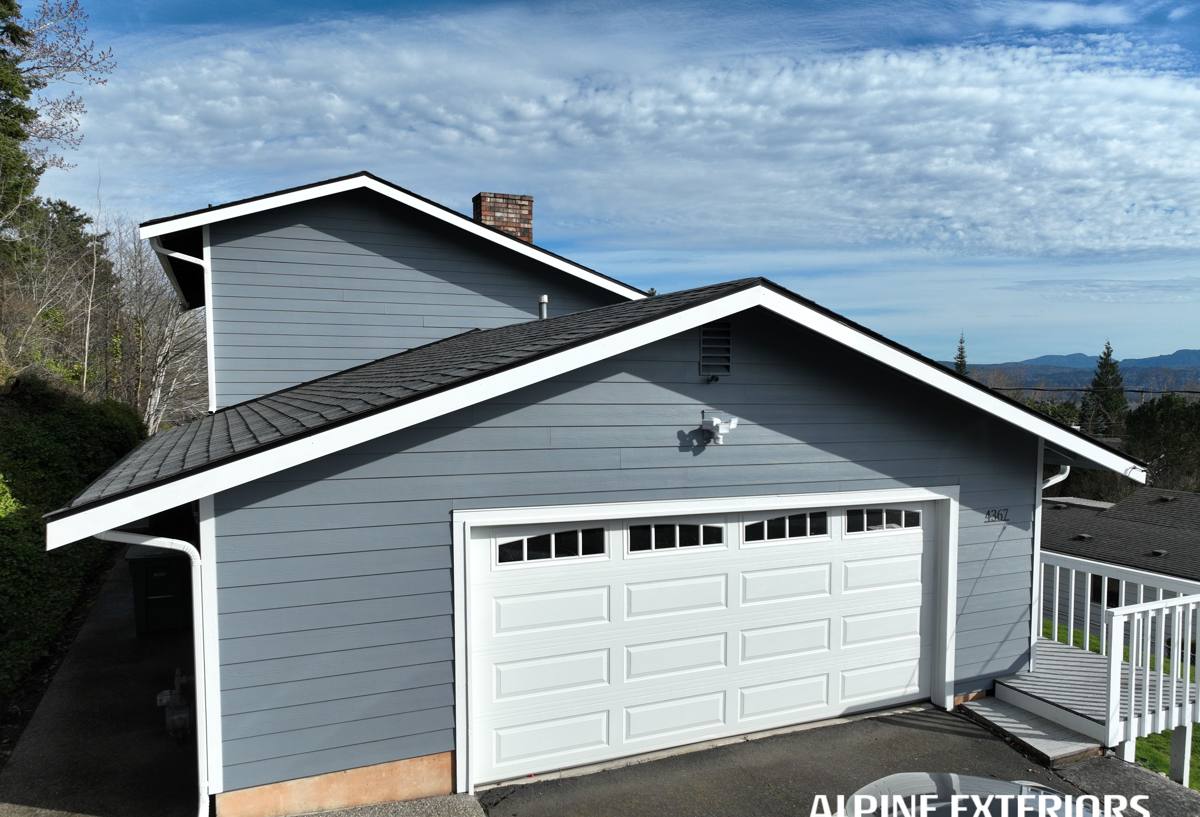
Why Happy Valley's Climate Is Hard on Roofs
Salt Air and Metal Fatigue
Proximity to salt water accelerates corrosion on anything metal — flashing, fasteners, vents, and drip edge. Cheap or mismatched metal components corrode faster than the shingles or panels around them, and once flashing fails, water gets underneath the roofing system even if the field material still looks fine from the ground. We spec corrosion-resistant metal and fasteners rated for coastal exposure on every Happy Valley job, not just the ones closest to the water.
Driving Rain and Wind-Driven Water
Whatcom County storms don't always drop rain straight down. When wind pushes rain sideways or upward under eaves and around penetrations, standard installation shortcuts that would pass in a calmer climate start to leak. Roof valleys, chimney flashing, skylight curbs, and low-slope transitions are where this shows up first.
Moss and Prolonged Dampness
Bellingham's wet season stretches long, and shaded lots in Happy Valley with mature trees hold moisture even longer. Moss doesn't just look bad — it holds water against the roofing surface, lifts shingle edges, and works its way into seams over time. A roof installed without moss-resistant materials and proper drainage detailing will need moss treatment and cleaning far more often than one that was built to resist it from the start.
What a Correct Roof Installation Actually Involves
A lot of roofing problems trace back not to bad materials but to skipped steps during installation. Here's what we consider non-negotiable on every new roof we install in this area.
Tear-Off and Deck Inspection
We remove the old roofing down to the deck rather than layering over it. This lets us actually see the plywood or plank sheathing underneath, which matters a lot in a climate where hidden moisture damage is common. Any soft, delaminated, or rotted decking gets replaced before anything new goes down — installing new roofing over a compromised deck just hides the problem for a year or two.
Underlayment Built for Wet Climates
The underlayment is the roof's backup plan if wind-driven rain or ice gets past the surface layer. In Happy Valley we use synthetic underlayment and self-adhered membrane in the areas most exposed to wind-driven moisture — eaves, valleys, and around every roof penetration — rather than relying on minimum-code coverage.
Flashing Done Right
Flashing failures cause more leaks than worn-out shingles do. Every chimney, vent pipe, skylight, and wall-to-roof transition gets new, properly lapped, corrosion-resistant flashing — never reused or caulked-over old flashing, which is a common shortcut that fails within a few years near the coast.
Ventilation That Matches the Climate
A roof that can't breathe traps moisture in the attic, which shows up as premature sheathing rot, mold, and reduced material lifespan. We balance intake and exhaust ventilation based on the specific roof geometry rather than installing a one-size-fits-all vent count.
Fasteners and Metal Rated for Coastal Exposure
Every nail, screw, and piece of metal trim on the roof is chosen with salt air in mind. This is a small line-item cost difference and a large difference in how the roof performs after ten or fifteen years.
Roofing Material Options for Happy Valley Homes
There's no single "best" roofing material — the right choice depends on the home's roof pitch, budget, architectural style, and how much maintenance the homeowner wants to take on. Here's an honest comparison of the main options we install in this area.
| Material | Moisture & Moss Resistance | Typical Lifespan | Maintenance Level |
|---|---|---|---|
| Architectural asphalt shingles | Good, especially with algae-resistant granules | 25-30 years | Moderate — periodic moss and debris cleaning |
| Standing seam metal | Excellent — sheds water fast, minimal moss buildup | 40-50+ years | Low |
| Synthetic composite (cedar-look, slate-look) | Very good, engineered to resist moisture absorption | 40-50 years | Low to moderate |
| Cedar shake | Requires ongoing treatment to resist moss and rot in this climate | 20-30 years with upkeep | High |
We're upfront with homeowners about the maintenance trade-off with cedar shake in a climate this wet — it can look great, but it demands a consistent treatment schedule to hold up against moss and moisture here, and skipping that upkeep shortens its life significantly. For most Happy Valley homeowners who want lower long-term maintenance, architectural asphalt or standing seam metal tend to be the better fit.
Signs a Happy Valley Roof Needs Replacing, Not Patching
- Granules collecting in gutters or at downspout outlets in significant amounts
- Shingles that are cupping, curling, or cracking, especially on south- and west-facing slopes
- Persistent moss growth that returns quickly after cleaning
- Soft spots or sagging visible along the roofline
- Daylight visible through the roof deck from inside the attic
- Water stains on interior ceilings, especially near chimneys, skylights, or valleys
- A roof approaching or past its material's expected lifespan, particularly if it has never been re-flashed
If a roof is showing more than one or two of these, patching individual spots usually costs more over time than it saves, since the underlying moisture damage tends to keep spreading.
How Our Installation Process Works
1. On-Site Assessment
We walk the roof and the attic, not just look from the ground. This tells us the true condition of the deck, ventilation, and existing flashing before we ever write up a proposal.
2. Honest Scope and Material Recommendation
We explain what the roof actually needs — including deck repairs, if any — and recommend materials based on the home's exposure, roof pitch, and the homeowner's budget and maintenance preference, not a one-size pitch.
3. Scheduling Around Bellingham Weather
Roofing in Whatcom County means working around rain windows. We plan installation timing to minimize the chance of exposed decking sitting open during a wet stretch, and we protect the work area if weather shifts mid-project.
4. Tear-Off, Deck Repair, and Installation
Old roofing comes off, the deck gets inspected and repaired as needed, and the new system goes on in the sequence that actually protects the home: deck repair, underlayment, flashing, field material, ridge and vent details.
5. Final Walkthrough and Cleanup
We walk the finished roof with the homeowner, confirm flashing and ventilation details, and make sure the property is cleared of debris and nails before we consider the job done.
Cost Factors for a New Roof in Happy Valley
Every roof is different, so exact pricing depends on a site visit, but these are the main factors that move the number up or down:
| Factor | Why It Matters |
|---|---|
| Roof size and number of planes | More material and more labor hours; complex rooflines take longer |
| Roof pitch and accessibility | Steep or hard-to-access roofs require more safety setup and time |
| Deck condition | Hidden rot or delamination found during tear-off adds repair cost |
| Material choice | Asphalt, metal, and composite options span a wide cost range |
| Flashing and penetration count | More chimneys, skylights, and vents mean more detail work |
| Ventilation upgrades | Adding or rebalancing intake/exhaust vents adds material and labor |
Why Local Experience in Happy Valley Matters
A roofing crew that already knows Whatcom County's weather patterns, this neighborhood's typical roof ages and construction styles, and the local permitting process moves faster and makes fewer assumptions than one working outside their usual territory. We know what tends to fail first on homes in this area, which lets us catch problems during the assessment instead of discovering them mid-project.
We also stand behind the work with clear warranty terms explained in plain language before the job starts — not buried in fine print afterward. If something needs attention after installation, we're a local crew you can actually reach, not a name that disappears once the invoice is paid.
Get a Straightforward Estimate
If your roof in Happy Valley is showing its age or you're planning ahead before the next wet season, we're happy to take a look and give you an honest assessment — no pressure, no inflated scope. Reach out for a free estimate using the form below.