 Bellingham Siding
 Storm Damage Roof Repair for South Hill, Bellingham
South Hill is one of Bellingham's older hillside neighborhoods, and that combination — steep terrain, mature tree canopy, and a mix of homes ranging from early-1900s construction to newer infill — creates a specific set of storm damage patterns we see over and over on repair calls up here. A wind event that barely touches a flat-lot neighborhood across town can strip shingles, snap limbs onto a roof plane, or drive rain up under flashing on a South Hill roof, simply because of how exposed and tree-lined the terrain is. This page covers what storm damage repair actually looks like for a South Hill home, what a correct job involves, and why local experience with this specific neighborhood matters more than it might seem.
Whatcom County's coastal climate is the backdrop for all of it. Salt-tinged marine air off Bellingham Bay, rain that arrives sideways as often as it falls straight down, and a moss season that runs long on shaded, tree-covered slopes all take a toll on a roof over time, and storm events accelerate whatever weakness was already building underneath.
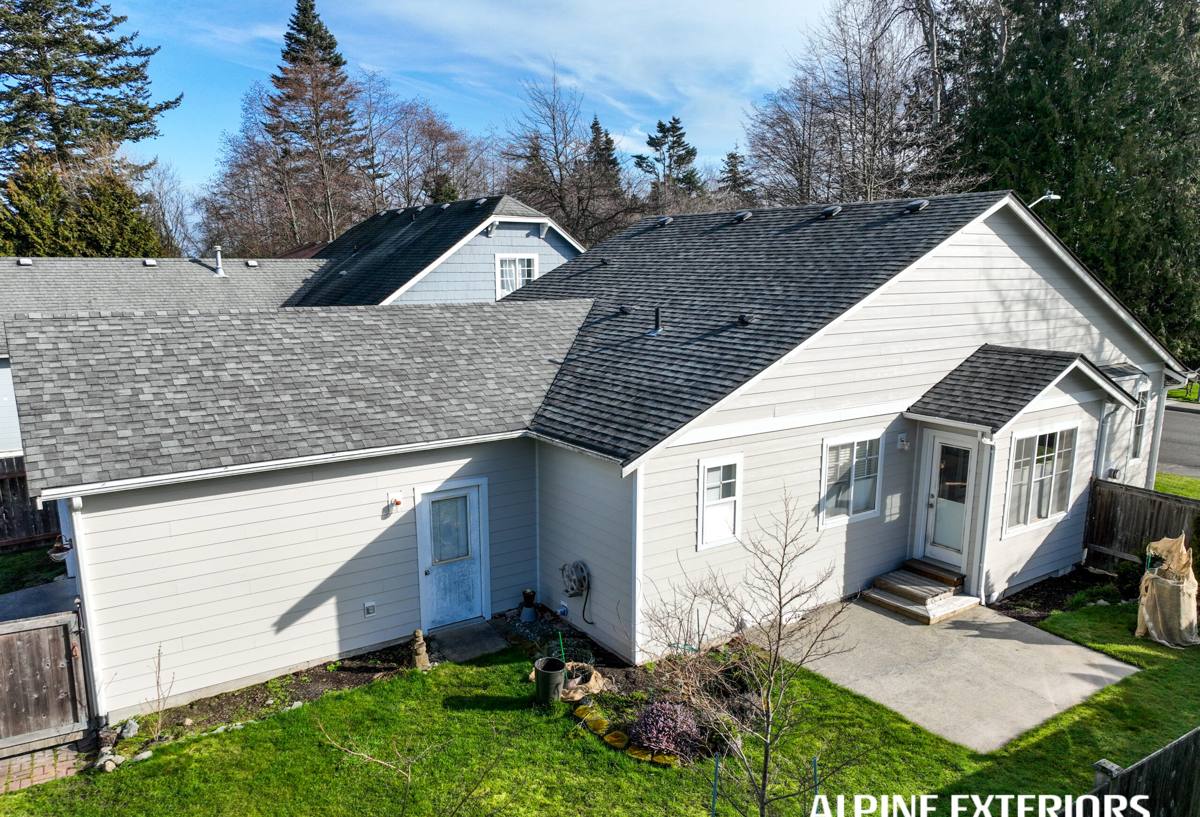
Why South Hill Sees a Particular Kind of Storm Damage
Hillside Exposure and Wind
South Hill sits up and above much of the surrounding city, which means roofs here catch more direct wind during storm events than roofs tucked into lower, more sheltered parts of Bellingham. Wind doesn't just tear at shingles from above — it gets under tab edges and ridge caps, and on a hillside lot that wind is rarely coming from a single predictable direction.
Mature Tree Canopy
Much of South Hill's charm is its tree cover, and that same canopy is a real source of storm damage. Windstorms bring down limbs, and sometimes whole trees, onto roof planes, and even when a limb doesn't visibly puncture the roof, the impact can crack shingles, dent flashing, or loosen a section just enough to let water in on the next rain. Tree cover also means South Hill roofs deal with a longer moss and mildew season than more open, sun-exposed properties, which weakens shingles and roofing felt before a storm ever arrives.
Older Housing Stock
A meaningful share of South Hill's homes are older, which often means older roofing systems, older flashing details, and decking that's been through more decades of moisture cycling than a newer build. Storm damage on an older roof frequently exposes a problem that was already there — a soft spot in the decking, an underlayment that's past its service life, flashing that was never sealed correctly to begin with.
What Storm Damage Actually Looks Like
Some storm damage is obvious from the ground. A lot of it isn't, and the damage that isn't obvious is usually the kind that causes the most expensive problems if it sits unaddressed through another wet season.
- Missing, torn, or curled shingles, especially on the side of the roof that faced the wind
- Granules collecting in gutters or at downspout outlets after a storm
- Visible dents, cracks, or displaced sections where a limb made contact
- Flashing that's been bent, lifted, or pulled away from a chimney, vent, or wall intersection
- Water staining on interior ceilings or upper-floor walls that appeared after a specific storm
- Sagging or soft-feeling spots on the roof deck when walked, which usually means moisture has already reached the sheathing
- Debris, moss clumps, or standing organic material left behind in valleys after branches came down
If you notice any of these after a windstorm or heavy rain event, the honest move is to get the roof looked at before the next storm, not after a second leak shows up inside the house.
What a Correct Storm Damage Repair Actually Involves
A storm damage repair that's done right is not just replacing whatever shingles are visibly missing. It starts with a full inspection of the affected roof plane, not just the spot the homeowner pointed to, because wind and impact damage often extends beyond what's visible from the ground or even from a quick walk of the roof.
Inspection Before Anything Else
We look at the full slope that took the damage, check the decking underneath any compromised area for soft spots or rot, and inspect flashing at every penetration nearby — chimneys, vents, skylights, wall intersections — since storm impact and wind-driven rain frequently loosen flashing seals even when the shingles right next to them look fine.
Matching Materials Correctly
Shingle repairs need to match the existing roof in both product line and, where possible, color batch, so the repaired section doesn't stand out or perform differently than the surrounding material over time. If the existing roofing is old enough that a true match isn't available, we'll tell you that directly rather than installing a mismatched patch and calling it done.
Flashing and Underlayment Get Fixed, Not Just Covered
A shingle sitting on top of compromised flashing or torn underlayment will fail again, often faster than the original damage took to develop. Any flashing that's been lifted, bent, or corroded by salt air gets replaced, not bent back into place, and any exposed underlayment gets properly resealed or replaced before new shingles go down over it.
Deck Repair When Needed
If moisture reached the sheathing before the repair happened, that section of decking gets replaced before new roofing goes on. Shingling over soft or rotted decking is a shortcut that guarantees a repeat repair, usually at a worse point in the damage.
Repair vs. Full Replacement After a Storm
Not every storm-damaged South Hill roof needs a full tear-off, and we're not going to tell you it does if it doesn't. A localized repair makes sense when the damage is contained to one section, the rest of the roof is in reasonable shape for its age, and the decking underneath is sound. A full replacement makes more sense when the roof was already near the end of its service life before the storm, when moisture has clearly been getting in for a while in more than one spot, or when the cost of a proper repair starts approaching a meaningful fraction of what a new roof would cost anyway. We'll walk the roof, show you what we find, and give you a straight answer on which category your roof falls into.
Our Process for a South Hill Storm Damage Call
- Initial contact and scheduling: We get a description of the damage and schedule an in-person inspection, usually quickly after a storm event since roof damage doesn't wait for a convenient week.
- On-site inspection: We walk the roof, check the deck and flashing around the damaged area, and document what we find with photos.
- Written estimate: You get a clear, itemized estimate that spells out repair versus replacement, materials, and scope, before any work starts.
- Insurance documentation, if applicable: If you're filing a storm damage claim, we provide the photo documentation and written scope your insurer will ask for.
- The repair itself: Work is scheduled around weather windows, since a repair started in the middle of another storm doesn't hold.
- Final walkthrough: We walk the finished repair with you and clean up debris, including any tree material from the storm itself.
Storm Damage Repair Cost Factors
| Factor | What It Affects | Why It Matters on South Hill |
|---|---|---|
| Extent of damage | Repair vs. full replacement scope | Limb impact and wind exposure on hillside roofs can affect more of the roof plane than is visible from the ground |
| Deck condition underneath | Whether sheathing needs replacing before reroofing | Older South Hill homes often have decking that's already absorbed years of moisture before a storm ever hits it |
| Flashing scope | Chimneys, vents, skylights, wall intersections | Salt air accelerates flashing corrosion, and storms frequently loosen seals that were already weakened |
| Debris and tree damage | Cleanup labor and any structural assessment needed | Mature tree canopy means limb strikes are a routine cause of storm damage calls in this neighborhood |
| Access and roof pitch | Staging, safety equipment, labor time | Steep hillside lots and older roof pitches common on South Hill add real setup time |
| Material match availability | Whether a patch blends in or a larger section needs replacing | Older homes may have discontinued shingle lines, which can widen the repair scope to get a clean match |
Real numbers depend on the specific roof and the specific storm, which is why we inspect in person before quoting rather than pricing a repair over the phone.
Why Hiring a Crew That Already Works South Hill Matters
After any significant windstorm, it's common for crews from outside the area to show up offering fast repairs. Some of that work is fine. A lot of it isn't built to last, because a crew that doesn't already know this neighborhood's terrain, tree exposure, and housing stock is guessing at details that a local crew already knows going in — how steep hillside access changes staging, how far tree canopy extends over a given roof plane, what era of construction is typical for a given block, and what that means for decking and flashing underneath.
A crew that already works South Hill regularly also has a reason to still be around in a year to honor a workmanship warranty, which matters more than it sounds like it should. Roofing warranties are only as good as the company standing behind them.
What to Check Before Hiring Any Storm Damage Repair Crew
- Active Washington state contractor license, verifiable through the state's Department of Labor & Industries
- General liability insurance and workers' compensation coverage
- A physical local address and phone number answered by a real local office, not a call center
- Willingness to inspect in person before quoting, rather than pricing off a description alone
- A written estimate that specifies materials and scope, not just a total number
- No pressure to sign the same day, especially tied to an artificial insurance deadline
A Word on Insurance Claims
Many storm damage repairs on South Hill are covered, in part or in full, by homeowners insurance, depending on the policy and the cause of damage. We're not an insurance company and we don't make coverage decisions, but we can document damage clearly with photos and a written scope of work that your adjuster will need to evaluate the claim. Getting an inspection soon after a storm, before further weather makes the damage worse or harder to trace back to the original event, puts you in a stronger position either way.
If a recent storm has left damage on your South Hill roof, or you're just not sure whether what you're seeing needs attention, we're happy to come take a look. The estimate is free, there's no pressure attached to it, and you'll get a straight answer about what the roof actually needs.