 Bellingham Siding
 Storm Damage Roof Repair Built for Birchwood's Coastal Weather
When a storm moves through Birchwood, the roof takes the brunt of it first, and how well it holds up usually depends on conditions that were already at work long before the storm arrived. This part of Whatcom County deals with more than the occasional rough weather day. Salt-tinged marine air works on exposed fasteners and flashing metal year-round, wind-driven rain routinely gets pushed sideways and forced upward under roofing edges instead of simply running off, and a long moss season settles into shaded roof planes and doesn't fully let go until well into the warmer months. A roof that's already fighting corrosion, trapped moisture, or moss intrusion has a much smaller margin for error when high wind or a falling branch adds a new problem on top of the old ones.
This page focuses specifically on storm damage repair for Birchwood homes, not a general roofing overview and not a full replacement guide. It's about what happens after wind, rain, or debris has already damaged a roof, and what it takes to fix that damage correctly rather than cover it up. That distinction matters more than most homeowners realize. A repair done wrong doesn't just fail to solve the problem; it can trap moisture behind an assembly that looks fine from the ground and end up causing more damage than the storm itself did.
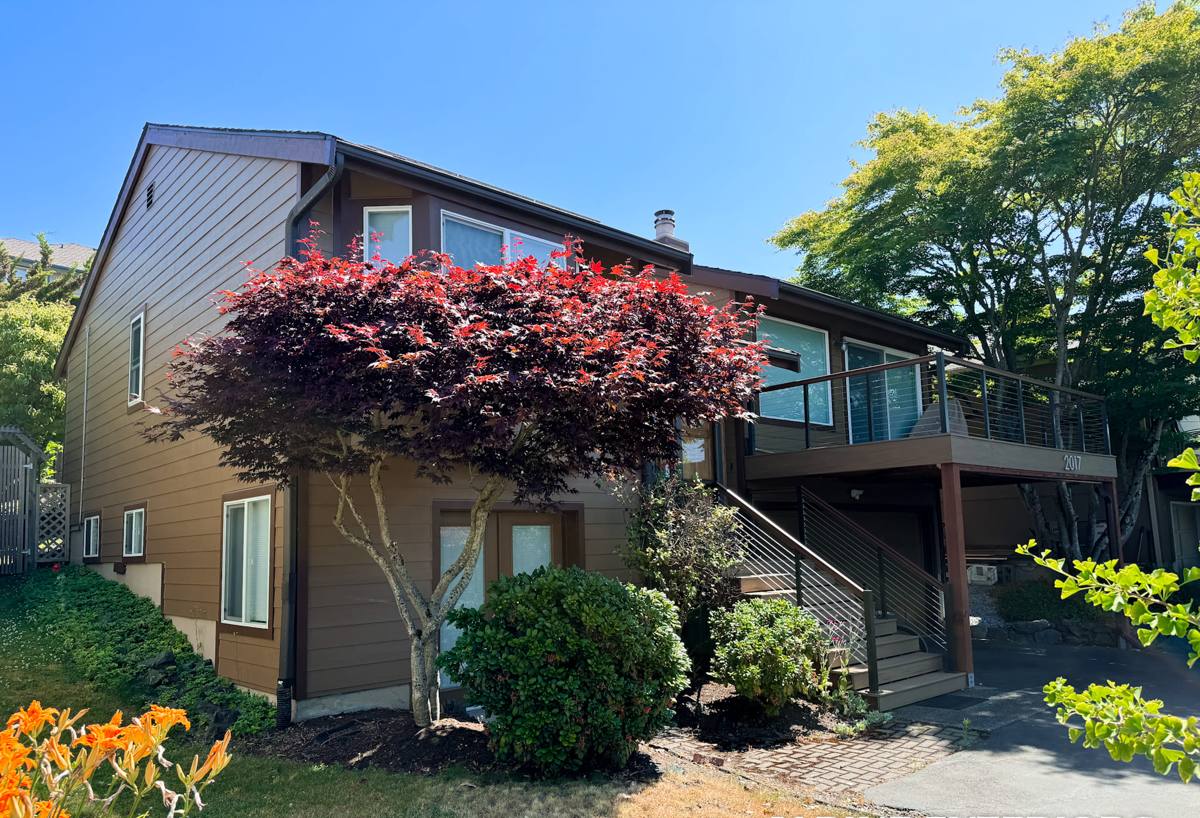
How Storms Actually Damage a Birchwood Roof
Storm damage rarely shows up as one obvious hole. More often it's a handful of smaller failures working together, and knowing what to look for is the first step in getting a repair scoped correctly.
Wind Uplift and Lifted or Missing Shingles
Sustained wind and sudden gusts get under shingle edges and lift them, breaking the seal strip that normally holds each course flat. Sometimes shingles blow off entirely and the damage is obvious from the driveway. More often, shingles get lifted and reseated by the wind without fully sealing back down, which leaves a roof that looks intact from the ground but has multiple entry points for the next rain event.
Wind-Driven Rain Intrusion
Rain that's being pushed sideways rather than falling straight down behaves differently on a roof. It can work up and under shingle tabs, ridge caps, and flashing edges that would never see water under calmer conditions. This is one of the more deceptive forms of storm damage in Birchwood, because the water intrusion can start well before any shingles are visibly missing, and the first sign inside the house is often a stain that seems to appear out of nowhere weeks later.
Debris Impact
Falling branches, wind-blown limbs, and debris carried by storm gusts can crack shingles, dent metal flashing, or puncture the roof deck outright on properties with mature trees nearby, which describes a fair number of lots in and around Birchwood. Impact damage isn't always dramatic. A cracked shingle from a small branch strike can sit unnoticed for a season before it starts leaking.
Flashing and Sealant Failure
Flashing at valleys, chimneys, skylights, and wall transitions is usually the weakest link in an older roof, and storms are what finally expose it. Repeated cycles of wind, rain, and temperature swings gradually work sealant loose and metal flashing out of position, so a storm doesn't always create new damage as much as it finishes off a detail that was already failing quietly.
Emergency Response: What Happens Right After a Storm
The first hours and days after storm damage matter. Water that's actively getting into a home needs to be stopped from causing further damage while a proper repair is planned and scoped, and that's a different job than the repair itself.
Temporary Protection
A correctly installed tarp, held down with battens or fasteners rather than loose bricks or sandbags, can stop active water intrusion while materials are sourced and a repair is scheduled. Temporary protection should be treated as exactly that: temporary. Leaving a tarp on longer than necessary invites its own problems, since tarps degrade, shift in wind, and are never a substitute for a proper repaired roof surface.
What Homeowners Shouldn't Do Themselves
- Climb onto a wet, moss-covered, or storm-damaged roof to inspect it — this is genuinely dangerous and the leading cause of fall injuries after storm events.
- Assume a roof is fine just because no water is visibly dripping inside yet; slow leaks can travel along framing before ever showing up on a ceiling.
- Attempt a DIY tarp or patch on a steep or wet roof plane without fall protection.
- Wait through multiple storm systems before having the roof looked at, since each additional event can widen existing damage.
Assessing the Damage the Right Way
A proper storm damage assessment goes beyond a look from the ground with binoculars. It should include an actual roof walk where it's safe to do so, along with an interior attic check for moisture staining, wet insulation, or daylight coming through the deck at points that don't match visible exterior damage. Ground-level assessments alone miss lifted shingles that have reseated, cracked ridge caps, and flashing that's shifted but not fully separated, all of which can be actively leaking despite looking unremarkable from the yard.
We document what we find with photos and a written summary before any repair work starts, both so you understand exactly what's being repaired and so you have something usable if you decide to file an insurance claim.
Repair vs. Replacement: How That Decision Actually Gets Made
Not every storm-damaged roof needs to be replaced, and not every roof that looks rough from the street is actually a repair candidate. The right call depends on the roof's age, the extent of the damage, and what condition the rest of the roofing system was already in before the storm hit.
| Factor | Leans Toward Repair | Leans Toward Replacement |
|---|---|---|
| Roof age | Roof is well within its expected service life | Roof was already nearing the end of its lifespan before the storm |
| Extent of damage | Damage is localized to one section or detail | Damage is spread across multiple roof planes |
| Underlying condition | Deck and underlayment were sound before the storm | Storm exposed pre-existing rot, widespread moss damage, or failed underlayment |
| Material availability | Matching shingles are available or an acceptable near-match exists | Original product is discontinued and a patch would be visibly mismatched |
| Storm frequency | This is an isolated event | The roof has taken repeated storm damage over successive seasons |
We'll always tell you honestly when a repair is the right call, even if a replacement would be the bigger job. A storm repair that's properly scoped and installed can add years of reliable service to a roof that doesn't need to come off yet.
What a Correct Storm Repair Actually Involves
Matching the Existing System, Not Just the Surface
A storm repair has to tie into the existing underlayment, flashing, and shingle courses so the whole assembly still functions as one water-shedding system. Simply nailing a new shingle over a damaged spot without addressing what's underneath it, whether that's compromised underlayment or shifted flashing, leaves the original failure point in place under a patch that looks fine.
Flashing Rebuild Where Needed
If flashing at a valley, chimney, or wall transition contributed to the damage, it gets rebuilt and properly integrated with the surrounding underlayment rather than resealed with a bead of caulk over the existing metal. Caulk is a maintenance item, not a repair, and it's one of the most common shortcuts that leads to a repeat leak the following storm season.
Deck Repair Where Storms Exposed It
Debris impact or long-term water intrusion sometimes reaches the roof deck itself. Any soft, rotted, or delaminated decking found during the repair needs to be cut out and replaced before new roofing goes back down. Skipping this step to save time is how a storm repair fails within a year or two.
Reasonable Color and Profile Matching
We do our best to match shingle color and profile to the existing roof, understanding that some fading and product changes over time can make a perfect match impossible. We'll be upfront about how close a match is realistically achievable before work starts, rather than letting you find out on the day the repair is finished.
Insurance Claims: What Birchwood Homeowners Should Know
Many storm repairs in this area do get filed as insurance claims, and a few practical points make that process go smoother.
- Document damage with photos as soon as it's safe to do so, before any temporary repairs cover it up.
- Keep a written record of the repair scope and any temporary protection measures taken, since insurers often ask for both.
- Be cautious of contractors who show up unsolicited after a storm offering to "handle the insurance company" for you — a legitimate local contractor will provide documentation and let you deal directly with your own adjuster.
- Understand that an adjuster's estimate and a contractor's estimate can differ, and it's reasonable to have your contractor walk the roof with the adjuster if there's a gap.
We're glad to provide the photos, written scope, and documentation you need to support a claim. What we won't do is inflate a scope of work to chase a bigger insurance payout, or pressure you into signing anything on the spot.
How Our Process Works
- Prompt inspection: We get on the roof, not just look at it from the driveway, and check the attic for moisture that isn't visible outside.
- Temporary protection if needed: If water is actively getting in, we stop that first with a properly secured tarp before anything else.
- Written, itemized scope: You get a clear breakdown of what's damaged, what needs to be repaired, and why, in language you can actually use to compare against another estimate or an insurance adjuster's figure.
- Repair work: Deck repair, flashing rebuild, underlayment patching, and shingle replacement are done to manufacturer specification, not shortcut to save a day of labor.
- Final walkthrough: We review the completed repair with you and do a cleanup and magnetic nail sweep of the work area before calling the job done.
Why Hiring a Crew That Already Works Birchwood Storm Repairs Matters
A crew that regularly handles storm damage in and around Birchwood has already seen how salt air accelerates corrosion on unprotected flashing, how wind off open terrain lifts shingles on exposed lots differently than on sheltered ones, and how a moss-heavy roof plane behaves once storm damage exposes it to more water than usual. That's earned, local knowledge, and it shows up in the small decisions made during a repair that a crew unfamiliar with this specific stretch of coastline might miss entirely.
It also matters after the storm season passes. Storm damage tends to arrive in clusters, and a contractor with an established, ongoing presence in the area is one you can actually reach again if a repair needs a follow-up look, rather than a name that only shows up when the weather is bad.
A Practical Checklist Before You Hire a Storm Repair Contractor
- Do they physically inspect the roof and attic, rather than quoting from a photo or a drive-by look?
- Does the estimate separate temporary protection from the permanent repair scope?
- Is flashing and deck repair explicitly addressed, not just shingle replacement?
- Do they carry current WA contractor licensing, liability insurance, and workers' compensation?
- Can they point to an established, ongoing presence working in or near Birchwood, not just a storm-season pop-up?
- Will they provide documentation you can use for an insurance claim without pressuring you on how to file it?
If a recent storm has left you with lifted shingles, a new leak, or just a nagging feeling that the roof took a hit, we're glad to come out, inspect it in person, and give you an honest, no-pressure assessment along with a written estimate. Use the form below to request a free estimate.