 Bellingham Siding
 Ferndale's Climate Is Harder on a Roof Than It Looks
Ferndale sits close enough to the water and the Cherry Point shoreline that salt-laden air is a real factor for anything installed on a roof deck, not just for siding or trim. Add Whatcom County's long stretch of wet weather, the wind that comes off the Strait, and the shade from mature fir and cedar trees that surround so many Ferndale properties, and you get a roofing environment that's genuinely tougher than what a shingle warranty is tested against in a lab. Homeowners here don't usually lose a roof to one dramatic storm. They lose it slowly, to moisture that never fully dries out, granule loss from driving rain, and moss that works its way under shingle tabs a little more every winter.
A roof replacement that's done right for a Ferndale home accounts for all of that from the start — not just the shingle brand, but the underlayment, the ventilation, the flashing details, and the decking underneath. That's the difference between a roof that looks fine for two years and one that actually performs for its full service life.
Signs a Ferndale Roof Is Telling You It's Done
Roofs rarely fail all at once. They give warning signs first, and in this climate those signs often show up earlier than homeowners expect because of the constant moisture exposure. Worth checking for:
- Granules collecting in gutters or at downspout outlets, especially after a hard rain
- Shingles that are cupping, curling at the edges, or look darker/patchy in shaded areas (early moss or algae staining)
- Moss visibly established on the roof plane itself, not just in the gutters
- Soft spots or slight sagging when walked on, which can point to decking that's absorbed moisture
- Daylight visible through the roof deck from inside the attic, or damp insulation
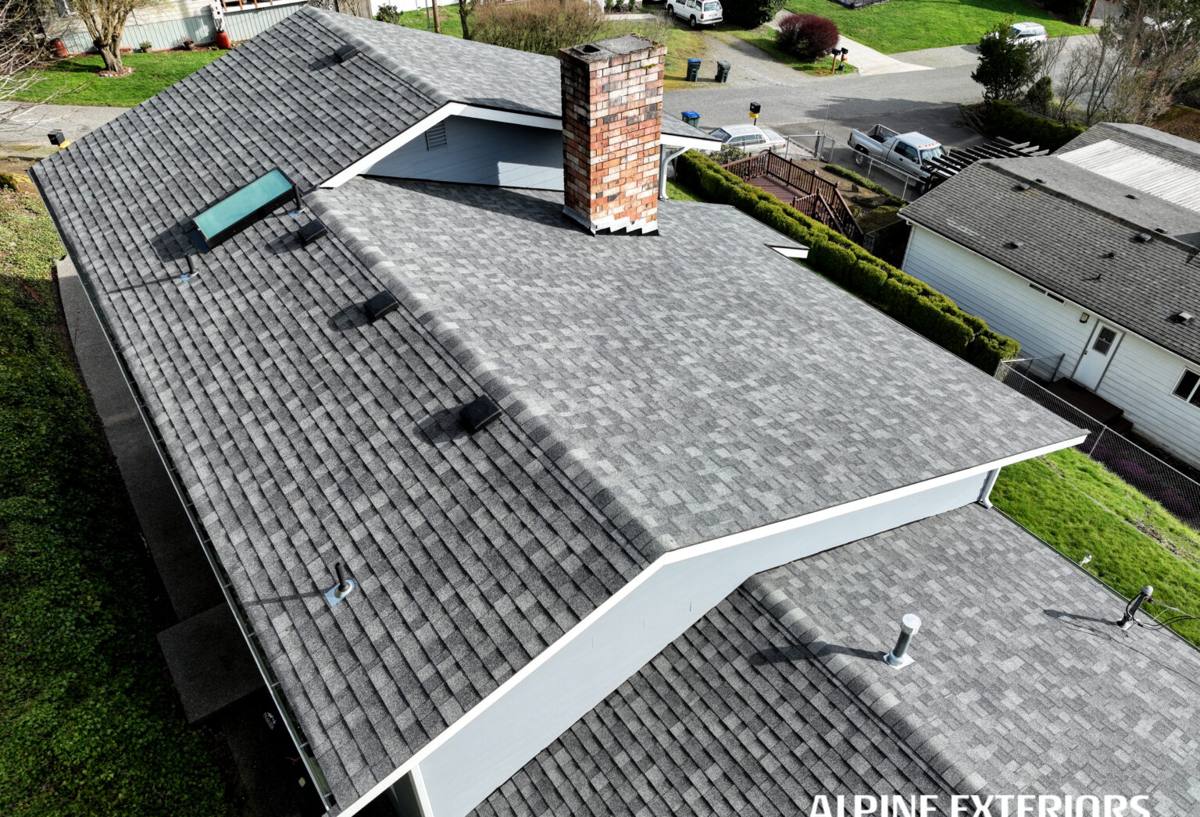
- Interior ceiling stains, especially near chimneys, skylights, or valleys where flashing does the most work
- A roof that's 20+ years old on standard three-tab shingles, or 25+ on architectural shingles, regardless of how it looks from the ground
Any one of these on its own might just mean a repair. Several at once, or a roof that's simply reached the end of its rated life, usually means replacement is the more honest recommendation — a patch on an old roof in this climate tends to buy months, not years.
What an Actual Roof Replacement Involves
Tear-Off and Deck Inspection
A correct replacement starts with a full tear-off down to the decking — not a layover on top of the old roof. That's the only way to actually see the plywood or OSB underneath, which in this climate is where hidden problems live. Any decking that's soft, delaminated, or stained from long-term moisture gets replaced before anything new goes down. Skipping this step is the single most common shortcut in the roofing trade, and it's the one that causes the most expensive problems later.
Underlayment and Ice/Water Protection
Given how much sustained rain Whatcom County sees, the underlayment matters as much as the shingle itself. Self-adhered ice-and-water shield belongs at eaves, valleys, and around every penetration — chimneys, vent pipes, skylights — where wind-driven rain is most likely to work its way under the shingle line. A synthetic underlayment across the rest of the field gives a second line of defense if any water ever gets past the shingles.
Flashing and Ventilation
Flashing at walls, chimneys, and valleys is where most roof leaks actually start, not in the open shingle field. New step flashing, counter-flashing, and valley metal should go in with every replacement — reusing old flashing to save time is a false economy. Proper intake and exhaust ventilation (soffit vents paired with ridge vents) keeps the attic dry and temperature-regulated, which reduces the condensation that feeds moss and speeds up shingle aging from underneath.
Choosing a Roofing Material for Ferndale's Conditions
There's no single "best" roofing material — the right choice depends on budget, the home's style, and how much maintenance a homeowner wants to take on. Here's how the common options actually compare for a coastal Whatcom County home:
| Material | Moss/algae resistance | Typical lifespan | Maintenance in this climate |
|---|---|---|---|
| Architectural asphalt shingle | Good with algae-resistant granules; still needs periodic cleaning | 25–30 years | Low to moderate |
| Standard three-tab shingle | Fair; more prone to moss buildup over time | 15–20 years | Moderate |
| Metal (standing seam or panel) | Excellent; moss struggles to gain a foothold | 40–50+ years | Low |
| Cedar shake | Requires active upkeep; naturally moisture-prone in shade | 20–30 years with maintenance | High |
Cedar shake has real visual appeal and a place on certain homes, but we'll always be straight with a homeowner about the trade-off: in a shaded, high-moisture setting like much of Ferndale, shake demands regular cleaning and treatment to avoid moss and rot taking hold between the shingles. That's not a knock on the product — it's simply a maintenance commitment some homeowners want to take on and others don't. Architectural asphalt with algae-resistant granules is the most common choice we install here because it balances upfront cost, appearance, and realistic upkeep. Metal is the strongest long-term performer against moss and wind but comes with a higher installed cost.
Ventilation and Moisture: The Part Nobody Sees
Most roof failures we find during tear-offs trace back to moisture that had nowhere to go, not to a bad batch of shingles. Whatcom County's mild, wet winters mean attics rarely get the kind of dry heat that pushes moisture out on its own — so the roof system has to be built to manage it mechanically. Balanced ventilation, correctly sized and placed intake and exhaust vents, and attic insulation that doesn't block soffit airflow all matter as much as the shingle brand on the invoice. A roof that looks great from the driveway but was installed without addressing ventilation is often the one that needs decking repairs at the 10-year mark instead of the 25-year mark.
Our Roof Replacement Process for Ferndale Homes
- On-site inspection. We walk the roof (not just look from the ground), check the attic, and document the actual condition of decking, flashing, and ventilation.
- Honest scope and estimate. We explain what's failing, what's still sound, and give a clear, itemized estimate — no pressure, no scare tactics.
- Material selection. We walk through options based on the home's style, budget, and how much maintenance the homeowner wants long-term.
- Tear-off and deck repair. Full removal of old roofing, inspection and replacement of any compromised decking.
- Underlayment, flashing, and ventilation install. Ice-and-water shield at vulnerable points, new flashing throughout, ventilation corrected or upgraded.
- Shingle or material installation to manufacturer specification, including proper nailing pattern and exposure — details that directly affect wind and warranty performance.
- Site cleanup and magnetic sweep for stray nails, plus haul-away of all old material.
- Final walkthrough with the homeowner and warranty paperwork.
What Drives the Cost of a Roof Replacement
Every roof is different, so we don't quote sight-unseen — but these are the factors that actually move the number on a Ferndale project:
| Factor | Why it matters |
|---|---|
| Roof size and number of facets | More squares and more complex cuts mean more material and labor |
| Roof pitch and access | Steep or hard-to-access roofs take longer and require more safety setup |
| Number of existing layers | Tear-off of two layers costs more than one; some jurisdictions limit layering anyway |
| Decking condition | Rotted or soft plywood/OSB found at tear-off has to be replaced before install |
| Material choice | Asphalt, metal, and cedar carry very different material and labor costs |
| Ventilation and flashing upgrades | Correcting undersized or missing ventilation adds work but pays off in roof life |
We'd rather walk a homeowner through these factors honestly during the estimate than give a number that doesn't hold up once the tear-off starts.
Why a Crew That Already Works in Ferndale Makes a Difference
Roofing crews that only occasionally work this far north can miss things that are second nature to a crew that's regularly on Whatcom County roofs — how much moss pressure a north-facing slope under fir trees is really going to see, which flashing details hold up against wind coming off the water, and how local building department permitting for a reroof actually works in practice. There's also a practical side: a local crew can respond quickly if weather threatens a project mid-tear-off, which matters a great deal when the forecast includes rain more days than not. Familiarity with the area isn't a marketing point — it's what keeps a project on schedule and keeps a home protected while the work is underway.
Caring for a New Roof Through Moss Season
A correctly installed roof with algae-resistant shingles and proper ventilation will resist moss far better than an older roof did, but "resist" isn't "immune." A light annual check — clearing debris from valleys and gutters before the wet season sets in, and having any early moss growth treated rather than scraped — goes a long way toward protecting the investment. We're glad to walk any homeowner through a simple maintenance routine at the end of a project so the new roof actually reaches its full rated lifespan instead of fighting the same moss problem the old one had.
If your Ferndale home is showing any of the signs above, or you'd simply like an honest look at where your roof stands, we're happy to come out for a free, no-pressure estimate — just fill out the form below.