 Bellingham Siding
 Storm Damage Roof Repair Built for a Waterfront Community
Birch Bay sits directly on the water in northern Whatcom County, and that location means storms hit differently here than they do a few miles inland. Wind off the bay doesn't just blow — it drives rain sideways and up under roof edges, ridge caps, and flashing that would stay dry in a more sheltered spot. Add in the salt-laden marine air that speeds up corrosion on exposed metal, and a moss season that runs long on shaded roof planes, and you've got a climate that's genuinely tougher on a roof than most people realize until something goes wrong.
This page is about one thing specifically: repairing storm damage on Birch Bay roofs. Not a full replacement guide, not a general roofing overview — what actually happens to a roof out here during and after a storm, how to tell if you've got real damage, what a correct repair involves, and how we run that job from first inspection to final walkthrough.
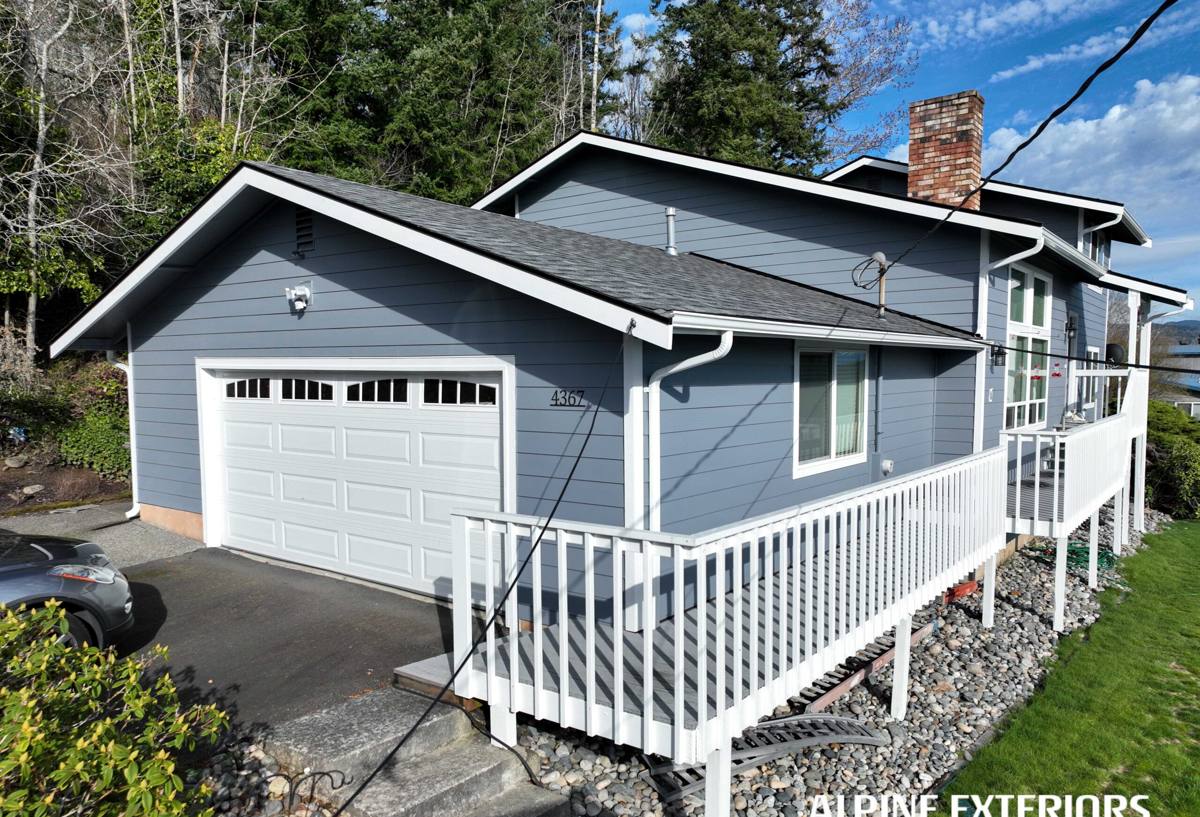
How Storms Actually Damage a Birch Bay Roof
Storm damage isn't always the dramatic kind. A tree limb through the roof deck or a full section of shingles peeled back by wind gets noticed immediately. Most of the storm damage we find on Birch Bay roofs is quieter than that, and it's often more expensive in the long run precisely because it goes unnoticed for months.
Wind Uplift and Lifted Shingles
Sustained wind off open water gets under shingle tabs and edges, breaking the seal strip that's supposed to hold each shingle flat against the one below it. A shingle can lift, reseal slightly out of place, and look almost normal from the ground while no longer shedding water the way it should. That's a common failure point on exposed Birch Bay roofs after a windy system passes through.
Flashing Displacement
Flashing at valleys, chimneys, skylights, and roof-to-wall transitions is mechanically fastened and sealed, not just sitting in place. Strong, sustained wind can work flashing loose at the edges or crack the sealant holding it, and once that seal breaks, wind-driven rain has a direct path in during the next storm rather than the one that caused the initial damage.
Impact Damage from Debris
Branches, pinecones, and wind-carried debris are a real factor on tree-lined or wooded Birch Bay lots. Impact damage can bruise or crack shingles in ways that aren't obvious from the ground but that compromise the shingle's ability to shed water, showing up as a leak weeks or months later rather than immediately.
Water Intrusion Through Existing Weak Points
A storm rarely creates a brand-new failure out of nowhere. More often it finds an existing weak point — aging underlayment, a marginal flashing detail, a spot where moss has been holding moisture against the roof deck — and pushes enough water through it to finally cause a visible leak. In that sense, storm damage repair on a Birch Bay roof is often really about finding and correcting a problem the climate had already been working on for a while.
Signs Your Roof May Have Storm Damage
Roof damage from a storm doesn't always announce itself with a ceiling stain the next morning. Some of the clearest signs are only visible if you know where to look.
- Shingles that look lifted, curled, or slightly out of alignment compared to the rest of the roof plane
- Granules collecting in gutters or at downspout outlets after a storm, beyond the normal amount
- Bent, lifted, or missing flashing at valleys, chimneys, or wall intersections
- Soft spots or visible sagging anywhere along the roofline
- New water staining on ceilings or in the attic, especially near valleys or penetrations
- Debris, branches, or visible punctures on the roof surface itself
- Daylight visible through the roof deck from inside the attic
If you notice any of these after a storm, it's worth having the roof looked at even if there's no active leak yet. Catching a lifted shingle or a cracked flashing seal before the next storm is almost always a smaller job than repairing the water damage that follows if it's left alone.
What a Correct Storm Damage Repair Involves
A storm damage repair done right isn't just patching the spot that's visibly leaking. It's a system check that confirms the damage is fully identified and that the repair holds up under the next round of weather, not just the current one.
Full Roof Inspection, Not a Spot Check
We walk the whole roof, not just the area where a leak showed up inside. Storm damage in one section is often a sign that wind or debris affected other parts of the roof too, and a repair that only addresses the obvious problem can leave a second failure point untouched.
Attic and Deck Check
Where access allows, we check the attic side for water staining, damp insulation, or soft decking. This tells us whether water has already made it past the roofing layer and how far it's traveled, which affects whether the repair is a surface-level fix or needs to include deck-level work.
Matching Repair to Existing Roofing
Shingle repairs use matching material where reasonably available, tied into the existing courses with correct nail pattern and sealant, not just caulked over the damaged area. A patch that isn't properly integrated into the surrounding shingles is its own future leak point.
Flashing Reset or Replacement
Displaced flashing gets reseated, re-fastened, and resealed to spec, or replaced outright if it's corroded or damaged beyond a clean reset. Given the corrosion risk from salt air this close to the water, we don't reuse flashing metal that's already showing significant deterioration just to save a step.
Underlayment Repair Where Needed
If the underlayment itself has been compromised, patching shingles over it without addressing that layer just seals a problem back up instead of fixing it. We replace damaged underlayment sections as part of the repair rather than skipping straight to the visible shingle layer.
Repair vs. Replacement: How We Make That Call
| Factor | Leans Toward Repair | Leans Toward Replacement |
|---|---|---|
| Roof age | Roof is under roughly 10-15 years old | Roof is already near or past expected shingle lifespan |
| Extent of damage | Damage is localized to one area or slope | Damage is spread across multiple roof planes |
| Underlying condition | Deck and underlayment elsewhere are sound | Widespread moss, moisture staining, or aging underlayment found during inspection |
| Shingle availability | Matching shingle product is still available | Discontinued product makes a clean match impossible |
| Insurance scope | Adjuster's scope covers a defined repair area | Adjuster's scope or damage assessment supports full replacement |
We'll tell you honestly which side of this a given roof falls on. A roof that's otherwise sound doesn't need to be replaced just because a section of shingles took storm damage, and we're not going to talk a homeowner into a bigger job than the roof actually needs. On the other hand, if the damage is uncovering a roof that was already near the end of its useful life, patching it is a short-term fix, and we'll say so plainly.
Working With Insurance on a Storm Claim
Many storm damage repairs in Birch Bay get processed at least partly through a homeowner's insurance policy, and we're glad to work alongside that process, though the claim itself is between you and your insurer. What we can do is document the damage clearly with photos and a written scope, be available to meet with an adjuster on-site if that's helpful, and give you an honest, itemized repair estimate you can compare against whatever the insurance scope comes back with. We'd rather you have a clear picture of what the roof actually needs than have that determined solely by a claims process working from photos alone.
How Our Storm Damage Repair Process Works
- Prompt inspection: After a storm, we prioritize getting eyes on the roof quickly, especially if there's an active leak or exposed deck.
- Temporary protection if needed: Where there's active water intrusion, we can tarp or otherwise protect the affected area to prevent further damage while a full repair is scheduled.
- Full inspection and documentation: We check the whole roof, the attic where accessible, and document what we find with photos.
- Written estimate: You get a clear, itemized scope covering exactly what will be repaired and why, not a vague lump-sum number.
- Repair work: Shingles, flashing, and underlayment are addressed to manufacturer and trade standards, matched to the existing roof wherever possible.
- Final walkthrough: We review the completed repair with you and do a site cleanup, including a magnetic sweep for stray fasteners.
Why Hiring a Crew That Already Works in Birch Bay Matters
A crew that regularly repairs roofs in Birch Bay has already seen how salt air corrodes underspecified flashing, how wind coming straight off the water gets under shingle edges that would hold fine a few miles inland, and which roof orientations hold moss and moisture longest through the wet months. That's the kind of practical knowledge that shows up in dozens of small decisions during a repair — decisions a crew unfamiliar with this specific stretch of coastline might not think to make.
It also matters that whoever repairs your roof is still reachable if a question comes up later. A repair warranty only means something if the company behind it has an established, ongoing presence in the area, not a name that showed up after a big storm and moved on once the immediate demand dried up.
A Practical Checklist Before You Hire a Storm Repair Contractor
- Do they inspect the full roof and attic, not just the area of the visible leak?
- Is the estimate itemized, specifying shingle, flashing, and underlayment work separately?
- Will they document damage with photos you can use for an insurance claim?
- Do they carry current WA contractor licensing, liability insurance, and workers' compensation?
- Can they point to established, ongoing work in or near Birch Bay, not just a post-storm pop-up presence?
- Do they explain clearly whether your roof needs a repair or is a better candidate for replacement, rather than defaulting to the bigger job?
Preventing the Next Round of Storm Damage
Once a storm repair is done, a few ongoing habits make a real difference in how the roof holds up through the next system that rolls in off the water.
- Keep overhanging branches trimmed back from the roofline to reduce impact and abrasion risk during high wind
- Clear gutters and downspouts regularly so storm runoff has somewhere to go instead of backing up under the roof edge
- Address moss buildup on shaded slopes before it holds moisture against the roof deck long-term
- Have the roof looked at after any major wind event, even without an obvious leak, since lifted shingles and loosened flashing don't always show symptoms right away
None of this eliminates storm risk entirely — Birch Bay's location on the water means it never fully will — but it does reduce how often a storm turns into a real repair instead of nothing at all.
If a recent storm has you wondering whether your Birch Bay roof needs attention, we're glad to come take an honest look and put together a clear, no-pressure estimate. Use the form below to request a free inspection.