 Bellingham Siding
 Siding Repair for South Hill: A Neighborhood With Its Own Weather Problems
South Hill sits up above downtown Bellingham, close enough to Bellingham Bay to catch salt-laden air off the water, and high enough to take the full brunt of driving rain and wind that rolls in off the Salish Sea. Add in the mature tree canopy that shades a lot of South Hill's older lots, and you get a neighborhood where siding ages differently than it does in a flatter, more open part of Whatcom County. We repair siding all over Bellingham, but South Hill jobs tend to share a common thread: moisture that lingers, moss that gets a head start, and finishes that fade or fail faster on the shaded, wind-exposed sides of a house.
This page is about siding repair specifically for South Hill homes — what tends to go wrong here, what a repair actually needs to include to hold up, and why we think a crew that already knows this neighborhood does a better job than one seeing it for the first time.
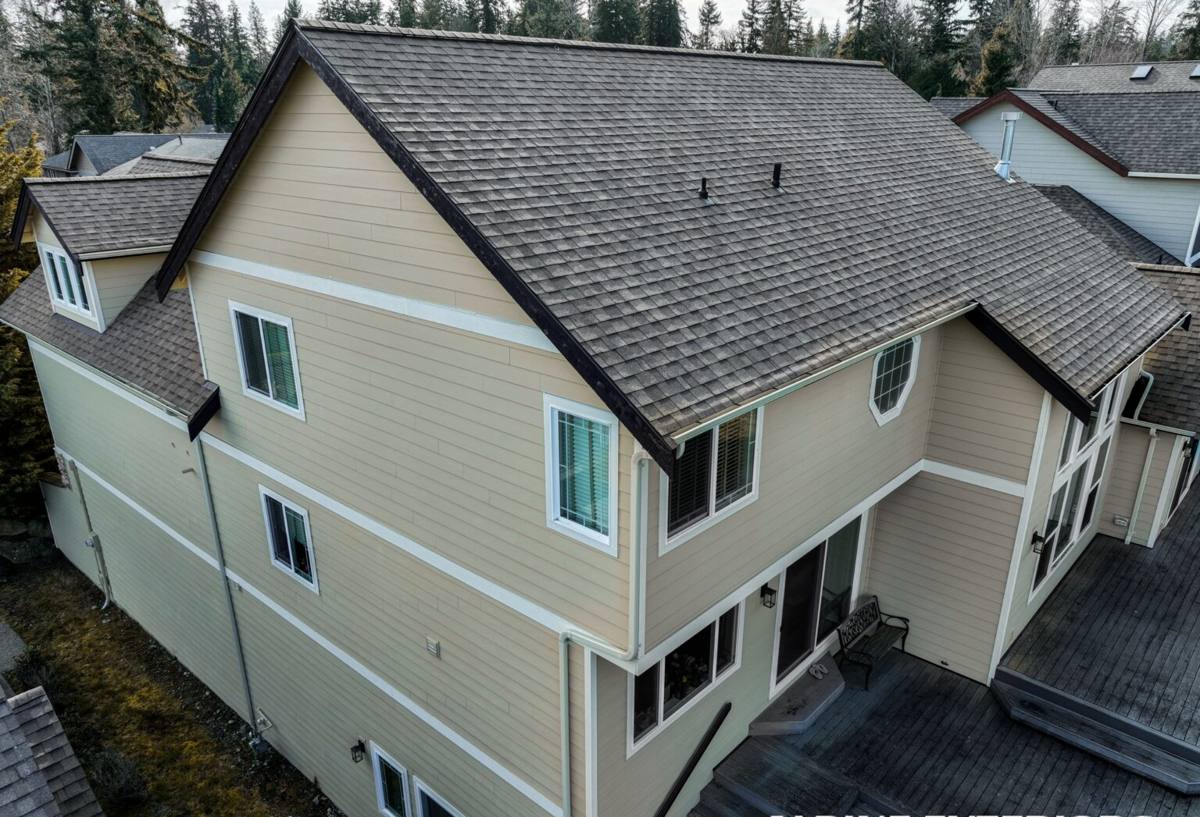
Why South Hill Siding Wears Differently
Salt Air and Elevation
Proximity to the bay means airborne salt settles on exterior surfaces year-round. On older or lower-quality siding, that salt accelerates finish breakdown, corrodes exposed fasteners, and speeds up the checking and cracking that eventually lets water behind the cladding. Elevation adds wind exposure — South Hill catches gusts that push rain sideways into wall assemblies, which is exactly the kind of load that finds every small gap in flashing, caulking, or board joints.
Tree Cover and a Long Moss Season
Whatcom County's wet season runs long, and South Hill's tree-shaded streets keep siding damp longer after a storm than it would stay in full sun. That extra drying time is what lets moss, algae, and mildew get established on siding, trim, and fascia. Moss isn't just cosmetic — it holds moisture against the surface and, over time, works into seams and fastener holes, which is where rot and paint failure usually start.
Older Housing Stock
Like a lot of established Bellingham neighborhoods, South Hill has a mix of older homes where siding has been through multiple paint or repair cycles, sometimes with mismatched materials or patch jobs that weren't detailed for this climate. That history matters when we're diagnosing a repair — what's underneath the visible damage often tells us more than the damage itself.
Common Siding Problems We See on South Hill Homes
- Moss and algae staining on north- and west-facing walls that stay shaded most of the day
- Soft or delaminating boards where water has been trapped behind siding for an extended period
- Cracked or checked panels from age, sun exposure on the walls that do get direct light, and repeated wet-dry cycling
- Corroded or popped fasteners, especially on older installations using nails not rated for coastal exposure
- Failed caulking and open joints around windows, trim, and butt joints, letting wind-driven rain behind the siding
- Paint and finish failure on painted wood or fiber cement that was never factory-finished, showing peeling or chalking well ahead of schedule
What a Correct Siding Repair Actually Involves
A siding repair that just replaces the visibly damaged piece and stops there is a repair that's likely to fail again. On South Hill homes especially, we treat every repair call as a chance to check the parts of the wall assembly you can't see from the ground.
Diagnose Before You Patch
Damaged siding is usually a symptom, not the root cause. Before replacing anything, we check for the actual water path: failed flashing above windows or trim, gaps at butt joints, caulking that's shrunk and pulled away, or ground-level moisture wicking up from grade. Replacing a board without fixing what let water in behind it just buys you a few more years before the same spot fails again.
Check What's Behind the Siding
Once damaged panels are pulled, we inspect the water-resistive barrier (house wrap or building paper) and the sheathing underneath. If the barrier is torn or the sheathing has soaked up moisture, that gets addressed before anything new goes back on — covering damp sheathing with new siding just seals the problem in.
Match the Existing System, or Explain Why We Can't
Fiber cement siding comes in specific profiles, reveals, and thicknesses. A patch that doesn't match butt-joint spacing, board width, or texture will stand out, and a mismatched material can behave differently in moisture and temperature swings than what's around it. We match existing James Hardie profiles wherever the product line allows it. Where an older or discontinued profile can't be matched cleanly, we say so upfront rather than installing something that will look or perform inconsistently.
Detail for This Climate, Not a Generic Spec
Fastener spacing, caulking products, flashing laps, and clearances at grade all get built to hold up against sustained wet weather and salt exposure — not just to pass a basic inspection. This is where a lot of shortcut repairs fail early, especially on wind-exposed South Hill walls.
Repair vs. Replace: How We Make the Call
Not every problem needs a full re-side, and not every problem is fixable with a patch. Here's generally how we think through it:
| Situation | Usually a Repair | Usually a Replacement |
|---|---|---|
| Damage from a single impact (branch, ladder, etc.) | Yes, if surrounding boards are sound | Only if it exposed wider hidden damage |
| Moss/algae staining with siding still solid underneath | Yes — clean, treat, reseal, monitor | Not usually necessary |
| Soft or delaminated boards in a small, contained area | Yes, once the water source is fixed | If soft spots show up in multiple areas |
| Widespread cracking, fading, or fastener failure | Rarely worth patching piecemeal | Yes — repeated repairs cost more long-term |
| Siding is an older or discontinued profile with no clean match | Possible on interior, less visible walls | Often the better long-term choice |
We'll always give you the honest read on which side of that table your home falls on, including telling you when a repair is genuinely the right call and a full re-side would be overkill.
Our South Hill Repair Process, Start to Finish
- On-site assessment. We inspect the damaged area and the surrounding siding, not just the spot you called about.
- Moisture and structure check. Where damage suggests trapped water, we open up the area to look at the barrier and sheathing before quoting the fix.
- Honest repair-or-replace recommendation. You get a straight answer, including cost trade-offs, not an upsell.
- Material matching. We source matching James Hardie profiles and colors wherever possible, or explain the closest available option.
- Correct reinstallation. Proper fastener type and spacing, correctly lapped flashing, and climate-appropriate sealants — built to the conditions South Hill actually sees, not a bare-minimum spec.
- Final check and cleanup. We walk the repaired area with you before we consider the job done.
Why We Only Repair and Install James Hardie Fiber Cement
We don't install or repair with vinyl, LP SmartSide, Cemplank, Allura, or unprimed cedar or spruce siding, and it's a deliberate standard, not a limitation we apologize for. In a climate like Whatcom County's — long wet seasons, salt air, sustained moss pressure — the material matters as much as the workmanship. James Hardie fiber cement is non-combustible, doesn't feed moss and mildew the way wood-based products can, and its ColorPlus factory finish holds color and resists the fading and peeling that plague field-painted siding in this kind of weather. Hardie also builds climate-specific HZ product lines engineered for exactly the wet, coastal conditions South Hill deals with, and backs the product with a strong transferable warranty when it's installed to spec.
That's why, when a repair calls for new material — whether it's a few boards or a full section — we install Hardie. It's also why, on jobs where the existing siding is a product we don't install, we'll tell you plainly what your options are rather than pretend we can make a like-for-like match with a product we don't stand behind.
Why It Matters to Hire a Crew That Already Works in South Hill
Siding repair is detail work, and the right details change with the site. A crew that's worked South Hill homes before already knows to expect long-lingering moisture on shaded walls, to check fastener corrosion more carefully given the salt exposure, and to plan around the tree cover that shapes how a house dries out after a storm. That's the difference between a repair that's cosmetic and one that actually holds. It also means fewer surprises during the estimate — we're not guessing at what Bellingham's wet season does to a wall assembly, we're accounting for it from the first inspection.
Maintenance Checklist for South Hill Homeowners
Between repairs, a little attention goes a long way in this climate. Worth checking a couple times a year:
- Look for moss or algae buildup on shaded walls, especially north- and west-facing sides
- Check caulking at trim, window edges, and board joints for cracking or gaps
- Watch for soft spots or discoloration near the bottom of walls and around downspouts
- Keep gutters clear so overflow isn't running down the siding face
- Trim back branches and shrubs that keep siding shaded and damp longer than necessary
- Note any fasteners that look rusted, popped, or backed out
Catching these early is almost always cheaper than waiting for a soft board or a bigger repair.
If you're seeing moss buildup, soft spots, cracked panels, or open joints on a South Hill home, we're glad to take a look and give you a straightforward assessment — no pressure, no upsell. Fill out the form below for a free estimate.