 Bellingham Siding
 Building a Deck That Can Actually Handle South Hill's Weather
South Hill sits above Bellingham with some of the best views in Whatcom County, but that elevation and proximity to the water come with a trade-off: the weather up here is harder on outdoor structures than most homeowners expect. A deck built the way it might be built in a drier inland climate will show problems within a few years on South Hill — soft spots, black staining, loose railings, rusted fasteners. A deck built correctly for this specific site, with the right materials and the right substructure, can last decades with basic upkeep. This page is about what that correct build actually looks like, and what our process is when we take on a deck project in this neighborhood.
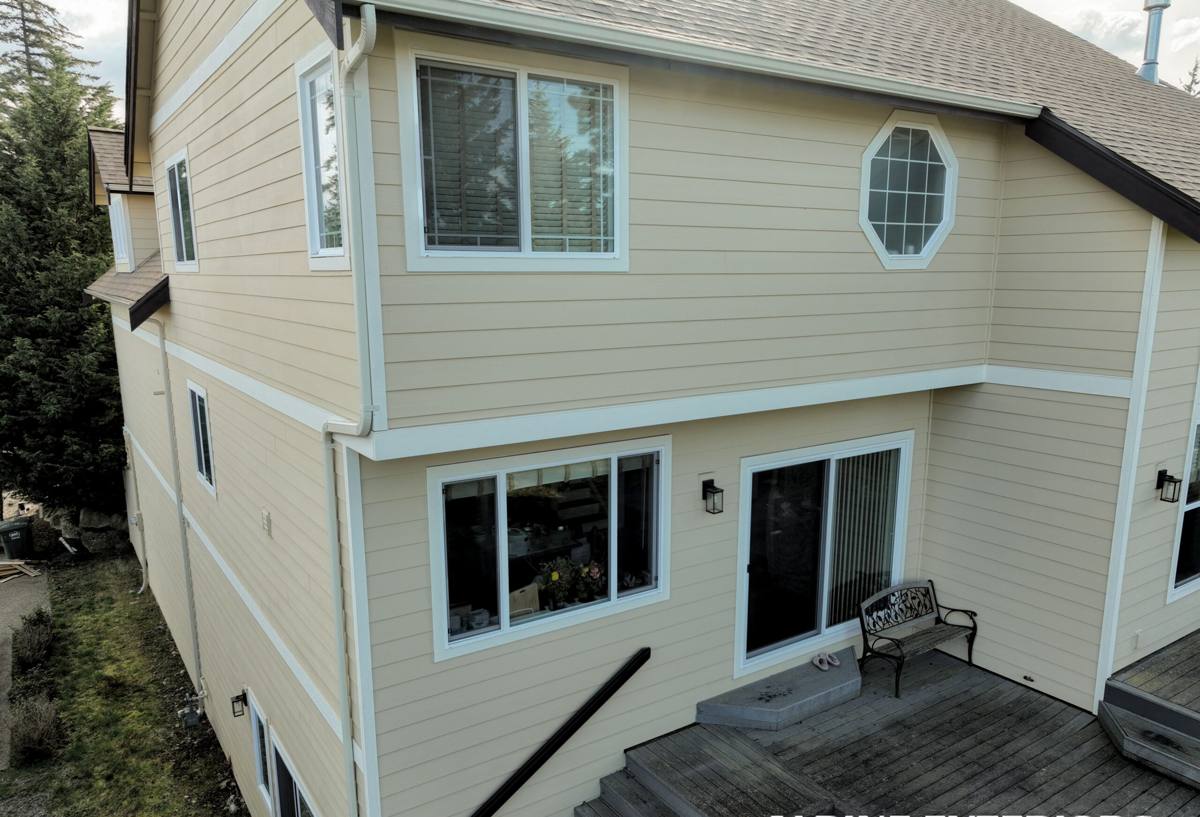
What Whatcom County's Climate Does to an Outdoor Deck
South Hill's combination of salt-laden air off the bay, frequent driving rain, and long stretches of overcast, damp weather creates conditions that accelerate almost every failure mode a deck can have. Understanding these mechanisms is the whole reason our approach differs from a generic build.
Salt Air and Fastener Corrosion
Airborne salt doesn't just affect homes directly on the waterfront — it travels on wind and settles on any exposed surface, including elevated decks with open exposure. Over time it accelerates corrosion in standard fasteners, hinges, and connector hardware. A deck built with the wrong grade of screws or joist hangers can develop rust streaks and weakened connections well before the decking itself wears out. This is a hardware decision, not a decking decision, and it's one of the most commonly overlooked details in deck construction.
Driving Rain and Water Intrusion
Rain in this region doesn't just fall straight down — wind-driven rain pushes water sideways, into ledger connections, under railing posts, and into any gap where flashing wasn't installed correctly. Most serious deck failures we see don't start in the visible decking boards. They start at the ledger board where the deck attaches to the house, where a missing or improperly lapped flashing detail lets water track behind the siding for years before anyone notices rot.
The Long Moss Season
Whatcom County's moss season runs long — shade, moisture, and mild temperatures are exactly what moss needs, and a deck with poor drainage, tight board spacing, or heavy tree cover becomes a moss farm. Beyond looking bad, moss holds moisture against the decking surface and turns walking surfaces slick and dangerous, especially on stairs. Preventing it is a design decision made before the first board goes down, not a maintenance problem to solve after the fact.
Choosing the Right Decking Material for a South Hill Site
There's no single "best" decking material — the right choice depends on your budget, how much sun or shade the deck gets, and how much maintenance you're willing to commit to. We walk every South Hill client through the real trade-offs rather than pushing one product line.
| Material | How It Handles This Climate | Maintenance | Typical Lifespan |
|---|---|---|---|
| Pressure-treated wood | Affordable, but absorbs moisture readily; needs consistent sealing to resist rot and moss growth | Annual cleaning and re-sealing recommended | 10-15 years with upkeep |
| Cedar | Naturally rot-resistant and handles damp conditions well, but is softer and shows wear on high-traffic areas | Periodic cleaning and oil/stain treatment | 15-20 years with upkeep |
| Composite decking | Resists moisture absorption and won't rot, though surface can still grow moss/mildew in shaded, damp spots without cleaning | Occasional washing, no sealing needed | 25-30+ years |
| PVC/capped polymer | Best moisture resistance of the group, holds up well in shaded, damp areas common on this hillside | Low — occasional rinse | 25-30+ years |
For shaded, tree-covered lots — common on South Hill — we lean toward recommending composite or capped polymer decking because it doesn't absorb water the way wood does, which directly reduces moss and rot risk in exactly the conditions this neighborhood produces. That said, plenty of homeowners still prefer the look and feel of real wood, and we'll build that correctly too if that's the right fit for your home.
The Substructure Most Homeowners Never See
The decking surface is what you notice — the framing underneath is what actually determines whether the deck lasts. This is where cutting corners causes the most damage, and it's the part of the job we spend the most care on.
Ledger Attachment and Flashing
Where the deck attaches to your house is the single most water-vulnerable point on the entire structure. We install proper flashing that directs water away from the house rather than behind the siding, and we use lag bolts or through-bolts rated for the load rather than relying on nails or undersized hardware.
Footings on Sloped Ground
South Hill's terrain is more varied than flat lots elsewhere in Bellingham, and a lot of the neighborhood's homes sit on grades that require footings set to the correct depth and bearing for the soil conditions on your specific lot. We don't use a one-size-fits-all footing plan — sloped and uneven ground gets engineered accordingly.
Joist Spacing, Hardware, and Ventilation Gaps
Correct joist spacing affects both structural strength and how the decking surface drains and dries. We use corrosion-resistant joist hangers and fasteners rated for coastal/marine-grade exposure given the salt air in this area, and we leave appropriate airflow beneath the deck so the substructure can dry out between rain events instead of staying damp continuously.
Designing Out the Moss and Drainage Problems Before They Start
Moss and standing water are design problems, not cleaning problems. A few decisions made at the framing and layout stage make an enormous difference over the life of the deck:
- Board spacing calibrated to let water drain through rather than pool on the surface
- A slight slope built into the frame so water sheds away from the house instead of toward it
- Gaps and venting at the substructure so shaded, damp areas can actually dry out
- Material and layout choices that account for how much tree cover and shade the specific deck location gets
- Railing and post placement that doesn't trap debris and standing leaves against the structure
None of this is complicated, but it has to be planned before construction starts — it's very difficult and expensive to retrofit good drainage into a deck that was built without it.
Permits and Local Considerations
Most deck projects in Bellingham require a building permit, particularly for decks attached to the house, decks above a certain height, or anything involving structural changes to the home. Requirements can also vary depending on your lot's setbacks and how close the deck sits to property lines, which matters on some of South Hill's tighter, older lots. We handle the permitting process as part of the job so you're not stuck deciphering city requirements yourself, and everything we build is designed to pass inspection the first time.
Our Deck-Building Process
Every project follows the same basic sequence, though the details are adjusted to your home and site:
- On-site assessment of your lot, slope, sun/shade exposure, and existing structure (if replacing a deck)
- Design and material recommendation based on your budget, maintenance preference, and the site's specific exposure to rain, sun, and salt air
- Permit application and preparation of plans where required
- Footings, framing, and ledger/flashing work — the structural phase where most quality differences show up over time
- Decking, railing, and stair installation
- Final walkthrough covering how the deck was built, what maintenance it needs, and answering any questions before we consider the job done
Cost Factors for a South Hill Deck
Every deck is priced based on the specifics of the job, but a few factors consistently move the number up or down more than others:
| Factor | Why It Affects Cost |
|---|---|
| Decking material | Composite and PVC cost more upfront than wood but reduce long-term maintenance costs |
| Slope and site access | Sloped lots common on South Hill can require deeper or additional footings and more labor to access the build site |
| Deck height and stairs | Elevated decks and multi-run stairs add framing, railing, and code requirements |
| Railing style | Cable, glass, and custom railing systems cost more than standard wood or metal baluster railing |
| Removal of an existing deck | Demolition and disposal of an old structure adds labor before the new build starts |
We give straightforward, itemized estimates so you can see exactly what's driving the number, rather than a single lump figure.
Maintaining Your Deck Through Whatcom County's Wet Season
Even a well-built deck needs some seasonal attention in this climate. A simple annual routine keeps most problems from ever starting:
- Clear leaves and debris from between boards and off the surface before the wet season sets in
- Rinse off moss and algae buildup before it has a chance to establish, especially in shaded corners
- Check railing posts and stair connections for looseness once a year
- Inspect fasteners and hardware for rust or corrosion, particularly on decks with more open exposure
- Reseal or re-stain wood decking on the manufacturer's recommended schedule — don't wait until it looks dry and gray
- Keep gutters and downspouts near the deck clear so runoff isn't dumping extra water onto or under the structure
Why Hiring a Crew That Already Works South Hill Matters
Deck construction isn't identical from neighborhood to neighborhood. A crew that mostly builds on flat, inland lots isn't automatically thinking about salt air corrosion, sloped footings, or moss-prone shade patterns — because they don't usually have to. Working regularly in South Hill means we've already seen how decks age here, which details actually matter over the long run, and which shortcuts cause callbacks a few years down the road. That experience shows up in the framing decisions, the hardware we choose, and the drainage details built into the design before a single board is installed.
If you're planning a new deck or replacing one that's showing its age, we're happy to take a look and put together a free, no-pressure estimate. Use the form below to get started, and we'll walk your site and talk through what makes sense for your home.