 Bellingham Siding
 Board & Batten in South Hill's Mix of Homes
South Hill is one of Bellingham's older hillside neighborhoods, and it shows in the variety of homes up and down its streets — Craftsman-era houses next to mid-century remodels next to newer infill construction. Board and batten siding fits comfortably into that mix. The wide vertical boards and narrow cover strips read as classic farmhouse on an older home and clean modern on a newer one, which is part of why we get asked about it so often in this part of Bellingham.
But board and batten isn't just a look. On a hillside neighborhood exposed to weather off Bellingham Bay, how that siding is built and installed matters as much as how it's styled. A vertical siding system done right sheds water efficiently. Done wrong, it traps moisture behind the battens and fails from the inside out, often before any problem is visible from the street.
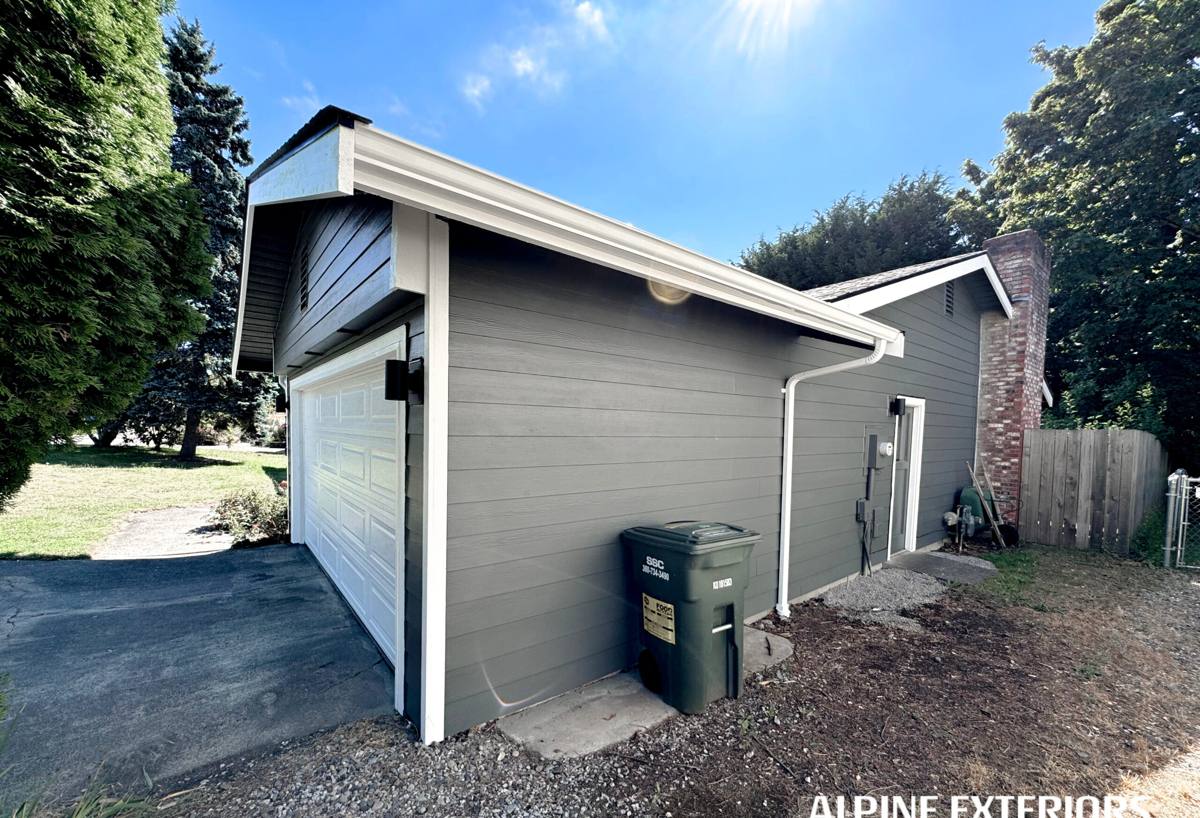
What Salt Air, Driving Rain, and Moss Season Do to Vertical Siding
Whatcom County's marine climate is mild, but it is relentless. Homes near Bellingham Bay deal with a steady dose of salt-laden air that accelerates corrosion on fasteners, trim, and any exposed metal flashing. Add driving rain that comes in sideways during winter storms, and any siding system with weak seams or under-flashed joints will eventually let water in.
Then there's moss. Whatcom County's damp season runs long — often eight months or more of consistently wet, shaded conditions on north- and east-facing walls. Moss and algae need almost nothing to get established: a little organic debris, a shaded corner, and moisture that doesn't fully dry between rain events. On siding, that means:
- Battens and board edges collecting debris and holding moisture longer than flat wall sections
- Paint and finish breakdown accelerating wherever moss gets a foothold
- Wood-based or wood-composite battens softening or rotting from the inside if moisture gets behind them
- Fastener corrosion showing up as rust streaks below nail heads within a few years on lower-grade materials
Board and batten's vertical lines actually help here — water runs down the face of the board instead of sitting on a horizontal ledge — but only if the material underneath the battens is stable and the flashing details are correct. A siding profile that looks identical to a well-built one can behave completely differently once you get behind the battens.
Why We Install Only James Hardie for Board & Batten
We don't install vinyl board and batten, LP SmartSide, primed spruce, cedar, or other fiber cement brands like Cemplank or Allura. That's not a marketing position — it's a standard we hold because of what we've seen happen to these products in this specific climate over time.
Vinyl board and batten is inexpensive and easy to install fast, but it's a thin extruded plastic panel. It expands and contracts significantly with temperature swings, which stresses the fastening system over years, and it doesn't hold paint if a homeowner ever wants to change the color. In driving rain, vinyl systems rely almost entirely on their overlaps and channels to keep water out — there's little forgiveness if installation isn't precise.
LP SmartSide and primed wood products are engineered wood — real wood fiber pressed and treated. They perform reasonably well when properly maintained, but wood-based products are inherently more vulnerable to moisture intrusion at cut edges and fastener penetrations than fiber cement. In a climate with this much sustained dampness, that's a maintenance burden we're not willing to hand a homeowner without saying so upfront.
Cedar is a beautiful, honest material, but it requires ongoing refinishing, is combustible, and is increasingly expensive and inconsistent in grade availability.
James Hardie fiber cement is non-combustible, dimensionally stable, and manufactured in HZ climate-engineered formulations built for regions with sustained moisture exposure like ours. The factory-applied ColorPlus finish resists fading and holds up to the freeze-thaw and wet-dry cycling that breaks down field-applied paint faster than most homeowners expect. It's the one material we're comfortable standing behind on a South Hill hillside lot.
What a Correct Board & Batten Installation Actually Involves
Flashing and Water Management
Board and batten lives or dies on its water management details, not its face appearance. Every horizontal transition — window heads, trim boards, the base of the wall — needs proper flashing that directs water out and away from the sheathing, not just a bead of caulk. Housewrap or weather-resistive barrier needs to be lapped correctly behind every penetration, and rainscreen furring (a small air gap behind the panel) is worth the extra step on a wall exposed to driving rain, since it lets any moisture that does get behind the siding dry out instead of sitting against the sheathing.
Batten Spacing and Fastening
Battens need consistent spacing for the look to read cleanly, but more importantly they need to be fastened into solid framing, not just through the panel into sheathing. Fastener spacing and type matter — corrosion-resistant fasteners are non-negotiable this close to the water, and Hardie's own fastening specifications exist precisely because under- or over-driven nails are one of the most common causes of premature siding failure, board and batten included.
Joints where panels meet — at corners, around openings, at the transition to trim — are where sloppy work shows up first, usually as a moss line or a soft spot within a few years. A correct install treats every one of those joints as a water management detail, not just a visual seam.
Board & Batten vs. Other Siding Choices for South Hill Homes
| Siding Option | Look on a Hillside Home | Moisture Performance | Long-Term Upkeep |
|---|---|---|---|
| James Hardie Board & Batten | Clean vertical lines, farmhouse or modern | Engineered for sustained wet climates; strong when properly flashed | Low — factory finish, occasional wash |
| Vinyl Board & Batten | Similar profile, less dimensional depth | Relies heavily on precise overlap installation | Low upfront, but can't be repainted; brittle over time |
| Cedar Board & Batten | Warm, natural, high-end feel | Vulnerable to moisture without diligent upkeep | High — refinishing on a recurring cycle |
| LP SmartSide / Engineered Wood | Comparable to Hardie visually | Wood-based; sensitive at cut edges and fasteners | Moderate — edge sealing and inspection matter |
| Standard Lap Siding | Traditional horizontal look | Good, but horizontal reveals can hold debris | Low with fiber cement |
Our Process, Start to Finish
We approach every South Hill board and batten project the same way, regardless of whether it's a full re-side or a single wall replacement:
- On-site walk-through to assess the existing wall assembly, sheathing condition, and any moisture damage before quoting anything
- Discussion of Hardie panel and batten profile options, reveal width, and finish color against the home's style and the neighborhood
- Removal of old siding with an eye on what's underneath — we don't cover up rot or existing moisture problems, we address them
- Installation of weather-resistive barrier, flashing at every penetration and transition, and rainscreen furring where the wall assembly calls for it
- Panel and batten installation to Hardie's fastening specifications, with attention to corner and trim details
- Final walk-through so the homeowner understands what was done and what basic upkeep looks like going forward
We don't skip the flashing and water management steps to speed up a job. On a hillside lot catching driving rain off the bay, those are the details that decide whether the siding is still performing in fifteen years or needs remedial work in five.
Maintenance in a Marine Climate
James Hardie board and batten is genuinely low-maintenance compared to wood or vinyl alternatives, but "low-maintenance" doesn't mean "no maintenance" in Whatcom County's climate. A short annual routine keeps it performing and looking right:
- Rinse the siding once or twice a year, focusing on shaded north- and east-facing walls where moss and algae take hold first
- Keep landscaping and shrubs trimmed back from the wall so air can circulate and battens can dry between rain events
- Check gutters and downspouts each fall — clogged gutters send water directly down the wall face, right where board and batten seams are
- Look at caulking around windows, doors, and trim boards annually and have gaps addressed before winter storms set in
- Watch for any dark streaking below fastener heads, which can signal a corroding fastener worth having inspected
Why a Crew That Already Works South Hill Matters
South Hill's hillside grades, older home framing, and mix of architectural styles mean no two board and batten jobs here look exactly the same on the wall. A crew that's already worked this part of Bellingham knows what tends to be hiding behind older siding, how the slope of a lot affects water flow and flashing decisions, and where moss and moisture problems typically start on homes exposed to weather off the bay. That local familiarity shows up in fewer surprises during tear-off and a tighter install once the new siding goes up.
If you're weighing board and batten for a home in South Hill, we're happy to walk the property, look at what's there now, and give you a straight assessment — no pressure, no inflated quote to start negotiating down from. Reach out for a free estimate and we'll tell you honestly what your home needs.