 Bellingham Siding
 Window Installation Built for Silver Beach
Silver Beach sits close enough to the water and the tree cover that its homes take a particular kind of weather beating. Marine air works its way into aluminum and steel hardware, wind-driven rain finds any gap in a window's flashing, and the long wet season here in Whatcom County keeps north- and west-facing walls damp for months at a time. Windows in this neighborhood don't fail because homeowners neglect them. They fail because the installation wasn't built to handle what this climate actually does, year after year.
This page covers what window installation should look like for a Silver Beach home specifically — not a generic overview of window types, but the details that matter when the job has to hold up against Bellingham's rain, humidity, and moss growth for the next few decades.
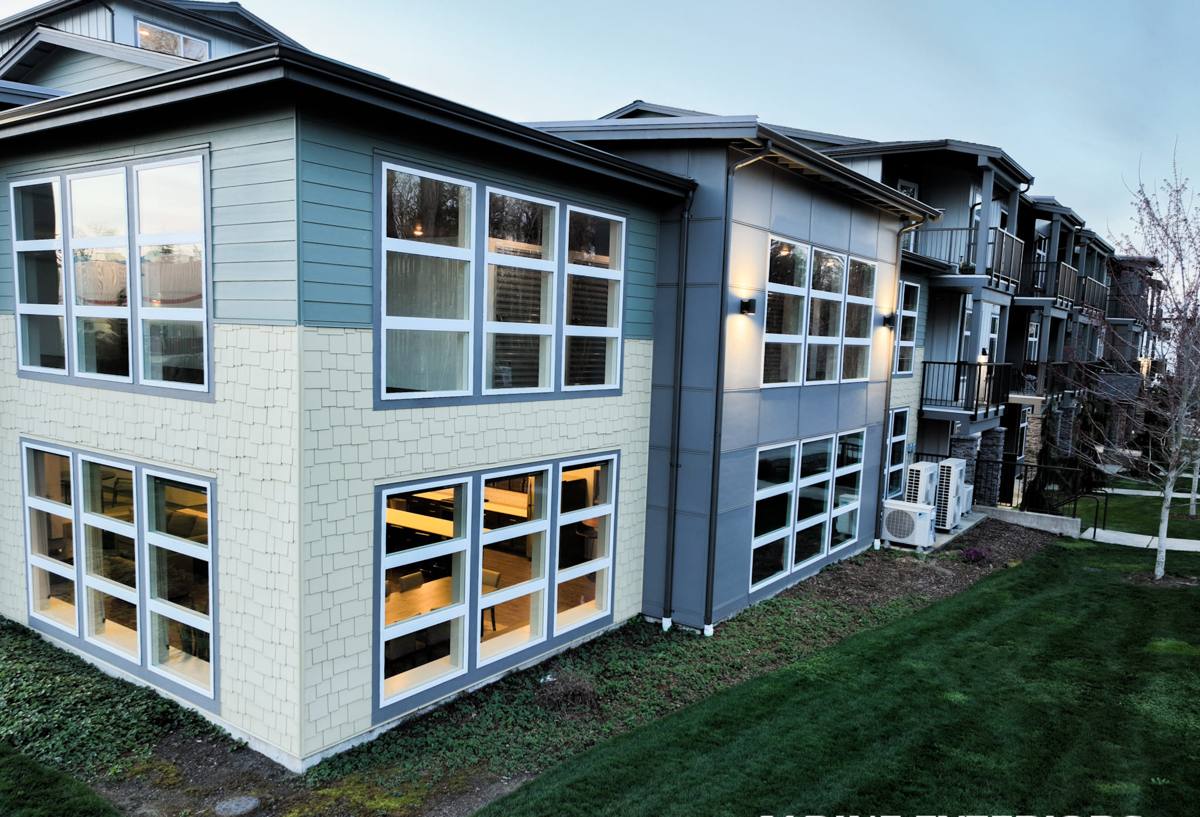
What This Climate Does to Windows Over Time
Three things drive most of the window problems we see in this part of Bellingham:
Driving Rain
Storms off the water don't just fall straight down here — wind pushes rain sideways into wall assemblies, and windows are the weakest point in that wall. A window installed without proper flashing and a sloped sill pan will let water behind the frame long before anyone notices a leak inside. By the time staining shows up on interior trim, the sheathing behind it has often been wet for a season or more.
Salt and Moisture in the Air
Homes near the water deal with airborne salt and near-constant humidity that ordinary inland homes don't. This accelerates corrosion on window hardware — hinges, locks, balance mechanisms — and it's part of why we steer clients away from bare aluminum frames and lower-grade hardware finishes for anything close to the shoreline.
Moss and Sustained Dampness
Bellingham's moss season isn't just a roof problem. Moss and algae take hold on window sills, tracks, and exterior trim wherever water sits instead of draining away. Poorly sloped sills and clogged weep holes turn a window into a small greenhouse for organic growth, which traps moisture against the frame and accelerates rot in wood components.
None of this means Silver Beach is a bad place to own a home — it just means window installation here has to account for exposure that a lot of manufacturers' standard install instructions don't fully address.
Signs a Silver Beach Home Needs New Windows
- Fogging or a permanent haze between the glass panes (seal failure — the insulated glass unit has lost its gas fill)
- Soft, discolored, or swollen wood on the interior or exterior frame
- Windows that are hard to open, close, or lock, especially after damp weather
- Visible daylight or a draft around the frame when the window is shut
- Condensation forming on the inside of the glass regularly through fall and winter
- Paint or finish that keeps failing on the frame no matter how often it's touched up
- Noticeable moss, algae, or black staining building up on the sill or bottom of the frame
- A jump in heating costs without a clear explanation elsewhere in the house
Any one of these can be a minor fix. Several together, especially on the same wall, usually point to a window and flashing system that's reached the end of its service life.
What a Correct Installation Actually Involves
The window unit itself is only part of the job. Most window failures we're called to diagnose in this area trace back to installation details, not product defects. A correct install includes:
Removal Without Damage
Old windows come out carefully so we can inspect the rough opening, sill, and surrounding framing before anything new goes in. This is where hidden rot or water damage from a previous bad install gets found — and it needs to be addressed before a new window goes in, not covered over.
Sloped Sill Pan Flashing
A sill pan directs any water that gets past the window to the outside instead of into the wall cavity. In a climate with as much sideways rain as Bellingham gets, this is not optional — it's the single most important detail in the whole installation.
Integrated Water-Resistive Barrier
The window's flashing has to be layered correctly into the house wrap or building paper already on the wall — over the barrier at the top, under it at the sides and bottom — so water is always shed downward and outward, never trapped behind the siding.
Proper Shimming and Fastening
A window that isn't shimmed level and square will bind, won't seal correctly against weatherstripping, and puts uneven stress on the glass unit. This shortens the life of the seals and hardware even on a good-quality window.
Insulation and Air Sealing
The gap between the window frame and rough opening gets sealed with a low-expansion foam or backer rod and sealant — never packed tight with fiberglass insulation alone, which does little to stop air movement and nothing to stop bulk water.
Interior and Exterior Trim Finished for Water Management
Exterior trim gets caulked and sealed at the right joints while leaving the bottom edge open so water can escape rather than pool. Interior trim gets set only after we've confirmed the window is sealed, square, and operating correctly.
Choosing the Right Window for This Exposure
There's no single "best" window for every home, but some materials handle Bellingham's marine, wet climate better than others. Here's how the common options stack up for a Silver Beach install:
| Frame Material | Moisture Performance | Maintenance | Where It Fits Best |
|---|---|---|---|
| Vinyl | Excellent — won't rot, resists corrosion | Low; occasional cleaning | Most homes; strong value and durability trade-off |
| Fiberglass | Excellent — very stable in wet/dry cycling | Low | Larger openings, homes wanting a narrower sightline |
| Wood-Clad | Good if detailed and maintained correctly | Higher — cladding needs inspection, interior wood needs care | Homes prioritizing a specific interior wood look |
| Bare Aluminum | Poor near marine air — prone to corrosion and heavy condensation | Higher; conducts cold and sweats | Generally not our recommendation this close to the water |
For most Silver Beach homes we steer toward vinyl or fiberglass frames with a good-quality low-E, argon-filled glass package. They shed water well, don't corrode in salt air, and don't need the ongoing upkeep that painted wood or bare metal frames demand in this climate. Wood-clad windows can still be the right call for a specific look, as long as the cladding and flashing details are done properly — the trade-off is more maintenance over the window's life, not a defect in the product itself.
How Our Process Works
- On-site assessment. We look at each window from both sides, check for soft framing or existing water damage, and note how the home is oriented to wind and rain.
- Honest recommendation. We tell you which windows need replacing now, which can wait, and which frame and glass options make sense for your exposure and budget — no upselling every opening on the house if it doesn't need it.
- Careful removal. Old units come out without damaging the surrounding siding or trim any more than necessary.
- Opening inspection and repair. Any rot, damaged sheathing, or missing flashing gets fixed before a new window goes in — this step gets skipped by installers in a hurry, and it's the step that causes callbacks two winters later.
- Installation with full flashing detail. Sill pan, water-resistive barrier integration, shimming, and air sealing done in the correct order.
- Finish work. Exterior trim and caulking done for proper water shedding, interior trim finished to match your home.
- Final walkthrough. We test operation, locks, and seals with you before calling the job done.
What Affects the Cost
| Factor | Why It Matters |
|---|---|
| Frame material and glass package | Vinyl is generally the most budget-friendly; fiberglass and wood-clad cost more upfront |
| Number and size of openings | Larger or custom-sized windows cost more to source and install |
| Condition of the existing opening | Rot repair or reframing adds labor beyond the window swap itself |
| Replacement vs. new construction install | New construction installs (removing siding to the studs) take more time than insert replacements |
| Access and second-story work | Upper-floor windows and tight access can add setup time |
Costs for a straightforward window replacement in this area typically run from a few hundred dollars per window for a standard vinyl insert up to several thousand for larger or custom units with full frame replacement. Every home is different, which is why we give a real number after seeing the openings in person rather than a phone estimate.
Why Local Experience in Silver Beach Matters
A window that's correctly installed for a dry inland climate isn't automatically correct for a home dealing with driving rain off the water and months of damp, moss-friendly weather. Crews who work regularly in this part of Bellingham know which walls take the worst of the weather, how to detail flashing so it actually sheds water instead of trapping it, and which products hold up instead of corroding or rotting within a few winters. That experience shows up in the details — the sill pan slope, the order the flashing layers go in, the hardware finish chosen for a home a few blocks from the water — not in anything a homeowner would think to ask about up front.
If your windows are drafty, fogged, hard to operate, or just old enough that you're wondering, we're happy to take a look and give you a straight answer about what's needed and what can wait. Reach out for a free, no-pressure estimate using the form below.