 Bellingham Siding
 Roof Repair in Silver Beach: Why Small Problems Don't Stay Small Here
A handful of lifted shingles or a small stain on a bedroom ceiling doesn't look like much on its own. But in a neighborhood like Silver Beach, where salt-tinged air, driving rain, and a long moss season all work on a roof year-round, small problems rarely stay small for long. Wind gets under a lifted tab and pries it further loose with every storm. Moisture that finds a gap in flashing doesn't dry out quickly in a climate this damp — it sits, soaks into the deck, and spreads before anyone inside the house notices. Moss holds water against the roof surface for months at a stretch, quietly breaking down the granule layer that protects the shingle underneath it.
That's the case for roof repair as its own specialized job, not a scaled-down version of a full replacement. This page covers what genuinely correct roof repair looks like for a Silver Beach home — what the local climate actually does to a roof, how to tell a real repair from a patch that's just buying time, and how we handle these jobs from the first inspection to the final walkthrough.
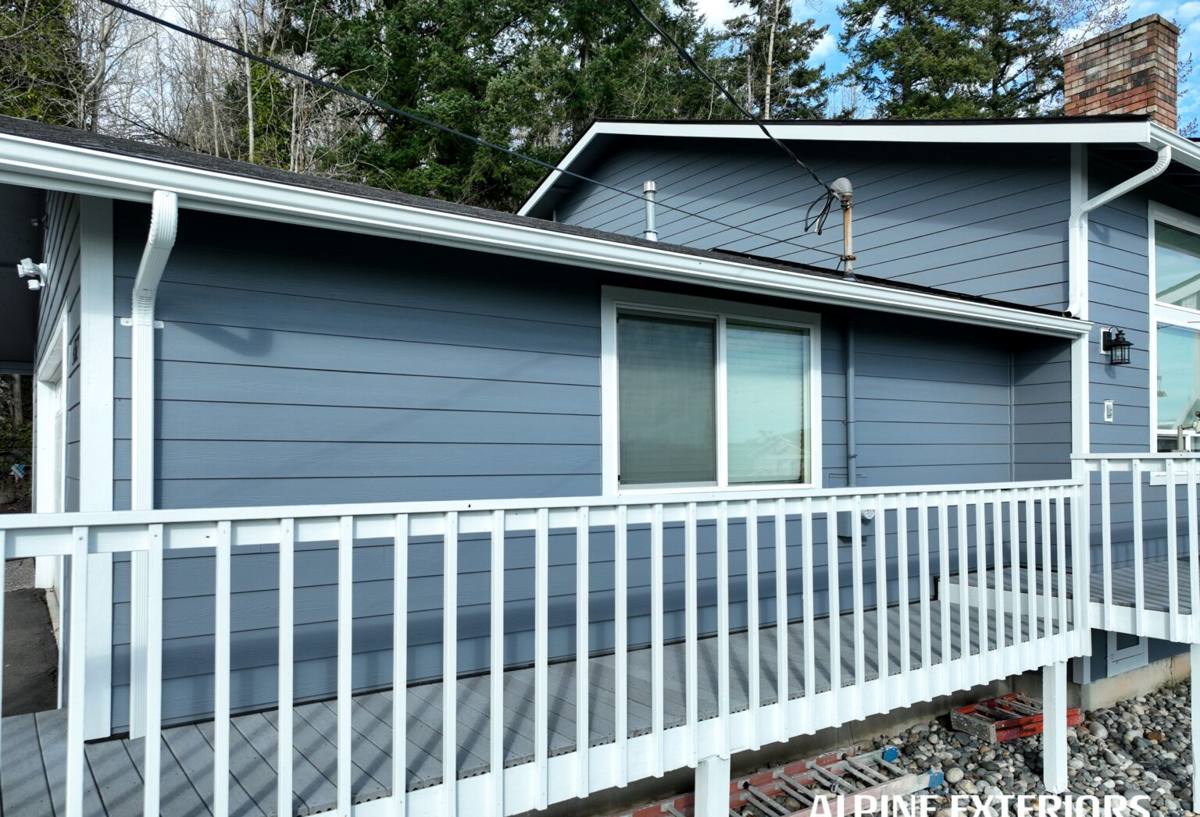
What Silver Beach's Climate Does to a Roof Over Time
Roof repair needs in this part of Whatcom County follow a fairly consistent pattern, and understanding it helps explain why certain repairs matter more here than they would somewhere drier and calmer.
Salt Air and Slow Corrosion
Salt-laden air moving through the area accelerates corrosion on exposed metal — nail heads, flashing, and fastener strips all age faster here than they would inland. A flashing seam that's rusted through is one of the most common sources of a leak that seems to appear "out of nowhere," when in reality it's been developing under the surface for years.
Driving Rain and Wind-Forced Water
Rain in this region doesn't always fall straight down. During stormier stretches it gets pushed sideways and forced upward under shingle edges, valley metal, and roof penetrations that would stay dry in a calmer climate. A repair that only addresses the visible gap, without accounting for water arriving at an angle, tends to fail again within a season or two.
A Long Moss Season
Shaded and north-facing roof planes in Silver Beach hold dampness for much of the year, which gives moss a long window to take hold. Beyond the cosmetic streaking, moss roots work into the shingle surface, lift tabs slightly as it grows, and trap moisture directly against the roof deck — all of which can turn a minor granule-loss issue into an active leak faster than homeowners expect.
Common Roof Repair Needs We See in This Neighborhood
Not every repair call is the same, but a few categories come up again and again on roofs in and around Silver Beach.
Wind and Storm Damage
Lifted, cracked, or missing shingles after a windstorm are among the most frequent repair calls in this area. The damage is often localized to one exposed slope or corner of the roof, which means a targeted repair — rather than a full re-roof — is usually the right and honest fix, provided the surrounding shingles and deck are still sound.
Flashing Leaks
Valleys, chimney bases, skylight curbs, and the points where a roofline meets a wall are where most leaks actually originate, far more often than in the open field of shingles. Flashing repair means removing the compromised section and properly integrating new metal with the underlayment, not smearing sealant over the gap and hoping it holds through the next storm.
Moss-Related Damage
Once moss has been growing on a section of roof for a while, the repair often involves more than just clearing it off. Damaged or lifted shingles underneath frequently need to be replaced, and depending on the extent of the growth, we may recommend zinc or copper strip treatment along the ridge to slow regrowth on that slope going forward.
Gutter and Drainage-Related Issues
Clogged or undersized gutters send water back up under the roof edge instead of away from it, which shows up as rot or staining along the eaves. In a fair number of cases, the actual fix for what looks like a roofing problem is correcting the drainage path, not just repairing the shingles above it.
Repair or Replace? How We Actually Make That Call
One of the most common questions homeowners have when a leak shows up is whether it's worth repairing the roof at all, or whether that money is better put toward a full replacement. The honest answer depends on the extent and location of the damage, not on which answer is more profitable for the contractor giving it.
| Situation | Usually Points To |
|---|---|
| Damage limited to one slope, valley, or penetration point | Targeted repair |
| Roof deck sound; no widespread soft spots when walked | Repair is a reasonable, durable option |
| Granule loss and curling concentrated in a few small areas | Spot shingle replacement |
| Multiple leaks in different areas of the roof | Aging roof nearing the end of its service life — replacement worth evaluating |
| Soft, spongy decking found in more than one location | Full or partial replacement usually the more durable answer |
| Roof already at or past its expected shingle lifespan | Replacement typically the better long-term value |
We walk the roof and, where accessible, check the attic from the inside before recommending either path. If a repair is the right call, we'll say so plainly, and we'll be just as direct if what looks like a simple leak turns out to be a sign that the roof has more widespread issues worth addressing at once.
What a Correct Roof Repair Actually Involves
A roof repair done right addresses the cause of the problem, not just the spot where water happened to find its way in. That distinction is the difference between a fix that lasts and one that reappears with the next heavy rain.
Finding the Real Source
Water often travels along the underside of the deck or underlayment before it drips through the ceiling, which means the visible stain inside the house isn't always directly below the actual leak point on the roof. A proper repair starts with tracing the path of the water, not simply patching the spot that matches the interior damage.
Matching Materials, Not Just Covering the Gap
Replacement shingles should match the existing roof as closely as possible in type, weight, and color, and they need to be woven into the surrounding courses correctly so wind and rain shed the same way they would on the original installation. A patch that sits proud of the surrounding shingles or breaks the shingle pattern is more likely to catch wind and fail again.
Rebuilding Flashing Properly
When the source is a flashing failure, the correct repair replaces or re-integrates the metal itself, lapped correctly with the underlayment beneath it. Sealant has a place as a finishing detail, but it isn't a substitute for flashing that's built correctly in the first place — sealant alone tends to crack and separate well before the rest of the roof shows its age.
Checking What's Underneath
Any time shingles come up for a repair, it's worth checking the underlayment and deck in that section for hidden moisture damage. Repairing the visible surface while leaving compromised decking or soaked underlayment underneath just delays the same problem by a season or two.
Cost Factors for Roof Repair in Silver Beach
Roof repair costs vary more than people expect, and the range usually comes down to a handful of specific factors rather than the size of the roof alone.
| Factor | What It Affects |
|---|---|
| Size and location of the damaged area | Labor time and how much of the surrounding roof needs to be opened up |
| Whether flashing is involved | Metal fabrication and integration work versus a simpler shingle swap |
| Condition of the deck underneath | Whether plywood or OSB repair is needed before new shingles go down |
| Roof pitch and access | Staging, safety equipment, and time required to work the area safely |
| Shingle availability and match | Whether matching material is readily available or needs to be sourced |
| Moss or gutter remediation included | Whether the root cause is addressed alongside the visible repair |
An honest repair estimate should spell out what's actually being done — not just "roof repair" as a single line — so you know whether you're paying for a genuine fix or a quick patch.
How Our Repair Process Works
- In-person inspection: We get on the roof and check the attic where accessible, rather than quoting a repair from a description over the phone.
- Honest diagnosis: We trace the actual source of the problem and tell you plainly whether repair or replacement is the more durable and cost-effective path.
- Written estimate: You get a clear scope covering exactly what's being repaired, what materials are used, and why — not a vague single-line quote.
- The repair itself: Damaged shingles, underlayment, or flashing are removed and rebuilt correctly, matched to the surrounding roof wherever possible.
- Verification: Where a leak was the original complaint, we check that the source has actually been addressed, not just the visible symptom.
- Cleanup and walkthrough: We do a full site and magnetic nail sweep and review the completed work with you before considering the job finished.
Why Hiring a Crew That Already Works in Silver Beach Matters
A crew that regularly repairs roofs in Silver Beach and the surrounding parts of Bellingham has already seen how salt air corrodes flashing on this stretch of coastline, which roof orientations hold moss longest through the wet months, and how far wind-driven rain can actually travel under a lifted shingle edge before it shows up as a stain inside the house. That kind of familiarity shortens the diagnosis and reduces the chance of a repair that misses the real cause.
It also matters for accountability after the work is done. A repair warranty only means something if the company behind it is still reachable a year or two later, which is more likely with a contractor that has an ongoing, established presence in this area rather than one working from out of town for a single job.
A Practical Checklist Before You Hire a Roof Repair Contractor
- Do they inspect the roof in person before quoting, rather than pricing over the phone?
- Does the estimate name the specific materials and areas being repaired, not just "roof repair" as one line?
- Do they explain their reasoning if they recommend replacement instead of repair, or vice versa?
- Do they carry current WA contractor licensing, liability insurance, and workers' compensation?
- Can they point to recent, real repair work in or near Silver Beach or Bellingham?
- Is there a clear workmanship warranty on the repair itself, separate from any manufacturer material warranty?
Signs Your Silver Beach Roof May Need Repair Now
Most roof problems give some warning before they turn into an active leak. Catching these signs early is usually the difference between a modest repair and a much larger bill later.
- A handful of shingles missing or visibly lifted after a windy stretch
- Granules building up in the gutters faster than seems normal for the roof's age
- Moss or dark streaking concentrated on one shaded or north-facing slope
- A water stain on a ceiling or in the attic that appears only during heavy or wind-driven rain
- Daylight visible through the roof deck from inside the attic near a valley or penetration
- Sagging or soft-feeling spots along one section of roofline
If any of these sound familiar, it's worth having a roofer take a look before the next round of storms makes the decision for you.
If you're dealing with a leak, storm damage, or a roof that just needs an honest second opinion, we're glad to come take a look at no cost and no pressure. Use the form below to request a free estimate for your Silver Beach home.