 Bellingham Siding
 Why Silver Beach Roofs Take a Different Kind of Beating
Silver Beach sits close enough to the water and tucked into enough tree cover that its roofs deal with a combination most inland Whatcom County neighborhoods don't see all at once: salt-laden air drifting in off the bay, heavy driving rain that comes in sideways during winter storms, and shaded, moisture-holding roof slopes that stay damp long enough for moss to take hold. Any one of those on its own is manageable. Together, over years, they wear down roofing materials faster than a spec sheet would suggest.
Metal roofing handles that combination better than most alternatives, but only when it's the right panel system, installed correctly, with the right underlayment and flashing details underneath it. This page is about that — what Silver Beach homes actually need from a metal roof, what a correct installation looks like, and how we approach these projects.
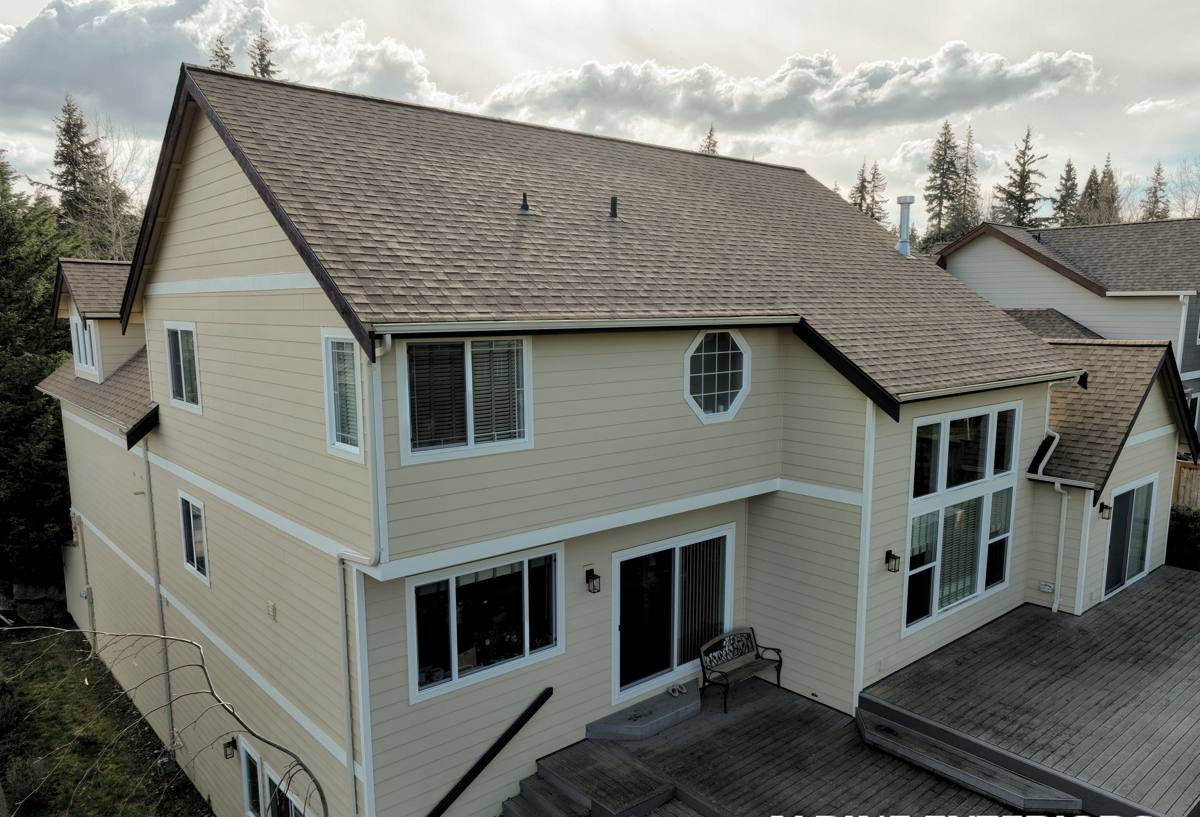
What the Local Climate Does to a Roof Over Time
Salt Air and Slow Corrosion
Bellingham isn't a heavy coastal environment the way an oceanfront town is, but Silver Beach still picks up enough salt-bearing moisture off the water to matter over a roof's lifespan. Salt air accelerates corrosion on unprotected or poorly coated metal, and it can also cause premature staining or granule loss on some conventional roofing materials. The practical takeaway is that not every metal roofing product sold as "coastal-rated" actually performs well in a mixed marine-and-rain climate like ours — coating quality and metal type matter more here than they would fifty miles inland.
Driving Rain and Wind-Driven Water
Winter storms in this part of Whatcom County don't just drop rain straight down — wind pushes it sideways and up under laps, flashing edges, and fastener heads. A roof that's fine in a gentle rain can leak in a driving one if the underlayment, flashing overlaps, and fastener sealing weren't detailed for wind-driven water in the first place. This is one of the most common causes of "mystery leaks" we get called out to diagnose on roofs that otherwise look fine.
Moss Season and Shaded Roof Slopes
Bellingham's moss season runs long — realistically much of the fall through spring — and Silver Beach's tree cover means north-facing and shaded slopes stay damp for extended stretches even between storms. Moss and algae don't just look bad; moss roots work into laps and seams, and algae growth can hold moisture against a roof surface far longer than it would otherwise sit there. Metal roofing doesn't stop moss from landing on it, but it gives moss nothing to root into the way shingle granules or wood shakes do, and it sheds water and dries out faster once the rain stops.
Metal Panel Options That Make Sense Here
Not all metal roofing is the same product wearing different colors. The panel type, how it's fastened, and the coating all change how it performs under our specific mix of salt air, rain, and shade. Here's how the common options compare for a home in this area:
| Panel Type | How It's Attached | Best For | Maintenance Reality |
|---|---|---|---|
| Standing seam | Concealed clips, no exposed fasteners | Homes wanting the longest maintenance-free run and the cleanest look | Very low — no fastener washers to fail over time |
| Exposed-fastener (ribbed/corrugated) | Screws driven through the panel face with rubber washers | Budget-conscious projects, outbuildings, simpler rooflines | Washers age and need occasional re-torque or replacement over the roof's life |
| Stone-coated steel | Interlocking panels, often nailed like traditional roofing | Homes wanting a shingle or shake appearance with metal's durability | Low, but coating chips at cut edges need attention during install |
For most Silver Beach homes dealing with driving rain and long-term salt exposure, we lean toward standing seam because there's no exposed fastener to eventually fail as a leak point, and the coating systems used on standing seam panels tend to hold up better against coastal air over decades. That said, exposed-fastener systems installed correctly with quality washers are a legitimate, lower-cost option for the right project — we'll tell you honestly which fits your roof and budget rather than defaulting to the more expensive system.
What a Correct Metal Roof Installation Actually Involves
A metal roof is only as good as what's underneath it and how the details are handled. The panels themselves rarely fail — the underlayment, flashing, and fastening choices are what determine whether the roof stays dry for the next thirty-plus years.
- Full synthetic underlayment, with self-adhering ice-and-water membrane at eaves, valleys, and any low-slope transitions where wind-driven rain is most likely to work its way back under the panel edge.
- Proper fastener selection — matching screw and washer materials to the panel metal to avoid galvanic corrosion between dissimilar metals, which is a real and preventable failure mode we watch for closely.
- Flashing at every penetration and transition — chimneys, vent stacks, wall intersections, and skylights are where most roof leaks actually originate, metal or otherwise.
- Correct panel overlap and seam direction, run with prevailing wind and water flow in mind rather than just square to the roofline.
- Adequate attic or roof-deck ventilation, so moisture doesn't condense against the underside of the panels during our cooler, wetter months.
- Coating and gauge matched to exposure — a heavier gauge and a quality baked-on coating system for anything with more direct salt air or sun exposure.
Skip any one of these and the panels can still look right for a few years while a slow leak or corrosion problem builds underneath. This is why we treat the underlayment and flashing work as equally important as the visible metal — it's the part that actually determines whether the roof performs.
Our Process for Silver Beach Metal Roof Projects
- On-site assessment. We look at roof pitch, shading and tree cover, existing ventilation, and any current moss, algae, or moisture staining before recommending a panel system.
- Deck inspection during tear-off. Old roofing comes off and we check the deck underneath for rot or soft spots — common on shaded slopes that have held moisture for years — and repair before anything new goes down.
- Underlayment and ice-and-water membrane installation. This layer goes down before a single panel is set, with extra attention at eaves, valleys, and wall transitions.
- Panel installation. Panels are run, seamed or fastened, and aligned with attention to wind direction and water flow across the roof.
- Flashing and detail work. Every penetration, wall intersection, and edge gets flashed and sealed as a distinct step, not an afterthought.
- Final walkthrough. We go over the finished roof with you, including what routine maintenance looks like for your specific panel type.
Living With a Metal Roof in a Wet, Shaded Climate
A correctly installed metal roof is low-maintenance, not zero-maintenance. A little seasonal attention goes a long way in a neighborhood with this much tree cover and moisture:
- Keep gutters and valleys clear of needles and leaf debris so water doesn't pool at panel edges
- Trim back overhanging branches to cut down on shade and debris buildup on north-facing slopes
- Rinse accumulated debris or moss growth off gently rather than pressure-washing, which can damage coatings and seams
- On exposed-fastener systems, have fasteners checked periodically — washers age and can need replacement well before the panels themselves do
- Watch for any staining near where metal flashing meets other metal components, which can signal galvanic corrosion starting
- Schedule a roof check after major windstorms, since driving rain is when marginal flashing details tend to show themselves
What Drives the Cost of a Metal Roof in Silver Beach
Metal roofing costs more upfront than asphalt shingles, and the final number depends on more than just square footage. Here's what actually moves the price on a project like this:
| Cost Factor | Why It Matters |
|---|---|
| Panel type | Standing seam costs more than exposed-fastener panels due to material and labor for concealed fastening |
| Roof complexity | Valleys, dormers, and multiple roof planes mean more flashing and cutting, which adds labor |
| Tear-off and deck condition | Rot or soft decking found during tear-off needs repair before new roofing goes on |
| Coating and gauge | Heavier gauge steel and premium coating systems cost more but hold up longer against salt air and sun |
| Ventilation upgrades | Older homes sometimes need added ridge or soffit ventilation to perform well under a new roof system |
We'll walk through these factors specific to your roof during the estimate so you know what's driving the number, rather than handing you a single line-item total with no explanation.
Why Hiring a Crew That Already Works Silver Beach Matters
A contractor who works this neighborhood regularly already understands how its tree cover, roof shading, and wind exposure differ from a roof three miles inland. That matters for panel choice, ventilation, and where we pay closest attention to flashing details. It also means we're familiar with the permitting and inspection process for roofing work in Bellingham and Whatcom County, so that part of the project moves without surprises.
Just as important is honesty about trade-offs. We'll tell you plainly if a lower-cost panel system is a reasonable fit for your roof, or if your specific exposure and roof design really call for the higher-end option. Our goal is a roof that performs correctly for decades in this climate, not the biggest invoice we can write.
If you're weighing metal roofing for a home in Silver Beach, we're glad to walk your roof, talk through what your specific slope and exposure need, and put together a straightforward, no-pressure estimate. Fill out the form below and we'll get in touch.