 Bellingham Siding
 Deck Building in Silver Beach
Silver Beach is a well-established residential pocket of Bellingham, and the decks here have to work harder than decks in drier parts of the country. Homes in this part of Whatcom County deal with driving rain for much of the year, a marine-influenced climate that keeps humidity high, and a moss and algae season that can run eight months or longer on any surface that doesn't get direct sun. A deck built without that reality in mind will look fine for a season or two, then start showing soft spots, slick planking, and rot at the joints. A deck built for it will still be solid a decade from now.
This page covers what actually matters when you're planning a new deck or replacing an old one in Silver Beach: the materials that hold up, the structural details that keep water from doing damage where you can't see it, how permitting works locally, and what our process looks like from first call to final walkthrough.
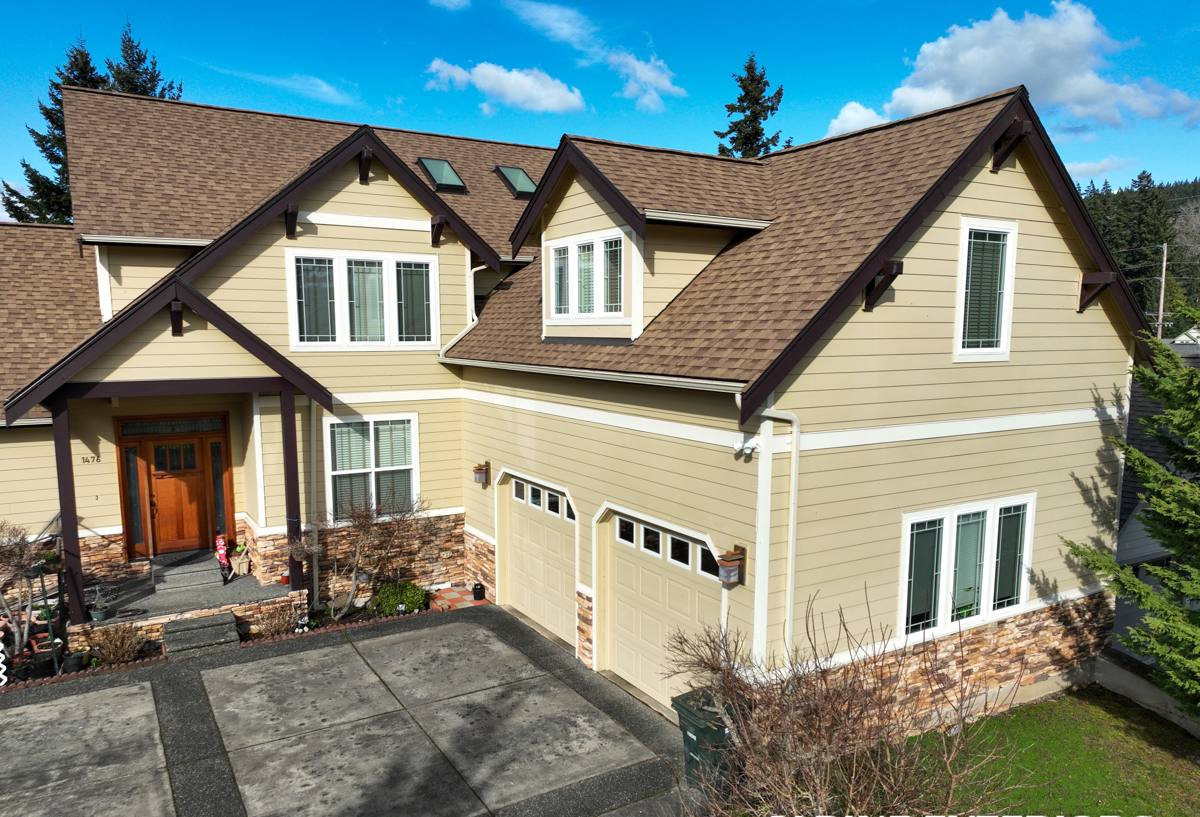
What Bellingham's Climate Does to a Deck
Most deck failures we see aren't from bad lumber or bad luck — they're from water that had nowhere to go. Understanding how the local climate attacks a deck helps explain why we build the way we do.
Constant moisture cycling
Whatcom County doesn't get one big wet season and then dry out — it gets long stretches of damp, overcast weather punctuated by driving rain, followed by short dry spells. Wood and fasteners that stay damp longer than they stay dry are the ones that rot and corrode first. Decks that get full sun exposure dry out between storms; decks tucked under trees or on the shaded side of a house often don't, which changes what material and maintenance schedule makes sense.
Moss, algae, and surface buildup
Anything horizontal in this region grows moss if it stays shaded and damp — deck boards included. Moss holds water against the surface, and on wood that accelerates rot; on composite it can stain and, if left long enough, create a slip hazard. Spacing, airflow under the deck, and board selection all affect how fast moss takes hold.
Salt-tinged marine air
Bellingham's proximity to the water means fasteners, flashing, and hardware are exposed to a mildly corrosive marine air even away from the immediate waterfront. Standard hardware-store screws and brackets that would be fine in a dry inland climate can rust and weaken over a few winters here. This is one of the most common failure points we find when we're called out to fix someone else's deck.
Choosing the Right Decking Material
There's no single "best" decking material — there's the right material for your budget, how much upkeep you want to do, and how much sun or shade your lot gets. Here's how the common options actually perform in this climate.
| Material | How It Handles Our Climate | Maintenance | Typical Lifespan |
|---|---|---|---|
| Pressure-treated pine | Affordable, but absorbs moisture readily and needs consistent sealing to resist rot and moss staining | Annual cleaning, re-sealing every 1-2 years | 10-15 years with upkeep |
| Cedar | Naturally rot- and insect-resistant, ages well in wet climates, but softer surface and needs periodic finish care | Cleaning and refinishing every 2-3 years | 15-20 years with upkeep |
| Composite decking | Doesn't absorb water or rot, resists moss staining better than wood, holds up well to the region's damp cycles | Periodic washing, no sealing or staining | 25-30 years |
| PVC / capped polymer | Fully sealed surface, best resistance to moisture and staining, performs well in shaded, damp spots | Occasional washing | 25-30+ years |
As a professional standard, we steer homeowners away from untreated or lower-grade lumber for anything beyond a temporary structure — not because the wood is inherently bad, but because it demands a maintenance commitment most people underestimate in a climate this wet, and the upkeep cost over 15 years often exceeds the upfront savings. If budget is the main driver, pressure-treated framing with a composite or PVC walking surface is usually the better long-term value than an all-wood deck.
Framing and Foundation: Where Decks Actually Fail
The decking boards are what you see, but the structure underneath is what determines whether the deck is safe and how long it lasts. This is where corners get cut on lower-quality jobs, and it's the part a homeowner can't easily inspect after the fact.
Footings
Whatcom County soil holds water, and frost depth requirements apply to footing design. Footings need to be sized and set to local code depth, on undisturbed or properly compacted soil, so the deck doesn't shift or heave over time.
Ledger board attachment
Where a deck attaches to the house is the single most common source of hidden water damage. Proper flashing at the ledger board keeps rain from tracking behind the siding and into the house framing — a failure here can rot out wall structure long before the deck itself shows any problem. This detail matters more in a climate that gets this much sustained rain than almost anywhere else in the structure.
Fasteners and hardware
Given the marine air noted above, we use corrosion-resistant, code-rated hardware and structural connectors rather than standard fasteners. It costs more up front and makes no visible difference on day one — the difference shows up in year eight, when the connections are still tight instead of rusted and loose.
Airflow underneath
Decks built too low to the ground, or without enough clearance and ventilation, trap moisture underneath and accelerate rot in the joists and posts. Proper clearance and, where needed, ground cover to control moisture from below are part of a correctly built deck in this climate.
Permits and Local Code
Most new decks and many deck replacements in Bellingham require a building permit, and the requirements cover footing depth, guardrail height, stair geometry, and structural attachment to the house. Skipping the permit process might save time up front, but it creates real problems later — unpermitted structures can complicate a home sale, and work that wasn't inspected has no third-party confirmation that the footings and framing were actually done correctly.
We handle the permitting and inspection process as part of the job, so you're not the one tracking down requirements or scheduling inspections.
Our Deck Building Process
Every Silver Beach deck we build follows the same core steps, adjusted for the specific lot, sun exposure, and how the deck will be used.
- On-site evaluation of the lot: sun exposure, drainage, soil, and how the deck ties into the house
- Design and material selection based on your budget, maintenance preference, and how the space will be used
- Permit drawings and submission to the city or county as required
- Footing layout and installation to local code depth
- Framing with corrosion-resistant hardware and properly flashed ledger attachment
- Decking installation with attention to board spacing for drainage and airflow
- Railing, stairs, and any built-in features per your design
- Final walkthrough and care guidance specific to the material you chose
We don't treat any of these steps as optional shortcuts, even on smaller decks. The framing and flashing work the same way whether the deck is 120 square feet or 600.
Keeping a Silver Beach Deck in Good Shape
How much maintenance a deck needs depends heavily on the material you chose, but a few habits matter regardless of what's underfoot:
Seasonal cleaning
A wash down before moss and algae get established each fall is far easier than removing buildup after months of growth. This matters more here than in drier climates simply because the growing season for moss is so long.
Watching the ledger and framing
Once a year, it's worth a quick look at where the deck meets the house for any signs of staining, soft wood, or gaps in flashing. Catching a small flashing issue early is a minor fix; catching it after five years of rain has gotten behind it is a much bigger one.
Sealing wood decks on schedule
If you went with cedar or pressure-treated lumber, staying on top of the resealing schedule is what determines whether you get 10 years out of it or 20.
Why a Crew That Already Works Silver Beach Matters
Deck building isn't unique to this neighborhood, but building one that actually holds up here requires knowing how this specific climate behaves — which sides of a lot stay damp longest, how local soil handles footings, what hardware corrodes too fast, and what the city and county actually check for at inspection. A crew that's done this work throughout Bellingham and Whatcom County has already made the adjustments that a generic build wouldn't include, and has already worked through the local permitting process enough times to keep it from slowing the job down.
If you're planning a new deck or need to replace one that's showing its age, we're happy to come take a look, walk the site with you, and put together a straightforward estimate — no pressure, no obligation. Use the form below to get started.