 Bellingham Siding
 Board & Batten in Silver Beach: A Look That Fits the Neighborhood
Board and batten has become one of the most requested siding profiles in Bellingham, and Silver Beach homes are a natural fit for it. The vertical lines read as modern on a newer build and as classic farmhouse on an older one, and the profile works well on gable ends, dormers, and accent walls even when the rest of the house is finished in a different siding style. It's a look that holds up visually on wooded, sloped lots where a house is often viewed from an angle rather than straight on, which describes a lot of the terrain around Silver Beach.
But board and batten is also one of the least forgiving siding profiles when it's installed wrong. The vertical battens create dozens of extra seams and fastening points compared to horizontal lap siding, and every one of those seams is a place water can find its way behind the cladding if the details aren't right. In a climate like ours, that's not a small detail — it's the whole job.
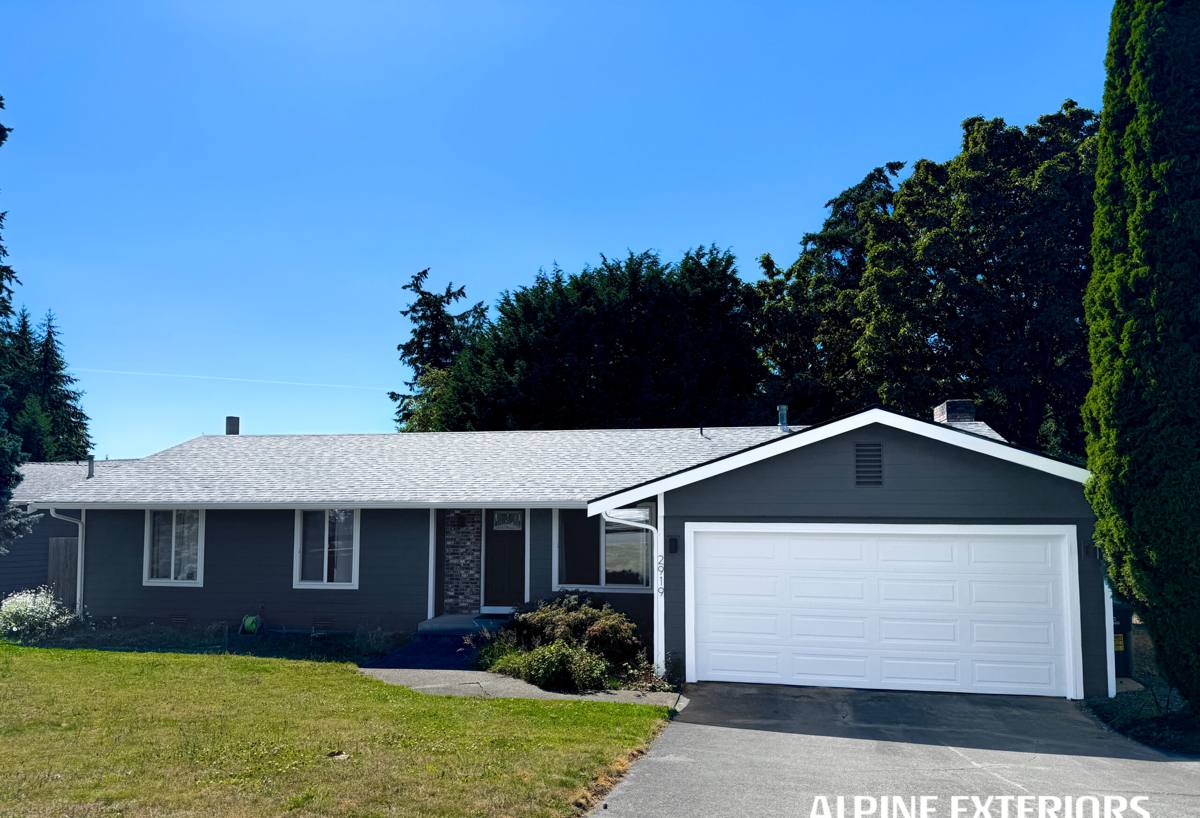
What Bellingham's Climate Puts Vertical Siding Through
Whatcom County siding takes a specific kind of abuse. It's rarely a single hard freeze or a single big storm that causes damage — it's the accumulation of months of damp, mild weather working on the same surfaces year after year. A few things matter specifically for board and batten:
- Driving rain: Wind-driven rain off the water hits vertical battens at an angle, pushing moisture toward every seam and fastener line instead of just sheeting straight down like it would on a flat wall.
- Long moss season: Shaded, tree-covered lots common around Bellingham stay damp for extended stretches, which is exactly the environment moss, algae, and mildew need to take hold on a wall surface.
- Salt-influenced air: Homes closer to Bellingham Bay and the broader Puget Sound air mass deal with a marine-influenced climate that keeps humidity and airborne moisture elevated compared to drier inland regions, accelerating wear on fasteners, caulk, and paint film.
- Freeze-thaw cycling: Even mild winter cold snaps that follow a soaked-in wet stretch can push trapped moisture through repeated freeze-thaw cycles, which is what actually breaks down siding materials over time rather than the cold itself.
None of this is unique to Silver Beach, but it's the reality anywhere in this part of Whatcom County, and it's why the material and the installation method matter more here than they would in a drier climate.
How Correct Board & Batten Siding Is Built
Board and batten isn't a single product — it's an assembly. Understanding the parts helps you evaluate any bid you get, from us or anyone else.
The Layers Behind the Battens
A correctly built board and batten wall has, from the framing outward: a weather-resistant barrier (house wrap or building paper), a rainscreen gap that lets any moisture that gets behind the cladding drain and dry out, the vertical panel or plank material, and then the battens fastened over the seams. Skip the rainscreen gap and you've built a wall that can trap moisture directly against the sheathing — a common shortcut that doesn't show up as a problem for a year or two, which is exactly why it keeps happening.
Fastening and Flashing
Every seam, window, door, and roofline intersection needs proper flashing so water is directed out and away rather than behind the siding. Battens need to be fastened into framing on a consistent schedule, not just into the panel material, or they'll work loose as the assembly moves through wet and dry cycles.
Why We Install Only James Hardie Board & Batten
We don't install vinyl board and batten, LP SmartSide, primed wood, or the other cementitious brands on the market. That's a deliberate standard, not a lack of options. Here's the honest reasoning:
Vinyl board and batten is affordable and low-maintenance in the sense that it doesn't need paint, but it's a thin material that expands and contracts significantly with temperature swings, and it can warp or crack under impact — not the right trade-off for a marine climate with real weather.
Engineered wood products like LP SmartSide use a resin-treated wood strand core that performs reasonably well when installation is perfect and maintenance never lapses, but wood-based siding is inherently more vulnerable to sustained moisture exposure than fiber cement, and Bellingham's wet season doesn't offer much margin for a maintenance schedule that slips.
Primed spruce and cedar look excellent when new, but they require ongoing refinishing, they're a food source for moss and mildew in a shaded, damp environment, and cedar in particular has become expensive and harder to source in consistent quality.
James Hardie fiber cement is non-combustible, dimensionally stable, and engineered specifically for Pacific Northwest moisture exposure through its HZ5 product line. The ColorPlus factory finish is baked on under controlled conditions rather than field-applied, which gives it far more consistent coverage and UV resistance than a job-site paint job — and it carries a substantial transferable finish warranty on top of the product warranty itself. For a vertical profile with this many seams, that combination of stability and finish durability is what makes the difference between a wall that looks good for two years and one that looks good for twenty.
HardiePanel Vertical Siding vs. True Board & Batten Reveal
James Hardie offers two ways to achieve the board and batten look, and it's worth knowing the difference before you get a quote:
| System | How It's Built | Best Fit |
|---|---|---|
| HardiePanel + battens | Large-format fiber cement panels installed vertically, with separate batten strips fastened over the seams | Full walls, whole-house exteriors, most new construction |
| Board & batten plank reveal | Individual vertical boards installed with a consistent gap or reveal, sometimes with a batten cap | Accent walls, gables, dormers, mixed-material facades |
What a Correct Installation Involves on a Silver Beach Home
Every board and batten job we do follows the same non-negotiable sequence, regardless of the size of the wall:
- Inspect and repair the sheathing before anything goes up — siding can't fix a rot problem underneath it, it just hides one.
- Install a weather-resistant barrier and a proper rainscreen gap so the wall can drain and dry.
- Flash every window, door, roofline, and penetration before the cladding goes on, not after.
- Fasten panels and battens into structural framing on Hardie's specified schedule, not just wherever is convenient.
- Caulk and seal joints with products rated for this climate, applied where Hardie's installation instructions actually call for them — not everywhere, and not nowhere.
- Final inspection of every seam, corner, and trim line before the job is called finished.
Homes on sloped or heavily treed lots — common around Silver Beach and along the Lake Whatcom side of Bellingham — often need extra attention paid to grading and gutter placement near the siding line, since a wall that stays wet longer because of poor drainage or dense shade will show moss and mildew faster than one that gets sun and airflow.
What Drives the Cost
Board and batten typically costs more per square foot than standard lap siding because of the added batten material and labor for the extra seams. Actual pricing depends on your specific home, but these are the factors that move the number:
| Factor | Why It Matters |
|---|---|
| Whole-house vs. accent application | A full board and batten exterior costs more than using it as a gable or accent feature over another siding profile |
| Existing wall condition | Sheathing repair or rot remediation adds cost but is not optional if it's needed |
| Wall height and access | Multi-story sections, steep lots, and limited equipment access increase labor time |
| Trim and detail complexity | Dormers, multiple roof intersections, and window density all add flashing and cutting labor |
| Color and finish selection | Standard ColorPlus colors vs. premium or custom finish options carry different material costs |
Our Process, Start to Finish
We start with an on-site visit to look at the actual wall assembly, note any moisture or rot issues, and talk through where board and batten makes sense on your specific house — whole exterior, or as an accent against another Hardie profile. From there we measure, help you select the HZ5-rated product and ColorPlus finish, and give you a clear written scope before any work starts. Installation follows the sequence above with no shortcuts on rainscreen, flashing, or fastening, and we walk the finished job with you before we consider it done.
Maintaining Board & Batten Long-Term
Fiber cement board and batten is low-maintenance compared to wood, but "low" isn't "none," especially in a climate that grows moss on almost anything that sits still. A short seasonal checklist keeps a correctly installed wall performing for decades:
- Rinse shaded and north-facing sections once or twice a year to keep moss and algae from establishing
- Keep gutters clear so overflow doesn't run down the wall face repeatedly in one spot
- Trim back vegetation and tree limbs that keep sections of the wall shaded and damp
- Walk the exterior annually and check caulk lines at trim, windows, and corners for cracking or separation
- Address any impact damage or fastener issues promptly rather than letting a small gap become a moisture entry point
Why Hire a Crew That Already Works Silver Beach
Board and batten punishes generic installation habits more than almost any other siding profile, because the extra seams multiply the number of places a mistake can let water in. A crew that already works around Bellingham understands what this climate actually does to a wall over ten wet seasons, not just what a spec sheet says it should do. That translates into practical judgment calls on-site — where to add extra flashing attention, how to handle a shaded or sloped section, and when a wall assembly needs more than the minimum before the siding goes on.
If you're weighing board and batten for a Silver Beach home, we're glad to come take a look, walk the specific walls you're considering, and give you a straightforward, no-pressure estimate — no fake urgency, just an honest read on what the job needs.