 Bellingham Siding
 Happy Valley's Climate Is Harder on Siding Than Most Homeowners Realize
Happy Valley sits close enough to Bellingham Bay and the surrounding tree cover that its homes take a specific kind of beating year-round. Salt-laden air moving in off the water accelerates corrosion on fasteners and metal trim. Driving rain off Puget Sound storms doesn't just wet a wall surface — it drives moisture sideways into seams, laps, and corner boards under wind pressure. And the deep shade from mature trees that gives the neighborhood its character also means siding stays damp longer after every rain, which is exactly the condition moss, algae, and mildew need to take hold.
None of that is unusual for Whatcom County. But it adds up differently on a neighborhood-by-neighborhood basis depending on tree canopy, sun exposure, and how close a given block sits to the water. Siding that would hold up fine on a dry, open lot in eastern Washington can fail years early here — not because it's bad siding, but because it was never engineered for this combination of salt, rain, and shade.
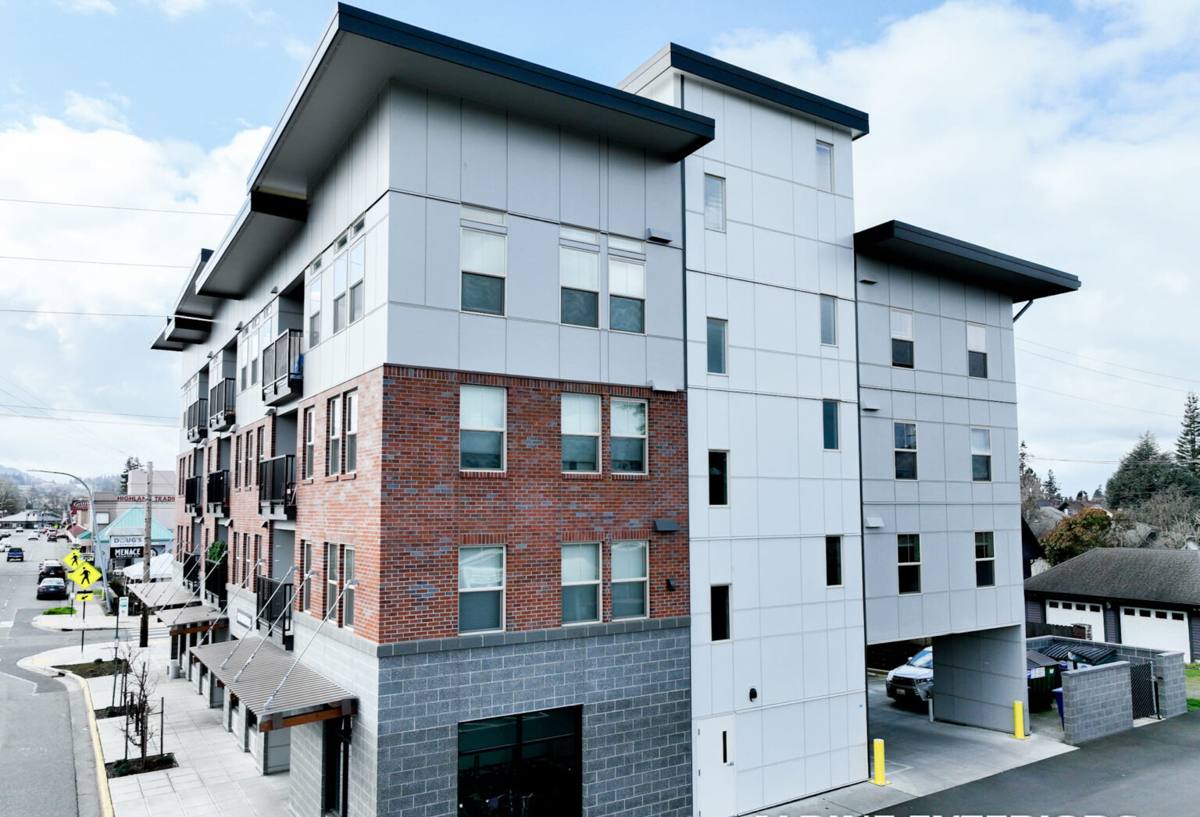
Why We Install Only James Hardie Fiber Cement
We don't carry vinyl, LP SmartSide, Cemplank, Allura, primed spruce, or cedar. That's not a marketing position — it's a standard we set after years of seeing how different siding materials actually perform once they're on a house in a wet, moss-prone climate. Fiber cement doesn't rot, doesn't feed moss and mildew the way wood-based products can, and doesn't warp or buckle from repeated wet-dry cycling the way vinyl and engineered wood products are prone to over time. James Hardie is the fiber cement manufacturer we trust to back that performance with a real product system and a real warranty.
Built for This Specific Climate
James Hardie engineers its HZ5 product line specifically for climate zones like ours — places that see sustained moisture, freeze-thaw cycling, and coastal air. That's a meaningful distinction from a one-size-fits-all siding product. The HZ5 formulation is designed to resist moisture-related damage in exactly the conditions Happy Valley sees most: prolonged dampness under tree canopy and wind-driven rain off the bay.
ColorPlus Factory Finish
Most of what we install carries Hardie's ColorPlus finish — a color baked on at the factory under controlled conditions, not brushed or sprayed on-site. That matters here because field-applied paint is only as good as the weather window it was applied in, and it's the first thing to fail when siding sits in shade and damp for long stretches. A factory finish resists fading and chipping far longer than field paint, and touch-up product is available to match it when it's ever needed.
What a Correct Installation Actually Involves
The siding material is only part of the equation. Most siding failures we get called out to inspect — regardless of the brand on the wall — trace back to installation mistakes, not the product itself. That's especially true in a climate where any gap in the water management plan gets tested constantly.
Water Management Behind the Siding
Correct installation starts with a drainage plane and proper flashing at every window, door, and horizontal transition — the details that keep wind-driven rain from ever reaching the sheathing in the first place. In a neighborhood that sees the rainfall volumes Bellingham does, a rainscreen gap behind the siding to let moisture drain and the wall assembly breathe isn't optional detailing — it's what keeps a fiber cement wall system performing for decades instead of years.
Fastening and Manufacturer Spec
James Hardie publishes exact specifications for fastener type, spacing, nailing patterns, and clearances — including minimum gaps between siding and roof lines, decks, and grade. Skipping those specs is the single most common way a Hardie installation voids its warranty or starts failing prematurely. We install to Hardie's published spec on every job, not a shortcut version of it.
Caulking and Joint Treatment
Every butt joint, corner, and penetration is a place water can find its way in if it's not treated correctly. We follow Hardie's joint treatment guidance rather than relying on caulk alone to do a job it was never meant to do by itself.
How Fiber Cement Compares for a Home Like Yours
Homeowners in Happy Valley considering a siding replacement are usually weighing James Hardie against vinyl, engineered wood, or cedar. Here's how they compare on the factors that actually matter in this climate.
| Factor | James Hardie Fiber Cement | Vinyl | Cedar / Engineered Wood |
|---|---|---|---|
| Moisture & moss resistance | Engineered for wet climates (HZ5); doesn't rot | Doesn't rot, but can trap moisture behind panels | Susceptible to rot, moss, and moisture damage over time |
| Salt air / coastal exposure | Non-combustible, stable in coastal conditions | Can become brittle and discolor | Requires more frequent sealing and upkeep |
| Finish durability | Factory ColorPlus finish resists fading and chipping | Color molded in, can fade and chalk over time | Field-applied paint or stain, needs recoating |
| Fire resistance | Non-combustible material | Combustible | Combustible |
| Typical maintenance | Periodic washing; touch-up paint rarely needed | Washing; prone to warping/cracking with age | Regular sealing, staining, and rot inspection |
| Warranty structure | Strong transferable manufacturer warranty when installed to spec | Varies widely by product line | Limited or none on the material itself |
Every material on that list has a place somewhere. In Happy Valley's specific mix of shade, rain, and salt air, fiber cement engineered for this climate is the option we're willing to put our name behind.
Our Process for a Happy Valley Siding Project
- On-site assessment: We walk the exterior with you, checking existing siding, trim, and the condition of the wall assembly underneath where it's accessible.
- Moisture and damage check: Because tree-shaded, coastal-adjacent homes are prone to hidden moisture issues, we look closely at areas most likely to be compromised — under windows, at deck ledgers, near grade, and anywhere caulking has failed.
- Product and color selection: We help you choose the right HardiePlank profile and ColorPlus color for your home, factoring in sun exposure and how the color will read under tree cover.
- Installation to manufacturer spec: Proper drainage plane, flashing, fastening, and joint treatment — done in that order, not skipped for speed.
- Final walkthrough: We review the finished work with you before calling the job complete.
Why the Crew Matters as Much as the Material
A crew that regularly works Happy Valley and the surrounding Bellingham neighborhoods already knows which details get skipped elsewhere and cause callbacks two winters later. That includes how much rainscreen gap to leave under heavy tree cover, how to detail flashing around the kind of window and trim styles common in the neighborhood, and how aggressively to plan for moss and algae given a given lot's sun exposure. That local pattern recognition is hard to get from a crew that installs siding all over the state and rarely sees the same climate conditions twice.
Signs Your Happy Valley Home May Need New Siding
- Visible moss or dark streaking that returns quickly after cleaning
- Soft spots, bubbling, or warping in the siding surface
- Cracked, peeling, or chalky paint that's failing faster than it used to
- Gaps opening up at seams, corners, or trim boards
- Rising energy bills that suggest the wall assembly is no longer performing
- Visible rot at the bottom courses, near grade, or under windows
If you're seeing more than one of these, it's worth having someone look at the wall assembly behind the siding, not just the surface.
Living with Fiber Cement in a Moss-Prone Neighborhood
James Hardie siding doesn't feed moss and algae the way untreated wood products can, but any exterior surface in a shaded, damp neighborhood like Happy Valley will still collect organic growth over time — it's a function of the environment, not the material failing. An occasional gentle wash (low-pressure, not a power washer aimed directly at seams) keeps growth from building up and keeps the ColorPlus finish looking like it did on install day. Because the color is factory-baked rather than field-painted, that maintenance stays limited to cleaning for most homeowners — not the repainting cycle that cedar or field-finished products require.
Get a Straightforward Estimate
If your Happy Valley home is due for new siding, or you're just trying to understand what's actually going on behind an aging exterior, we're happy to take a look. We'll give you a straightforward, no-pressure estimate and an honest read on what your home actually needs — use the form below to get started.