 Bellingham Siding
 South Hill's Siding Problem Isn't Like Other Neighborhoods'
South Hill sits up above downtown Bellingham with some of the best exposure in the city — which is exactly the problem. Elevated, view-oriented lots catch wind and moisture straight off Bellingham Bay with nothing to break it up. Add Whatcom County's long, wet winters and the shade from mature trees on older lots, and you get siding that stays damp far longer than siding on a sheltered, low-elevation street across town. That combination of salt-laden wind, driving rain, and shade-fed moss growth is the single biggest reason siding fails early up here, and it's the reason we think about South Hill jobs differently than a flat, inland lot.
None of this means South Hill homes need something exotic. It means the material and the installation details have to actually match the exposure, instead of just matching a catalog page. That's the whole focus of this page.
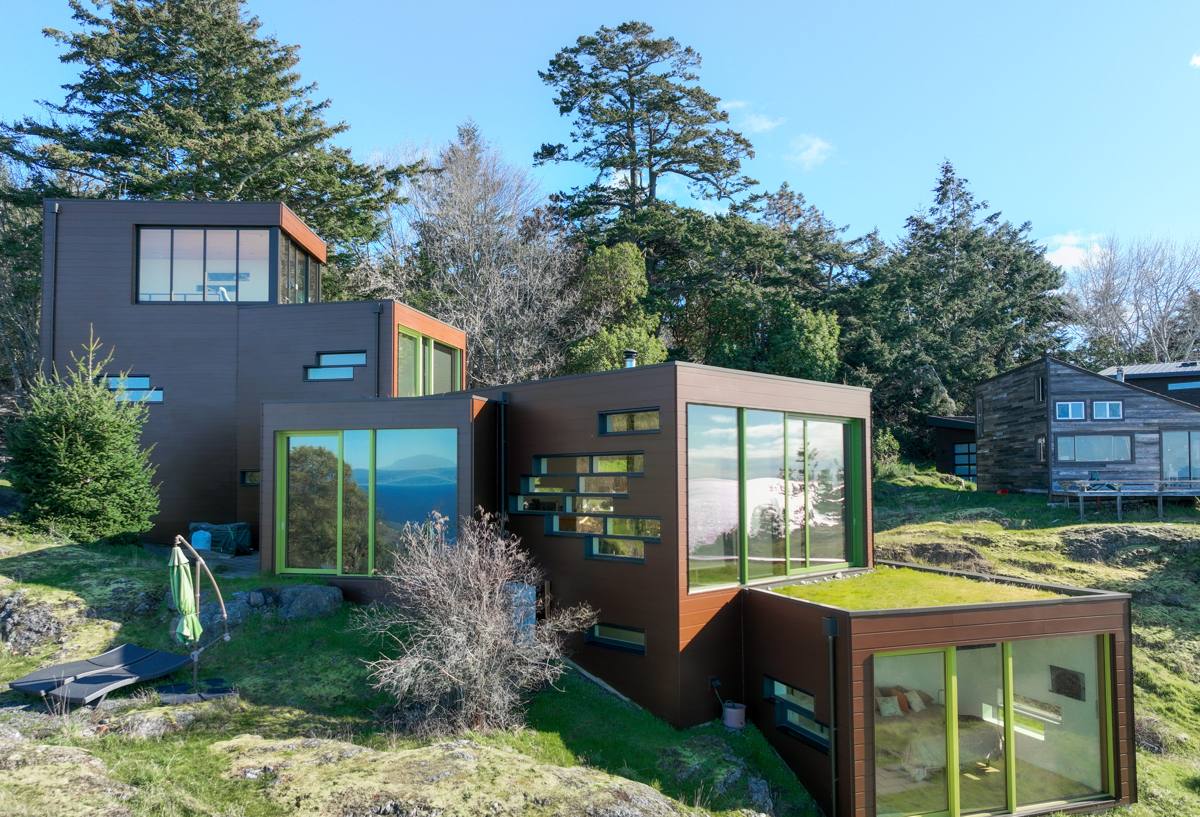
Why Fiber Cement Is the Right Call for This Exposure
Wood siding and trim on South Hill homes are the ones we see with soft spots, paint failure, and rot at butt joints and bottom edges — moisture gets in, the wood swells and dries repeatedly, and paint can't keep up with that cycle for long in a marine climate. Vinyl sheds water fine but flexes and gaps with age, and it doesn't stop moss and organic growth from taking hold in its seams and laps, especially on shaded, north- or west-facing walls that never fully dry out.
Fiber cement is a different animal. It's roughly 90% Portland cement, sand, and cellulose fiber, so it doesn't absorb and swell the way wood does, doesn't get brittle in cold snaps the way some plastics can, and holds paint or factory finish far longer because the substrate underneath stays dimensionally stable. That stability is exactly what a house on an exposed hillside lot needs — a siding material that doesn't move much no matter what the weather off the bay throws at it.
Why We Only Install James Hardie, Specifically
Fiber cement as a category is only as good as the specific product and how it's engineered for your climate. We install James Hardie exclusively because it's the fiber cement system that's been climate-engineered for the Pacific Northwest, backed by a real factory finish warranty, and consistent enough from batch to batch that we can guarantee the install. We don't install other fiber cement brands, and we don't install vinyl, LP SmartSide, or bare wood siding — not because those products have no merit anywhere, but because we've standardized on the one system we're confident will perform on Whatcom County homes for decades, and we'd rather turn down a job than install something we can't stand behind long-term.
What "Correct" Actually Means on a South Hill Job
Fiber cement siding fails almost exclusively at the installation, not the material. On a hillside, wind-exposed home, a few details matter more than they would on a sheltered lot:
- Water-resistive barrier and flashing first. Every window, door, and penetration needs correctly lapped flashing and house wrap underneath the siding — the siding is the last line of defense, not the only one.
- Proper clearance at grade and roof lines. Hardie's own installation instructions call for a minimum gap above roofing, decks, and finished grade so wind-driven rain and splashback don't sit against the bottom edge of the board.
- Correct fastening pattern and nail placement. Fasteners driven too high, too low, or overdriven into the board are one of the most common causes of early cracking and callbacks we see on re-inspections of other contractors' work.
- Factory-cut edges sealed, field cuts primed. Any cut edge exposes raw substrate; it needs to be back-primed or sealed before it goes up, especially on a job that's going to sit in near-constant damp air for months out of the year.
- Rainscreen or drainage gap where the wall assembly calls for it. On shaded, moisture-prone elevations, a small air gap behind the siding lets the wall dry out between storms instead of staying saturated.
Skip any one of these and the siding itself can be a great product and still fail in five years. This is why we care as much about who's on the ladder as which product goes up.
How We Approach a South Hill Fiber Cement Job
1. On-Site Assessment
We walk the exterior looking specifically at exposure — which elevations take the worst of the weather off the bay, where moss and algae have already taken hold, where trim and sheathing show signs of moisture damage under the current siding. This tells us whether it's a straightforward re-side or whether there's substrate repair to plan for before any new siding goes up.
2. Tear-Off and Substrate Check
Old siding comes off down to the sheathing so we can actually see what's underneath — soft sheathing, missing flashing, or house wrap that's failed doesn't show up until the old siding is gone. Any rot or water damage gets repaired before anything new is installed; covering it up is how small problems become expensive ones.
3. Weather Barrier and Flashing Detail
House wrap, flashing at every opening, and drainage detailing go in to spec before a single piece of Hardie siding is hung. On exposed South Hill elevations we pay particular attention to window and door head flashing, since that's where wind-driven rain finds its way in first.
4. Install to Manufacturer Spec
Fastening pattern, clearances, and joint treatment follow James Hardie's published installation requirements — not shortcuts, not "close enough." This is also what keeps the manufacturer's warranty intact for the homeowner.
5. Final Detail and Cleanup
Caulking, touch-up at any field cuts, and a full site cleanup close out the job. We walk the finished exterior with the homeowner before we consider it done.
Product Lines That Make Sense for South Hill
James Hardie's lineup gives us a few practical options depending on the home's style and exposure:
- HardiePlank lap siding — the standard horizontal lap look, available in several profiles, and the most common choice for both older South Hill homes and newer builds.
- HardiePanel vertical siding — used for board-and-batten style accents or full vertical runs on more modern homes.
- HardieTrim — matched trim boards so corners, fascia, and window surrounds age at the same rate as the field siding instead of becoming the weak point.
- ColorPlus Technology finish — a factory-baked color finish that holds up to UV and moisture better than field-applied paint, and it means no repainting cycle for the siding itself for years.
Hardie also engineers its siding by climate zone — HZ5 for regions like ours with real winters and sustained wet weather, versus HZ10 formulations built for hot, dry, high-UV climates. Installing the zone-matched product is a small detail that makes a real difference over a 20- or 30-year lifespan in Whatcom County's weather.
What Drives Cost on a South Hill Siding Job
Every home is different, but the same handful of factors move the price up or down on most South Hill projects:
| Factor | Why It Matters Here |
|---|---|
| Tear-off and disposal of existing siding | Older South Hill homes may have multiple layers or wood siding that needs full removal, not just a cover-over |
| Hidden moisture or rot repair | Common where shade and hillside exposure have kept walls damp for years under failing siding |
| Home height and access | Hillside lots and multi-story homes often need staging or lift access that flat lots don't |
| Trim and detail complexity | Bay windows, dormers, and multiple roof lines add cutting, flashing, and labor time |
| ColorPlus vs. field-primed siding | Factory finish costs more upfront but removes a repainting cycle from the maintenance schedule |
We walk through these specifics during the estimate so there are no surprises once the tear-off starts.
Living with Fiber Cement Siding on a Hillside Lot
Correctly installed Hardie siding is genuinely low-maintenance, but "low-maintenance" doesn't mean "zero-maintenance," especially with South Hill's moss season. A short annual routine keeps it looking right and keeps small issues from becoming repairs:
- Rinse siding annually with a garden hose and soft brush — avoid high-pressure washing, which can force water behind boards and joints
- Trim back tree limbs and shrubs that keep any wall shaded and damp longer than the rest of the house
- Check and refresh caulking at trim joints and penetrations every few years
- Look at north- and west-facing walls each fall for early moss or algae growth and address it before winter rains set in
- Keep gutters clear so overflow isn't running down the face of the siding
Why Local Experience on South Hill Actually Matters
A crew that's worked South Hill before already knows which elevations take the worst weather, what older South Hill homes typically have hiding under their existing siding, and how to plan access on a sloped lot before the job starts — not figure it out as they go. That translates into fewer surprises mid-project and a wall assembly that's actually built for this specific exposure, not a generic install dropped onto a hillside home.
It also matters for accountability. A local, established crew is the one you can call back in year three if something needs a look — not a name that disappears once the invoice is paid.
If you're planning a re-side on South Hill or just want a straight answer on what your home actually needs, we're happy to take a look and walk you through it. Use the form below to request a free, no-pressure estimate.