 Bellingham Siding
 Siding Installation in Sehome: A Job That Has to Answer to the Weather, Not Just the Wall
Sehome sits in one of Bellingham's older, more established parts of the city, close enough to Sehome Hill that lot slope and shade patterns vary block to block, and old enough that a good share of its homes are on their second or even third exterior since they were built. Siding installation here isn't just a cosmetic upgrade. It's the first line of defense against a climate that doesn't let up: salt-laden air moving in off the Salish Sea, rain that arrives sideways more often than straight down, and a moss and algae season across Whatcom County that can run most of the year on shaded, north-facing walls. A siding job that ignores any one of those factors tends to look fine for a season or two and then start showing problems right where the house is weakest.
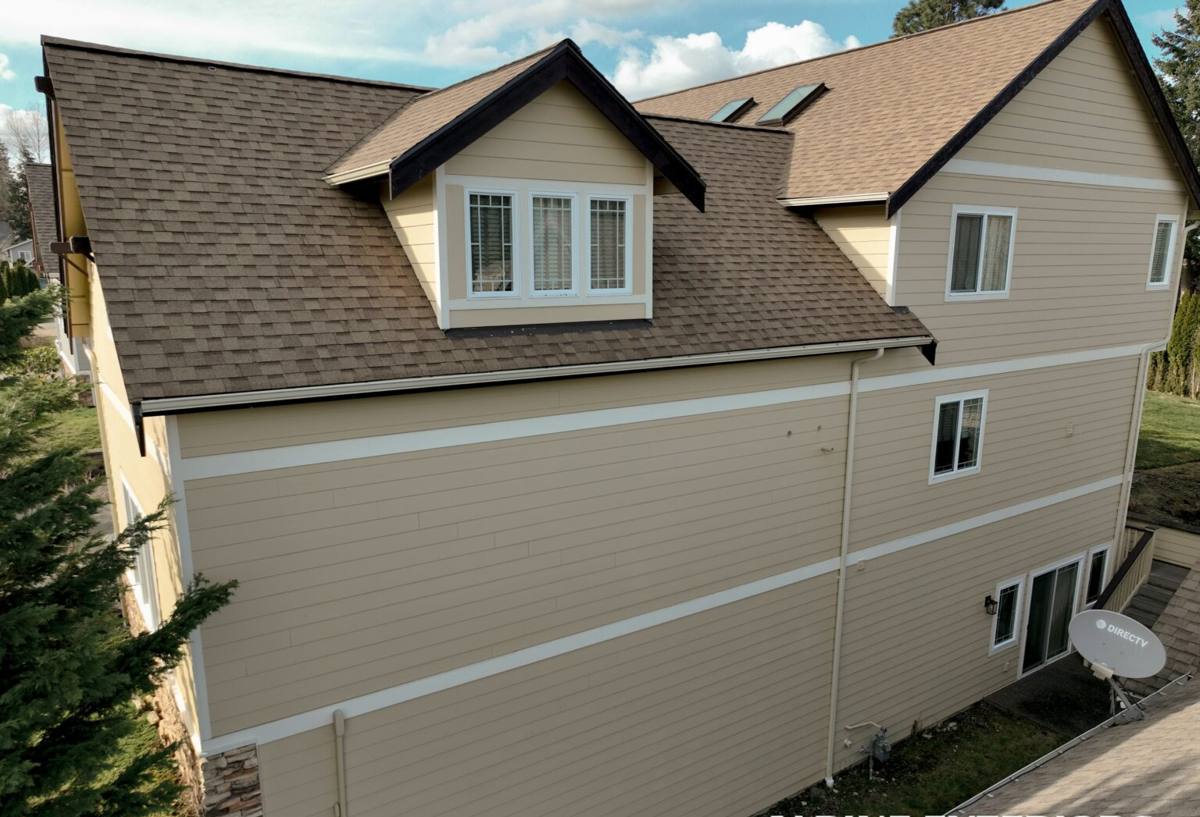
We install James Hardie fiber cement siding exclusively, and we treat Sehome as its own set of conditions rather than a generic Bellingham job. This page covers what siding installation actually needs to get right in this neighborhood, how we approach it, and why the crew doing the work matters as much as the material going up.
What Sehome's Climate Demands From a Siding Job
Salt Air and Corrosion
Sehome is inland of Bellingham's immediate waterfront, but it's still well within reach of salt-carrying air moving through the region. Salt exposure speeds up corrosion on fasteners, flashing, and any exposed metal trim, and it wears down lower-grade finishes faster than they'd fail in a drier climate. That means fastener choice, flashing material, and finish quality all need to be treated as durability decisions, not just line items to check off during a bid.
Driving Rain and Wall Assembly
Rain in this part of Washington usually comes with wind behind it, which pushes water sideways into siding laps, window and door flashing, and the transitions where walls meet trim, roof, or foundation. A correct installation depends on how water is managed behind the siding, not just how the finished wall looks. Sehome's terrain adds another layer: some lots slope noticeably toward or away from the house, which affects how water drains at grade and how much moisture sits against lower siding courses after a storm.
A Long Moss and Algae Season
Mature tree cover and mild, damp temperatures give Bellingham a moss and algae season that can last most of the year, and Sehome's older, established landscaping is no exception. Shaded walls and anywhere airflow is limited tend to grow organic buildup first, and that growth holds moisture against the substrate once it takes hold. Siding installation should account for airflow and drainage at the design stage, not treat moss as something to pressure-wash away after the fact.
What a Correct Siding Installation Actually Involves
The finished look of a siding job is the easy part to judge from the curb. The parts that determine whether it lasts are underneath, and they're the parts a homeowner usually can't see once the job is done.
- Substrate inspection — checking sheathing and framing for existing moisture damage or rot before anything new goes up, since covering a compromised substrate just hides the problem
- Water-resistive barrier — a correctly lapped and sealed weather barrier behind the siding, installed so water that gets past the surface still drains out rather than pooling
- Flashing at every penetration — windows, doors, hose bibs, vents, and any other wall penetration need flashing detailed to shed water outward, not just caulked over
- Proper fastening — corrosion-resistant fasteners, set to the manufacturer's specified pattern and depth, since overdriven or underdriven fasteners are one of the most common causes of premature siding failure
- Correct clearances — siding held to the proper distance from grade, roof lines, and decks so it isn't sitting in standing water or trapped moisture
- Finish and caulking details — factory-finished edges kept intact, field-cut edges sealed per spec, and joints caulked with a product rated for the exposure
Skipping or rushing any one of these doesn't usually show up right away. It shows up two, five, or ten years later as a soft spot, a stain, or a section that needs to come off and be redone, usually at a higher cost than doing it right the first time.
Why We Install Only James Hardie Siding
We used to offer a broader range of siding products. We narrowed that down to James Hardie fiber cement, and the decision came out of years of service calls, inspections, and tear-offs on homes in exactly this kind of wet, salty climate, not from a supplier relationship.
- Non-combustible material — fiber cement doesn't feed a fire the way some wood-based and polymer sidings can, which matters for insurance considerations and peace of mind alike
- Engineered for this climate — Hardie's HZ5 formulation is built specifically for regions with heavy moisture exposure and freeze-thaw cycling, which fits Whatcom County far better than a generic national product line
- Factory-applied ColorPlus finish — baked-on color that resists fading and chipping better than field-applied paint, and that holds up under years of UV and salt exposure
- Dimensional stability — fiber cement doesn't swell, warp, or rot the way engineered wood and some composite products can when they take on moisture
- A strong, transferable warranty — backed by a large, established manufacturer, which matters if you sell the home before the warranty period is up
Hardie siding isn't the cheapest option on the market, and we don't pretend otherwise. What it offers in exchange is a material that's been engineered for exactly the conditions Sehome homes face, backed by a manufacturer warranty, and installed by a crew that isn't guessing at how it behaves over time in this climate.
How Our Installation Process Works
1. Inspection and Assessment
We start by looking at the existing siding, the substrate underneath where accessible, and the specific exposure your home faces, sun, shade, slope, prevailing wind, before recommending anything.
2. Removal and Substrate Repair
Old siding comes off, and any damaged sheathing, framing, or trim gets repaired or replaced before new material goes up. This is the step that gets skipped by crews trying to move fast, and it's the one that determines how long the new siding actually lasts.
3. Weather Barrier and Flashing
A correctly installed water-resistive barrier and flashing package goes on next, detailed around every window, door, and penetration so water has a planned path out of the wall assembly if it gets past the siding surface.
4. Hardie Installation to Manufacturer Spec
Siding goes up following James Hardie's published installation specifications, fastener pattern, clearances, and all, because deviating from spec is one of the fastest ways to void a warranty and shorten the material's real-world lifespan.
5. Final Detailing and Walkthrough
Trim, caulking, and touch-up work get finished, and we walk the job with you before calling it complete.
| Cost Factor | Why It Matters in Sehome |
|---|---|
| Home size and wall complexity | More corners, gables, and window openings mean more flashing and cutting labor |
| Substrate condition | Older Sehome homes more often need sheathing or framing repair before new siding goes up |
| Siding profile chosen | Lap, shingle, and board-and-batten profiles differ in material and labor cost |
| Access and lot slope | Sloped lots and tight side yards can add setup and staging time |
| Existing damage discovered | Rot or moisture damage found once old siding is removed adds repair cost, which is why an honest pre-quote inspection matters |
Signs Your Sehome Home May Need New Siding
- Soft or spongy spots when you press on the siding, especially low on the wall or near window trim
- Visible warping, bubbling, or peeling on shaded, north-facing walls
- Persistent moss or algae staining that comes back quickly after cleaning
- Cracked, chipped, or delaminating siding panels or trim
- Rising utility bills that suggest air and moisture are getting past the wall assembly
- Visible gaps or separation at seams, corners, or window and door trim
Why a Local Crew Matters for This Job
A crew that installs siding across Bellingham day in and day out learns how salt air, wind-driven rain, and a long moss season actually behave on real houses over a full year, not just how a product performs on a spec sheet. In Sehome specifically, that experience shapes decisions like where extra flashing attention pays off given the neighborhood's mix of older and newer construction, and how a sloped lot changes drainage planning around the base of the wall. A contractor who only occasionally works this specific climate is more likely to fall back on generic details that don't quite match what this part of Bellingham puts a house through.
If your Sehome home needs new siding, or you're not sure whether what you have is holding up, we're glad to take a look and give you a straightforward, honest assessment. Reach out using the form below to schedule a free, no-pressure estimate.