 Bellingham Siding
 Building a Deck for Sehome's Particular Climate
Sehome sits close enough to Bellingham Bay that salt-tinged air reaches every yard in the neighborhood, and it sits on a hillside thick with mature trees that keeps much of the ground — and anything built on it — shaded and damp for long stretches of the year. That combination is what makes a deck in Sehome behave differently than one built on an open lot elsewhere in Whatcom County. Driving rain off the water is only half the story here; the other half is a moss season that can start early and run late because so many Sehome yards never get a full day of direct sun.
A deck built correctly for this neighborhood accounts for both of those things from the start — material selection, drainage, and framing details that are chosen for shade and moisture, not just rain. This page covers what that actually looks like, what a correct build involves, and how our process works for a custom deck project in Sehome specifically.
Why Sehome's Terrain and Tree Cover Change the Job
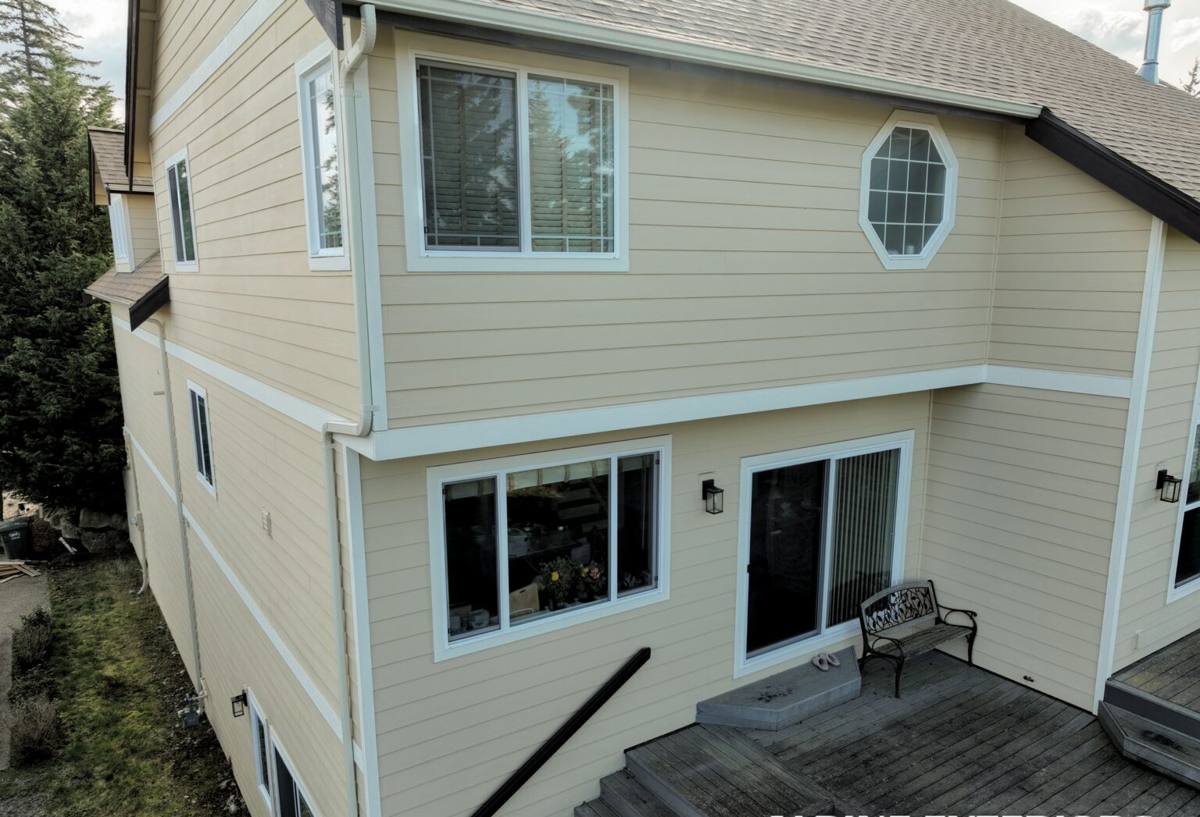
Much of Sehome rises up toward the wooded slopes near Sehome Hill, and that hillside character shows up in almost every deck project we take on here: sloped yards, mature trees close to the house, and a mix of older homes with newer additions built onto them over the years. None of that is a problem on its own, but it does mean a deck can't be framed the same way it would be on a flat, open lot.
Sloped ground affects footing depth — reaching stable, undisturbed soil sometimes means going deeper on the downhill side of a deck than the uphill side — and it affects how stairs and railings get laid out. Heavy tree cover affects something else entirely: how long a deck surface stays wet after a storm passes, and how much sunlight ever reaches the boards to help dry them out. Combined, that shade and slope are the main reasons a deck built without those specifics in mind tends to show moss and soft framing years before a deck built for the actual site.
Site Conditions We Look For on a Sehome Property
- Shaded areas near mature trees that stay damp for days after rain
- Overhanging limbs that drop needles, leaves, and sap onto the deck surface
- Sloped or uneven yards affecting footing depth, stair placement, and rail height
- Older homes where the ledger connection to the house needs updated flashing to current standards
- Soil that stays saturated through the wet season, which changes footing and drainage planning
Choosing Decking Material for Salt Air and a Long Moss Season
The gap between a decking product that's suited to this climate and one that isn't shows up faster in a shaded, damp yard than it does almost anywhere else in Bellingham. Salt-laden air corrodes exposed hardware over time no matter what's on top of it, but the bigger day-to-day issue in Sehome is moisture sitting on the surface long enough for moss and algae to take hold. A material's texture and how well it sheds water both matter more here than they would on a sun-exposed deck across town.
| Material | Moss & Algae Resistance | Maintenance | Typical Lifespan Here |
|---|---|---|---|
| Pressure-treated wood | Low — porous surface holds moisture and organic buildup | Annual cleaning and periodic sealing | 10–15 years with upkeep |
| Cedar | Moderate — natural oils help early on, fade without sealing | Sealing every 1–2 years | 15–20 years with upkeep |
| Capped composite | Strong — non-porous cap sheds water and resists staining | Occasional washing | 25–30 years |
| Cellular PVC | Strongest — no wood fiber for moss or algae to grip | Occasional washing | 25–30+ years |
Why We're Selective About Low-Grade Composite
Not every composite board on the market is built the same way. Older or lower-grade composite lines without a full cap around the core can absorb moisture at cut ends and fastener holes, which defeats much of the point of choosing composite over wood in a climate like this. That's a maintenance and moisture-behavior trade-off, not a knock on composite decking as a category — we're simply selective about which lines we install, and we'll walk you through why on a given product.
Wood still has a place on this list. It costs less upfront and gives a look plenty of homeowners want, but it asks for real annual attention in a shaded, wet climate — skip a season of sealing and the difference shows up as graying, splintering, or moss creeping in from the shaded edges first.
Framing, Fasteners, and Flashing: What Determines Lifespan
Deck problems almost never start with the boards you can see. They start underneath — at the ledger, the joists, and the fasteners — where nobody looks until something's already wrong. In a shaded, high-rainfall climate, three details matter more than they would on a drier build.
Fasteners and Hardware
Standard galvanized fasteners corrode faster with sustained exposure to salt-influenced coastal air, and a corroding fastener loses holding strength well before it looks obviously bad. We use stainless steel or heavy-coated hardware rated for coastal exposure on structural connections and anything in ground contact.
Ledger Board Flashing
Where a deck attaches to the house, water intrusion at the ledger board is one of the most common — and most preventable — sources of hidden rot. This matters even more on Sehome's older homes, where an existing ledger connection may predate current flashing standards and needs to be brought up to spec during a rebuild.
Joist Protection
A moisture barrier over the top of every joist keeps water from soaking into end grain and fastener holes, which is exactly where rot typically starts on a deck that spends a lot of time damp and shaded. It's a small material cost that adds real years to the structure.
Drainage and Airflow: Keeping Moss From Taking Over
Moss doesn't grow because a deck is old — it grows because moisture sits somewhere long enough for it to establish, and shaded Sehome yards give it exactly that opportunity. Two things control it: how well the deck surface sheds water, and how much air actually moves underneath.
We build in a slight slope on the decking surface so water runs off rather than pooling, and we plan clearance and ventilation beneath the deck at the design stage rather than as an afterthought once framing is up. On lower decks built close to grade, which we see on some of Sehome's flatter lots near the base of the hill, that under-deck airflow has to be accounted for up front or moisture just sits there between storms.
Board gapping and orientation matter too, and so does simply keeping the deck surface clear of whatever is overhanging it. A deck tucked under mature trees will always need more attention than one in the open, but the right build decisions cut down how much that attention actually has to be.
Our Process for a Sehome Deck Project
Every lot here is a little different, especially with the hillside terrain, so we start with an actual site visit rather than a phone quote.
- Site assessment — slope, drainage patterns, tree cover, sun exposure, and the condition of the house at the attachment point.
- Design and material selection — layout, size, and decking options weighed against your budget and how much upkeep you actually want to take on.
- Permitting — the City of Bellingham generally requires a permit for decks attached to a house or built above a certain height, and setbacks can matter on tighter Sehome lots; we handle the application rather than leaving it to you.
- Build — footings, framing, flashing, and decking installed in sequence, with the structural details above built in from the start, not offered later as an upgrade.
- Final walkthrough — covering exactly what your specific material and site will need going forward, and on what schedule.
Keeping a Sehome Deck Looking and Performing Well Long-Term
Whatever material you choose, a little regular attention goes a long way under this much tree cover. Here's what we walk clients through after a build is finished:
- Sweep leaves, needles, and debris off the surface regularly, especially through fall
- Rinse the deck surface a couple of times a year to keep moss and algae from establishing
- Keep gaps between boards clear so water can actually drain instead of sitting
- Reseal wood decking on the schedule the specific product calls for — don't stretch it
- Trim back branches overhanging the deck to improve sun exposure and airflow where you can
- Check ledger flashing and fasteners every year or two for early staining or corrosion
Why Hiring a Crew That Already Works in Sehome Matters
Most of the deck problems we get called out to look at weren't built carelessly — they were built with a standard approach in a spot that needed something more specific. A shaded, sloped lot in Sehome needs different drainage and framing decisions than an open lot elsewhere in Whatcom County, and that's not something you pick up from a manual. It's something you learn from building decks in this exact neighborhood, under these exact trees, through enough wet seasons to see what actually holds up.
That experience shows up in decisions you won't notice at handoff — footing depth on a slope, fastener grade, how a ledger gets flashed on an older home — but that you will notice five or ten years out, when the deck is still solid instead of showing rot at the ledger or moss working its way across the boards.
If you're planning a new deck or replacing one that hasn't held up to Sehome's shade and rain, we're glad to walk the property with you and lay out the options honestly. Reach out below for a free, no-pressure estimate.