 Bellingham Siding
 Roofing a Sehome Home Isn't the Same as Roofing Anywhere Else
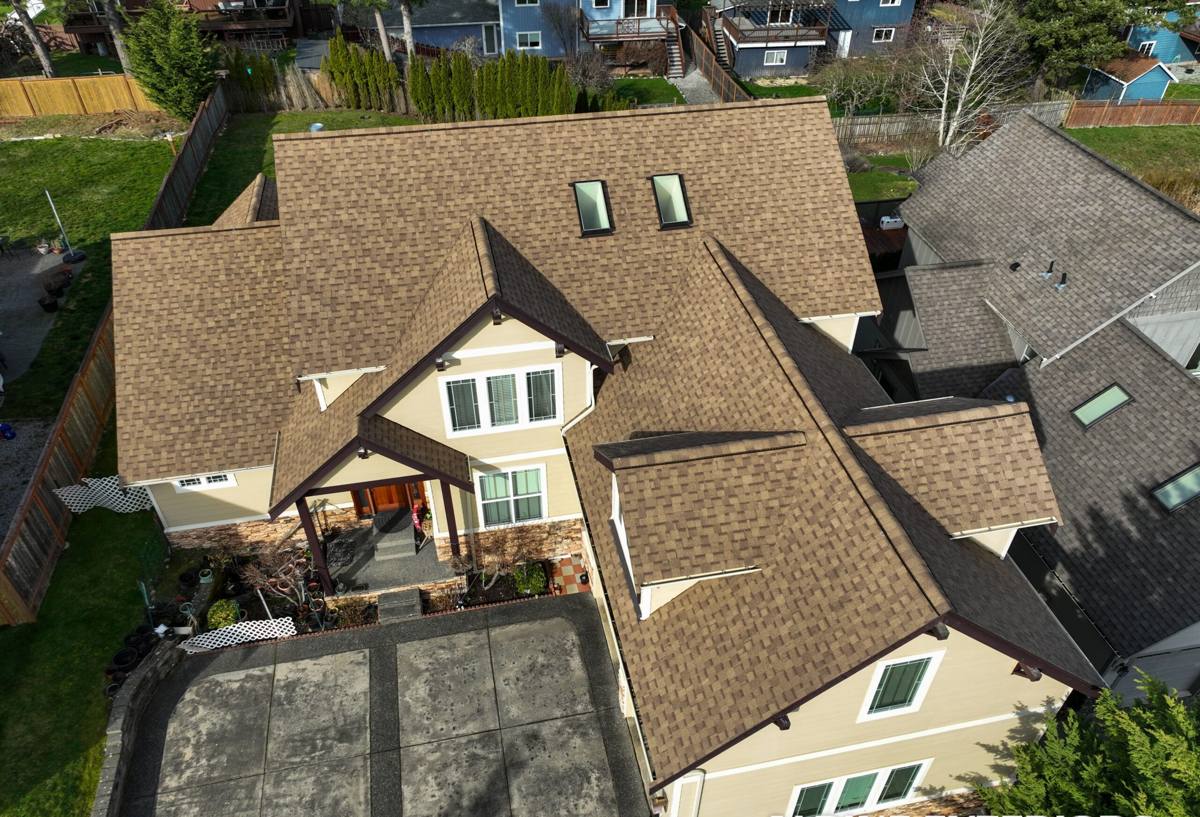
Sehome sits close enough to the water and up against enough tree cover that its roofs take a different kind of beating than roofs on the open, sunnier edges of Whatcom County. You've got salt-tinged air moving in off Bellingham Bay, driving rain that comes in sideways during winter storms, and a shade pattern from mature trees that keeps sections of a roof damp long after the rest has dried. Any one of those factors is manageable on its own. Together, they're exactly the combination that ages an asphalt shingle roof faster than the manufacturer's warranty label suggests it should.
We install and repair asphalt shingle roofs on homes throughout Bellingham, but a job in Sehome gets planned differently from the start — because the failure points here aren't hypothetical, they're predictable.
What This Climate Actually Does to a Shingle Roof
Salt Air and Metal Fatigue
Homes closer to the water deal with airborne salt that accelerates corrosion on exposed metal — flashing, nail heads, vent caps, and gutter hardware. A shingle field can look fine while the metal tying it all together is quietly rusting through underneath. That's why we spec corrosion-resistant fasteners and flashing on every job in this part of Bellingham, not just the ones a client specifically asks for.
Driving Rain and Wind-Driven Water
Standard shingle installs assume rain falls mostly straight down. Storms off the Sound don't cooperate — wind pushes rain sideways and up under shingle tabs, valleys, and step flashing. If the underlayment, sealant strips, and nailing pattern aren't done to handle wind-driven water specifically, you get slow leaks that show up as ceiling stains months after the storm that caused them.
Shade, Moisture, and Moss
Sehome's tree canopy is part of what makes the neighborhood pleasant to live in, and it's also the reason moss shows up faster here than in more exposed parts of town. Shaded, north-facing slopes stay damp for days after a rain, and moss doesn't just look bad — its root structure lifts shingle edges and holds water against the granule surface, which shortens the life of the roof underneath it.
What a Correct Installation Looks Like Here
A shingle roof that's going to hold up in this environment needs a few things done right, in order, before the first shingle ever goes down.
- Full tear-off to bare deck when the existing roof is at end of life, so we can actually inspect the sheathing instead of guessing what's underneath the old layer
- Deck repair or replacement anywhere water has already gotten in — soft, delaminated, or stained plywood gets replaced, not covered over
- Ice-and-water shield membrane at eaves, valleys, and around every penetration, not just the minimum code strip
- Synthetic underlayment rated for the wind and moisture exposure this side of Whatcom County actually sees
- Balanced intake and exhaust ventilation, sized to the attic — not just a ridge vent with no intake to match it
- Corrosion-resistant flashing and fasteners at every valley, wall intersection, and roof penetration
- Manufacturer-specified nailing pattern and shingle exposure, checked, not assumed
Skip any one of these and the roof will probably still look fine for a year or two. The problems this climate causes are slow — they show up as a soft spot, a stain, or a section of moss two or three winters in, long after the crew that cut the corner is gone.
Choosing the Right Shingle for a Sehome Roof
Not every asphalt shingle product is a good match for a shaded, salt-air, high-rainfall site. The table below covers the trade-offs we walk homeowners through most often.
| Shingle Type | Typical Lifespan | Fit for Sehome Conditions |
|---|---|---|
| 3-tab shingles | 15-20 years | Lowest upfront cost, but thinner profile and lower wind rating make them a weaker match for driving rain and gusty storms off the Sound |
| Standard architectural (laminate) | 25-30 years | Heavier, better wind rating, and the layered profile sheds wind-driven rain more effectively — our default recommendation for most homes here |
| Algae-resistant architectural | 25-30 years | Same durability as standard architectural, with copper-infused granules that resist the algae staining and moss growth this shaded, damp climate encourages |
| Impact-resistant / premium | 30+ years | Worth it on steep, exposed, or heavily tree-surrounded roofs where falling branches and debris are a real risk, not just a marketing add-on |
For most Sehome homes with any meaningful tree cover, we lean toward algae-resistant architectural shingles. The upcharge over a standard shingle is modest, and it directly targets the moss and staining problem this neighborhood deals with more than most.
Managing Moss and Shade Long-Term
No shingle is moss-proof if a roof sits under enough shade with poor airflow. Algae-resistant granules slow the problem; they don't eliminate the need for basic upkeep. A few things go a long way:
- Keep overhanging branches trimmed back so the roof gets more light and dries out faster after rain
- Clean gutters and valleys at least once a year — trapped debris holds moisture against the shingle edge and is where moss usually gets its start
- Have zinc or copper strips installed near the ridge on shaded sections; rain washing over them carries trace metal down the roof and suppresses new moss growth
- Remove existing moss with a soft-wash approach rather than a pressure washer, which strips granules and shortens shingle life
If a roof already has heavy moss coverage, that's usually a sign it's been an issue for a few seasons, not a one-time thing — worth a real inspection rather than just a surface cleaning.
Our Process for a Sehome Roofing Job
The steps themselves aren't unusual — what changes is what we're specifically checking for at each one, given the neighborhood.
- Inspection. We walk the roof and the attic, not just one or the other. In Sehome we're specifically looking for moss undermining shingle edges, rust streaking at flashing points, and ventilation imbalance from years of shade and moisture.
- Written scope and materials. You get a clear breakdown of what's being replaced, what shingle and underlayment we're recommending and why, and what the ventilation plan looks like — before any tear-off starts.
- Tear-off and deck inspection. Old material comes off down to the deck so we can see and repair any hidden damage, rather than layering over problems.
- Install. Underlayment, flashing, ventilation components, and shingles go in to manufacturer spec, with the corrosion-resistant hardware and wind-driven-rain detailing this site calls for.
- Cleanup and final walk-through. Site is cleared of debris and nails, and we walk the finished roof with you so you know exactly what was done.
Signs a Sehome Roof Needs a Closer Look
Because this climate's damage is gradual, most homeowners don't notice a problem until it's already inside the house. Watch for these:
- Visible moss or dark streaking on shaded sections of the roof
- Granules collecting in gutters or at the base of downspouts
- Curling, cupping, or lifted shingle edges, especially on north-facing slopes
- Rust staining running down from flashing or vent stacks
- Water stains on ceilings or in the attic after a wind-driven rainstorm
- Daylight visible through the roof deck from inside the attic
- A roof over 20 years old that hasn't had a professional inspection recently
Repair or Replace? What Actually Decides It
Not every issue means a full replacement, but a few factors tend to tip the decision one way or the other.
| Factor | Favors Repair | Favors Replacement |
|---|---|---|
| Roof age | Under 12-15 years | Approaching or past 20-25 years |
| Extent of damage | Isolated to one section or penetration | Spread across multiple slopes or both sides of the roof |
| Moss and moisture history | First occurrence, caught early | Recurring moss, staining, or soft spots over several seasons |
| Decking condition | Sound, no soft spots found | Soft, stained, or delaminated sheathing discovered |
| Ventilation | Adequate, just needs minor adjustment | Undersized or imbalanced, contributing to premature wear |
An honest inspection should be able to tell you which column your roof falls into. If a contractor recommends full replacement without walking the attic or checking the deck, that's a reason to get a second look.
Why Local Experience in Sehome Matters
A crew that's worked roofs throughout Bellingham and Whatcom County isn't guessing at how this neighborhood's shade, salt air, and storm patterns behave — they've already seen which flashing details hold up and which ones don't, and which shingle products actually resist moss here versus just claiming to on the label. That matters when you're comparing bids, because two roofs that look identical on paper can perform very differently five winters in if one was built with this climate in mind and the other used a generic, one-size-fits-all approach.
Local experience also means faster response when a storm does cause damage — someone who already knows the area's common failure points can diagnose a leak correctly on the first visit instead of the third.
Get a Straight Answer About Your Roof
If your Sehome home has moss buildup, aging shingles, or a leak you can't quite pin down, we're happy to take a look and give you an honest assessment — no pressure, no inflated scope. Reach out for a free estimate and we'll walk you through exactly what your roof needs and why.