 Bellingham Siding
 Roof Replacement for Silver Beach Homes
Silver Beach is a residential community within the greater Bellingham area, and like most neighborhoods in Whatcom County, its roofs take a specific kind of beating. This isn't the dry-heat wear you'd see on a roof in the Southwest, and it isn't the hail damage common in the Midwest. It's slow, steady moisture pressure: rain that falls for months at a stretch, moss that finds a foothold in shaded valleys and north-facing slopes, and salt-tinged air off the Puget Sound that speeds up corrosion on metal fasteners and flashing. A roof replacement done right in this area has to be built around those specific stressors, not just installed to a generic spec sheet.
This page covers what a Silver Beach roof replacement actually involves, what to look for in materials and workmanship, and why local experience on this exact terrain and climate makes a measurable difference in how long a roof lasts.
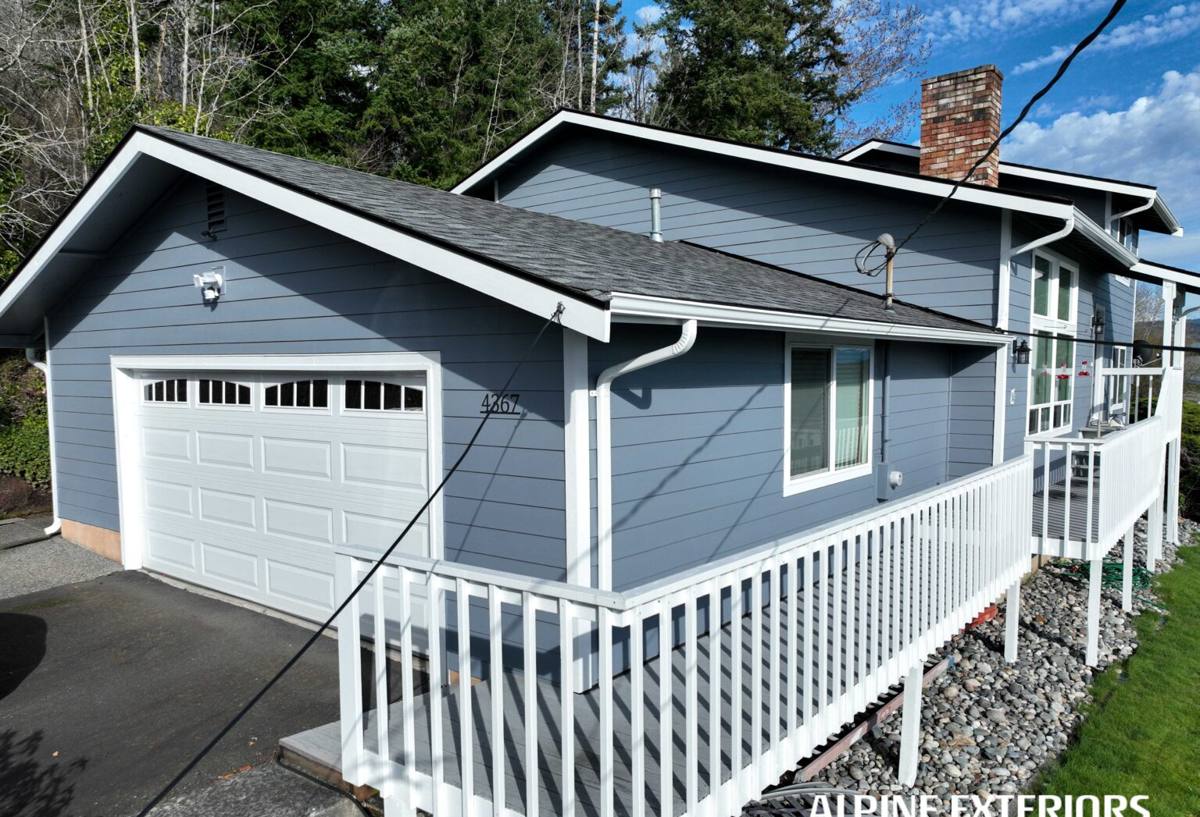
How the Local Climate Wears Down a Roof
Bellingham sits in a marine climate zone, and Silver Beach is no exception. A few conditions do most of the damage over time:
Driving Rain
It's not just the total rainfall — it's the duration. Roofs here spend a large share of the year wet, which means underlayment, flashing, and ventilation details matter more than they would in a drier climate. A roof that's only "mostly" sealed will find the weak point eventually, because it gets tested constantly rather than occasionally.
Moss and Organic Growth
Tree cover is common throughout Whatcom County, and shaded roof sections — especially north-facing slopes and areas near overhanging branches — stay damp longer after every rain. That dampness is exactly what moss and algae need to establish. Once moss roots into a shingle mat, it lifts the tabs, holds water against the roof surface, and accelerates granule loss. Left alone, a moss-covered roof ages years ahead of schedule.
Salt Air and Corrosion
Proximity to the Sound means metal components — nails, flashing, vents, gutter hardware — are exposed to airborne salt. Standard fasteners can corrode faster here than they would further inland, which is why fastener and flashing material selection is part of doing this job correctly rather than an upgrade option.
Wind-Driven Debris
Storms off the water regularly bring gusty wind alongside rain, which pushes water sideways and drives it into laps and seams that would stay dry in a calmer climate. Underlayment and shingle sealing have to account for that, not just vertical rainfall.
Signs Your Roof Needs Replacement, Not Just Repair
Not every roof problem in Silver Beach means a full replacement. But there's a point where patching stops making financial sense. Some signs worth taking seriously:
- Granules collecting in gutters or at downspout outlets, especially if it's a consistent pattern rather than a one-time event
- Shingles that are curling, cupping, or visibly brittle
- Moss or dark streaking covering large sections rather than isolated spots
- Soft or spongy spots when walked, which usually means decking damage underneath
- Daylight visible through the roof deck from inside the attic
- Repeated leaks in different spots after prior patch repairs
- A roof approaching or past the manufacturer's expected service life for its material type
If you're only seeing one or two of these and the roof is relatively young, a repair or a moss treatment may be enough. If you're seeing several at once, or the roof is old enough that a repair would just be a temporary patch, replacement is usually the more honest recommendation.
What a Correct Roof Replacement Involves
A roof replacement is more than swapping old shingles for new ones. The work that happens underneath the visible surface is what determines whether the new roof actually holds up to another 20-plus years of Bellingham weather.
Full Tear-Off and Deck Inspection
We remove the old roofing down to the deck rather than layering over it. This lets us actually see the plywood or OSB sheathing underneath and replace any sections that have soft spots, rot, or delamination from long-term moisture exposure — problems that are invisible from above and get sealed in permanently if you install over them.
Ice and Water Shield in Vulnerable Areas
Valleys, eaves, and areas around penetrations get a self-adhering waterproof membrane underneath the primary underlayment. In a climate with this much sustained rain, these are the spots most likely to see water pushed backward under normal shingle laps.
Proper Underlayment Coverage
The whole deck gets a synthetic or felt underlayment as a second line of defense, sized and lapped correctly so water is always shed downhill, never trapped.
Flashing at Every Transition
Chimneys, skylights, sidewalls, and roof-to-wall transitions are where most leaks actually originate — not in the open field of shingles. New, correctly lapped flashing at every one of these points is not optional.
Ventilation
Balanced intake and exhaust ventilation keeps the attic from trapping moisture, which matters as much for mold and wood rot prevention as it does for shingle life. A roof that looks fine on top can still be failing from the inside if the attic isn't breathing correctly.
Drip Edge and Gutter Integration
Correctly installed drip edge directs water away from the fascia and into the gutter system rather than letting it wick back under the roof edge — a small detail that has an outsized effect on rot prevention over time.
Material Options for This Climate
There's no single "best" roofing material for every home — it depends on budget, roof pitch, and how much long-term maintenance you're willing to do. Here's how the common options compare for a Whatcom County climate specifically:
| Material | Typical Lifespan | Moss/Moisture Resistance | Maintenance Needs |
|---|---|---|---|
| Architectural asphalt shingle | 25–30 years | Good, especially with algae-resistant granules | Periodic moss treatment and gutter cleaning |
| Standing seam metal | 40–50+ years | Very good — sheds water fast, little surface for moss to grip | Low; occasional fastener and sealant check |
| Cedar shake | 20–30 years with upkeep | Requires active maintenance in wet, shaded climates | Higher — regular treatment needed to resist rot and moss |
| Synthetic/composite shake or slate | 40–50 years | Good — engineered to resist moisture absorption | Low to moderate |
We generally steer homeowners with heavily shaded, north-facing, or low-slope sections away from natural cedar shake unless they're committed to a real maintenance schedule — in this climate, that product's long-term performance depends heavily on upkeep, and untreated shake is one of the fastest materials to hold moisture and grow moss. That's a maintenance and moisture-behavior tradeoff, not a knock on the material itself; it performs differently in drier climates.
Our Process, Start to Finish
- On-site inspection — we walk the roof and attic, not just look from the ground, and document the actual condition before recommending anything.
- Written estimate — a clear scope of work and material selection, with the reasoning behind each recommendation explained plainly.
- Scheduling around weather windows — we plan tear-off days around dry stretches when possible, since an open deck shouldn't sit exposed longer than necessary in this climate.
- Tear-off, deck repair, and dry-in — old material removed, deck inspected and repaired, and the roof made watertight the same day whenever possible.
- Underlayment, flashing, and material installation — done in the sequence and overlap pattern the manufacturer specifies, not shortcuts.
- Cleanup and magnetic sweep — job site cleared of debris and stray fasteners before we consider the job finished.
- Final walkthrough — we go over the finished roof with you before calling it done.
Why Local Experience in Silver Beach Matters
A roofing crew that regularly works in and around Bellingham brings a few practical advantages that an out-of-area or one-time crew doesn't:
We know how Whatcom County permitting and inspection processes work, so paperwork doesn't slow the job down. We know which shingle lines and underlayment products actually perform well under sustained coastal rain versus which ones look fine on a spec sheet but underperform in this specific climate. We know how tree cover and roof orientation in this area tend to create moss-prone zones, and we plan ventilation and material choice around that instead of treating it as an afterthought. And because we're not driving in from out of town, warranty callbacks and follow-up questions get answered by a crew that's actually local and easy to reach.
None of that is exotic — it's just the difference between a contractor who's replaced a handful of roofs in this climate and one who does it as a regular, ongoing part of their work here.
What Affects the Cost of a Roof Replacement
Every roof is different, and we don't publish fixed pricing because the honest answer depends on your specific roof. But the main factors that move the price up or down are consistent:
- Total roof square footage and number of facets (a simple gable roof costs less to cover than a roof with many valleys, dormers, and hips)
- Roof pitch — steeper roofs take longer and require more safety setup
- Current layer count and whether a full tear-off is needed
- Deck condition — how much plywood or sheathing replacement is required underneath
- Material selection — asphalt, metal, and synthetic products all sit at different price points
- Access — tree cover, tight lot lines, or difficult staging areas can add labor time
- Ventilation and flashing upgrades needed to bring an older roof system up to current standards
We walk through these factors on-site so the estimate reflects your actual roof, not a generic average.
After the Install: Keeping a Silver Beach Roof Healthy
A correctly installed roof still benefits from basic upkeep in this climate. Keeping gutters clear so water doesn't back up under the roof edge, having moss treated or removed before it establishes heavily on shaded slopes, and getting an occasional visual check after major storms will all extend the practical life of the roof well beyond just meeting the material's minimum expectations. We're glad to walk any homeowner through a simple maintenance routine after installation — it's a short conversation that pays off over many years.
If your roof is showing wear, you're dealing with recurring leaks, or you just want an honest read on where things stand, we're happy to take a look. Reach out for a free, no-pressure estimate using the form below.