 Bellingham Siding
 Roofing Built for Lynden's Weather, Not Just the Sale
Lynden sits inland from Bellingham Bay, but it doesn't escape what makes Whatcom County roofing tough: long stretches of driving rain, salt-tinged marine air pushing in off the Sound, and a moss season that can run most of the year in shaded, tree-lined yards. A roof replacement here has to do more than look good going on. It has to shed water fast, resist moss colonization under constant dampness, and hold up to wind-driven rain that finds every weak seam in a roof system.
We work on homes throughout Lynden and the surrounding Whatcom County area, and the roofs we replace tend to fail for the same handful of reasons: underlayment that was never rated for this much sustained moisture, ventilation that was undersized when the house was built, and flashing details that were rushed the first time around. A correct replacement fixes all three, not just the shingles on top.
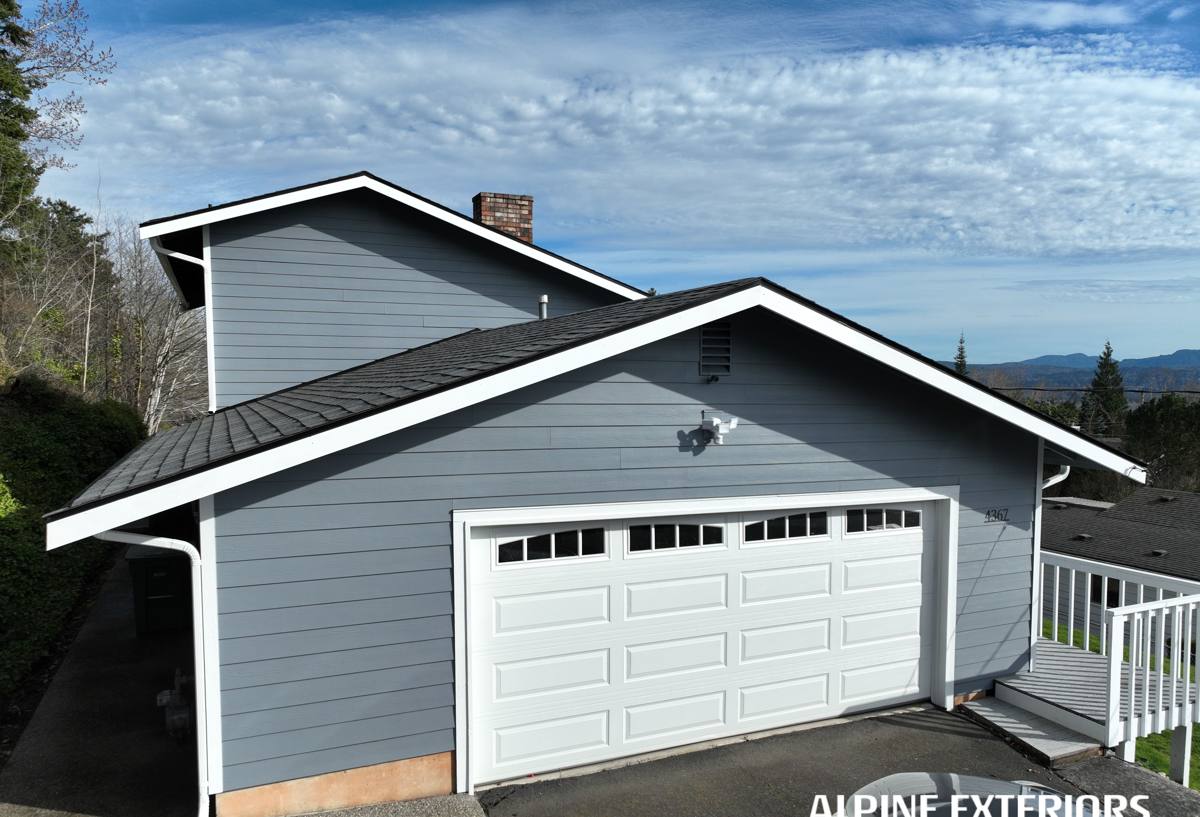
Signs a Lynden Roof Is Due for Replacement
Roofs rarely fail all at once. They give warning signs for months or years before a leak actually shows up inside the house. Because moss and moisture do so much of the damage here, some of the clearest signs are easy to miss from the ground.
- Moss or algae streaking that keeps coming back within a season or two of cleaning
- Granules collecting in gutters or at downspout outlets
- Shingles that are cupping, curling at the edges, or visibly thinning
- Soft or spongy spots underfoot when walking the roof deck
- Daylight visible through the roof deck from inside the attic
- Rusting, lifting, or gapped flashing around chimneys, vents, and skylights
- Rising energy bills alongside a roof that's approaching 20+ years old
- Visible sagging along the ridge line or roof edges
Any one of these on its own might just mean a repair. Several together, especially on an older roof, usually mean the underlying materials have reached the end of their service life and repairs will only buy short-term time.
What a Correct Roof Replacement Actually Involves
Full Tear-Off, Not a Layover
We remove the existing roofing down to the deck rather than layering new shingles over old ones. Overlaying traps moisture that's already worked its way into the old system and hides deck damage that needs to be addressed before new material goes down. In a climate that stays damp as long as Whatcom County's does, that trapped moisture is exactly what feeds long-term rot.
Deck Inspection and Repair
Once the old roofing is off, we inspect the plywood or plank decking for soft spots, delamination, and water staining. Any compromised sections get replaced before anything else goes on. Skipping this step is one of the most common shortcuts in the trade, and it's the reason some "new" roofs start leaking again within a few years.
Underlayment Rated for Sustained Moisture
We install underlayment suited to a wet, moss-prone climate rather than the minimum a manufacturer allows. In areas prone to ice damming or heavy wind-driven rain along eaves and valleys, self-adhered ice-and-water membrane goes down first, with synthetic underlayment covering the rest of the field.
Flashing at Every Penetration
Chimneys, skylights, vent pipes, and roof-to-wall transitions are where the vast majority of leaks actually start, not the open field of shingles. Correct flashing means new step flashing, counter-flashing, and pipe boots at every penetration, not just caulking over what's already there.
Ventilation Sized to the Attic
Intake and exhaust ventilation get calculated for the actual attic volume, not just matched to whatever was there before. Undersized ventilation traps warm, moist air against the underside of the deck, which accelerates rot and gives moss and mold an easy foothold from below as well as above.
Choosing a Roofing Material for Lynden's Climate
There's no single "best" roofing material for every home. The right choice depends on your roof's pitch, how much shade the property gets, your budget, and how much maintenance you're willing to do. Here's how the common options actually perform under sustained Whatcom County moisture and moss pressure.
| Material | Moss & Moisture Resistance | Maintenance Needs | Typical Lifespan |
|---|---|---|---|
| Standard asphalt composition shingle | Moderate — algae-resistant granules help but moss can still take hold in shaded, low-slope areas | Periodic soft-washing recommended | 20–30 years |
| Premium/architectural shingle with algae-resistant granules | Good — copper- or zinc-infused granules actively discourage moss and algae growth | Lower — less frequent cleaning needed | 30–40 years |
| Standing seam metal | Excellent — smooth, steep-shedding surface gives moss almost nothing to grip | Very low | 40–60 years |
| Cedar shake | Poor without diligent upkeep — natural wood holds moisture and is highly prone to moss and rot in constant damp shade | High — regular treatment and cleaning required | 15–25 years (with upkeep) |
We don't push cedar shake on shaded Lynden lots, not because the product is without merit, but because the maintenance burden it requires to stay ahead of moss and moisture in this climate is more than most homeowners want to take on. Algae-resistant architectural shingles or metal roofing give you a much better return on low-maintenance performance for the same general look and budget range.
Ventilation and Moss: The Part Most Homeowners Never See
Moss doesn't just grow because a roof gets rained on. It grows because a roof surface stays cool and damp longer than it should, which is exactly what happens when trapped attic heat and moisture can't escape properly. In shaded Lynden yards with mature trees, a roof can stay wet for days after a storm passes simply because it never gets direct sun to dry it out.
That's why we treat ventilation as part of the moss-prevention strategy, not a separate line item. Balanced intake at the eaves and exhaust at the ridge keeps the deck temperature closer to outdoor conditions, which speeds up drying and gives moss less time to establish itself between rain events. Combined with algae-resistant shingles, correct ventilation is the difference between a roof that needs moss treatment every year and one that mostly takes care of itself.
Our Roof Replacement Process
- On-site inspection — we walk the roof and attic, check the deck, flashing, and ventilation, and take photos of anything that needs attention
- Written estimate — a clear scope of work and price, with material options laid out so you can compare trade-offs directly
- Scheduling around weather — we build in buffer for Whatcom County's rain patterns rather than promising a date we can't reliably hit
- Tear-off and deck repair — old roofing removed, deck inspected, any damaged sections replaced
- Underlayment, flashing, and ventilation installed — the parts of the job that determine whether the roof actually performs
- New roofing installed to manufacturer specification, including proper nailing pattern and exposure
- Final walkthrough — we review the finished roof, gutters, and cleanup with you before calling the job done
Timing a Replacement Around Whatcom County Weather
Roofing can be done for much of the year in this region, but not every stretch is equally forgiving. Drier windows in late spring through early fall give underlayment and adhesive seals the best chance to set properly before the next round of driving rain arrives. That doesn't mean winter replacement is off the table — it just means scheduling has to account for realistic drying time between weather systems, and a crew that's used to working this climate will plan around that instead of rushing a job into a wet forecast.
If your roof is already showing active leaks, we don't recommend waiting for a "better" season. Temporary protection can bridge the gap, but the underlying repair shouldn't sit for months once water is getting into the structure.
Why Hire a Crew That Already Works in Lynden
Roofing crews that split their time across very different climates — dry heat one month, coastal Pacific Northwest the next — don't always adjust their defaults for what actually holds up here. A crew that regularly works Whatcom County roofs already knows which underlayment specs are worth upgrading to, where moss tends to establish first on a given roof style, and how local moisture patterns affect scheduling and drying time.
That familiarity shows up in small decisions that add up: where extra ice-and-water membrane goes even when code doesn't strictly require it, how ventilation gets sized for a shaded lot versus an open one, and which material recommendations are honest fits for your specific roof rather than a one-size-fits-all pitch.
Getting Started
If you're seeing moss buildup, granule loss, or an aging roof on your Lynden home, it's worth getting an honest, on-site look before deciding what to do next. We'll walk the roof, explain what we find in plain terms, and give you real options with no pressure to choose the most expensive one. Use the form below to request a free estimate.