 Bellingham Siding
 Roof Repair for Ferndale Homes
Ferndale sits close enough to the water and far enough into Whatcom County's wet season that roofs here take a specific kind of beating. It's not one dramatic storm that does the damage — it's the slow, steady combination of salt-laden air off the bay, months of driving rain, and moss that never really stops growing. A roof that would coast along fine in a drier climate can develop real problems here in a fraction of the time if it isn't maintained or repaired correctly.
We do roof repair work throughout Ferndale and the surrounding Bellingham area, and most of what we see falls into a handful of predictable categories: moss-related shingle damage, flashing failures around chimneys and vents, gutter and edge rot from standing water, and the occasional storm-driven issue after a hard wind event. This page walks through what we actually look for, how we approach a repair, and how to think about repair versus replacement before you spend money either way.
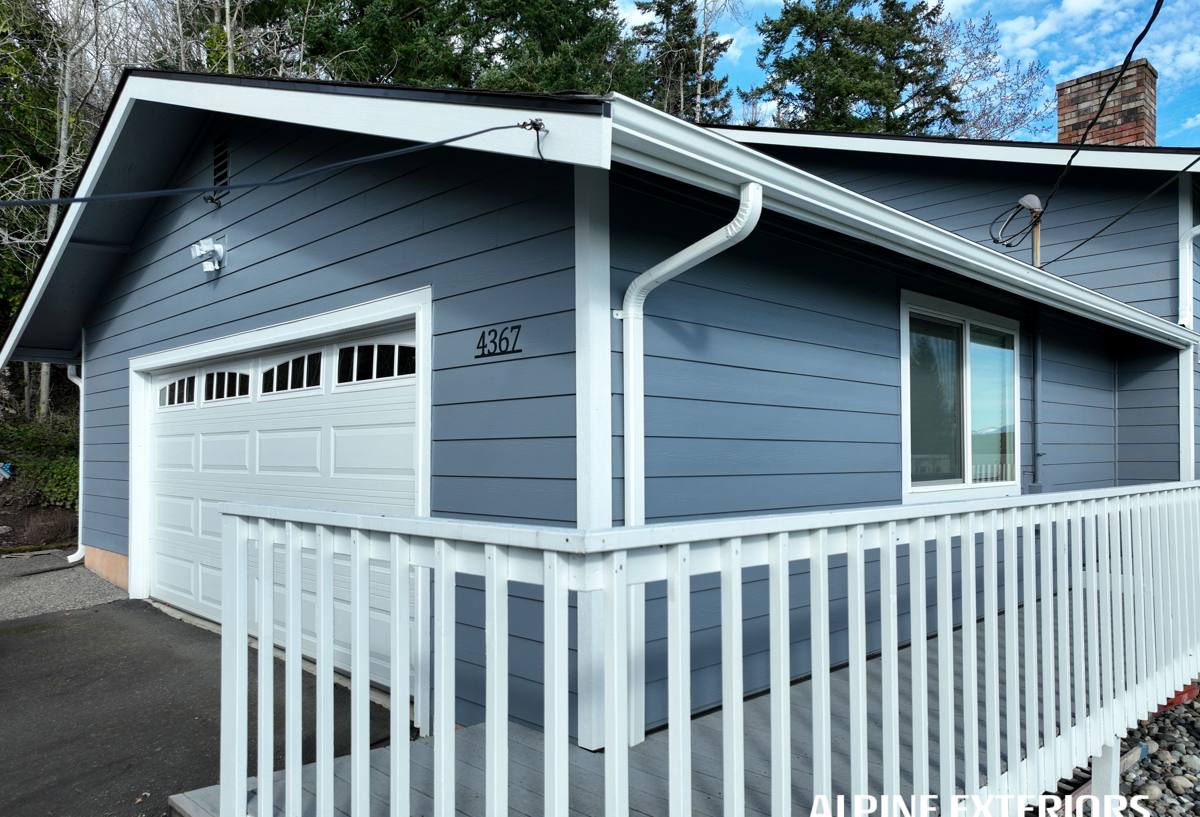
What Ferndale's Climate Does to a Roof
Understanding the local conditions matters because it changes where and how a roof fails. Three things drive most of the repair calls we get in this part of Whatcom County:
Salt Air
Homes closer to Bellingham Bay and the Strait see accelerated corrosion on any exposed metal — nails, flashing, vent caps, and gutter hardware. Once metal fasteners or flashing start to corrode, they lose their grip or their seal long before the shingles around them are actually worn out. A roof can look fine from the ground while the metal holding it together is quietly failing.
Driving Rain
This isn't a light-drizzle climate. Rain here often comes sideways, driven by wind off the water, which pushes water into gaps that would stay dry in a straight-down rain. That means valleys, step flashing, and any horizontal seam are under more stress than a standard rain exposure chart would suggest. Repairs that don't account for wind-driven water tend to fail again within a season or two.
Moss Season
Between the shade from mature trees common in this area and the number of overcast, damp days per year, moss has a long growing window. Moss doesn't just look bad — it lifts shingle edges as it grows, holds moisture against the roof deck, and works its way under flashing. Left alone, a moss patch that started as a cosmetic issue becomes a leak point within a couple of years.
Signs a Ferndale Roof Needs Repair
Most roof damage doesn't announce itself with an obvious hole. It shows up as smaller signals that homeowners either don't notice or assume aren't urgent. Worth checking for:
- Moss or dark streaking concentrated on the north-facing or shaded slopes
- Granules collecting in gutters or at downspout outlets
- Curling, cracked, or lifted shingle edges, especially near valleys
- Rust staining or visible gaps around chimney flashing, vent boots, or skylights
- Soft or spongy spots when walked on (a sign of deck rot underneath)
- Water stains on interior ceilings, especially after a windy rainstorm
- Daylight visible through the attic roof deck
- Sagging in the roofline, even slight, along any section
Any one of these on its own might be minor. Two or three together usually mean it's time for a closer look before the next wet stretch turns a small fix into a bigger one.
Common Repair Types We Handle
Not every roof problem calls for the same fix. The table below covers what we run into most often on Ferndale roofs, what tends to cause it, and how it's typically addressed.
| Problem | Usual Cause | Typical Repair |
|---|---|---|
| Leak at chimney or skylight | Failed or corroded flashing, dried sealant | Remove and replace flashing, reseal properly, check deck below for rot |
| Moss-lifted shingles | Extended shade, poor airflow, infrequent cleaning | Careful moss removal, replace damaged shingles, treat to slow regrowth |
| Valley leak | Wind-driven rain overwhelming an undersized or worn valley | Rebuild valley with proper underlayment and metal, re-lace shingles |
| Gutter-line rot | Standing water, clogged gutters, ice in cold snaps | Replace rotted fascia or decking, correct drainage, reinstall edge metal |
| Wind-lifted shingles | Storm gusts catching a weak seal or old adhesive strip | Reseal or replace affected shingles, check surrounding courses for wind damage |
| Nail pops / exposed fasteners | Corrosion, deck movement, original installation shortcuts | Re-set or replace fasteners, seal penetration points |
How Our Repair Process Works
Inspection First
We start on the roof, not with a guess from the driveway. That means checking the deck underneath a suspected problem area, not just the shingles on top — a leak that shows up in one spot on the ceiling can travel a surprising distance from where the water actually enters.
Honest Diagnosis
We'll tell you plainly whether it's a contained repair or a sign of broader wear. If moss or flashing damage is isolated to one section, we say so. If we find soft decking or widespread granule loss that suggests the roof is near the end of its service life, we say that too, rather than patching something that needs a bigger conversation.
The Repair Itself
Depending on the issue, that might mean replacing a run of flashing, tearing out and rebuilding a valley, swapping damaged shingles course by course, or addressing rotted decking before anything goes back down. We match materials as closely as possible so a repair doesn't stand out as an obvious patch.
Cleanup and Follow-Through
We clear moss and debris as part of the job, not as an upsell, because leaving it in place undermines the repair we just made. You get a clear explanation of what we found, what we fixed, and anything worth keeping an eye on going forward.
Repair or Replacement? How to Think About It
This is the question most homeowners actually want answered, and it depends on more than the roof's age. Here's how we weigh it:
| Factor | Leans Toward Repair | Leans Toward Replacement |
|---|---|---|
| Age of roof | Under 15 years | Nearing or past typical asphalt shingle lifespan |
| Extent of damage | Isolated to one area (a valley, a chimney, a slope) | Spread across multiple slopes or repeated leak points |
| Deck condition | Solid, dry decking under the damaged shingles | Soft, rotted, or repeatedly wet decking |
| Shingle condition elsewhere | Rest of the roof still has good granule coverage | Widespread curling, cracking, or granule loss |
| History of repairs | This is the first real issue | Third or fourth repair call in a few years |
A roof that's had one flashing failure isn't a replacement candidate. A roof that's needed three separate repairs in five years is telling you something, and at that point continuing to patch it usually costs more over time than addressing it properly once.
Materials and Methods We Rely On
For repair work, we use flashing and fasteners rated for coastal exposure rather than standard-grade hardware, since the salt air here corrodes lower-grade metal faster than it should wear out. Underlayment gets installed to handle wind-driven rain, not just straight-down exposure, particularly in valleys and around penetrations. When moss is part of the problem, we remove it by hand rather than pressure-washing it off, since aggressive pressure washing can strip granules and shorten the life of shingles that are otherwise fine. Where regrowth is a recurring issue, we can talk through longer-term moss control options as part of the repair.
Why Local Experience in Ferndale Matters
A roof repair crew that mostly works inland or in drier parts of the state doesn't see wind-driven valley leaks or salt-accelerated flashing failure often enough to know what to look for first. We work Ferndale and the rest of Whatcom County regularly, which means we're not guessing at how this climate behaves — we're diagnosing based on patterns we see repeatedly on roofs a few miles apart. That translates into faster, more accurate diagnosis and repairs that are built to hold up against the specific conditions here, not generic ones.
It also means we're not disappearing after the invoice. If a repair doesn't fully resolve an issue, or if something related turns up down the road, we're a local call away rather than a company that was passing through the area for one job.
Get a Straight Answer on Your Roof
If you've got a leak, moss buildup, or damage you're not sure how to size up, we're glad to take a look and give you an honest read on what it needs — a repair, or something bigger. Reach out for a free, no-pressure estimate using the form below.