 Bellingham Siding
 Roof Repair Built for Barkley's Climate
Barkley sits in a part of Bellingham where the roof over your head works harder than most homeowners realize. Between the salt-laden air drifting in off Bellingham Bay, the long stretches of driving rain that define a Whatcom County winter, and a moss season that can run eight months out of the year in shaded, tree-lined neighborhoods, a roof here ages differently than one in a drier climate. Small problems don't stay small for long. A lifted shingle tab or a gap in flashing that might sit harmless for years in Eastern Washington can turn into a active leak in one wet Pacific Northwest season.
This page is about roof repair specifically — not full replacement — for homes in and around Barkley. If your roof is basically sound but has a specific problem area, this is the right service. We'll walk through what local roofs are up against, what a correct repair actually involves, and how to tell when a repair is still the right call versus when you're looking at something bigger.
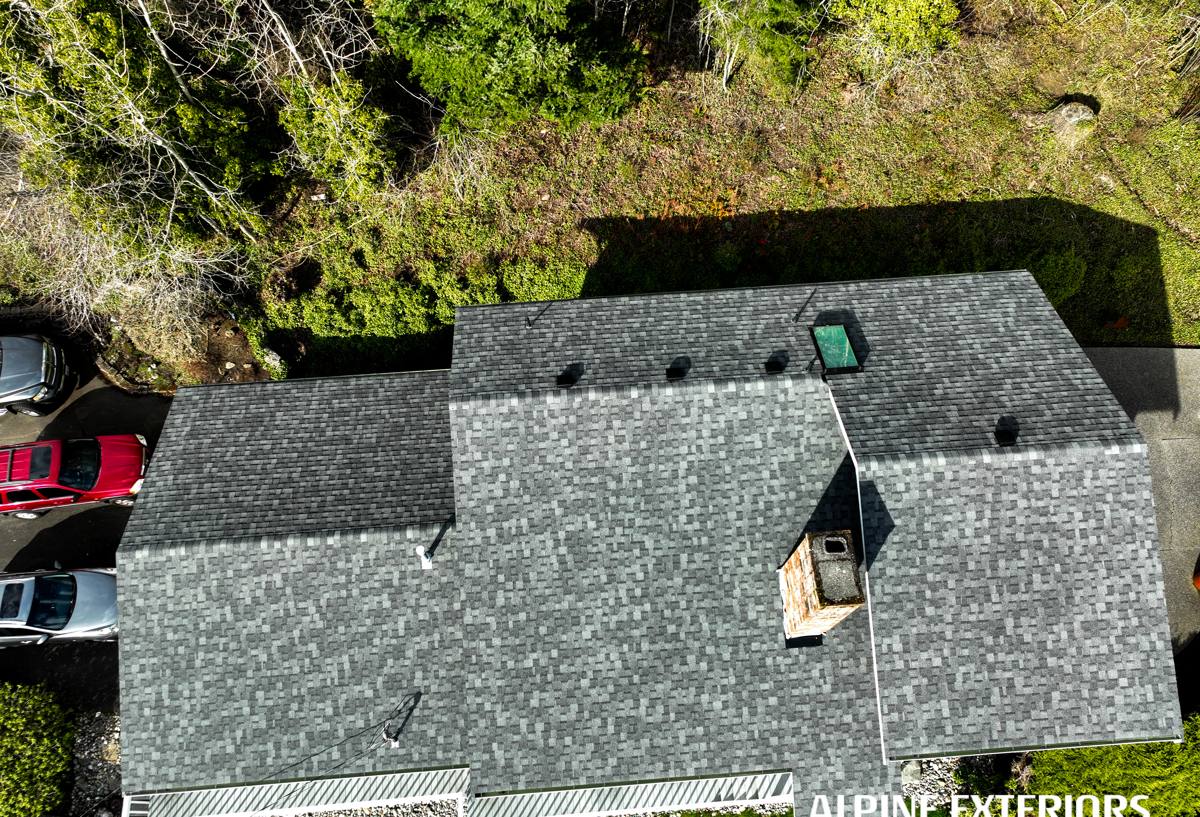
What Barkley Roofs Deal With Each Year
Moss and Organic Growth
Whatcom County's mild, wet climate is close to ideal growing conditions for moss, and Barkley's tree cover only adds to it. Moss doesn't just look bad — it holds moisture against the roof surface long after the rain stops, which accelerates granule loss on asphalt shingles and can work its way under shingle edges over time. On roofs with heavier shade, moss can build up in a single season if it isn't addressed.
Wind-Driven Rain
Bellingham storms rarely come straight down. Rain pushed sideways by wind off the water finds every weak point in a roof system — lifted shingle tabs, dried-out pipe boots, gaps around chimney flashing, and nail heads that have backed out slightly. A roof can shed vertical rain just fine and still leak badly in a wind-driven storm if those small defects are present.
Salt Air and Marine Exposure
Being close to Bellingham Bay means metal components on the roof — flashing, fasteners, vent caps, gutter hardware — are exposed to airborne salt. Over years, that accelerates corrosion on lower-grade metal and fasteners, which is one of the more overlooked causes of slow leaks around chimneys, skylights, and roof-to-wall junctions.
Common Roof Repair Issues We Find in Barkley Homes
Most repair calls in this neighborhood fall into a fairly consistent set of categories. Knowing what's typical helps you describe the problem accurately when you call, and helps set expectations for what the fix will involve.
| Issue | Typical Cause | Why It Matters Here |
|---|---|---|
| Moss buildup on shingles | Shade, moisture retention, infrequent roof maintenance | Accelerates shingle wear in our wet climate; can lift shingle edges |
| Leaks around chimneys or skylights | Failed or corroded flashing | Wind-driven rain finds these gaps first |
| Leaks near roof valleys | Worn valley material, debris damming water flow | Valleys carry the most water volume on a roof during heavy rain |
| Damaged or lifted shingle tabs | Wind, age, sun exposure on unshaded sections | Creates an entry point for wind-driven rain |
| Deteriorated pipe boots | Rubber gaskets breaking down with age and UV exposure | A very common, often-missed leak source in older homes |
| Gutter and edge damage | Debris buildup, ice, or improper drainage | Backed-up water can push under roof edges |
What a Correct Roof Repair Actually Involves
Diagnosis Before Anything Else
A repair is only as good as the diagnosis behind it. Water can enter a roof in one spot and show up as a stain on your ceiling somewhere else entirely, since it follows rafters, sheathing seams, and insulation before it becomes visible indoors. We trace the actual entry point rather than patching wherever the stain happens to be — patching the visible symptom without finding the source is the most common reason a "fixed" leak comes back.
Matching Materials, Not Just Covering the Spot
A repair should use materials and techniques that match how the rest of the roof is built, including compatible flashing metal, correctly lapped underlayment, and shingles that are a reasonable match in type and wear pattern. A patch that doesn't tie into the existing roofing correctly can create a new leak point right at its own edges.
Flashing Detail Work
Given how much of our leak calls trace back to flashing — around chimneys, skylights, wall junctions, and valleys — this is where careful workmanship matters most. Flashing needs to be properly stepped, lapped in the right direction relative to water flow, and sealed with materials rated for exterior, UV, and moisture exposure, not general-purpose caulk that will crack within a season or two.
Our Roof Repair Process
- Inspection. We get on the roof (or use a camera where access is limited) to look at the full roof surface, not just the reported problem area, since one visible issue often points to a related one nearby.
- Honest assessment. We tell you what we find, including if the roof's overall condition suggests a repair won't be a lasting fix. We would rather tell you that up front than sell a repair that doesn't hold.
- Written estimate. You get a clear scope of work and price before anything starts — no surprise add-ons once we're on the roof.
- The repair itself. Work is done with materials matched to your existing roof system, with attention to proper flashing, sealing, and shingle integration.
- Cleanup and walk-through. We clear debris, old materials, and nails from the property and walk you through what was done.
Repair or Replace? Cost Factors to Weigh
Not every roof problem needs a full replacement, but a repair isn't always the right long-term answer either. These are the factors that actually drive that decision, more than any single number:
| Factor | Favors Repair | Favors Replacement |
|---|---|---|
| Roof age | Well within expected lifespan | Near or past typical service life for the material |
| Extent of damage | Isolated to one area or component | Spread across multiple sections or slopes |
| Underlying decking | Solid, no rot found during inspection | Soft, delaminated, or water-damaged sheathing |
| Shingle condition overall | Granules intact, tabs still flexible | Widespread granule loss, brittle or cracking shingles |
| History of repeat leaks | First occurrence in this area | Same area has needed repair more than once |
Broad cost range for straightforward roof repairs in our area typically runs from a few hundred dollars for a small, contained fix to a few thousand for more involved flashing or valley work. Every roof is different, and the only way to give you an accurate number is to actually see the damage — which is why we start with an inspection, not a phone quote.
Materials We Work With
The large majority of roofs in Barkley and the surrounding Bellingham area are asphalt composition shingle, and that's what most of our repair work involves. For homes with wood shake, metal, or older tile roofing, repair techniques change accordingly, and we'll walk you through what's realistic for that specific material.
One thing worth being upfront about: some roofing products marketed as "moss-proof" or "algae-resistant" rely on zinc or copper granules embedded in the shingle. These can genuinely help slow moss and algae growth over time, and we're happy to discuss them for a repair or future re-roof. What we won't do is oversell them as a permanent fix — in a climate as wet and shaded as ours, no shingle product eliminates the need for periodic moss removal and roof maintenance. We'd rather set that expectation honestly than have a customer surprised later.
Signs You Need a Roof Repair Now
Waiting on a roof issue in this climate almost always costs more than addressing it early, since moisture problems compound with every rain event. Call for an inspection if you notice any of the following:
- Water stains on ceilings or upper interior walls, especially after a windy storm
- Visible moss buildup, particularly on north-facing or shaded roof sections
- Granules collecting in gutters or at downspout outlets
- Shingles that look curled, cracked, or are missing entirely
- Daylight visible through the attic roof deck
- Soft or spongy feeling roof decking when walked on (a sign for us to check, not you)
- Rusty streaking near flashing, vents, or chimney edges
- A musty smell in the attic that wasn't there before
Why Hire a Crew That Already Works in Barkley
Roofing in Bellingham isn't the same trade as roofing in a dry inland climate, and a crew that mainly works elsewhere doesn't always account for how much moisture management matters here. A crew familiar with Barkley and the surrounding neighborhoods already understands the tree cover and shade patterns that drive moss growth locally, how exposed a given roof is to wind off the bay, and what flashing details tend to fail first on homes of this area's typical age and construction. That local pattern recognition shortens the diagnosis and helps make sure the repair addresses the actual cause, not just the symptom that happens to be visible.
It also matters for scheduling. Whatcom County's rainy stretches can make roof access unpredictable, and a local crew can move quickly when there's a dry window rather than juggling travel time from farther away.
If you've got a leak, moss buildup, or a roof issue you're not sure how serious it is, we're happy to take a look. We offer a free, no-pressure estimate for Barkley homeowners — just fill out the form below and we'll get you scheduled.