 Bellingham Siding
 Windows Built for the Puget Side of Bellingham
Homes in the Puget area sit close enough to the water that the climate does more work on a house than most homeowners realize. Salt-laden air off the Sound, driving rain that comes in sideways during winter storms, and a moss season that seems to stretch longer every year all put steady pressure on window openings. A window that would hold up fine forty miles inland can fail early here if it isn't installed with this specific environment in mind.
We install windows throughout Bellingham and Whatcom County, and the Puget area gets treated differently than a job on the drier east side of town. The product selection, the flashing detail, and the sealant choices all shift based on how exposed a wall is to wind-driven moisture and salt exposure.
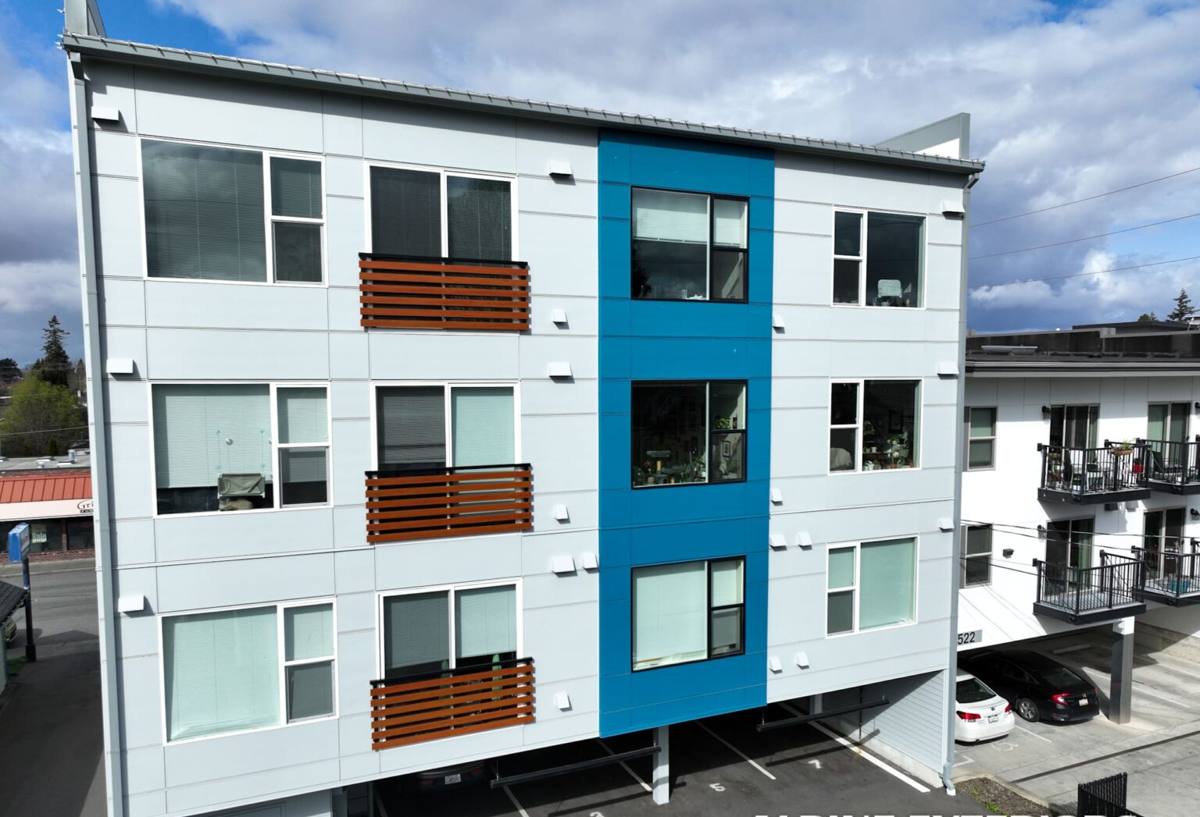
What Salt Air, Rain, and Moss Actually Do to a Window
Salt air and corrosion
Airborne salt accelerates corrosion on hardware, screens, and lower-quality metal components. Cheap fasteners and thin aluminum cladding show pitting and discoloration years before they should. It's not usually the glass or the frame body that fails first near the water — it's the small metal parts holding everything together.
Driving rain and wind pressure
A storm blowing in off the Sound doesn't just wet the glass — it pushes water sideways and upward against the window assembly under real pressure. Any gap in the flashing or a sealant bead that wasn't tooled correctly becomes an entry point. This is different from a light rain falling straight down, and it's why installation detail matters more here than the window brand itself.
Moss, algae, and trapped moisture
Whatcom County's long, damp moss season means anything that holds moisture against wood — sills, trim, the top of a window head flashing — stays wet longer than it would in a drier climate. Moss and algae growth on sills and trim isn't just cosmetic; it holds moisture against the surface and can mask early rot if it isn't cleaned back periodically.
What a Correct Window Installation Involves
Setting a new window into a rough opening looks simple from the outside, but the parts nobody sees are what determine whether the job lasts. In an exposed, wet climate like this one, we don't skip steps to save time.
Flashing and water management first
Before a window ever goes in, the opening needs a proper flashing sequence — sill pan flashing that directs any water that gets past the window back out, side flashing that laps correctly with the weather-resistive barrier, and head flashing that sheds water down and away rather than trapping it. This layered approach means that even if a seal eventually ages, water still has a path out instead of into the wall cavity.
Air sealing and insulation around the frame
The gap between the window frame and the rough opening needs to be sealed and insulated correctly — not overpacked with expanding foam that can bow the frame, and not left with gaps that let moist air condense inside the wall. This affects both energy performance and long-term moisture control.
Sealant selection and application
Not every exterior sealant is rated for constant salt and moisture exposure. We use sealants suited to marine-adjacent environments and apply them with the correct joint width and tooling — a sealant bead that looks fine but wasn't applied at the right depth will crack and fail early.
Our installation checklist for Puget-area homes
- Inspect the existing rough opening and sheathing for hidden rot or prior water damage before setting anything
- Install sill pan flashing with an integrated back dam and end dams
- Lap house wrap and flashing in the correct shingle-style order, top over bottom
- Use corrosion-resistant fasteners rated for coastal/salt-air exposure
- Shim and level the frame without over-compressing it
- Insulate the perimeter gap with low-expansion foam or backer rod, not general-purpose foam
- Apply exterior sealant rated for constant moisture exposure, tooled to the correct joint profile
- Reinstall or replace trim so it sheds water rather than holding it against the wall
Choosing a Window Frame Material for This Climate
Frame material matters more near the water than it does inland, mainly because of how each material handles constant moisture and salt exposure over time.
| Material | How it handles salt air & moisture | Maintenance | Fit for Puget-area homes |
|---|---|---|---|
| Vinyl | Good — won't corrode or rot, seams need to be well-sealed | Low | Solid, budget-friendly choice for most homes |
| Fiberglass | Excellent — very stable in wet, salty conditions, minimal expansion/contraction | Low | Strong long-term option, especially for more exposed walls |
| Wood-clad | Vulnerable if cladding seams fail — interior wood can absorb moisture | Higher — needs monitoring | Fine on protected elevations, riskier on exposed sides |
| Aluminum | Prone to pitting and corrosion in salt air over time | Moderate | Generally not our first recommendation this close to the water |
We don't install every product on the market, and that's a deliberate choice. Some frame and cladding combinations are more sensitive to installation error or long-term moisture exposure than others, and we'd rather steer a homeowner toward something that holds up in this specific environment than install something that looks good on day one and causes callbacks in five years.
Our Process for a Puget Window Installation
- On-site assessment — we look at exposure (how much direct wind and rain the wall takes), existing window condition, and any signs of past moisture intrusion around openings.
- Measurement and product selection — exact measurements, and a frame/glass recommendation based on that specific wall's exposure, not a one-size answer for the whole house.
- Removal and opening inspection — old windows come out carefully so we can check the sheathing and framing underneath before anything new goes in.
- Flashing and installation — sill pan, side and head flashing, correct shimming, and air sealing as described above.
- Trim and exterior finish — trim reinstalled or replaced so water sheds away from the opening, matched to your siding.
- Final check — operation, seal, and cleanup, with a walkthrough so you know what to look for going forward.
Signs Your Current Windows Are Losing the Battle
- Fogging or moisture between panes of a double- or triple-glazed unit — the seal has failed
- Soft or discolored wood trim or sill, especially on the side that faces prevailing weather
- Persistent moss or dark staining on sills that comes back soon after cleaning
- Drafts or a noticeable temperature difference near the window in winter
- Hardware (locks, cranks, hinges) that's stiff, corroded, or has visible pitting
- Difficulty opening or closing, or a frame that looks visibly warped or out of square
What Affects the Cost of a Window Installation
| Factor | Why it affects your quote |
|---|---|
| Frame material | Vinyl, fiberglass, and wood-clad carry different material costs and labor requirements |
| Wall exposure | Walls facing prevailing wind and rain often need more thorough flashing work |
| Condition of the existing opening | Hidden rot or past water damage found during removal adds repair scope |
| Number and size of openings | More or larger windows mean more material and labor, but often better per-unit pricing |
| Glass package | Double vs. triple glazing, low-E coatings, and gas fills affect both cost and performance |
| Trim and exterior finish work | Matching existing siding or trim profiles can add time compared to a simple swap |
Pricing for a straightforward single-window replacement is usually a modest project; a full-house replacement with exposure-driven flashing upgrades is a larger investment. We'll always walk you through exactly what's driving your number rather than handing over a flat quote with no explanation.
Why It Matters to Hire a Crew That Already Works in Puget
A lot of window problems we get called out to fix didn't start with a bad window — they started with an installation that treated this area like anywhere else. Skipped sill pan flashing, the wrong sealant, or trim that traps water against the wall are mistakes that don't show up for a year or two, which is exactly why they're so common. A crew that regularly works this close to Bellingham Bay knows which details aren't optional here, because we're the ones who get the callback if we get it wrong.
We're not asking you to take our word for climate conditions we haven't dealt with firsthand — this is the work we do throughout Whatcom County, on homes facing the same salt air, the same driving rain, and the same moss season as yours.
If you're noticing drafts, fogged glass, or trim that won't stay clean no matter how often you scrub it, we're happy to take a look. Request a free, no-pressure estimate using the form below and we'll give you a straight answer on what your windows need.