 Bellingham Siding
 Why Siding Wears Differently in the Puget Neighborhood
Homes in the Puget area of Bellingham sit close enough to the water and the surrounding tree cover that they take on a specific combination of punishment: salt-tinged marine air, long stretches of driving rain off the Strait, and shaded, damp conditions that keep moss and algae active for most of the year. Any one of those factors is manageable on its own. Together, over a decade or two, they're what separate siding that looks tired at year eight from siding that still looks sharp at year twenty-five.
Salt air is corrosive to exposed fasteners and metal trim, and it accelerates the breakdown of lower-grade paint films. Driving rain finds every gap in flashing and caulk, and it doesn't need a storm to do it — steady Whatcom County drizzle pushed sideways by wind is enough over time. Moss and algae thrive in the shaded, moisture-retentive spots many Puget-area lots have, whether that's a north-facing wall, a section tucked under mature trees, or siding close to grade where airflow is limited. Siding replacement in this neighborhood isn't just about swapping old material for new — it's about choosing a product and installation method that actually accounts for these three stressors together.
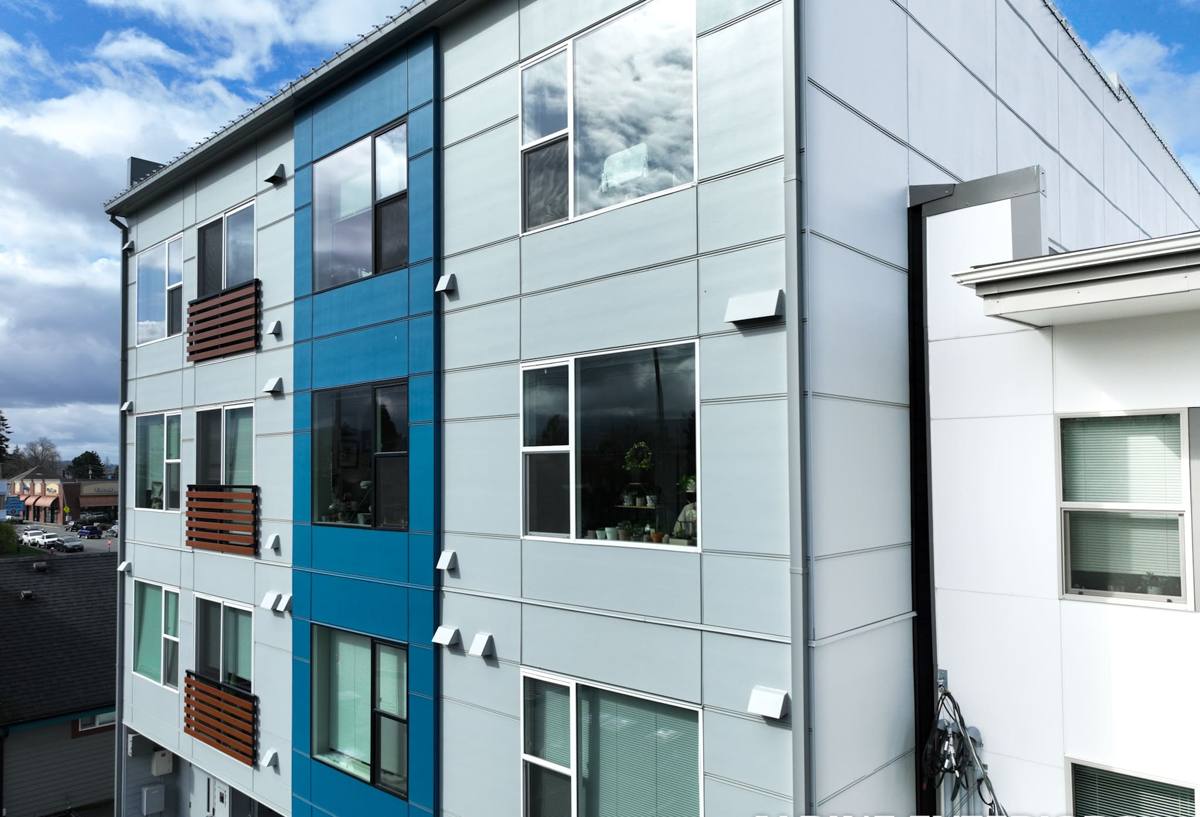
Signs a Puget-Area Home Needs Siding Replacement, Not Just Repair
Not every siding problem calls for full replacement. But there's a point where patching becomes a losing game, especially once moisture has gotten behind the cladding. Here's what we look for when we walk a property in this part of Bellingham:
- Soft or spongy spots when you press on the siding, especially near the bottom courses or around window and door trim
- Paint that's peeling, bubbling, or chalking heavily rather than just fading
- Persistent black or green streaking that comes back within a season or two of cleaning
- Visible cupping, warping, or delamination of panels or boards
- Gaps opening up at seams, corners, or trim joints that weren't there a few years ago
- A musty smell or visible staining on interior walls that back up to exterior siding
- Rust streaks below fasteners or metal trim pieces
If you're seeing two or more of these, especially the soft-spot or interior-staining signs, that usually means moisture has already worked its way past the surface. At that stage, spot repair just delays a bigger tear-out later, and it's worth having a full assessment rather than chasing individual problem areas.
What a Correct Siding Replacement Actually Involves
Siding replacement done right is mostly about what happens before the new material ever goes up. In a climate like this one, the water management layer underneath the siding matters as much as the siding itself.
Tear-Off and Inspection
Full removal of the old siding lets us actually see the sheathing underneath — something you can't evaluate from a ladder with the old material still in place. On homes in wetter, shadier lots, it's common to find sheathing that's soft or discolored in isolated spots even when the siding looked fine from outside. Any of that gets identified and repaired before anything new goes on; new siding over damaged sheathing just hides the problem for another cycle.
Weather-Resistive Barrier and Flashing
A correctly lapped weather-resistive barrier, properly integrated flashing at windows, doors, and any roof-to-wall intersections, and rainscreen or drainage detailing where it's called for are what actually keep driving rain from becoming a wall cavity problem. This step is invisible once the siding is on, which is exactly why it's the step most likely to get shortcut by a crew in a hurry.
Installation to Manufacturer Spec
Fastener spacing, clearance from grade and roof lines, caulking at the right joints (and not at the ones that need to breathe), and proper field-cutting and sealing of cut ends all affect how the siding performs against salt air and moisture over the long run. Fiber cement in particular has specific installation requirements — clearances, fastener types, and finishing details — that differ from wood or vinyl, and skipping them is one of the most common ways a siding job underperforms its warranty.
Why We Install Only James Hardie Fiber Cement
We don't install vinyl, LP SmartSide, or other fiber cement brands like Cemplank or Allura, and we don't install primed spruce or cedar. That's a deliberate standard, not a lack of options, and it's worth explaining why — especially for a neighborhood dealing with salt air, rain, and moss all at once.
Vinyl is inexpensive and low-maintenance in the sense that it doesn't need repainting, but it's also a thinner, more temperature-sensitive material that can warp or crack in impact and doesn't hold up as well cosmetically over a long service life, particularly with algae and grime in a damp climate. Wood-based siding, including engineered wood products and primed cedar or spruce, performs well when maintenance stays on schedule, but any lapse in caulking, painting, or moisture control opens the door to rot — and that's a real risk in a climate with this much sustained moisture exposure. Other fiber cement brands aren't inherently bad materials, but we've standardized on one manufacturer, one set of installation specs, and one warranty structure so our crews are experts in a single system rather than generalists across several.
James Hardie's fiber cement is non-combustible, holds paint and factory finish far longer than wood-based alternatives, and its HZ5 product line is engineered specifically for climates with heavy moisture exposure — which describes this part of Whatcom County well. The factory-applied ColorPlus finish resists fading and chipping better than field-applied paint, and the transferable warranty backs the product for decades under normal use. For a home absorbing salt air, driving rain, and a long moss season every year, that combination of moisture resistance, finish durability, and non-combustibility is why Hardie is the only product we put on a wall.
| Factor | Vinyl | Wood / Engineered Wood | James Hardie Fiber Cement |
|---|---|---|---|
| Moisture tolerance | Moderate — can trap moisture behind panels | Low without diligent maintenance | High — HZ5 line engineered for wet climates |
| Finish longevity | Can fade or chalk over time | Depends entirely on paint/stain upkeep schedule | Factory ColorPlus finish, long fade resistance |
| Combustibility | Combustible | Combustible | Non-combustible |
| Typical service life | 15-25 years | 10-20 years with upkeep | 30+ years installed to spec |
| Maintenance burden | Low, but limited repair options | Regular repainting/sealing required | Low; periodic wash and caulk check |
Why a Crew That Already Works Puget Matters
Siding installation isn't one-size-fits-all across Bellingham. A crew that's worked this specific neighborhood already knows which lots tend to have shaded, slow-drying walls, where salt exposure tends to concentrate fastener corrosion, and which flashing details matter most given the local rain pattern. That familiarity shows up in small decisions — how much rainscreen gap to leave, where to prioritize extra flashing attention, which sides of the house need the most careful caulk detailing — that a crew unfamiliar with the area might treat as optional rather than necessary.
It also matters for sequencing the job around the actual weather. Fiber cement installation has dry-time and temperature requirements for caulking and finishing work, and a crew that knows the local rhythm of dry windows between rain systems plans around it instead of rushing work between showers.
Our Process, Start to Finish
- On-site assessment — we walk the exterior, check problem areas you've flagged, and look at sheathing condition where accessible
- Scope and estimate — a clear, itemized plan covering tear-off, repair allowances, water management upgrades, and the Hardie product line and color selected
- Tear-off and sheathing inspection — full removal, with any soft or damaged sheathing repaired before moving forward
- Weather-resistive barrier and flashing — installed and integrated at every penetration, window, door, and transition
- Hardie installation to spec — proper fastener spacing, clearances, and joint treatment throughout
- Final finish and cleanup — trim, caulking, touch-up, and full site cleanup before walkthrough
What Drives Cost on a Siding Replacement
Every home is different, but a few factors consistently move the number more than others:
| Cost Factor | Why It Matters |
|---|---|
| Sheathing condition | Hidden rot or damage found during tear-off adds repair scope before new siding can go on |
| Home size and complexity | More corners, gables, and trim detail mean more labor and cutting |
| Siding profile and accessories | Lap width, trim style, and accent details affect material and labor cost |
| Water management upgrades | Adding or improving rainscreen and flashing detail is worth the upfront cost in this climate |
| Access and site conditions | Tree cover, tight lot lines, or multi-story sections affect staging and labor time |
We give straightforward, itemized estimates so you know exactly what you're paying for and why — no vague lump-sum numbers that hide what's actually being done.
Living With Your New Siding
Hardie siding is low-maintenance compared to wood, but "low-maintenance" isn't "no-maintenance," especially in a climate that grows moss and algae readily. A rinse-down once or twice a year keeps organic growth from taking hold, and it's worth a quick visual check after major windstorms for any loose trim or caulk gaps. Beyond that, correctly installed Hardie siding is built to handle the salt air, rain, and moss season that come with living in this part of Bellingham without demanding constant attention.
If your Puget-area home is showing signs it's due for new siding, or you just want an honest read on what shape it's in, we're happy to take a look. The estimate is free, there's no pressure, and you'll get a straight answer either way — use the form below to get started.