 Bellingham Siding
 Why Puget's Location Makes Siding Choice a Bigger Decision
Homes in the Puget area sit close enough to the water that the air itself works against ordinary siding. Salt-laden moisture rides in on the wind off Bellingham Bay, wind-driven rain hits walls at angles that gutters and overhangs don't fully block, and the region's long gray season keeps north- and shade-facing walls damp for weeks at a stretch. That combination is exactly what wears out lower-grade siding fastest: it's not one dramatic storm, it's months of low-level moisture exposure every year, year after year.
For homeowners in this part of Whatcom County, siding isn't just a cosmetic choice. It's the one layer of the house doing constant, quiet work against salt, rain, and moss. Getting it right the first time matters more here than it does in drier inland climates, because the margin for a poor installation or the wrong material is thinner.
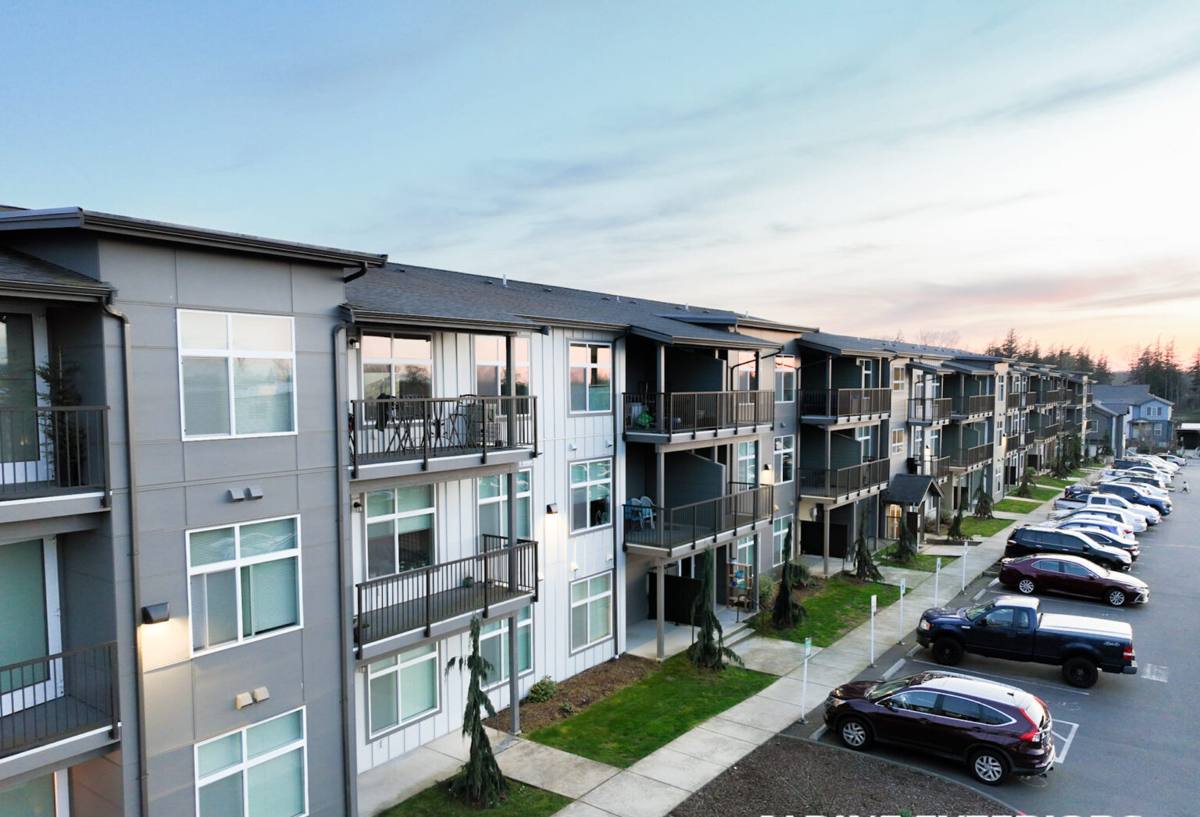
What Salt Air, Driving Rain, and Moss Actually Do to a Wall
Salt air
Airborne salt is corrosive to exposed metal fasteners, flashing, and hardware, and it accelerates the breakdown of coatings and finishes that aren't formulated to resist it. Over time, a finish that looks fine at first can start chalking, fading, or lifting years earlier than it should near the water.
Driving rain
Bellingham's weather pattern brings rain on wind, not just straight down. That means siding has to shed water that's being pushed sideways and upward into laps, seams, and butt joints — spots that a lot of installations treat as an afterthought. Wherever a house lacks proper flashing and a drainage path behind the cladding, that wind-driven moisture finds its way in.
Moss and algae
Shaded, damp walls — especially north-facing elevations and anything under mature trees — stay wet long enough for moss and algae to take hold. Beyond the appearance issue, sustained moss growth holds moisture against the siding surface, which is hard on materials that aren't dimensionally stable or that absorb water at the edges.
How Siding Materials Actually Compare in This Climate
We get asked often why we standardized on James Hardie fiber cement instead of offering vinyl, LP SmartSide, or cedar as options. Here's the honest breakdown of how each holds up under Puget's specific conditions:
| Material | Moisture behavior | Salt air exposure | Moss/algae resistance | Typical maintenance |
|---|---|---|---|---|
| James Hardie fiber cement | Non-combustible, engineered for wet climates; doesn't swell or rot | ColorPlus finish resists chalking/fading; holds up well near water | Dense, stable surface resists moss anchoring better than wood | Occasional wash, repaint only if field-painted |
| Vinyl siding | Doesn't rot, but seams and panels can warp or gap over time | Can fade and become brittle faster in coastal UV/salt combo | Can trap moisture behind panels where moss/algae forms unseen | Low, but panels aren't repairable — often full replacement |
| LP SmartSide (engineered wood) | Wood-based core is more moisture-sensitive at cut edges and seams | Coating needs to be maintained to keep moisture out | Wood substrate is more vulnerable if moisture gets past the coating | Regular inspection of seams/edges, repainting on schedule |
| Cedar / primed spruce | Natural wood movement, prone to cupping and checking when wet | Salt accelerates weathering of natural wood surface | Highest moss/algae risk of the group; needs active upkeep | Frequent staining/sealing, most labor-intensive to maintain |
Every material on that list can be installed correctly and look good on day one. The difference shows up in years five, ten, and fifteen — which is the window that matters for a house near the water in a climate like this one.
Why James Hardie Is What We Put on Puget Homes
James Hardie fiber cement is engineered specifically for climates like this. The HZ5 product line is formulated for wet, moderate climates in the Pacific Northwest, which means the board itself is designed around the exact conditions Bellingham sees — not a generic national spec. A few specifics that matter locally:
- Non-combustible core — fiber cement doesn't feed a fire the way wood-based products can, which matters for insurance and long-term risk regardless of coastal exposure.
- ColorPlus factory finish — baked-on color that resists the fading and chalking that salt air and UV cause faster on field-applied paint.
- Dimensional stability — fiber cement doesn't expand and contract with moisture the way wood does, so joints and laps stay tighter over time.
- Transferable warranty — backed by the manufacturer, not just the installer, which matters if the home changes hands.
None of that replaces good installation. A great product installed wrong will still fail in this climate — which is the next part.
What a Correct Installation Actually Involves Here
Fiber cement siding is only as good as the details behind it. In a climate with this much wind-driven rain, the installation choices that don't show up in a finished photo are the ones that determine whether the wall stays dry for the next 30 years.
Drainage plane and rain screen
A proper water-resistive barrier and drainage gap behind the siding gives any moisture that does get past the cladding a way to drain and dry out, instead of sitting against the sheathing. This is especially important on walls that take direct wind-driven rain.
Flashing at every penetration
Windows, doors, hose bibs, light fixtures, and deck ledgers all need proper flashing integrated with the water-resistive barrier — not just caulk. Caulk is a backup, not a substitute for flashing.
Correct fastening and clearances
James Hardie specifies exact nailing patterns, fastener types, and minimum clearances from grade, roof lines, and other surfaces. Skipping these — nailing too high, too close to an edge, or leaving no gap at the bottom — is one of the most common ways a technically "Hardie" installation still fails prematurely.
Joint and seam treatment
Butt joints need to be treated correctly (either flashed or caulked per spec, depending on the detail), since these are the highest-risk points for wind-driven rain intrusion.
Common Problems We Find on Existing Installations
When we're called out to look at siding that's failing early in this area, it's rarely the material itself. It's almost always one of these:
- Missing or improperly lapped flashing around windows and penetrations
- No drainage gap behind the siding, trapping moisture against the sheathing
- Fasteners driven too high or too tight, restricting the board's designed movement
- Caulk used to bridge gaps that should have been flashed
- Bottom courses installed too close to grade or hardscaping, wicking moisture from the ground
These are installation errors, not material failures — which is exactly why we're selective about installation quality rather than about which brands we're willing to install.
Our Process for a Puget-Area Home
Every project starts with a walk-around assessment specific to the house — which elevations take the most wind-driven rain, where shade and moss have already become a problem, and where existing moisture damage might be hiding under old siding. From there:
- Assessment of existing siding, sheathing condition, and problem areas specific to the site
- Removal of old siding and inspection/repair of sheathing and framing before anything new goes on
- Installation of water-resistive barrier and drainage plane sized for the exposure of each wall
- Flashing integration at every window, door, and penetration
- James Hardie panel or lap installation to manufacturer fastening and clearance specs
- Final detailing — trim, caulking where specified, and a walkthrough of the finished work
We don't shortcut the sheathing inspection step. Covering up hidden rot or moisture damage with new siding just delays a much bigger repair — and in a climate this wet, that damage doesn't stay hidden for long.
Why a Crew That Already Works This Area Matters
A contractor who works Whatcom County regularly already knows which elevations on a given lot take the worst of the wind-driven rain, how much moss pressure to expect on shaded walls, and how the salt air off the bay factors into fastener and finish choices. That's not something you get from a general national installer working off a standard spec sheet — it comes from doing this work, on homes like this one, in this specific climate, repeatedly.
What to Check Before You Hire Anyone for This Job
- Are they a factory-trained or certified James Hardie installer, not just someone who occasionally uses the product?
- Will they specify a drainage plane/rain screen detail, or just staple up house wrap and go?
- Do they flash every penetration, or rely on caulk as the primary defense?
- Will they inspect and repair sheathing before installing new siding, not just cover it?
- Can they explain why they'd choose a specific Hardie product line and finish for your walls' sun/shade and wind exposure?
If your Puget-area home needs new siding, or you want a second opinion on an installation you're not sure was done right, we're happy to walk the property and give you a straight answer. Reach out for a free, no-pressure estimate using the form below.