 Bellingham Siding
 Roofing in Sehome: Built for Bellingham's Weather, Not Just Any Weather
Sehome sits close enough to Bellingham Bay to catch salt-laden air, and close enough to the hills and tree cover to stay damp and shaded for long stretches of the year. That combination is harder on a roof than either factor alone. Salt air accelerates corrosion on fasteners and metal flashing. Shade and moisture feed moss and algae. And the driving, wind-pushed rain that comes through Whatcom County in the fall and winter finds every weak seam, lap, and nail hole a roof has. A roof built for a drier, sunnier climate simply doesn't hold up the same way here.
When we install a new roof in Sehome, we're not just replacing worn shingles — we're building a system that's meant to handle this specific mix of conditions for the next few decades. That means paying close attention to the parts of a roofing job that are easy to rush: ventilation, underlayment, flashing, and fastener choice. Get those right and a roof will shrug off a wet Bellingham winter. Get them wrong and you'll be dealing with moss, leaks, or premature wear years before you should.
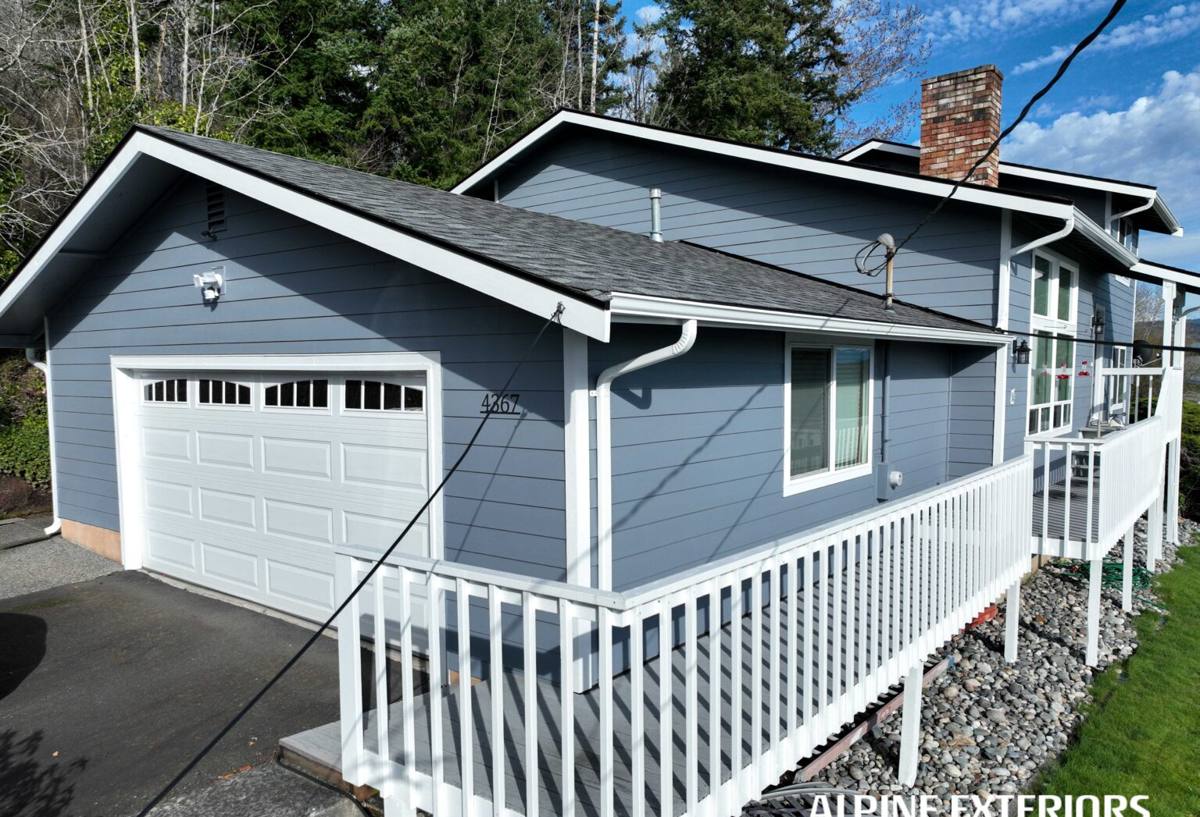
Signs a Sehome Home Needs a New Roof, Not Another Repair
Age and material wear
Most asphalt shingle roofs in this region are good for roughly 20–25 years, sometimes less if ventilation was ever marginal. If your roof is in that range and you're starting to see granules collecting in gutters or downspouts, that's the shingle surface wearing thin — not something a patch repair fixes.
Moss and algae staining that keeps coming back
A little moss on a north-facing slope is normal in this climate. But moss that returns every year no matter how often it's cleaned, or moss that's started lifting shingle edges, is a sign the roof surface is holding moisture longer than it should. That's often tied to aging shingles losing their granule coating, not just a cleaning problem.
Leaks, dark ceiling spots, or musty attic smell
Any active leak, or a musty smell in the attic during our wetter months, means water is getting past the roofing system somewhere. Sometimes that's a localized flashing failure that can be repaired. Often, on an older roof, it's one symptom of a system that's failing in multiple places at once.
Sagging, soft decking, or visible daylight
If you can see the roofline sagging between rafters, or a contractor finds soft, spongy decking during an inspection, that's a structural issue that a new roof installation needs to address directly — not just cover over.
What a Correct New Roof Installation Actually Involves
A new roof is more than removing old shingles and nailing down new ones. The parts that determine how well a roof performs in Bellingham's climate are mostly invisible once the job is done.
Full tear-off versus overlay
We install over a full tear-off in almost every case. Overlaying new shingles on top of old ones traps moisture, hides deck damage, and shortens the life of the new roofing — it's a shortcut, not a standard we're willing to build a roof on.
Deck inspection and repair
Once the old roofing is off, we inspect the decking underneath for rot, soft spots, or delamination — common wherever a roof has held moisture for years. Damaged sections get replaced before anything new goes down. Skipping this step is one of the most common ways a "new roof" fails early.
Underlayment and ice-and-water protection
A synthetic underlayment goes down as the primary water barrier beneath the shingles, with self-adhering ice-and-water membrane at the eaves, valleys, and around any penetration — chimneys, vents, skylights. These are the spots where wind-driven rain gets pushed backward under shingles, and they're the most common source of hidden leaks on an otherwise sound roof.
Flashing at every transition
Valleys, chimneys, sidewalls, and vent pipes all need properly formed and sealed flashing — not just roofing cement smeared over a gap. Flashing is metal and, in a salt-air environment, the fastener and flashing material choice matters more than it would further inland.
Ventilation built into the system
Intake vents at the eaves and exhaust at the ridge keep air moving through the attic space, which controls both heat and moisture. We cover this in more detail below because it's one of the most under-discussed parts of a roof install — and one of the biggest factors in how much moss and rot show up down the road.
Roofing Material Options for Whatcom County Weather
There's no single "best" roofing material for every home — the right choice depends on the roof's slope, the home's style, budget, and how much long-term maintenance you're willing to take on. Here's how the common options stack up against the conditions Sehome roofs actually face.
| Material | Moss/algae resistance | Wind & rain performance | Typical lifespan | Maintenance |
|---|---|---|---|---|
| Standard asphalt shingle | Moderate — needs periodic cleaning | Good with proper fastening and underlayment | 20–25 years | Moderate; moss treatment recommended |
| Architectural/dimensional shingle | Better — denser mat, often algae-resistant granules | Very good; heavier and more wind-resistant | 25–30 years | Low to moderate |
| Standing seam metal | Excellent — sheds moisture, little surface for growth | Excellent in wind and heavy rain | 40–50+ years | Low; occasional fastener/sealant checks |
| Composite/synthetic shake | Good, varies by product | Good; check manufacturer wind rating | 30–50 years depending on product | Low to moderate |
Most Sehome homes we work on land on architectural asphalt shingle as the practical choice — it balances upfront cost, appearance, and durability well for this climate. Metal roofing is a strong option for homeowners planning to stay long-term and wanting to minimize moss and maintenance altogether, though the upfront investment is higher. We'll walk through the honest trade-offs for your specific roof rather than pushing one product across the board.
Ventilation and Moisture Control: The Part That Prevents Moss
Moss doesn't grow because a roof is old — it grows because a roof surface stays damp and shaded longer than it should. Poor attic ventilation is a major, often overlooked contributor. When warm, moist air from inside the house gets trapped in the attic instead of venting out, it keeps the underside of the roof deck warmer and damper, which slows drying on the surface above and encourages moss, algae, and premature shingle aging.
A correctly balanced system pulls cool air in low (soffit vents) and pushes warm, moist air out high (ridge vents), keeping the deck and shingles closer to outdoor temperature and drier overall. On a new roof installation, this is something we size and correct as part of the job — not an afterthought after the shingles are already down.
Our New Roof Installation Process in Sehome
Sehome's lots tend to be closer together than in some outlying areas, with mature trees and neighbors nearby, so we plan the job with that in mind — protecting landscaping, managing debris, and keeping the site controlled from day one.
- On-site inspection and honest assessment of whether repair or full replacement makes sense
- Written estimate detailing materials, scope, and timeline before any work starts
- Permitting handled through the City of Bellingham where required
- Protection of landscaping, siding, and windows with tarps and plywood before tear-off begins
- Full tear-off to bare decking, with photos of any deck damage found before repair
- Underlayment, ice-and-water membrane, flashing, and ventilation installed to spec
- New roofing material installed per manufacturer requirements to keep warranty coverage intact
- Magnetic sweep and full site cleanup, including gutters, before we consider the job finished
- Final walk-through so you can see the completed work and ask questions before we leave
Why a Crew That Already Works Sehome Makes a Difference
A roofing crew that regularly works this part of Bellingham already understands things that take other contractors extra time to figure out: how the City of Bellingham's permitting and inspection process runs, how tight some Sehome lots are to work around safely, and how weather windows here actually behave — you don't schedule a tear-off the same way in a stretch of steady fall rain as you would in a dry July week. That local familiarity translates into fewer surprises, a tighter schedule, and a crew that isn't learning the neighborhood on your dime.
It also means we're not a stranger if something needs a follow-up look next year. We service the homes we install roofs on, and being a short drive away rather than an hour out matters when you need someone to actually show up.
What Affects the Cost of a New Roof
Every roof is different, and we won't quote a number without seeing the job, but the main factors that move the price are consistent:
- Roof size and complexity — square footage, number of valleys, dormers, and roof planes
- Pitch and access — steeper roofs and limited access add labor time
- Decking condition — rot or soft spots discovered during tear-off require repair before installation continues
- Material selection — standard asphalt, architectural shingle, or metal carry different material and labor costs
- Layers to remove — a roof with an existing overlay takes longer to tear off than a single-layer roof
- Ventilation and flashing upgrades — bringing an older, under-vented roof up to a proper standard
We'll walk through each of these with you during the estimate so the final number makes sense, rather than handing you a lump figure with no explanation behind it.
Caring for a New Roof Through Bellingham's Moss Season
A properly installed and ventilated roof still benefits from basic seasonal care in this climate. Keeping gutters clear of needles and leaves prevents water from backing up under the roof edge. Trimming back tree limbs that overhang the roofline reduces shade and debris buildup, both of which feed moss. A light annual inspection — especially after the first heavy fall storms — catches small issues like a lifted shingle or a cracked pipe boot seal before they turn into a leak. None of this is heavy maintenance; it's the kind of upkeep that lets a well-built roof reach its full lifespan instead of falling short of it.
If your Sehome home's roof is showing its age, holding onto moss no matter what you do, or you're just planning ahead before a real problem shows up, we're happy to take a look. Use the form below to request a free, no-pressure estimate — we'll give you a straight assessment of what your roof actually needs.