 Bellingham Siding
 Metal Roofing in Cordata: Built for What This Weather Actually Does
Cordata sits in north Bellingham, close enough to the water and the lowland fog that roofs here deal with a specific combination of problems: near-constant damp, salt-tinged air drifting in off the Sound, and a moss season that runs most of the year. A roof that would hold up fine in a drier inland climate can start showing streaking, granule loss, or soft spots within a decade here. Metal roofing, installed correctly, is one of the more forgiving options for this kind of weather — but "installed correctly" is doing a lot of work in that sentence, and it's where most of the long-term problems either get prevented or built in.
This page covers what a metal roof needs to do on a Cordata home specifically, what a correct installation actually involves, and what our crew does differently because we already work in this neighborhood and know how these roofs age here.
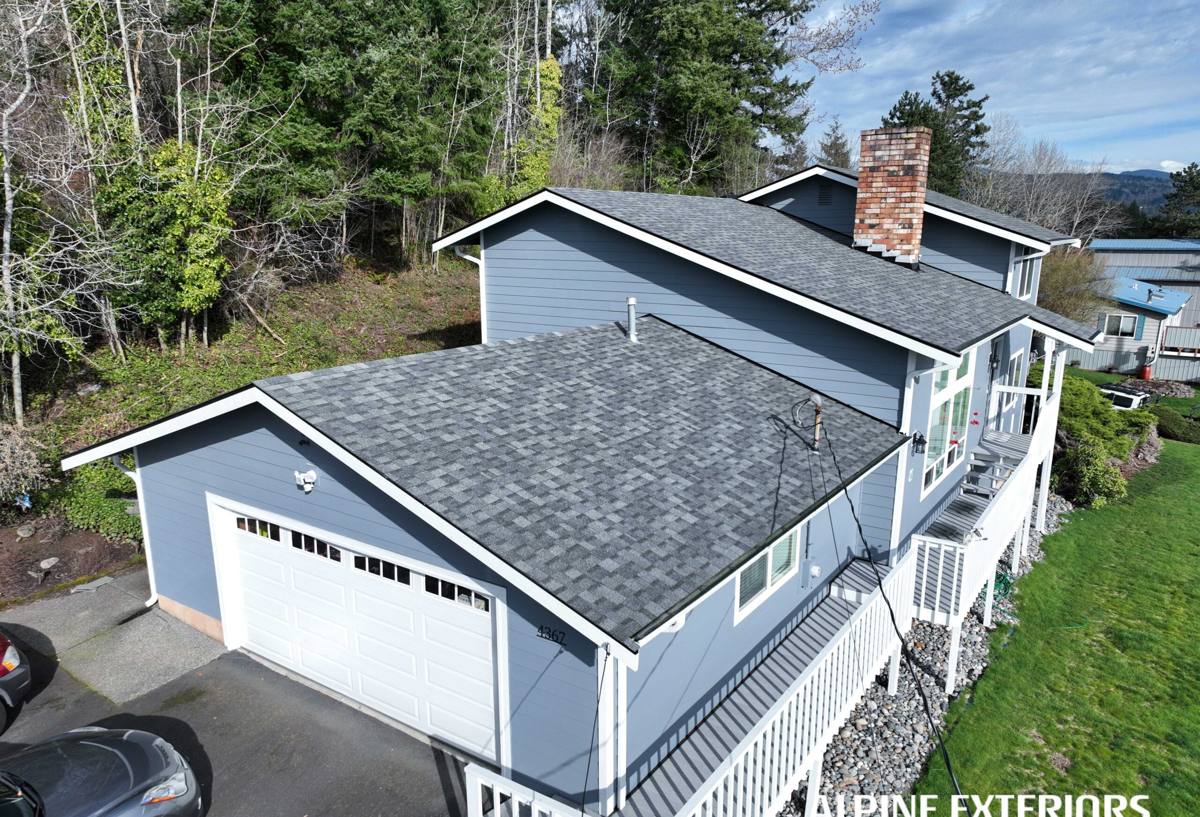
What Whatcom County Weather Does to a Roof Over Time
Bellingham's marine climate is mild, which is part of why people move here — but mild and gentle aren't the same thing when it comes to roofing. A few specific stresses show up again and again on Cordata roofs:
- Persistent moisture: Long stretches of drizzle and fog keep roof surfaces damp far more often than they're fully dry, which is exactly the condition moss and algae need to establish.
- Moss and organic growth: Tree cover and shaded north-facing slopes hold moisture longer, and moss roots can lift shingles, hold water against fasteners, and work into seams over several seasons.
- Salt-influenced air: Proximity to Bellingham Bay means airborne salt reaches inland further than people expect, accelerating corrosion on unprotected metal, exposed fasteners, and lower-grade flashing.
- Wind-driven rain: Storms off the water don't just fall straight down — wind pushes rain sideways and up under laps, so lap and seam design matters more here than in calmer climates.
None of this makes metal roofing a bad choice — the opposite, actually. But it does mean the panel type, fastener choice, and coating system need to match the climate, not just the budget or the look.
Panel Types We Install, and Where Each One Fits
"Metal roofing" isn't one product. The differences between panel systems matter a lot in a wet, salt-influenced climate like Cordata's, mostly around how the panels shed water and how many fastener penetrations sit exposed to weather.
| Panel Type | How It Sheds Water | Fastener Exposure | Where It Fits Best |
|---|---|---|---|
| Standing seam | Interlocking raised seams, no exposed fasteners on the field of the roof | Concealed clips, fasteners protected from direct weather | Full re-roofs, homes with lower-slope sections, anyone prioritizing longevity over lowest upfront cost |
| Exposed-fastener panel | Overlapping ribbed panels, fasteners driven through the panel face | Fastener heads exposed to rain, UV, and salt air directly | Outbuildings, shops, lower-budget projects where fastener maintenance is accepted |
| Stone-coated steel shingle/shake | Interlocking shingle-profile steel panels | Mostly concealed under overlapping courses | Homeowners who want a traditional shingle or shake look with steel's durability |
For most Cordata homes we recommend standing seam or a stone-coated steel product for the main roof, and reserve exposed-fastener panels for accessory structures where the occasional fastener re-torque or gasket check isn't a major inconvenience. Exposed fasteners aren't wrong — they're just a maintenance commitment that makes more sense on a shop roof than over a living room.
Steel vs. Aluminum
Steel panels (galvanized or Galvalume-coated, then finished with a paint system) are the standard choice for most homes and hold up well once properly coated and flashed. Aluminum costs more but doesn't rust — it can still corrode under certain conditions, but it doesn't have iron to oxidize, which is worth considering on homes closer to the water where salt exposure is highest. We'll talk through both options honestly based on where your specific property sits relative to the Bay, not just push the higher-margin product.
What a Correct Metal Roof Installation Actually Involves
Metal roofing has a reputation for being low-maintenance, and it can be — but that reputation is earned by the installation, not the material itself. A metal roof that leaks almost never fails because the panels themselves wore out; it fails because something underneath or around the panels was done wrong.
Underlayment
In a climate this wet, we use a high-temperature synthetic or self-adhered underlayment rated for the panel type, with extra coverage at eaves and valleys. This is the roof's real waterproofing layer — the metal sheds the bulk of the water, but wind-driven rain and ice-dam-style backup (which does happen during Bellingham's occasional cold snaps) need a real second line of defense underneath.
Flashing and Penetrations
Valleys, chimneys, skylights, and vent penetrations are where the overwhelming majority of roof leaks originate, on metal or any other material. Flashing needs to be sized, lapped, and sealed for the specific panel profile, not bent to a generic shape and caulked into place. We treat flashing detail work as the part of the job that actually determines whether the roof performs, not a finishing touch.
Fastening and Panel Layout
Panel layout needs to account for prevailing wind direction and roof slope so that laps face away from driving rain, and fasteners need to be the correct length and type for the decking underneath — not whatever's fastest to run through a gun. On standing seam systems, clip spacing and expansion allowance matter too, since steel expands and contracts with temperature swings more than most homeowners realize.
Ventilation
A metal roof over a poorly ventilated attic can trap moisture underneath the deck, which causes rot and mold that has nothing to do with the roof surface itself. We check and correct ridge, soffit, and intake ventilation as part of the job, not as an upsell after the fact.
Moss, Salt Air, and What Long-Term Maintenance Looks Like
One real advantage of metal roofing in a moss-prone climate is that moss has a much harder time establishing on a smooth metal surface than on the rough texture of asphalt shingles or wood shakes. It's not immune — moss and organic debris can still build up in valleys, around penetrations, and anywhere leaves and needles collect and hold moisture — but it's a meaningfully lower-maintenance surface than what most Cordata homes currently have.
Salt air is the tradeoff to manage instead. A quality factory-applied coating system (PVDF-type finishes are the industry standard for coastal-adjacent durability) resists chalking and corrosion far longer than a basic painted finish, and it's worth the upgrade on homes anywhere in the Bellingham Bay's general vicinity. We'll also make sure fastener and flashing metals are compatible with the panel metal — mixing incompatible metals in a salt-air environment can cause galvanic corrosion that has nothing to do with the panels themselves failing.
Realistic Maintenance Expectations
Even with the right materials, plan on:
- An annual walk of the roof (or a call to us) to clear debris from valleys and around penetrations before it holds moisture through the wet season
- Gutter checks — clogged gutters back water up under eave flashing regardless of what the roof surface is
- A visual check of sealant at penetrations every few years, since sealants age faster than the metal itself
Our Process, Start to Finish
We keep the process straightforward and don't ask homeowners to make decisions they don't have the information for:
- On-site assessment: We look at your existing roof, decking condition, ventilation, and how your specific lot and roof slope interact with sun, shade, and prevailing weather.
- Honest product recommendation: We'll walk through panel type, metal, and finish options with real tradeoffs — cost, appearance, and how each performs in this specific climate — instead of steering toward one option.
- Written estimate: Scope, materials, and price laid out clearly before any work starts.
- Tear-off and deck check: We remove the old roofing and inspect the decking underneath, since a new roof over compromised sheathing is a problem waiting to resurface.
- Underlayment, flashing, and panel installation: Done in the sequence and detail described above, not shortcut to save a day of labor.
- Final walkthrough and cleanup: We review the finished roof with you and make sure the site is cleared of debris and fasteners before we consider the job done.
Cost Factors for Metal Roofing in Cordata
Metal roofing costs more upfront than asphalt shingles, and the honest answer to "how much" depends on several factors specific to your home rather than a flat per-square-foot number we can quote sight unseen:
- Panel type: Exposed-fastener panels cost less than standing seam or stone-coated steel; standing seam typically carries the highest material and labor cost due to the concealed clip system.
- Roof complexity: Steep pitches, multiple valleys, dormers, and skylights all add labor time and flashing detail work.
- Decking condition: Rot or soft sheathing found during tear-off needs to be replaced before installation, which is common on older Cordata homes that have carried moisture-holding roofing for years.
- Metal and finish: Steel with a standard paint system costs less than aluminum or premium PVDF-type coatings, which trade higher upfront cost for longer coating life in salt-influenced air.
- Ventilation corrections: If your attic ventilation needs work to properly support the new roof, that's additional scope worth doing right rather than skipping.
We give real numbers during the on-site estimate, once we've actually seen your roof — not a range pulled from a national average that has nothing to do with Whatcom County labor and material costs.
Why a Crew That Already Works in Cordata Matters
A lot of roofing problems in this climate aren't material failures — they're installation choices that didn't account for how wet and salt-influenced this specific area gets, made by a crew that installs the same way whether they're in a dry inland climate or here. We work Bellingham and Whatcom County roofs regularly, which means we're not guessing at how a given panel system, underlayment, or flashing detail holds up under this area's rain patterns and moss pressure — we've seen it firsthand on roofs like yours.
That local track record also means we're easy to reach if something needs a look after the fact, and we stand behind our own installation work in a climate we understand rather than one we're unfamiliar with.
Get a Straight Answer on Your Cordata Roof
If you're weighing metal roofing for a Cordata home, we're glad to come take a look, answer your questions honestly, and give you a written estimate with no pressure to sign anything on the spot. Fill out the form below and we'll get in touch to set up a time.