 Bellingham Siding
 Windows Built for Lynden's Climate, Not Just the Showroom
Lynden sits in the flat farm country of the Nooksack River valley, close enough to the Canadian border that winters run damp and gray for months at a stretch. It's a different setting than downtown Bellingham, but the same weather system governs both: long stretches of driving rain, heavy moisture in the air off the Salish Sea, and a moss season that seems to start earlier every year. Windows here take a beating that windows in drier parts of the country never see, and it shows up as fogged glass, drafty rooms, and heating bills that creep up every winter.
Energy-efficient windows aren't a luxury upgrade in this climate — they're a practical response to it. A well-built, well-installed window keeps wind-driven rain out of your wall cavity, cuts down on the condensation that feeds mold and mildew, and stops the slow heat loss that makes a house feel cold no matter how high the thermostat is set. This page is about that one job, done right, for homes in and around Lynden.
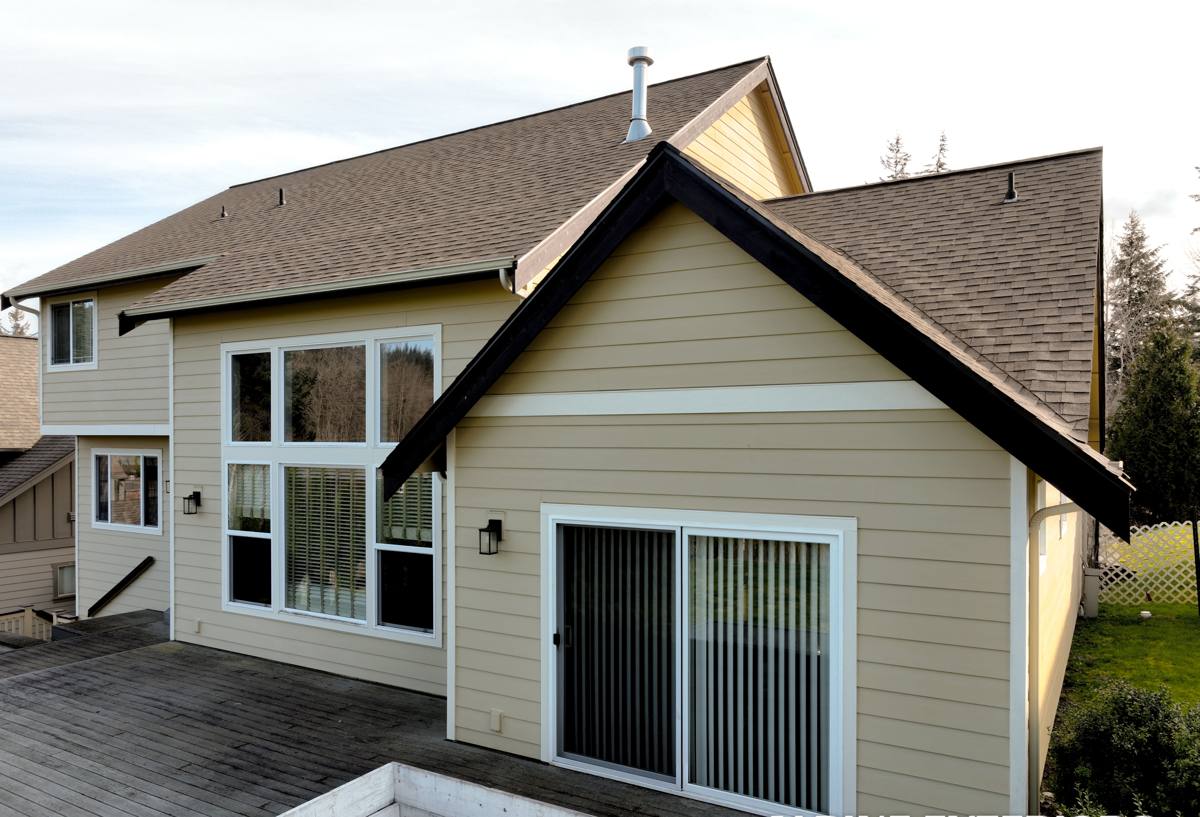
Signs Your Current Windows Are Working Against You
Most homeowners don't think about their windows until something forces the issue — a draft you can feel from across the room, or a pane that's gone permanently cloudy. Whatcom County's climate tends to accelerate window problems that would take much longer to show up somewhere drier. A few things worth checking before they turn into bigger repairs:
- Condensation or fogging between panes of double-glazed glass — a sign the seal has failed and the insulating gas or air gap is gone
- Visible gaps, drafts, or a noticeable temperature difference near the window on a cold, windy day
- Wood frames that feel soft, spongy, or discolored, especially at the bottom corners where water collects
- Windows that are difficult to open, close, or lock — often a sign the frame has swelled or shifted from moisture
- Moss or algae staining on the exterior trim or sill, which points to water sitting where it shouldn't
- Higher-than-expected heating bills in a house that hasn't changed its usage habits
Any one of these on its own might just mean routine maintenance. Several together, especially on a home with its original windows, usually means it's time to look at replacement rather than another round of patching.
What "Energy-Efficient" Actually Means
U-Factor and Solar Heat Gain
Every energy-efficient window is rated on two numbers that matter more than the marketing language around them: U-factor (how much heat escapes through the window — lower is better for our cold, wet winters) and Solar Heat Gain Coefficient, or SHGC (how much solar heat passes through the glass). In Whatcom County's climate, where heating costs matter far more than cooling costs most of the year, we generally steer homeowners toward lower U-factor glass first, then talk through SHGC based on which direction the window faces and how much direct sun that side of the house actually gets.
Frame Material
The frame matters as much as the glass. It's what holds the seal together, what takes the brunt of driving rain, and what determines how much upkeep you're signing up for. Here's how the common options compare for a home in this region:
| Frame Material | Energy Performance | Maintenance | Typical Lifespan |
|---|---|---|---|
| Vinyl | Strong insulator, no thermal bridging | Low — no painting, won't rot | Long-lasting with minimal upkeep |
| Fiberglass | Very strong, dimensionally stable in temperature swings | Low — holds paint well if color changes are wanted later | Long-lasting, resists warping |
| Wood / Wood-Clad | Good insulator, classic look | Higher — exterior cladding and seals need regular inspection | Depends heavily on maintenance and moisture exposure |
| Aluminum | Weakest without thermal breaks — conducts cold | Low, but prone to condensation without a thermal break | Durable frame, but poor energy fit for this climate |
We don't push one material on every job. A vinyl or fiberglass window is usually the practical choice for straightforward energy performance and low maintenance, while a wood-clad window can make sense on a home where matching an existing architectural style matters more than squeezing out the last bit of efficiency. What we steer clients away from is bare aluminum framing in this climate — without a thermal break, it turns into a cold spot on the wall and a condensation magnet, which is exactly the problem you're trying to solve.
Why Installation Matters More Than the Window Itself
A high-performance window installed poorly will underperform a mid-grade window installed correctly — and in a climate with this much driving rain, a bad installation doesn't just waste energy, it lets water into the wall. Most of the window failures we see in older Whatcom County homes trace back to flashing and sealing details that were rushed or skipped, not to the window unit itself.
What a Correct Job Looks Like
- Remove the old window and inspect the rough opening and sheathing for hidden water damage or rot before anything new goes in
- Install flashing that directs water down and out, layered correctly with the house wrap so water never has a path inward
- Set the new window plumb, level, and square, shimmed properly so the frame isn't under stress
- Seal and insulate the gap between the window and framing with the right materials — not just spray foam packed in without regard for drainage
- Tie the exterior trim and siding back in cleanly so the water-shedding path is continuous from siding to window to sill
That last step is where window replacement and siding work overlap, and it's a big part of why a crew that handles both trades tends to get better long-term results than a window-only installer working around someone else's siding.
Our Process for Lynden Window Projects
We keep the process straightforward because homeowners generally want two things from a window project: to understand what they're paying for, and to not have their house torn apart for weeks.
1. On-Site Assessment
We walk the home, check each window that's a candidate for replacement, and look at the surrounding trim and siding condition — since a window with rotted trim around it needs more than a swap-out.
2. Product Selection
We talk through frame material, glass package, and grille or trim style based on the home's exposure, orientation, and your budget, without steering you toward the most expensive option by default.
3. Installation
Old windows come out, openings get inspected and flashed properly, new units go in plumb and sealed, and exterior trim is finished to match. Most single-window replacements are a same-day job; whole-house projects are scheduled to minimize how long any opening sits exposed to weather.
4. Walkthrough and Cleanup
We check operation on every window, clean up the work area, and go over care basics before we leave.
What Drives the Cost
Pricing on a window project depends on more variables than most homeowners expect, and it's worth understanding them before you compare quotes:
| Factor | Why It Matters |
|---|---|
| Number and size of windows | Larger openings and whole-house replacements have more material and labor per project, but often better per-unit pricing |
| Frame material | Vinyl is typically the most budget-friendly; fiberglass and wood-clad cost more upfront |
| Glass package | Double vs. triple glazing, and coatings tuned for our climate, add cost but also long-term energy savings |
| Condition of the rough opening | Hidden rot or water damage found during removal adds repair work before the new window can go in |
| Trim and siding integration | Matching existing trim profiles or coordinating with a siding project affects labor and materials |
| Access and site conditions | Second-story windows or tight access can add time to the job |
Rather than quote a number that doesn't mean much without seeing the home, we prefer to walk the property first — a wide range of factors can move the total up or down, and a free on-site estimate gives you real numbers instead of a guess.
Why a Local Crew Makes the Difference
Lynden's older homes and the newer builds going up around it don't face identical problems — a house from decades ago is more likely to have single-pane glass and aluminum frames, while newer construction usually needs less structural work but still benefits from an upgrade in glass performance. A crew that works this area regularly has already seen the common failure points in both, and knows what Whatcom County's building department expects for permitting on window replacements.
There's also a simple practical benefit: a contractor based nearby can respond quickly if something needs a follow-up visit, and isn't juggling long drive times that eat into the actual work. For a trade this dependent on getting flashing and sealing right the first time, familiarity with the local weather pattern — the wind direction rain typically comes from, how early moss takes hold on a north-facing wall, how humid the air stays through a Whatcom County winter — isn't a minor detail. It's the difference between a window that performs for decades and one that needs attention again in a few years.
Caring for Your New Windows
Energy-efficient windows are low-maintenance, not no-maintenance. A little seasonal attention keeps them performing the way they're supposed to:
- Clear moss, leaves, and debris from sills and tracks before wet weather sets in each fall
- Check exterior caulking and trim seals once a year for cracking or gaps
- Operate locks and hardware periodically so mechanisms don't seize up from disuse
- Watch for condensation between panes — it's the clearest sign a seal is starting to fail
- Keep gutters and downspouts clear so water isn't sheeting down past upper-story windows
None of this takes much time, but skipping it is how small issues turn into water damage down the line — especially in a climate that doesn't give window seals much of a break between rainy seasons.
If your Lynden home has drafty, foggy, or aging windows, we're happy to take a look and talk through honest options — no pressure, no obligation. Fill out the form below to schedule a free estimate.